
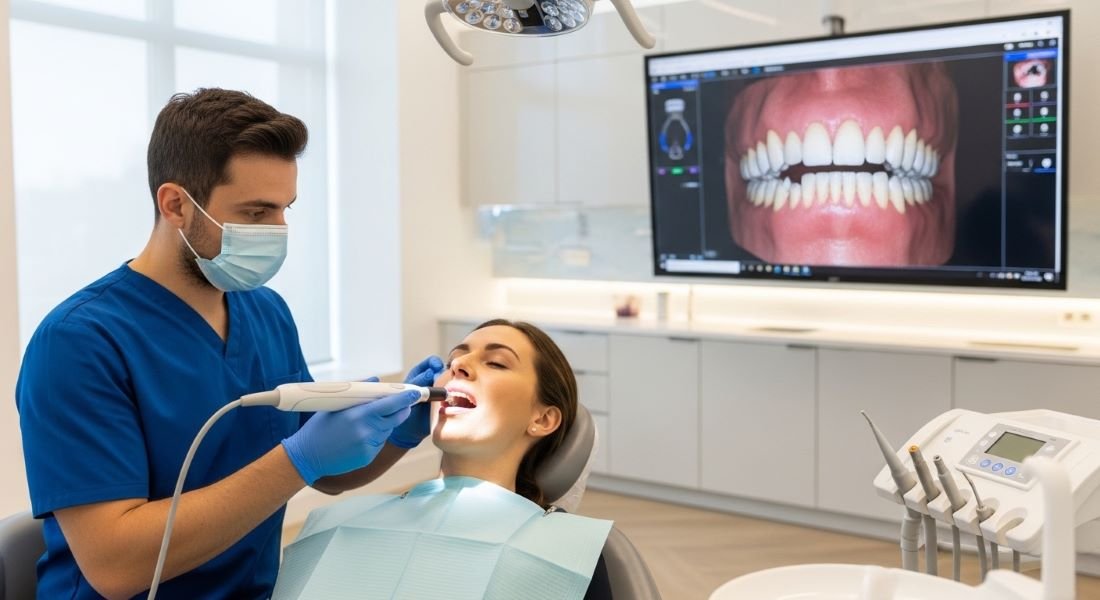

Digital tools now shape how you receive dental care. You may notice screens at the front desk, handheld scanners near the chair, or text reminders on your phone. Each one changes your visit in real ways. You spend less time waiting. You answer fewer repeated questions. You get clearer answers about your mouth. A dentist in Andover can see small problems early because digital images show tiny changes. Office teams move faster because records stay in one place.
You also gain more control. You can see photos and models of your teeth before you choose treatment. That removes guesswork and fear. This blog explains three clear benefits. You will see how digital tools improve accuracy. You will see how they shorten visits. You will see how they support honest talks about cost and options. Strong digital systems help you feel safe and heard during every visit.
1. Better accuracy for early problem spotting
Digital tools help your dentist see what the eye misses. That means earlier care and smaller treatments.
Common digital tools include:
- Digital X rays
- Intraoral cameras
- 3D scanners for teeth and gums
Digital X-rays use less radiation than old film. The images appear on a screen in seconds. Your dentist can zoom in and adjust contrast. That helps find tiny spots of decay, bone loss, or infection. The National Cancer Institute notes that dental X-rays use low-dose radiation when used with care. Digital systems keep that dose even lower.
Intraoral cameras are small cameras that fit in your mouth. They show close-up views of teeth and gums. You see what your dentist sees. Cracks, worn spots, and early gum changes stand out on the screen. That shared view builds trust. You do not need to guess why a filling or crown is needed. You can point and ask questions.
3D scanners capture a full image of your teeth in a few minutes. You no longer need messy impression trays in many cases. The scan creates a model on the screen. That model guides crowns, aligners, and night guards. A better fit reduces pain and repeat visits.
When problems show up early, treatment is often simple. A small cavity needs a small filling. Early gum disease may need a deep cleaning and better home care. You avoid root canals, extractions, and complex surgery in many cases. That protects your health and your savings.
2. Shorter visits and smoother office flow
Time in a dental office can feel heavy for you and your family. Digital tools help cut that time and remove many small hassles.
Helpful tools include:
- Online forms and check in
- Automated reminders
- Digital records and e prescribing
You can fill out medical history and insurance forms at home on your phone or computer. That means less time with a clipboard. Staff can check your information before you walk in. They can fix insurance issues early. Your visit starts on time more often.
Text and email reminders help you remember cleanings and follow-up visits. Missed visits hurt your health. They also cause stress when you try to reschedule. Simple reminders keep your care on track. The Centers for Disease Control and Prevention stresses that regular dental visits help prevent decay and gum disease. Digital reminders support that routine.
Digital records store your history, X-rays, photos, and notes in one secure place. Staff do not search for paper charts. Your dentist can see past treatment, allergies, and health changes with one click. E-prescribing sends needed medicine straight to your pharmacy. You avoid lost paper scripts and extra trips.
The table below shows how digital tools can change a common step in your visit.
| Visit step | Traditional process | With digital tools |
|---|---|---|
| Check in | Paper forms at front desk | Online forms before visit |
| X rays | Film, longer wait for images | Instant digital images on screen |
| Treatment planning | Spoken explanation only | On screen images and 3D models |
| Prescriptions | Handwritten paper script | Electronic script sent to pharmacy |
| Follow up | Phone calls, voicemail tag | Text or email reminders |
Each small change saves you minutes. Together, they can cut a visit by a large chunk. You spend more time talking with your dentist and less time waiting.
3. Clearer talks about cost and choices
Money questions can cause shame and fear. Digital tools can make those talks straightforward and calm.
When your dentist uses on-screen images and 3D models, you see the problem and the choices. You can compare:
- Do nothing and watch
- Simple treatment now
- More complex treatment later
Digital treatment planning software can show side-by-side views of your teeth. One view shows your mouth today. Another shows a likely future if decay or wear continues. A third view can show a likely result after treatment. This clear picture helps you weigh cost, time, and comfort.
Office software can also pull your insurance details and show estimates on the spot. Staff can review:
- What insurance may pay
- What you may pay at the visit
- What future visits may cost
That level of detail removes surprise bills in many cases. You can plan for care instead of putting it off. You can also ask for other options that fit your budget.
Staying safe with digital systems
Many people worry about privacy when they hear about digital records. That concern is real. Dental offices must follow federal rules that protect your health information. Staff receive training on how to store and share records. Many systems use strong passwords and encryption to keep your data safe.
You can ask your dentist:
- How your records are stored
- Who can see your records
- How your information is shared with other providers
Clear answers help you feel secure. You have a right to see your records and to ask for copies.
Taking your next step
Digital tools will not replace the human side of care. Your trust in your dentist still matters most. Yet these tools give your dentist sharper eyes, faster hands, and stronger ways to explain your choices.
When you schedule your next visit, you can ask three simple questions.
- Do you use digital X-rays and cameras
- Can you show my images and explain my options on screen
- Can I complete forms and get reminders electronically
The answers will tell you how much digital support you can expect. With the right tools in place, your visits can be shorter, clearer, and less stressful for you and your family.

 By
By


 By
By