
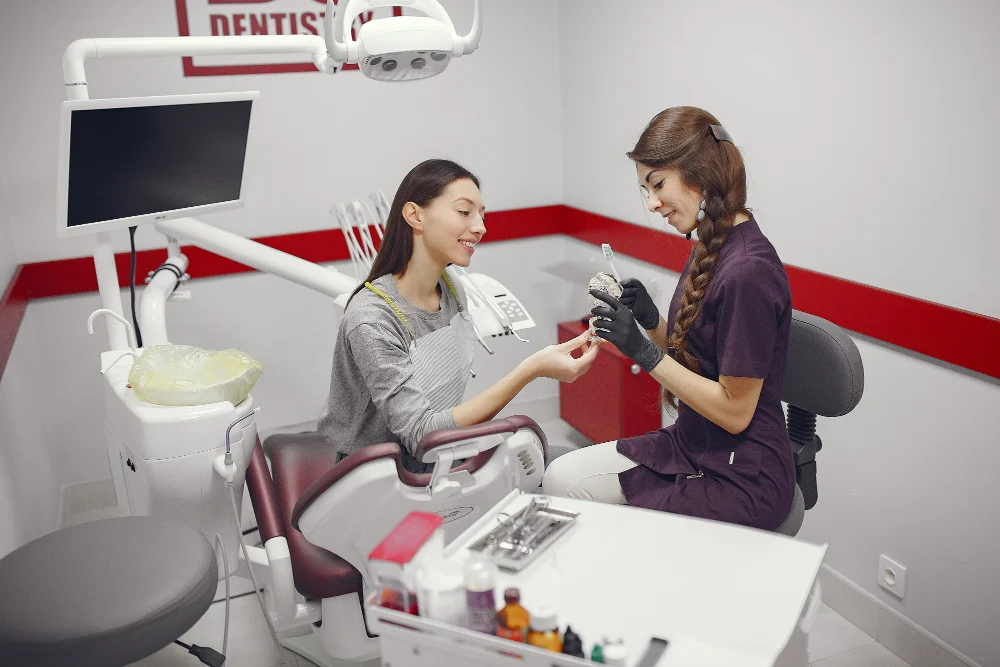

Your smile deserves clear answers and safe care. Digital X-rays help your dentist see hidden problems early, with less exposure and less waiting. You sit in the chair. A small sensor captures your teeth. The image appears on a screen in seconds. Your dentist can zoom, measure, and compare past images with new ones. This helps with fillings, root canal treatment, and implant restoration Toronto patients often need after tooth loss. Digital X-rays also reduce waste from film and chemicals. They store easily in your record. They send quickly to specialists when needed. This short guide explains five key benefits you can feel in the chair and see in your results. You will understand why many general dentists now rely on digital X-rays for everyday care. You will also know what to expect at your next visit.
1. Lower radiation and stronger safety
Digital X-rays use less radiation than older film X-rays. That matters for you and your family. Children, pregnant people, and those who need regular checks all face less exposure over time.
Research from the Centers for Disease Control and Prevention explains that dental X-ray doses are already low. Digital systems cut this even more. Lead aprons, thyroid collars, and careful settings add another layer of safety.
You can ask your dentist three clear questions.
- Why do I need this X-ray today
- How often do I need X-rays for my teeth?
- Can you use my past images to limit new ones
Those questions keep your care focused. They also help your dentist plan only what you need.
2. Clearer images for faster answers
Digital X rays show sharp images on a screen. Your dentist can zoom, change contrast, and mark spots. That way, small cavities, bone loss, or cracks show up before you feel pain.
This clarity gives you three strong gains.
- Faster checks for tooth decay between teeth
- Better tracking of gum disease and bone support
- More exact planning for crowns, bridges, and implants
The National Institute of Dental and Craniofacial Research notes that early detection can help prevent tooth loss. Digital views support that goal. You see what your dentist sees. You also understand why a treatment is needed now rather than later.
3. Less waiting and smoother visits
Film X-rays need time to process in dark rooms. Digital X-rays do not. The image appears almost at once. That means fewer pauses in the chair and fewer rrepeatedimages.
This speed can help you in three ways.
- Shorter appointment times for you and your child
- Faster action when you have a toothache or injury
- Quicker sharing with a specialist when you need extra care
When you spend less time waiting, you can focus on questions. You can talk through options while the fresh image is on the screen. That supports calmer choices during stressful visits.
4. Easier record sharing and llong-termtracking
Digital X rays store in your electronic record. They can be sent by secure email or uploaded to a secure portal. This helps when you move, change dentists, or see a specialist.
Here are three common examples.
- You move to a new city and need your past X-rays for a first visit
- You see an oral surgeon who must check wisdom teeth and nerves
- Your child needs orthodontic care, and the dentist sends records ahead
Digital files keep their quality over time. That helps your dentist compare past and present images. Slow changes in bone, roots, or fillings can show up across years. The pattern tells an honest story about your mouth and your habits.
5. Cleaner process and less physical waste
Film XX-raysuse plastic, paper, and chemical liquids. Those supplies become waste. Digital systems remove most of that. There is no film to store in bulky folders. There is no need to handle chemical tubs.
This cleaner process brings three wins.
- Less physical waste from film wrappers and paper
- No storage rooms filled with old film charts
- Easier backup of records on secure servers
A practice that uses fewer supplies can keep spaces tidier. Staff can spend more time with you and less time handling film. That can improve your experience in small but real ways.
Quick comparison of digital and film X-rays
| Feature | Digital X rays | Film X rays |
|---|---|---|
| Radiation exposure | Lower | Higher |
| Image wait time | Seconds | Several minutes |
| Image quality | Can zoom and adjust on screen | Fixed on film |
| Record sharing | Easy electronic transfer | Mail or copy film |
| Physical storage | Electronic files | Large chart rooms |
| Chemical use | None for image processing | Needs developer and fixer |
How to talk with your dentist about digital X-rays
Your choices matter. You can take an active role in every step. During your visit, you can ask clear questions about digital X-rays.
- Do you use digital X-ray for routine checks
- How do you keep my images private and secure
- Can you show me what you see on the screen
Those questions open honest talk. They also show that you care about safety, clarity, and long-term planning.
Dental care can feel tense. Clear images, quick answers, and simple sharing can reduce that strain. Digital X-rays support you, your child, and older family members at every stage of life. You deserve care that is safe, clear, and respectful during every visit.


 By
By
 By
By


 By
By