
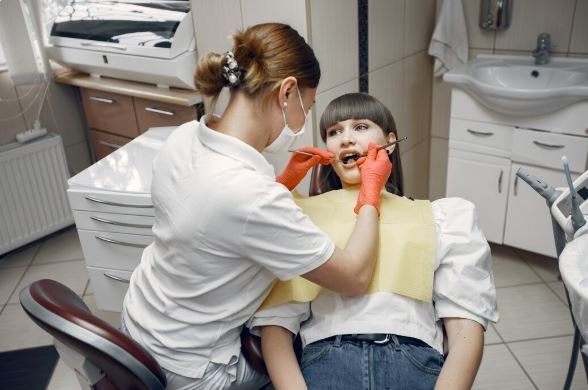

Modern dental care looks very different from what you may remember as a child. New tools now shape how your Westwood dentist cleans, repairs, and protects your teeth. These tools do more than speed up visits. They cut pain, reduce guesswork, and give you more control over your care. You see problems earlier. You heal faster. You understand your options in clear images, not confusing words. This blog will show six key technologies that now guide general dentistry. You will read how each tool works in plain language. You will see what it changes for your exams, fillings, and crowns. You will learn what to ask before your next visit. Change in health care can feel heavy. Clear facts can ease that weight and help you choose a path that protects your teeth, your time, and your peace of mind.
1. Digital X-rays that use less radiation
Digital X-rays now replace film in many offices. Sensors capture images and send them to a screen in seconds. You see your teeth the same moment your dentist does. You do not wait for the film to process.
The Centers for Disease Control and Prevention notes that medical and dental X-rays use controlled, low doses. Digital systems often cut that dose even more. You still get clear images. You face less exposure.
With digital X-rays, you gain three key benefits.
- Faster answers during exams
- Lower radiation dose compared with film
- Easy sharing if you need a second opinion
Digital images also help track slow changes over time. Small shifts in bone or tiny shadows show up when side by side on a screen. That supports earlier action and smaller repairs.
2. Intraoral cameras that show what your dentist sees
An intraoral camera is a small camera that fits inside your mouth. It sends live video to a monitor near the chair. You see cracks, worn fillings, and red gums in real time.
This tool changes your visit in three ways.
- You see the problem, not just hear about it
- You can ask clear questions while you look at the screen
- You can compare before and after pictures
That shared view builds trust. It also helps children and older adults who may feel unsure. A clear picture can calm fear and support better brushing and flossing at home.
3. 3D imaging and cone beam CT for complex cases
Some problems sit below the surface. Impacted teeth, bone loss, or root issues can hide in a flat X-ray. Cone beam computed tomography, often called CBCT, creates a three-dimensional view of your teeth, jaw, and joints.
CBCT is not needed for every patient. It is often used for implants, root canal planning, and some jaw joint problems. The U.S. Food and Drug Administration explains that dentists should use the lowest dose that still gives the needed image. CBCT follows that same rule.
With 3D imaging, your dentist can often
- Plan implant size and angle with greater accuracy
- Locate hidden roots or extra canals
- Check sinus and nerve positions before surgery
That planning can lower the chance of surprises during treatment. It can also reduce the need for repeat procedures.
4. CAD CAM systems for same-day crowns
Computer-aided design and computer-aided milling, often called CAD CAM, now help create crowns and some bridges in the office. A small scanner maps your tooth. A computer shapes a digital model. A milling unit then carves your crown from a solid block.
Here is a simple comparison of traditional crowns and CAD-CAM crowns.
| Feature | Traditional crown | CAD CAM crown |
|---|---|---|
| Number of visits | Two or more | Often one |
| Temporary crown needed | Yes, for several days | Often no |
| Impression method | Paste tray in mouth | Digital scan |
| Common materials | Metal and porcelain mix | Ceramic blocks |
| Chair time per visit | Shorter visits, more trips | One longer visit |
This method can save you time away from work or school. It also removes the risk that a temporary crown will crack or fall off between visits.
5. Lasers for gum and cavity treatment
Dental lasers use focused light to remove or shape soft or hard tissue. Many patients report less bleeding and less swelling compared with some older tools. In some cases, you may not need numbing for small jobs.
Lasers can help with three common needs.
- Gum contouring for overgrown or uneven gums
- Removal of early decay in small spots
- Treatment of cold sores or small growths
Lasers can also help clean pockets around teeth in some gum disease cases. Some people heal more quickly when the tool is gentle and precise. That can mean less time feeling sore and more time back in daily life.
6. Digital scanners and clear aligner planning
Clear aligners now straighten many smiles without metal brackets. Digital scanners map each tooth and feed that data into planning software. You and your dentist can see a step-by-step plan before you start.
For you, this means three key gains.
- No messy impression trays for many cases
- Preview of likely tooth movement on a screen
- Aligners that often fit more closely
Digital planning can also shorten some treatments. Teeth move along planned paths. That can reduce the need for mid-course changes.
How to talk with your dentist about new tools
You do not need to know every detail of each device. You only need clear answers that help you weigh risk, cost, and comfort. Before you agree to a new type of scan or treatment, you can ask three simple questions.
- Why do I need this tool for my case
- What are the benefits and risks for me
- Are there other options that might work
Modern technology can support strong teeth and steady health. It can also feel cold or confusing if no one explains it. When you speak up, you turn that technology into a shared tool that protects your mouth, your budget, and your sense of control.


 By
By

 By
By