
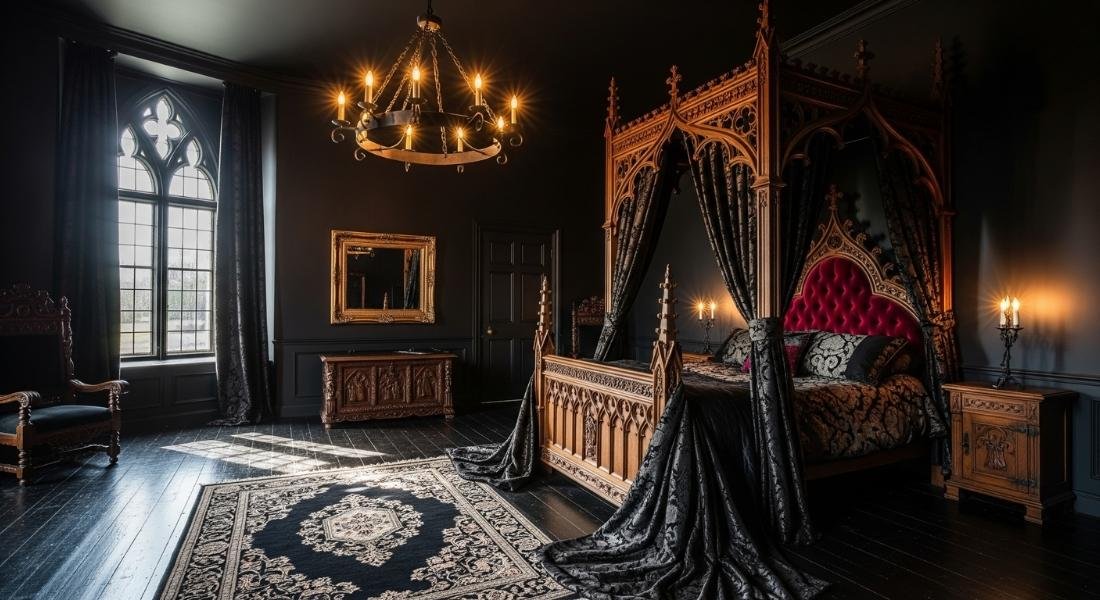

A Gothic room is more than just a dark colored space. It’s a mix of elegance, mystery and history that can transform any area into a work of art. The style draws from centuries old architecture and decor but feels fresh when blended with modern design.
Whether you’re curious about what a Gothic room is or wondering how to make your room Gothic, this guide will walk you through everything. From understanding its roots to adding key elements, you’ll learn how to create a space that feels both dramatic and welcoming.
What Is a Gothic Room?
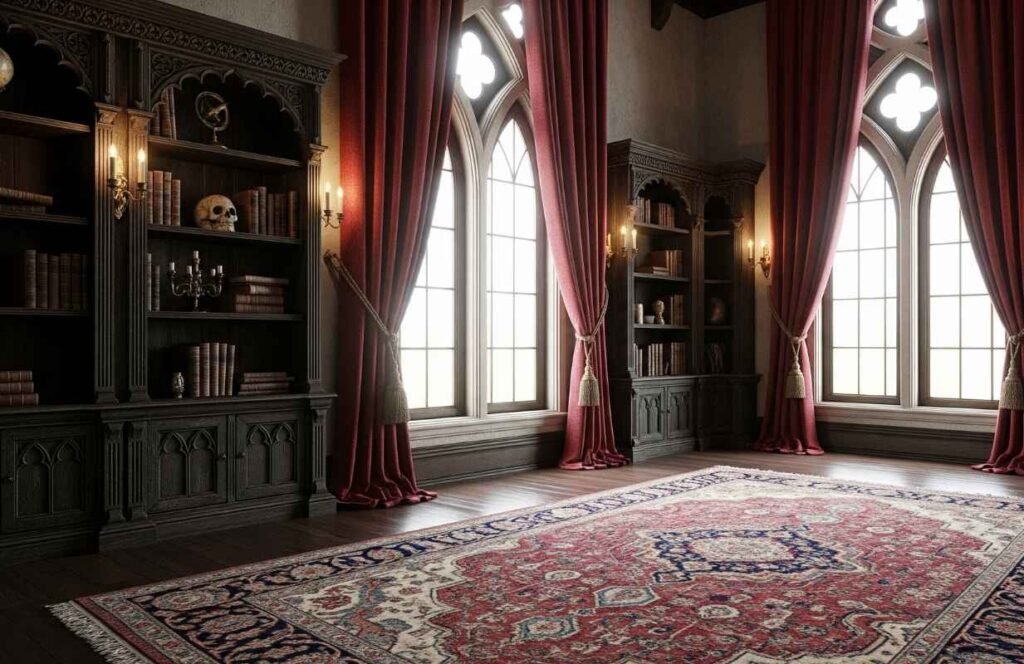
A Gothic room is inspired by Gothic architecture and interior design, which originated in the Middle Ages. This style often features tall arches, intricate woodwork, and rich, moody colors. In modern homes, Gothic design translates into deep hues, ornate furniture, and striking details.
It’s not just about black walls or candlelight. A true Gothic room blends atmosphere, texture, and decorative details to create a layered and immersive space. This can mean velvet curtains, wrought iron fixtures, and even stained glass accents.
Origins of Gothic Style
Gothic architecture began in 12th-century France and spread across Europe. It was known for pointed arches, ribbed vaults, and stained glass windows. While these features were part of churches and castles, the decorative style eventually made its way into homes. Today, the concept has evolved into modern Gothic style, sometimes called Gothic Revival or Contemporary Gothic, which balances dark elegance with modern comfort.
Why Create a Gothic Room?
Designing a Gothic room isn’t just about following a trend—it’s about creating a unique environment that reflects personality and taste.
Adds Depth and Character
Gothic design brings rich textures, ornate details, and a sense of history. This makes a room feel special compared to plain or minimalist spaces.
Creates a Cozy Atmosphere
Deep colors and layered fabrics make a space feel warm and inviting. This is perfect for bedrooms, reading corners, or lounges.
Expresses Personal Style
If you enjoy dramatic decor, bold contrasts, and a slightly mysterious vibe, a Gothic room allows you to express that in a creative way.
Timeless Appeal
While trends come and go, Gothic elements—like wood carvings, luxurious fabrics, and elegant lighting—are classic. They work in both old and new homes.
How to Make Your Room Gothic: A Step-by-Step Guide
If you’ve been asking, “How do I make my room Gothic?”, here’s a detailed plan you can follow. Each step builds on the last, ensuring your space transforms beautifully.
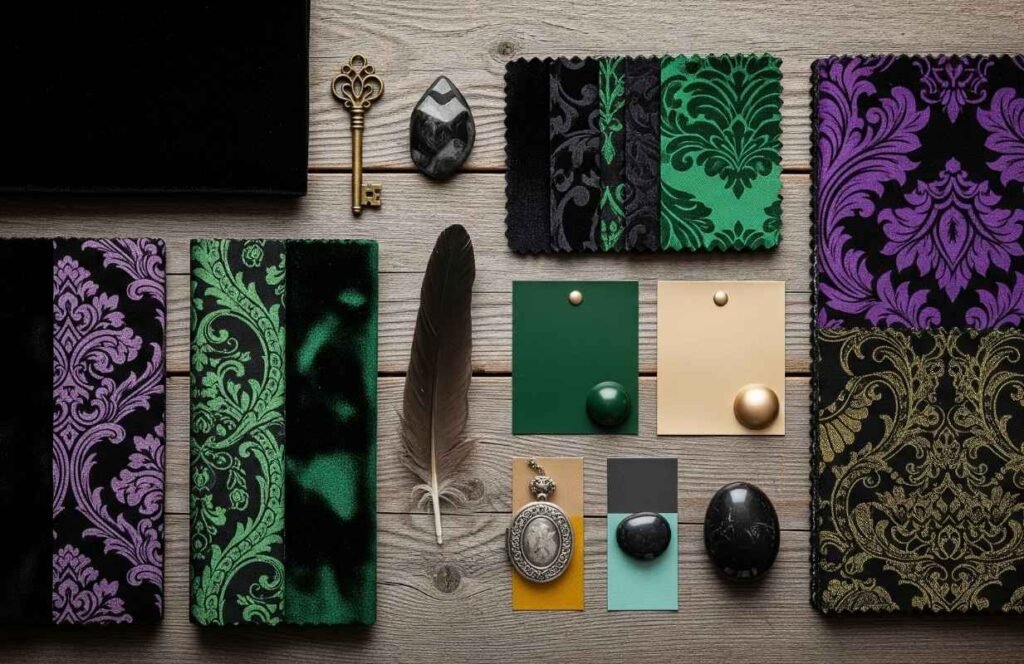
Step 1: Choose a Gothic Color Palette
Colors set the tone for the entire room. Gothic rooms often use:
- Deep black, charcoal, or midnight blue for walls.
- Rich jewel tones like ruby red, emerald green, and royal purple for accents.
- Metallic touches in gold or brass for warmth.
Painting the walls in a dark hue creates an instant moody base. If you prefer a lighter approach, try a feature wall in deep color while keeping the rest neutral.
Step 2: Pick the Right Furniture
Furniture in a Gothic room should feel substantial and elegant. Look for:
- Carved wooden bed frames or cabinets.
- High-backed chairs with tufted upholstery.
- Tables with turned legs or ornate details.
Antique stores and flea markets are great places to find pieces that have authentic character.
Step 3: Add Textures and Fabrics
Fabrics play a big role in Gothic interiors. The more layers and textures, the richer the look. Common choices include:
- Velvet curtains or cushions.
- Jacquard or damask upholstery.
- Heavy drapes that pool on the floor.
These fabrics not only add beauty but also help soften the darker colors, making the room feel inviting.
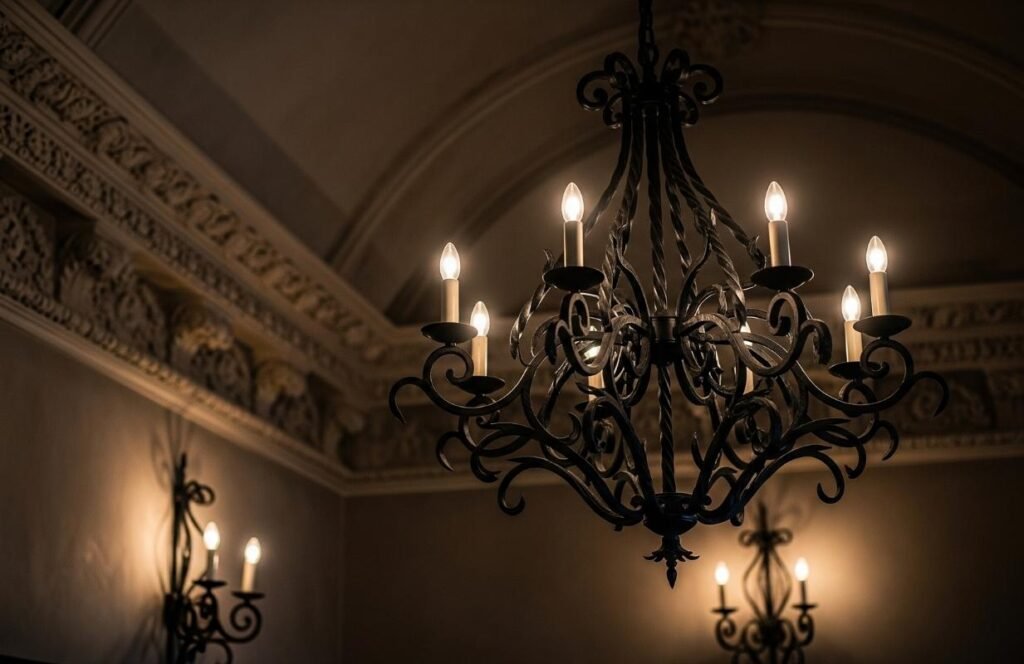
Step 4: Incorporate Gothic Lighting
Lighting should feel dramatic but also practical. Use:
- Chandeliers with wrought iron or crystal accents.
- Wall sconces with candle-like bulbs.
- Lamps with stained glass shades.
Dimmer switches are a great addition, allowing you to control the mood.
Step 5: Use Gothic-Inspired Accessories
Accessories bring the theme together. Consider:
- Ornate mirrors with gold or black frames.
- Gothic art prints or vintage-style paintings.
- Candle holders, candelabras, and lanterns.
Even small touches, like decorative skulls or gargoyle figurines, can make a big impact if used tastefully.
Step 6: Consider Architectural Details
If possible, add elements that mimic historical Gothic architecture:
- Arched doorways or windows.
- Wall paneling or wainscoting.
- Decorative molding or ceiling medallions.
These features add depth and give the room a more authentic feel.
Step 7: Blend Old and New for Modern Gothic Style
Many people ask, “What is modern Gothic style called?”
It’s often referred to as Contemporary Gothic or Gothic Revival. This style keeps the dark elegance but pairs it with modern simplicity.
For example, you might combine a black-painted wall with sleek, minimalist shelves, or pair antique furniture with modern art. This makes the space timeless rather than old-fashioned.
Tips for Maintaining a Gothic Room
Once your Gothic room is complete, a little upkeep ensures it stays beautiful.
- Regular Dusting: Dark surfaces show dust more quickly, so clean regularly.
- Protect Fabrics: Use fabric protectors to maintain the look of velvet and other luxurious materials.
- Balance Light: Keep the space from feeling too dark by adding mirrors or strategic lighting.
Conclusion
A Gothic room combines drama, elegance, and history into a space that feels deeply personal. By understanding the basics, choosing the right colors and furniture, and adding thoughtful details, you can create a room that’s both stylish and comfortable.
Whether you prefer the traditional look of Gothic Revival or the sleeker lines of Contemporary Gothic, the key is to blend moodiness with warmth. Done right, your room will feel like a timeless retreat that reflects your unique style.
FAQs
What is a Gothic room?
A Gothic room is an interior space inspired by Gothic architecture and design. It features deep colors, ornate details, and rich textures for a dramatic, elegant look.
How do I make my room Gothic?
Start with a dark color palette, choose elegant furniture, add rich fabrics, use dramatic lighting, and incorporate Gothic accessories like mirrors or chandeliers.
What is modern Gothic style called?
Modern Gothic style is often called Contemporary Gothic or Gothic Revival. It blends traditional Gothic elements with modern design features.
Do Gothic rooms have to be black?
No. While black is common, Gothic rooms can also use deep reds, purples, greens, and blues, paired with metallic accents for warmth.
Can I create a Gothic room on a budget?
Yes. Use thrift store finds, DIY wall treatments, and affordable fabrics to achieve the Gothic look without overspending.
Is Gothic style only for large rooms?
No. Gothic elements can work in small spaces by focusing on key accents like lighting, mirrors, and fabrics without overwhelming the room.


 By
By
 By
By
 By
By
 By
By
 By
By