
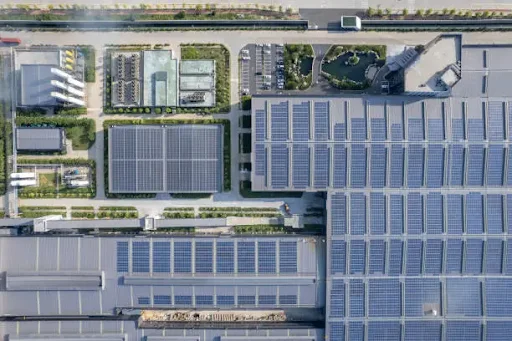

As markets around the world focus on renewable energy, the need for energy companies, developers, and government agencies to prioritize grid reliability and stability increases. Energy storage system manufacturers enable flexible and efficient power systems. Along with renewable energy, the storage system helps provide the continuous power industries and cities required by modern standards.
For B2B actors in the industry such as renewable energy equipment suppliers, utilities, and project developers, the latest developments in energy storage systems must be understood to make relevant, timely, and competitive decisions and partnerships in the rapidly globalizing energy market.
The Growing Significance of Energy Storage in the Switching to Renewables
The worldwide shift to renewable energy sources has for the first time driven new challenges to grid operators. Although solar and wind energy are sustainable, they are variable and dependent on season, time of day, and even weather. In the absence of proper energy storage systems, this variability can precipitate grid inefficiencies, instability, and in extreme cases, power outages.
Energy storage system manufacturers are changing how the industry works. New technologies, such as lithium-ion and flow and hybrid batteries, have the critical capability to balance the grid. These technologies store excess renewable energy to be used during periods of low generation and high demand, maintaining the flow of electricity, and providing added resilience to the grid.
For renewable energy equipment suppliers, collaborative innovation is integrating systems consisting of solar panels, inverters, and batteries into single units for commercial and utility-scale projects. Seamless interconnection of components improves the system’s overall efficiency, scalability, and cost-effectiveness, which is a great advantage for the manufacturers and the end-users of renewable energy systems.
Advanced Battery Technologies Redefining Grid Applications
One of the most sequeliable transformative trends in the energy sector is the advanced battery technologies. New innovations in the lithium-ion space, which still holds the lion’s market share, are addressing the diverse requirements of different grid applications.
The key development is the arrival of solid-state batteries, which surpass conventional lithium-ion batteries with their greater storage potential, increased safety, and enhanced lifespans. Their ability to provide dependable performance with lower maintenance demands makes them the most sought-after batteries in large-scale energy storage systems.
Another promising advancement is flow battery technology, which allows flexible scaling of both power and energy. Since flow batteries use liquid electrolytes and have external storage tanks, their unique design is well-suited for grid-scale, long-duration energy storage applications. This technology offers increased longevity and the ability to perform thousands of charge and discharge cycles without notable wear, which decreases overall ownership costs for utilities and developers.
Maintaining the pace of these innovations is also important for suppliers of renewable energy equipment. As manufacturers improve their offerings, suppliers need to align with new standards for product compatibility and the integration of new technologies to provide the necessary additions and retain competitiveness in a value proposition marketplace based on energy efficiency, reliability, and sustainability for the next decade.
Smart Grid and Digital Technologies Integration
The way energy systems are optimized and managed is undergoing a change due to digital technologies. Manufacturers of energy storage systems are adopting smart grid technology, artificial intelligence (AI), and predictive analytics to improve grid reliability and predictive maintenance.
Smart energy management systems allow for real-time system monitoring and control of energy flow, demand forecasting, and the predictive diagnosis of performance anomalies. An energy manager system enhances the coordination of distributed energy resources (DERs) such as solar and wind and battery storage, thereby improving grid stability and responsiveness.
AI powered analytics reduce energy operational risks by forecasting and predicting power fluctuations for proactive dispatch. During peak load periods, for instance, storage systems release energy to prevent grid stress and potential storage systems drain unscheduled outages.
Digital integration offers renewable energy equipment suppliers new collaboration opportunities with energy management and predictive maintenance systems software and analytics developers. This offers new integrated and smart energy/install and energy storage solutions for real-time energy optimization. For industrial applications, this integration and real-time optimization represents a new set of efficiencies and sustainable sales.
The Role of Energy Storage in Decentralized and Hybrid Systems
Another of the trends influencing the stability of the grid is the development of decentralized energy systems and hybrid systems. The traditional power grid is being transformed into a myriad of networks of distributed generation sources, including small-scale renewables in utility networks.
In the decentralized model, decentralized energy storage system manufacturers and developers have designed almost modular and scalable storage options which can be jailed and ,cost effective energy storage, added at virtually any point in the grid from an individual enterprise to a community powered net. These systems are multipurpose. They can provide backup power and theoretically enhance the stability of an entire local area grid by nominally removing the defensive barriers of controlled power switch transmission lines and smoothing fluctuations actively at the modular energy generator.
In hybrid systems, which are increasingly common in remote and industrial settings, renewable generation is combined with battery storage and backup generators. They improve reliability and ensure consistent energy supply in regions with weak grid infrastructures. Hybrid systems provide the flexibility needed to replace grid power with renewables during certain productive hours to help companies increase productivity at a lower carbon. Hybrid systems help companies increase productivity at a lower carbon footprint. This is dual productivity.
For renewable energy equipment suppliers, this shift is a unique opportunity to capture a wider market. Supporting hybrid and distributed systems enables them to offer complete systems to capture sustainable, reliable power across entire industries including manufacturing, telecommunications and transportation.
Recycling, Sustainability, and the Circular Economy
With the deployment of energy storage systems, manufacturers and suppliers are more concerned about sustainability. It is the production and disposal of batteries that poses the biggest environmental concern in relation to the extraction of raw materials, energy use, and the management of batteries at the end of their life span.
Environmental concerns have caused energy storage manufacturers to focus on new sustainable production strategies, including the recycling of batteries and the use of sustainable resources. Closed loop recycling, recovery and reuse of lithium, nickel, cobalt and other valuable metals contained in batteries extends the life span of the batteries and lessens the need for mining.
There have also been innovations in the use of second life batteries. Batteries that are no longer used in electric vehicles and consumer electronics can now be used for stationary storage applications. This not only extends the life span of the batteries, lessens the environmental impact of disposal but also economically supports large scale renewable energy projects. This is a circular economy at its best.
For renewable energy equipment suppliers, the alignment of sustainable practices in this area will be a key differentiator in the growing B2B market. Such companies that can prove their commitment to eco-sustainable practices will be the first to benefit from the growing stringent corporate sustainability objectives that accompany new environmental regulations.
Conclusion: The Collaborative Future of Renewable Energy
The trends coming from energy storage system manufacturers are changing how the world generates, distributes, and consumes energy. With inventive approaches to batteries, the inclusion of smart grids, decentralized frameworks, and eco-friendly production methods, they are spearheading the next generation of renewable energy infrastructure.
For renewable energy equipment suppliers, these changes highlight the need for strategic collaboration and technological flexibility. The partnership between battery developers, solar system connectors, and grid solution innovators is critical to building a more dependable, efficient, and robust future for energy.With energy demand surging and the world accelerating to decarbonization, the collaboration between energy storage system manufacturers and renewable energy equipment suppliers will continue to offer the foundation for a cleaner, smarter, and more sustainable power ecosystem. B2B companies can leverage these changes to establish themselves as leaders in the world’s shift to renewable energy and grid stability.


 By
By

 By
By
 By
By
 By
By