
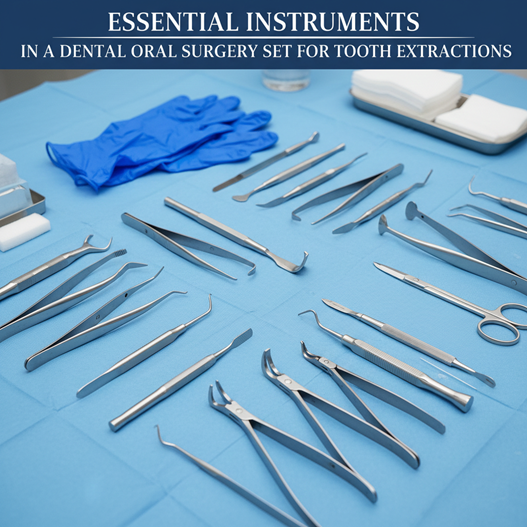

Tooth extraction is among the most frequent, yet technique-sensitive procedures performed in the field of dental surgery. Although it appears simple on the surface, the success of an extraction is dependent greatly on the accuracy, precision and proper use of dental instruments that are specially designed.
Every tool used in a dental orthodontia set has been designed with a particular purpose to limit trauma, decrease complications, and provide satisfaction. The understanding of these instruments is essential not just for dentists but for clinic administrators, students, as well as anyone who is involved in the management of dental practices.
This complete guide explains the primary instruments used in a dental office that are used to extract teeth with their various functions, differences and why each is important. In the end, you’ll have a thorough comprehension of how these instruments cooperate to facilitate the safe, effective and predictable procedures for extraction.
Understanding the Role of Oral Surgery Instruments in Extractions
Instruments for oral surgery are designed to offer the ability to control, leverage and accuracy. The procedure involves manipulating the hard tissues (tooth as well as bone) as well as soft tissues (gingiva as well as periodontal ligaments). If you don’t have the proper tools, an easy extraction could be traumatic and cause complications like excess bleeding, root fractures or even alveolar bone damage.
An effective oral surgery set ensures:
- The reduction of anxiety and discomfort in patients.
- Efficient procedural flow
- Minimal tissue trauma
- Better healing outcomes
Each instrument is made to complement the others and form a system for extraction instead of relying only on force.
Diagnostic and Examination Instruments
Before any extraction is initiated, an accurate diagnosis and evaluation are essential. Instruments help evaluate dental health, mobility and other surrounding tissues.
Mouth Mirror
The mirror inside the mouth offers an indirect view, with lighting in addition to tissue retraction. It allows dentists or the surgeon of oral surgery to view the areas that are difficult to view directly, such as the posterior teeth. Mirrors can also assist in retraction of cheeks, lips and tongues, facilitating accessibility, and lessening discomfort during the examination.
Dental Explorer and Probe
Explorers and probes assist in assessing dental caries, restorations, root exposure, and the periodontal pocket depth. Before extraction, they assess the dental structure as well as the surrounding bone. The ability to determine if a tooth has been broken, ankylosed, or is heavily decayed influences the extraction method and the instruments.
Anesthesia and Soft Tissue Management Instruments
Soft tissue management is crucial for the success of an extraction.
Dental Syringe
A dental syringe is utilized to inject local anesthesia. Syringes for aspiration are commonplace for oral surgery, which allows the doctor to avoid intravascular injections. Anesthesia that is effective ensures comfort for patients and permits the surgeon to work in a controlled manner instead of rushing due to the discomfort of the patient.
Periosteal Elevator
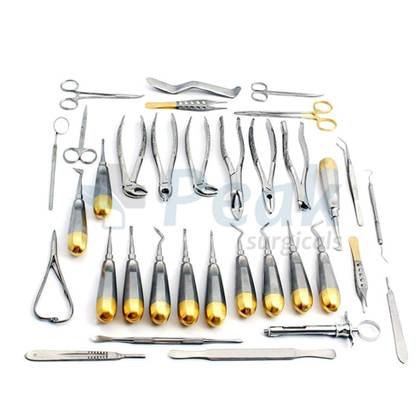
The periosteal elevator helps to pull and reflect soft tissue away from the bone. This procedure is essential for surgical extractions in which accessibility to tooth roots or the alveolar bone is needed. A proper technique can reduce the tearing of soft tissues and increase the visibility.
Elevators: The Foundation of Tooth Luxation
Dentists’ elevators rank among the crucial tools in an extraction set. They can be used to loosen teeth by cutting off ligaments of the periodontal region and enlarging the socket of the alveolar.
Straight Elevators
Straight elevators are often employed to trigger the process of luxation. They operate by putting controlled force on the tooth’s surrounding bone. These elevators are ideally suited for premolars and anterior teeth.
Cryer Elevators
Cryer elevators are also referred to in the field of East-West elevators, which were designed to take out broken or damaged roots or teeth with split roots. Their triangular tips allow engagement in the socket and provide the force of rotation rather than direct leverage.
Root Tip Picks
The root tippicks are small pointed instruments designed to remove small fragments of root. These instruments are vital in minimizing the need for bone removal and also preventing complications in difficult extractions.
Extraction Forceps: Precision and Control
Extraction forceps may be the most famous instruments employed in the field of oral surgery. But many different types of forceps are identical. Each model is a reflection of particular teeth and the anatomy of the root.
Universal Forceps
Universal forceps can be utilized for a variety of types of teeth. While they’re convenient, they might not offer the same level of control as the tooth-specific forceps. They are commonly employed in general practice for routine extractions.
Maxillary Forceps
Maxillary forceps are made for upper teeth. Their beaks are shaped so that they be able to adapt to the facial anatomy of incisors, canines, premolars and molars. A proper adaptation decreases the chance of a fractured crown and the breaking of the root.
Mandibular Forceps
Mandibular forceps feature a different angle that can allow for lower teeth. They offer a strong grip and controlled force that is crucial for the mandibular bone to be dense.
Surgical Instruments for Complex Extractions
When the simple extraction techniques aren’t enough, surgical tools are required.
Surgical Handpiece and Burs
A surgical handpiece that has diamond or carbide burs is utilized to segment teeth or to remove bone. This is typical when teeth are impacted or when multirooted molars are involved. The removal of bone is controlled, which minimizes the risk of injury and speeds healing.
Bone Rongeurs
Bone rongeurs help cut and smooth bone edges following extraction. This helps prevent irritation to soft tissue and aids in wound closure.
Bone File
A bone file can further smooth the alveolar line. This is especially important to prepare for prosthetics that will be used in the future, like implants or dentures.
Curettes and Socket Management Tools
Following tooth removal, proper treatment of the socket is vital to ensure healing.
Surgical Curettes
Curettes are used to eliminate the granulation tissues as well as cystic lining obstructions from the socket for extraction. Clean sockets lower the risk of infection and encourage healthy clot growth.
Irrigation Syringe
An irrigation syringe flushes the socket with sterile Saline, clearing away debris and improving visibility. It also helps to cool the area during surgery.
Hemostasis and Suturing Instruments
Stopping bleeding and closing surgery sites are both final, however crucial actions.
Hemostats
Hemostats can clamp blood vessels to regulate bleeding and aid in the manipulation of tissue. They are particularly useful during surgical extractions that involve significant reflection of soft tissue.
Needle Holder
A needle holder is utilized to grip and guide needles for suturing. It is crucial to be precise to avoid trauma to the tissue and ensure wound closure is secure.
Surgical Scissors
Surgical scissors are used for cutting sutures and soft tissue. Sharp, well-maintained scissors provide clear cuts and an efficient process.
Sterilization and Instrument Quality Considerations
The best instruments are usually constructed of surgical-grade stainless steel. This guarantees longevity, corrosion resistance, and compatibility with sterilization procedures like autoclaving.
The most important aspects to take into consideration when choosing instruments include:
- Ergonomic design to reduce hand fatigue
- Weight balance for control
- The instruments are clearly identified and have their types
- Conformity with medical standards
Instruments that are well-maintained improve effectiveness and patient safety while cutting down on long-term expenses.
Importance of a Complete and Organized Oral Surgery Set
A complete dental or oral surgery set lets doctors move smoothly from one step to the next without any unnecessary delays. Incorrectly designed or unfit instruments could hinder workflow and extend the length of time needed for procedures.
A well-organized tray setup can also:
- Improves the efficiency of clinical care
- Reduces stress for the practitioner.
- Improves patient confidence
- Supports protocols for infection control
Consistent instrument selection can help develop muscle memory and confidence in procedures over time.
Training and Proper Instrument Use
Even the most sophisticated instruments require a proper education. Unintentional use can cause complications like root fracture and bone injury to the alveolar region or the inability to heal for a long time.
Training in hands-on, continuous education as well as mentorship is vital to mastering the extraction technique. Dental professionals must regularly review techniques for handling instruments and remain current with advances in dental tools.
Conclusion
The essential instruments used in a surgical set-up for extractions of teeth form the foundation of a safe, efficient and reliable dental care. From diagnostic instruments and elevators to forceps and suturing instruments, every piece is essential to minimising trauma and increasing the patient’s ease.
Knowing the function and correct application of these tools can not only improve clinical outcomes but also increase the confidence of professionals and the efficiency of procedures. A well-equipped and well-maintained dental surgery set isn’t only a set of tools, it’s an essential investment in quality dental health care.
FAQs
Which is the top essential instrument to remove teeth
Forceps and elevators are the most crucial instruments since they aid in the removal of teeth.
Why are different forceps needed for different teeth?
Every tooth has an individual anatomy. Forceps that are specifically designed for teeth provide greater control and grip, which reduces the potential for complications.
Are surgical extractions always required?
Not necessarily. A lot of extractions are straightforward and require no surgical tools; they are necessary for damaged, fractured, multirooted or impacted teeth.
How often should instruments for oral surgery need to be changed?
With the right treatment and sterilization, top-quality instruments will last for many years; however, they must be replaced when they are damaged or worn.
Are general dentists able to be able to perform surgical extractions?
Absolutely, with the right education and experience, general dentists can safely perform a variety of surgical extractions.


 By
By
 By
By


 By
By