
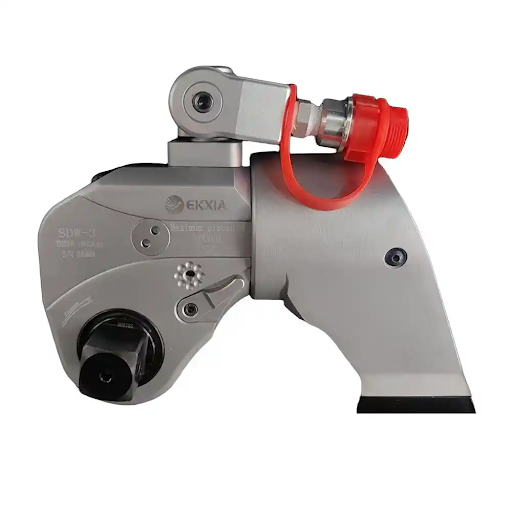

In industries where large bolts and heavy machinery are common, achieving accurate tightening is essential for safety and performance. A Hydraulic Torque Wrench is a specialised instrument that provides accurate torque via hydraulic pressure. It is extensive in the oil and gas, power generation, construction, mining, and heavy equipment maintenance industries. The tools used in these industries must withstand high torque loads without sacrificing accuracy or efficiency.
Compared to manual torque wrenches, hydraulic torque wrenches use hydraulic power to produce controlled force. This allows technicians to loosen or tighten large bolts with minimal physical effort while still achieving the desired torque level. Various companies utilise high-performance bolting systems and therefore use hydraulic torque tools that minimise mishaps, boost productivity, and improve worker safety.
What Is a Hydraulic Torque Wrench?
A hydraulic torque wrench is a very accurate bolting device which employs hydraulic pressure to supply torque to bolts. It is composed of several parts, including the hydraulic cylinder, reaction arm, drive mechanism, and Hydraulic pump. As the pump pressurises the oil into the wrench, the inner piston is pushed, generating a turning force that tightens the bolt.
The main benefit of the tool is that it delivers very high torque with the highest level of accuracy. Compared to conventional torque tools, which apply manual force or electric motors, hydraulic torque wrenches use fluid power, enabling them to exert thousands of Newton-meters of torque with minimal effort.
The tools are generally used to tighten critical bolts in infrastructure, such as pipelines and wind turbines, as well as in heavy machinery and other industrial applications. Engineers use a hydraulic torque system because it ensures all bolts are under equal tension, which is critical to structural integrity.
Types of Hydraulic Torque Wrenches
1. Square Drive Hydraulic Torque Wrench
This kind is just like a normal socket wrench only that it works on hydraulic power. It has exchangeable sockets, which enable technicians to loosen or tighten different bolt sizes. Square drive torque wrenches are multi-purpose and most often applied in shorter duration of time in the course of maintenance work when we have to deal with various sizes of fasteners.
2. Low Profile Hydraulic Torque Wrench
Low-profile hydraulic torque wrenches are intended for use in limited spaces. They do not have sockets; instead, they have a cassette system (which fits right over the head of the bolt). Their design is suitable even in restricted spaces, such as flange construction in pipelines. Which type is the most appropriate for your project? It is important to consider factors such as bolt size, working space, and the required torque.
If you want to know more about which type is best for your project, it is important to consider the bolt size, working space, and required torque capacity.
Key Benefits of Hydraulic Torque Wrenches
Hydraulic torque wrenches offer several benefits over traditional bolting tools.
High Precision
Such tools provide the correct amount of torque, ensuring bolts are clamped to the engineering requirements.
Improved Safety
Since hydraulic torque equipment requires less manual effort, the risk of worker injury is minimised. Bolts can be fastened quickly, saving time during repairs or assembly.
Consistent Results
Evenly distributed torque from hydraulic systems is important for pipeline flanges and joints in the structure.
Capability for High Torque Applications
Hydraulic torque wrenches can generate extremely high torque outputs that manual tools cannot achieve.
Organizations that depend on reliable bolting systems often invest in hydraulic torque equipment to improve productivity and minimize downtime.
Common Applications of Hydraulic Torque Wrenches
Hydraulic torque wrenches are used in many heavy industries where high-strength bolting is required.
Oil and Gas Industry
Used for tightening flange bolts in pipelines, pressure vessels, and drilling equipment.
Power Plants
Vital in the construction of turbines, generators and boiler systems.
Wind Energy
Wind turbine towers and blades require precise bolt tension for safe operation.
Mining Equipment
Heavy machinery used in mining operations relies on strong bolting systems.
Construction Projects
Steel structures and bridges often require controlled torque during assembly.
These industries demand tools that can deliver both strength and precision, making hydraulic torque wrenches an essential solution.
How Hydraulic Torque Wrenches Work
A hydraulic torque wrench is a device that works on the principle of fluid power. A hydraulic pump forces pressurised oil into the wrench through a hose. This force causes a piston within the tool to rotate. This force is then applied to the bolt via the reaction arm and tightened to the required torque.
Pressure calibration charts are also provided in many of the modern hydraulic torque systems. These characteristics enable technicians to check torque discharge and ensure that every bolt meets the required specifications.
If you would like to know more about the operation and calibration of hydraulic torque tools, manufacturers often provide detailed manuals and training programs for technicians.
Choosing the Right Hydraulic Torque Wrench
The choice of the appropriate hydraulic torque wrench is subject to a number of factors:
- Required torque range
- Bolt size and type
- Working environment
- Space limitations
- Frequency of use
An example is that a low-profile torque wrench could be the best tool for tight areas, whereas a square-drive tool would be more useful for general maintenance. There are other factors that companies consider when buying hydraulic torque equipment. Good-quality tools are designed to withstand harsh industrial conditions and provide long-lasting service.
Maintenance and Safety Tips
Hydraulic torque wrenches should be properly maintained.
It should be noted that some of these key practices are:
- Calibration of the torque settings that are frequently made.
- Checking hoses and connections for leakage.
- Washing the tool on a case-by-case basis.
- Shelving equipment in a dry place.
- Adhering to the instructions of the manufacturer.
Routine inspections help prevent failures and ensure that the tool continues to deliver precise torque.
Conclusion
A Hydraulic Torque Wrench is an essential tool for industries that require precise and powerful bolting solutions. By using hydraulic pressure, these tools provide accurate torque, improved safety, and efficient operation for heavy-duty applications.
Hydraulic torque wrenches are important for ensuring firm, stable connections in oil and gas pipelines, wind turbines, and construction projects, among others. They are more desirable to engineers and technicians worldwide because they can provide steady torque.

 By
By

 By
By
 By
By