
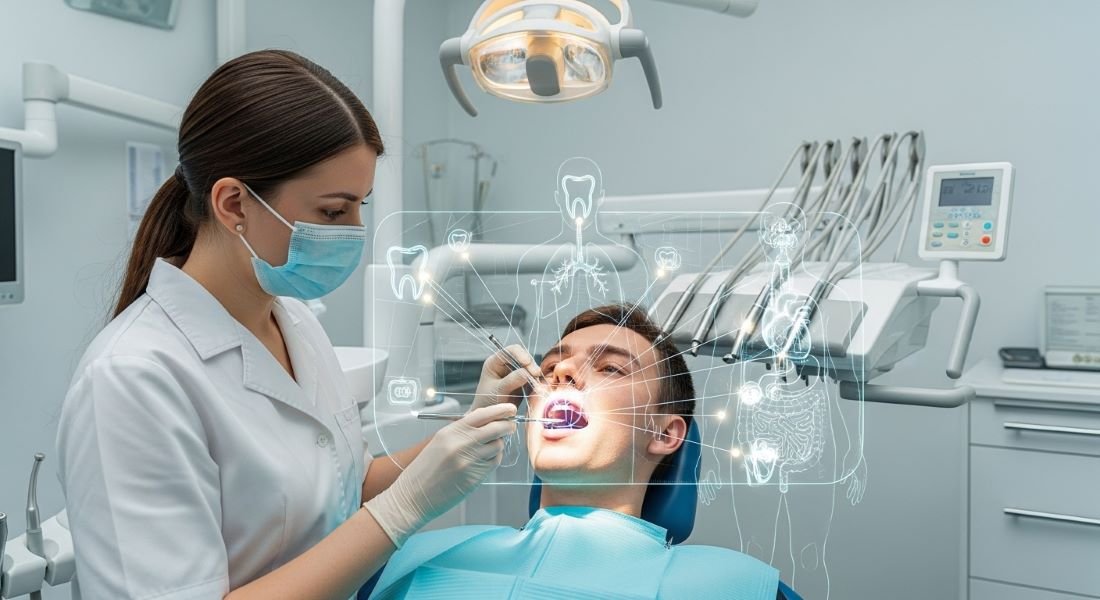

Your mouth tells a raw story about your whole body. General dentistry now pays close attention to that story. Routine checkups do more than fix teeth. They can flag early signs of heart disease, diabetes, sleep apnea, and some cancers. Many people sit in the dental chair more often than they see a primary doctor. That time matters. Careful screening during cleanings can uncover quiet problems before they turn severe. Dentists look at your gums, tongue, throat, bite, and breathing patterns. They review your medical history. They ask about medicines, tobacco, and stress. Each step helps connect oral health to the rest of your body. In west Houston cosmetic dentistry, these screenings sit beside whitening and crowns. They are not extras. They are basic care. When you understand how dental visits protect your whole health, you can use each appointment to guard your future.
Why your dentist cares about more than teeth
Your mouth links to your heart, lungs, and immune system. Bacteria from gum disease can enter the blood. That strain can raise the risk for heart disease and stroke. It can also make blood sugar harder to control for people with diabetes.
General dentists now screen for three things during routine visits. They look for infection. They look for changes in soft tissue. They look for signs that point to sleep or breathing problems. This careful review protects you and your family. It also supports your primary doctor.
The connection is clear. The Centers for Disease Control and Prevention explains how poor oral health increases the chance of chronic disease.
Key whole body conditions your dentist may spot
During a general exam, your dentist and hygienist watch for signals of common health problems. They do not replace your doctor. They give you early warnings.
- Heart and blood vessel disease. Red, swollen, or bleeding gums can point to long-term inflammation. That stress can connect with heart disease.
- Diabetes. Slow healing, frequent infections, or dry mouth can hint at blood sugar trouble.
- Oral and throat cancer. Patches, lumps, or sores that do not heal can be early cancer signs.
- Sleep apnea. Teeth grinding, a narrow throat, or a scalloped tongue can show sleep breathing problems.
- Autoimmune disease. Mouth ulcers or very dry mouth can link to disorders of the immune system.
These signs often feel small to you. They feel loud to a trained dental team. That difference can change the course of the disease.
What whole body screening looks like at a routine visit
You may not notice how much general screening happens in a short visit. Yet each step serves a clear purpose. The visit often follows a pattern.
- Medical history review. Staff asks about new diagnoses, medicines, and allergies. They ask about pregnancy, tobacco, alcohol, and family history.
- Blood pressure check. Many offices check blood pressure before care. High readings can warn of heart disease or stroke risk.
- Head and neck exam. The dentist feels your jaw joints and neck. They check glands and watch how you open and close your mouth.
- Soft tissue exam. They inspect cheeks, tongue, palate, and throat for spots, lumps, or color changes.
- Gum health check. They measure the space between teeth and gums. They check for bleeding or loose teeth.
- Bite and wear review. They look for grinding, clenching, or chipped teeth that may signal stress or sleep apnea.
Each piece builds a picture of your general health. That picture guides what happens next.
How dentists and doctors work as a team
General dentistry supports your doctor. It does not replace medical care. When a dentist sees a warning sign, they often send a clear note to your primary doctor or specialist. That shared care gives you stronger protection.
Here is how the partnership often works.
- Suspicious mouth sore. The dentist may refer you to an ear, nose, and throat specialist or an oral surgeon.
- Signs of sleep apnea. The dentist may recommend a sleep study with a sleep doctor.
- Possible diabetes. The dentist may urge a blood test with your primary doctor.
- High blood pressure. The dentist may pause treatment and direct you to urgent or routine medical care.
The National Institute of Dental and Craniofacial Research explains this mouth-body link in clear terms.
Comparison of routine dental exam and whole body screening focus
| Exam step | Traditional tooth focus | Whole body health focus |
|---|---|---|
| Medical history review | Note allergies and past dental work | Spot risk for heart disease, diabetes, bleeding problems |
| Blood pressure reading | Not always done | Catch high blood pressure before a crisis |
| Gum measurement | Plan cleanings and gum treatment | Judge inflammation that can affect the heart and blood sugar |
| Soft tissue exam | Check for sore spots near teeth | Screen for oral cancer and immune system problems |
| Bite and wear check | Find cracked or loose teeth | Flag grinding, stress, and possible sleep apnea |
How you can use dental visits to protect your family
You have power in the chair. You can turn each checkup into a strong health screen with three simple steps.
- Share your full medical story. Bring an updated medicine list. Tell staff about new diagnoses or hospital stays.
- Ask clear questions. You can ask what your gums show. You can ask if any mouth changes should be reviewed by a doctor.
- Follow up quickly. If your dentist urges a medical visit, schedule it. Bring the dental notes or X-rays if needed.
These actions protect you. They also show children that caring for teeth is the same as caring for the heart and body.
When to call your dentist between checkups
You do not need to wait for a routine visit if something feels wrong. Contact your dental office if you notice any of these signs.
- A mouth sore that does not heal within two weeks
- Sudden loose teeth or bleeding gums
- New trouble swallowing or a lump in the neck
- Morning headaches, jaw pain, or reports that you stop breathing at night
- Severe dry mouth or burning feelings
Early calls lead to early answers. That pattern can protect your health over a long life.
Moving forward with whole body dental care
General dentistry now stands at a strong crossroad between oral health and whole body health. Each visit offers a chance to spot disease early, support your doctor, and guard your family. You can protect yourself by staying on a steady schedule of checkups, sharing honest health information, and acting on each concern. Your mouth speaks for the rest of you. Let your dental team hear its full story.


 By
By


 By
By