
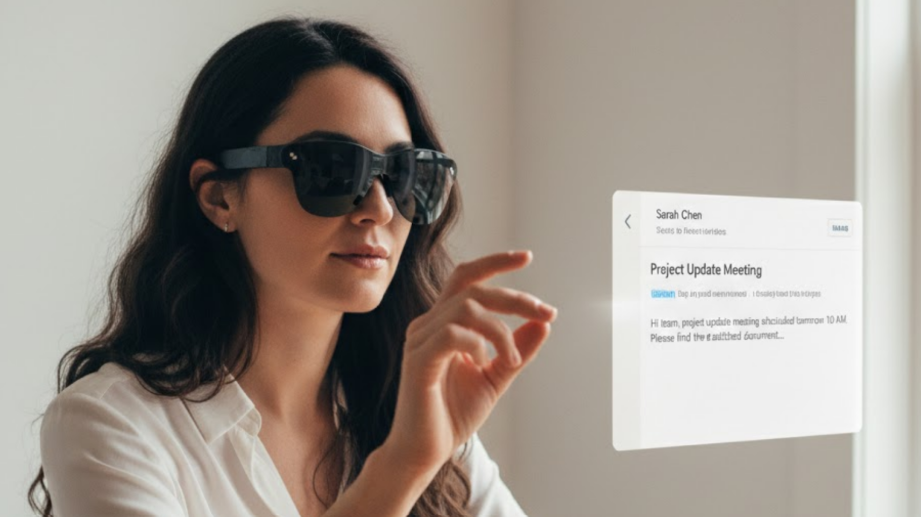

The wearable display market shifted noticeably heading into 2026. Between CES product launches, new display chipsets, and HDR finally reaching wearable screens, buyers now face a crowded field of capable display-focused options.
This guide picks five display models worth watching — each targeting a different sweet spot of price, visual quality, and comfort. If you are trying to figure out which are the best AR glasses 2026 has delivered so far, these five represent the current front line.
What Changed for AR Glasses in 2026
The single biggest upgrade this year is HDR10 support arriving in consumer AR glasses. Wearable displays have trailed phones and TVs in dynamic range for years. That gap started closing when models like the RayNeo Air 4 Pro debuted with HDR10 support at a $299 MSRP.
At the same time, field-of-view numbers climbed past 55 degrees on multiple models, and brand-name audio partnerships — Bose, Bang & Olufsen, Harman — became standard rather than novelty. These are display-focused AR Glasses built for entertainment, gaming, and portable productivity, not the AI-assistant category like Ray-Ban Meta.
The result is a tighter race than ever. Every pair on this list uses micro-OLED panels and USB-C connectivity, so the differences come down to display processing, audio engineering, comfort, and price. Here is how the best AR glasses in 2026 stack up.
Five Pairs Worth Watching
All five models below sit in the same product category: tethered display glasses with micro-OLED panels. That keeps the comparison direct and fair. Here is what separates them.
Xreal 1S — Best for Everyday Use
Tom’s Guide ranks the Xreal 1S as their current top pick in the category. Its X1 spatial computing chip delivers stable 3DoF tracking with 3ms motion-to-photon latency, and the Bose-tuned speakers are among the clearest in the category. At $449 and 82 grams, it hits a solid middle ground between price and polish.
Xreal One Pro — Best Premium Display
The One Pro pushes further with a 57-degree field of view simulating a 171-inch screen, Sony micro-OLED panels at 1920×1080 per eye, and 120Hz refresh rate. Major reviewers have highlighted it as a premium AR option in their 2026 roundups — a strong candidate for anyone seeking the best AR glasses 2026 has offered at the high end. At $649 and 87 grams, it is the priciest pair here but also the widest and sharpest.
Viture Luma Pro — Best for Mild Myopia
Viture’s Luma Pro stands out with built-in electronic diopter adjustment supporting up to -4.0D, reducing the need for separate prescription inserts for users with mild to moderate myopia. The 1200p micro-OLED display reaches up to 1000 nits with Harman-tuned audio. Retail price sits at $499.
RayNeo Air 4 Pro: A Closer Look
Among the best AR glasses for 2026, the Air 4 Pro earns extra attention because it introduces display technology that no competitor at its price currently matches. RayNeo markets it as the first consumer display glasses with HDR10 support, and that positioning has appeared in launch coverage from CES 2026.
HDR10 Display and the Vision 4000 Chip
The Air 4 Pro supports HDR10, enabling wider dynamic range and 10-bit color depth. RayNeo’s panel specifications include a 200,000:1 contrast ratio, 98% DCI-P3 gamut, and Delta E under 2 — figures that describe this specific panel, not what HDR10 certification guarantees on its own. The Vision 4000 chip adds AI-driven SDR-to-HDR upscaling and 2D-to-3D conversion.
Audio and the Sound Tube Accessory
RayNeo worked with Bang & Olufsen to co-tune a four-speaker open-ear system with Whisper and Surround modes. When paired with the optional Sound Tube accessory — sold separately, not included in the box — the directional design reduces sound leakage by up to 80%. Without the tube, the speakers still provide directional audio but with less isolation.
Why the Price Gets Attention
At a $299 MSRP — currently $249 during a launch promotion — the Air 4 Pro undercuts the Xreal 1S by at least $150 and the Viture Luma Pro by $200, while adding HDR10 and B&O-tuned audio. The frame weighs 76 grams with a 46.7:53.3 front-to-rear weight balance and supports magnetic prescription lenses.
The main trade-off is that it requires a USB-C tethered connection, and HDR output depends on whether your source device supports 10-bit video over DisplayPort. Anyone comparing the best AR glasses 2026 has produced will find the Air 4 Pro one of the strongest price-to-feature plays in the category, though higher-end pairs still lead on field of view.
Viture Beast: The New Challenger
What It Brings to the Table
First shown at AWE 2025 and gaining wider attention through early 2026, the Viture Beast features dual Sony micro-OLED panels, a 58-degree field of view, and up to 1250 nits peak brightness. It features a 1200p display, along with VisionPair 3DoF tracking and Harman-tuned audio. At $549, it slots between the Air 4 Pro and the Xreal One Pro, adding another option for anyone surveying the best AR glasses 2026 has introduced.
Where It Stands Today
Its electrochromic tint control gives it an edge for outdoor and mixed-lighting use. With a 1200p display, a 58-degree field of view, and Harman-tuned audio, the Beast stands out as one of the more ambitious display-first options in this category.
How the Best AR Glasses in 2026 Compare
All five picks use micro-OLED panels and USB-C tethered connections. Here is how their core specs line up:
| Feature | Xreal 1S | Xreal One Pro | RayNeo Air 4 Pro | Viture Luma Pro | Viture Beast |
|---|---|---|---|---|---|
| Price (MSRP) | $449 | $649 | $299 | $499 | $549 |
| Resolution/Eye | 1200p | 1080p | 1080p | 1200p | 1200p |
| HDR10 | × | × | √ | × | × |
| FOV | 52° | 57° | 46° | 52° | 58° |
| Audio | Bose | Bose | B&O co-tuned | Harman | Harman |
| Weight | 82g | 87g | 76g | ~78g | TBD |
| Myopia Support | Magnetic clip | Magnetic clip | Magnetic clip | Built-in (-4.0D) | Prescription insert |
Matching These Picks to Your Life
Finding the best AR glasses 2026 has introduced means matching features to how you actually use them. Here are three common scenarios.
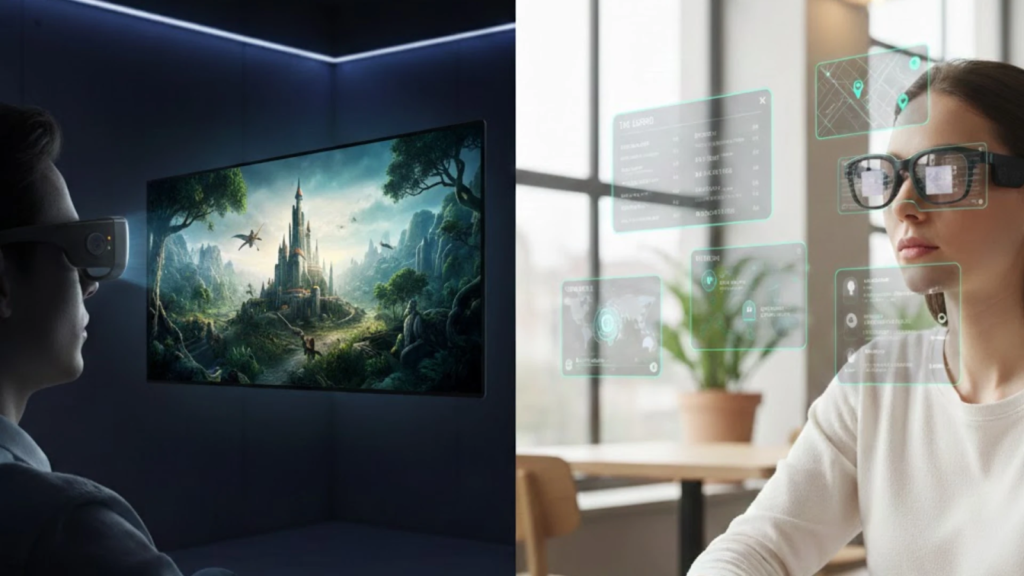
For Movies and Streaming
If visual fidelity matters most, three things to prioritize:
- HDR10 support for wider dynamic range in modern streaming content
- High contrast ratio and strong color calibration for dark scenes and shadow detail
- Audio quality that creates spatial separation without headphones
The Air 4 Pro is the value leader here on display features per dollar. The Xreal One Pro leads on field of view and resolution clarity.
For Gaming
Gamers should weigh refresh rate over raw resolution. Key factors:
- 120Hz support for smooth motion in fast-paced titles
- Low motion-to-photon latency to minimize input lag
- Broad device compatibility including Steam Deck, ROG Ally, and Switch 2
The Xreal 1S and One Pro both deliver 120Hz and low latency today. The Air 4 Pro supports 120Hz as well, with the HDR10 advantage adding visibility in dark game environments.
For Travel and Commuting
Portability and comfort drive this use case. Look for:
- Weight under 80 grams for sessions longer than an hour
- Plug-and-play USB-C with no app required
- Open-ear audio that keeps you aware of surroundings
At 76 grams and $299 with no mandatory app, the Air 4 Pro is the lightest and most affordable option among the best AR glasses 2026 offers for travel.
Final Word
Every pair on this list earns its spot for a specific reason. The right choice depends on whether you value display width, color accuracy, audio quality, or price. Start with your primary use case and let that guide the decision.


 By
By
 By
By

 By
By
 By
By