
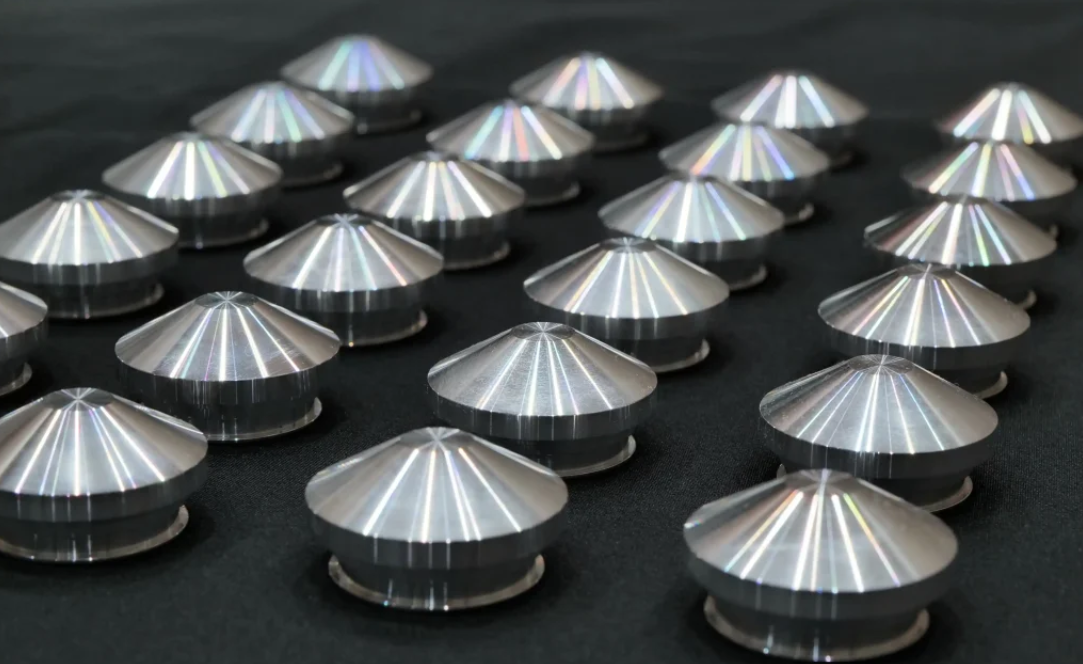

Boston medical device startup manufacturing wearable glucose monitor spent $52,000 CNC machining 15 aluminum housing prototypes validating ergonomic fit—then discovered design flaw requiring complete geometry redesign. Root cause: wrong method, wrong stage. Team needed form/fit validation (achievable via $180 SLS nylon prints, 3-day turnaround) but purchased structural validation precision ($3,467/part CNC, 12-day lead time). Cost of mismatch: $51,280 wasted (could have tested 285 SLS design iterations same budget), 9-week timeline delay, investor milestone missed.
Inverse failure equally common: 40 FDM prototype iterations generating false confidence → injection molding reveals material behavior completely different, structural failure under load. Both mistakes share root cause: choosing prototyping method by familiarity rather than development stage requirements. Understanding functional prototyping solutions matching each validation phase prevents expensive misalignment between testing method and actual question requiring answer.
Prototyping Method Comparison: Cost, Speed, Application
| Method | Cost Per Part (10 qty) | Lead Time | Tolerance | Material Equivalence | Best Development Stage |
|---|---|---|---|---|---|
| FDM 3D Printing | $8-$35 | 1-2 days | ±0.2-0.5mm | 30-40% injection molded strength | Early geometry checks, concept models |
| SLA 3D Printing | $25-$120 | 2-4 days | ±0.05-0.15mm | 40-55% (resin-dependent) | Detailed features, investor models, fit checks |
| SLS Nylon 3D Printing | $45-$180 | 2-5 days | ±0.15-0.3mm | 60-75% injection molded PA12 | Functional fit testing, snap-fit assemblies |
| CNC Machining (Aluminum) | $120-$450 | 5-10 days | ±0.01-0.025mm | 100% (production material) | Structural validation, precision interfaces |
| CNC Machining (Complex) | $350-$1,500 | 7-15 days | ±0.005-0.015mm | 100% | Final design validation, tooling masters |
| Vacuum Casting | $55-$220 | 7-12 days | ±0.1-0.2mm | 75-90% injection molded PU | Market testing samples, appearance models (10-100 qty) |
| Soft Tool Injection Molding | $8-$45/part + $3,500-$12,000 tooling | 3-5 weeks tooling + production | ±0.05-0.1mm | 95-100% | Bridge production, early customer shipments (500-10,000 qty) |
Selection framework: Geometry validation → SLA/SLS. Structural validation → CNC production material. Customer appearance/feel → Vacuum casting. Revenue-generating pre-production → Soft tooling injection.
Low-Volume Production Definition: Risk Stage, Not Quantity
Low-volume production: 10-10,000 units, but quantity misleading. Defining characteristic: Risk management type—geometry validation (form/fit), structural performance validation (load/thermal/fatigue), revenue generation during production tooling fabrication.
Volume breakpoints by method economics:
- 1-25 units: 3D printing (SLA/SLS) most economical unless production material validation required (CNC)
- 25-100 units: Vacuum casting competitive for plastics, CNC for metals/engineering polymers
- 100-1,000 units: Soft tooling injection molding breakeven (tooling amortized), high-volume CNC for metals
- 1,000-10,000 units: Soft tooling injection molding optimal, production tooling economical >5,000 units
CNC Machining: When Production Material Validation Critical
CNC prototyping appropriate when: Validating structural performance (load-bearing assemblies, thermal cycling, fatigue life), precision mechanical interfaces (±0.01mm mating tolerances), production material behavior (aluminum, titanium, stainless, PEEK, engineering plastics).
Cost reality (February 2026):
- Simple aluminum part (single-setup, <50mm): $120-$280/part (1-10 qty)
- Complex multi-setup part (tight tolerances): $350-$850/part
- Precision titanium component: $450-$1,800/part
Lead time: 5-15 days depending on complexity, material, finishing requirements.
Common misuse: Deploying CNC 2-3 development stages early—answering geometry questions with $200/part process when $45 SLS print provides equivalent spatial information. Strategic timing: CNC after geometry locked, validating structural performance before production tooling commitment.
Example: Robotic gripper jaw—FDM concept iterations (5× designs, $140 total) → SLS functional fit testing (3× refined designs, $270) → CNC aluminum final validation (2× parts, $560) → production. vs CNC-only approach: 10× iterations $2,800, slower feedback cycles.
3D Printing: Geometry Validation, Rarely Function Validation
SLA (Stereolithography): Highest detail/accuracy additive method. Applications: Fine features inspection, investor presentations, mating part fit verification. Limitations: Brittle resins (20-35 MPa tensile), UV degradation, limited functional testing.
SLS (Selective Laser Sintering) Nylon: Best additive option mechanical fit-checks—holds geometry well, meaningful structural integrity (45-55 MPa tensile, comparable injection molded nylon minus anisotropy). Applications: Snap-fit assemblies, functional enclosures, living hinges, assembly validation.
FDM (Fused Deposition Modeling): Budget workhorse—rough geometry checks, internal mockups, concept communication. Critical limitation: Layer adhesion fails at stress levels trivial for injection-molded equivalents. FDM stress test passing means minimal about production part performance.
Key principle: 3D printing validates geometry, rarely validates function. Material properties, surface finish, structural behavior differ significantly from production processes—generates false confidence if treated as production-equivalent.
Vacuum Casting: Production-Equivalent Appearance (10-100 Units)
Process: Master pattern (high-quality SLA print) → silicone mold → polyurethane castings replicating injection-molded properties/finish.
Economics:
- Tooling: $800-$2,500 per mold cavity
- Parts per mold: 20-25 before degradation
- Cost per part: $55-$220 (60-70% cheaper than CNC machining plastics)
- Lead time: 7-12 days
Optimal applications: Market testing samples (customer feedback requiring production appearance), investor demonstration units (professional finish critical), early customer pilots (50-200 units pre-production).
Material properties: Polyurethane resins 75-90% injection-molded equivalent—adequate appearance/feel validation, insufficient for structural performance validation under extreme loads.
Soft Tooling Injection Molding: Bridge Production Revenue Generation
Contrarian insight: Injection molding ≠ mass production exclusively. Soft aluminum tooling (vs hardened steel production tooling):
- Cost: 70-80% cheaper ($3,500-$12,000 vs $15,000-$80,000)
- Shot capacity: 1,000-10,000 parts reliably
- Lead time: 3-5 weeks tooling fabrication
Strategic application: Bridge production services—fulfilling early customer orders, generating revenue, validating market demand while hardened production tooling manufactured (12-20 week parallel timeline).
Production equivalence: Parts from soft tooling are production-equivalent material, surface finish, dimensional behavior—zero translation gap between prototype performance and production performance (same process).
Breakeven analysis (consumer electronics enclosure):
- 500 units: Soft tooling $8,500 tooling + ($18/part × 500) = $17,500 total
- CNC alternative: $85/part × 500 = $42,500
- Savings: $25,000 (59% reduction) enabling earlier market entry
Companies like FastPreci specialize in this critical gap—running soft tooling programs and bridge production services for hardware teams 6-12 weeks from launch commitments requiring real customer shipments without betting everything on unfinished production tooling, combining functional prototyping solutions (CNC, 3D printing validation) with scalable bridge manufacturing enabling revenue generation during production ramp.
Method Selection Decision Framework
Stage 1 – Concept validation (geometry/ergonomics): SLA (detail) or SLS (functional features). Cost: $25-$180/part, 2-5 days.
Stage 2 – Functional fit testing (assemblies, mechanisms): SLS nylon (snap-fits, living hinges) or CNC (precision interfaces). Cost: $45-$450/part, 2-10 days.
Stage 3 – Structural performance validation: CNC machining production-equivalent material (aluminum, stainless, PEEK, titanium). Cost: $120-$1,500/part, 5-15 days.
Stage 4 – Market testing/appearance validation (10-100 units): Vacuum casting production-equivalent finish. Cost: $55-$220/part, 7-12 days.
Stage 5 – Bridge production/early customer shipments (500-5,000 units): Soft tooling injection molding. Cost: $3,500-$12,000 tooling + $8-$45/part, 3-5 weeks + production.
FAQs: Low-Volume Production Method Selection
What is low-volume production? Typically 10-10,000 units, but quantity less important than development stage. Defines transition from pure prototyping (design validation) to revenue-generating manufacturing (customer shipments) before full production tooling investment. Characterized by: design still evolving, market validation ongoing, production tooling not yet justified by proven demand.
Which prototyping method is cheapest? FDM 3D printing: $8-$35/part, 1-2 day turnaround. But “cheapest” misleading—FDM adequate geometry checks only. Functional validation requires SLS ($45-$180) or CNC ($120-$450). Choosing cheapest method inappropriate for development stage wastes money generating wrong validation data requiring re-testing correct method.
What is the difference between CNC and 3D printing for prototypes? CNC machines production-equivalent materials (aluminum, titanium, stainless, PEEK) with production-equivalent properties, ±0.01mm tolerances, validating structural performance. 3D printing (SLA/SLS/FDM) uses prototype-specific materials with 30-75% production strength, ±0.05-0.5mm tolerances, validating geometry/fit. CNC 2-8× more expensive, slower, but only method generating credible structural data.
How much does CNC prototyping cost? Simple aluminum parts: $120-$280/part (1-10 qty). Complex multi-setup: $350-$850/part. Precision titanium: $450-$1,800/part. Lead time: 5-15 days. Volume discounts significant: 100+ units often 40-60% cheaper per-part through amortized setup, optimized fixturing.
Can 3D printed parts be used for production? Limited applications. SLS nylon adequate low-stress enclosures, jigs/fixtures, custom tooling (<1,000 units where tooling unjustified). SLA/FDM inappropriate production use—brittle, inconsistent properties, poor fatigue resistance. Medical/aerospace/automotive requiring validated performance, traceability, material certifications mandate CNC or injection molding production processes.
What is vacuum casting for prototypes? Silicone mold created from master pattern (SLA print), polyurethane resin cast replicating injection-molded appearance/finish. Cost: $55-$220/part. Capacity: 20-25 parts per mold. Applications: Market testing samples, investor models, appearance validation (10-100 qty). Material properties: 75-90% injection-molded equivalent—adequate customer perception testing, insufficient structural validation.
When should I use injection molding for prototypes? When need >500 units production-equivalent parts (early customer shipments, market testing at scale, bridge production during tooling fabrication). Soft aluminum tooling: $3,500-$12,000, produces 1,000-10,000 shots, 3-5 week lead time. Breakeven vs CNC: ~200-500 units depending on part complexity. Enables revenue generation 8-16 weeks before production tooling ready.
What is bridge production? Manufacturing early customer orders using interim processes (soft tooling injection molding, high-volume CNC) while final production tooling fabricated. Enables: revenue generation during production ramp, market validation before massive tooling investment, cash flow improvement funding production tooling. Typical volumes: 500-10,000 units over 2-6 months parallel to production tooling.
How do I choose the right prototyping method? Match method to development stage question: (1) Geometry validation → SLA/SLS 3D printing. (2) Structural performance → CNC production material. (3) Appearance/customer feel → Vacuum casting. (4) Early revenue generation → Soft tooling injection molding. Costliest mistake: using same method every stage because familiar, systematically learning wrong things.
What is soft tooling in injection molding? Aluminum mold (vs hardened steel production tooling): 70-80% cheaper ($3,500-$12,000 vs $15,000-$80,000), produces 1,000-10,000 shots reliably, 3-5 week fabrication. Enables low-volume injection molding (500-5,000 units) economically, production-equivalent parts (same material, process, finish) unlike prototyping methods. Ideal bridge production before production tooling investment justified.
What low-volume production stage challenge is preventing confident method selection—geometry vs structural validation uncertainty, cost-benefit analysis paralysis, bridge production timeline planning, or prototyping-to-production translation risk assessment?


 By
By
 By
By

 By
By