
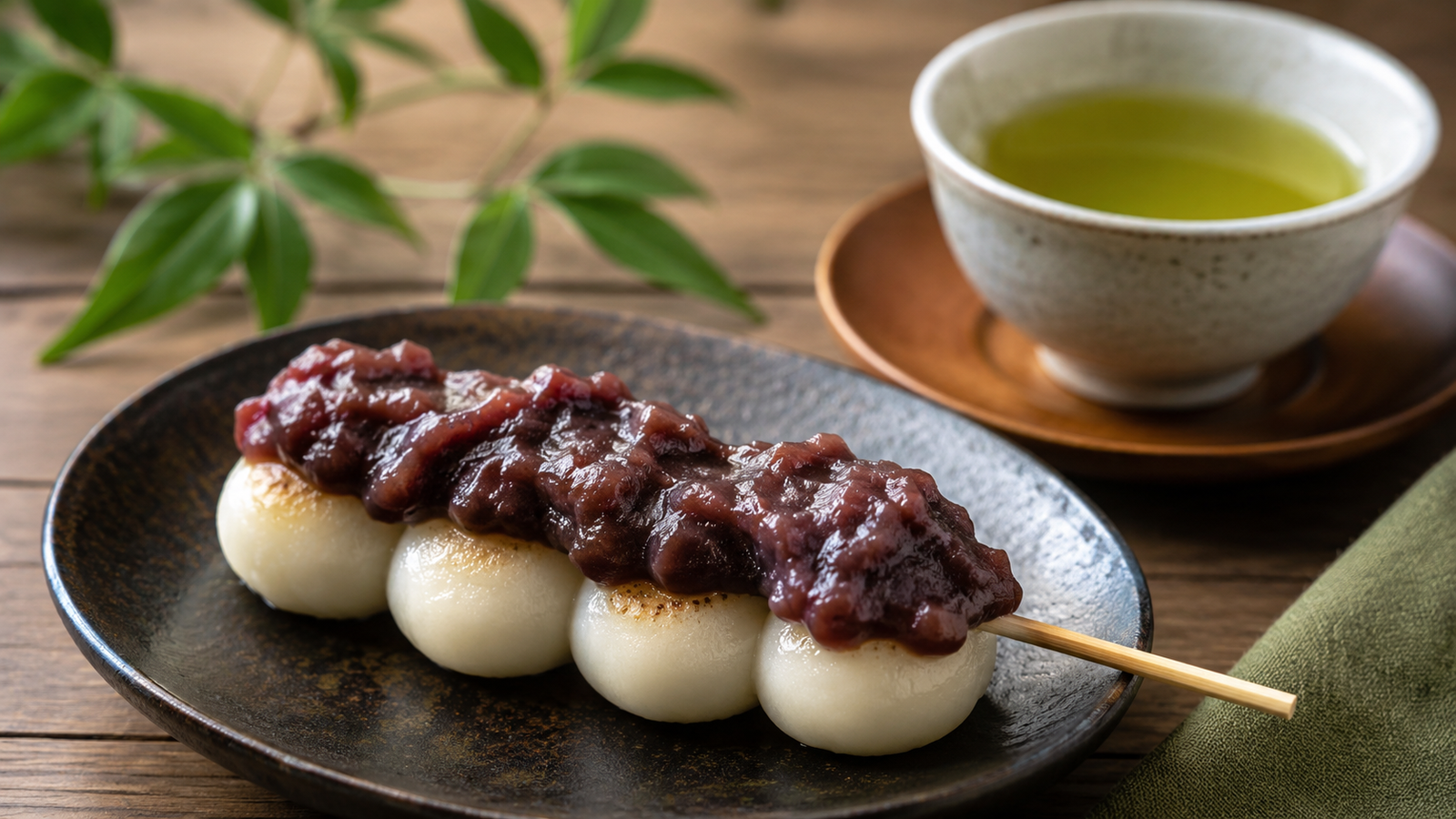

If you are searching for anko dango near you, start with Japanese wagashi shops, Japanese supermarkets, Japanese dessert cafés and Japanese restaurants that serve traditional sweets. These are much more likely to carry dango than ordinary bakeries.
Availability can change by season location and daily stock so checking the current menu or calling before travelling is worthwhile. In the UK London is one of the easiest places to look because of its concentration of Japanese food retailers and confectionery shops while specialist Japanese stores in other cities can also be good options.
What Is Anko Dango?
Anko dango is a Japanese sweet made from small rice flour dumplings served with anko a sweet paste made from azuki beans. The dumplings are usually soft and chewy while the bean paste adds a smooth earthy sweetness.
Dango is different from daifuku even though both belong to the wider world of Japanese sweets. Dango is generally shaped into small balls and served on a skewer while daifuku is a mochi based confection that commonly surrounds a filling.
The rice dumplings can be made using ingredients such as shiratamako or other rice flours used in Japanese confectionery. Japan Centre’s wholesale catalogue for example describes shiratamako as an ingredient for Japanese sweets including shiratama dango and anmitsu.
Anko itself can also vary. Tsubuan contains some visible bean texture while koshian is smoother. If you enjoy desserts with a rich but relatively restrained sweetness anko dango can be very different from heavily frosted Western desserts.
Where Can I Find Anko Dango Near Me?
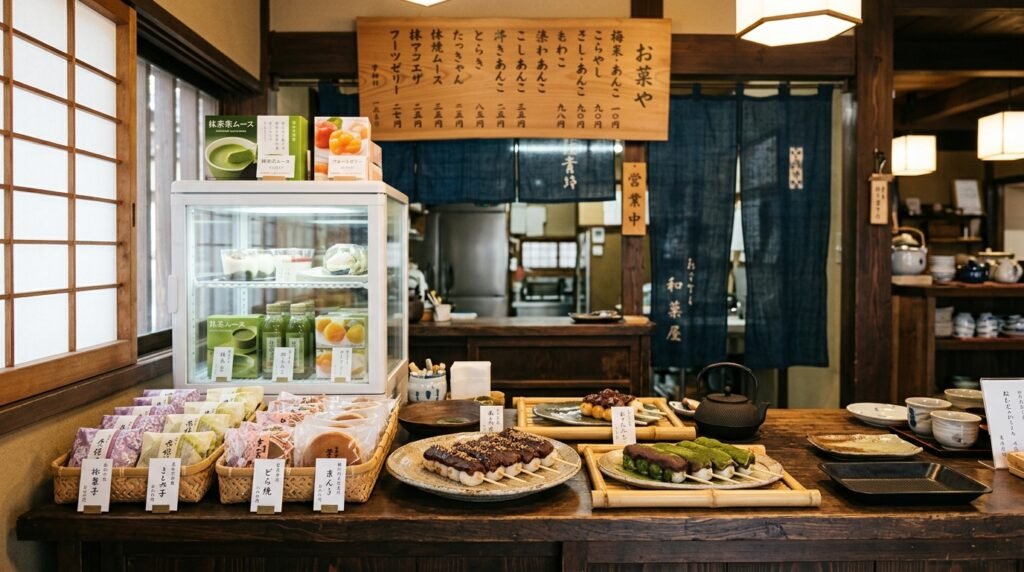
Start with Japanese confectionery shops wagashi stores Japanese supermarkets cafés and restaurants that specialise in Japanese sweets. Some may offer mitarashi dango instead so check the specific variety before visiting.
If fresh dango is unavailable try Japanese grocery delivery services or specialist retailers for packaged or frozen options. Search for “anko dango” “azuki dango” “Japanese dango” or “dango with red bean paste” and check the current menu or contact the shop because availability can change.
Where Is Anko Dango Most Likely to Be Sold?
Not every Japanese restaurant carries dango and not every Japanese supermarket has fresh skewers in stock. Knowing which type of business to check first can save time.
| Place to check | What you may find | Best for |
| Wagashi shop | Fresh traditional sweets and seasonal dango | Authentic fresh options |
| Japanese supermarket | Packaged or frozen Japanese sweets | Convenience |
| Japanese café | Fresh dessert portions | Eating immediately |
| Japanese restaurant | Dango or other Japanese desserts | Dine in |
| Online Japanese grocer | Packaged or frozen products | Home delivery |
Japanese confectionery and wagashi shops
Wagashi shops are strong candidates because they specialise in traditional Japanese sweets. Their menus can change seasonally so dango may be a limited item. Ask specifically for anko dango or dango topped with azuki paste.
Japanese supermarkets
Japanese supermarkets are useful for buying dango rather than eating it at a café. Check refrigerated and frozen dessert sections for dango mochi anko and shiratama products. Frozen options can be a practical alternative when fresh dango is unavailable although the texture may differ.
Japanese cafés and restaurants
Japanese dessert cafés and restaurants may serve dango but check the variety before visiting. Some offer mitarashi dango with a sweet soy glaze instead of anko. For example a published menu for Akai Tori Ramen & Yakitori in Vienna Virginia lists mitarashi dango showing why checking the specific variety matters.
Online Japanese grocery stores
Online Japanese grocery stores are useful when local options are limited. Search for “dango” “anko dango” “azuki dango” or “Japanese rice dumplings” and check whether the product is fresh refrigerated or frozen. Online listings can change so confirm availability before ordering.
How Can You Check if a Shop Has Anko Dango?
Searching for a business name followed by “dango” can sometimes reveal menu pages social posts or recent customer photographs. But because Japanese sweets can be seasonal an old photograph is not proof that the item is available today.
Use this quick process:
- Search the shop’s current menu for “dango” “anko” “azuki” or “red bean”.
- Check the business’s recent social media posts for seasonal sweets.
- Look at recent customer photos if the menu is incomplete.
- Call the shop if you are travelling specifically for dango.
- Ask whether they have anko dango azuki dango or dango topped with sweet red bean paste.
The last step is especially useful because a shop may sell dango without using the phrase “anko dango” on its menu.
Is Dango Basically Mochi?
No. Dango and mochi are related Japanese rice based sweets but they are not the same thing.
Dango is typically made into small round dumplings and served as individual balls often on a bamboo skewer. Mochi is traditionally produced from glutinous rice that is steamed and pounded into a sticky dough although modern commercial products use several production methods.
The distinction can become confusing because both can be chewy and both can contain or be served with sweet ingredients such as anko.
If you are searching for a skewer of chewy rice balls covered with red bean paste, search specifically for anko dango rather than simply mochi.
What Does Anko Dango Taste Like?
Anko dango has a gentle flavour compared with many Western desserts. The rice dumplings are mild and chewy while the anko adds earthy azuki flavour and gentle sweetness with either a smooth or slightly textured consistency.
It pairs well with Japanese green tea whose slightly bitter or grassy notes balance the sweetness. If you have never tried red bean desserts expect a more subtle flavour than chocolate or caramel with the balance between chewy rice and sweet bean paste being the main appeal.
Which Dango Should You Try If Anko Dango Is Unavailable?
If you find a Japanese restaurant selling dango but not the anko version you still have several good options.
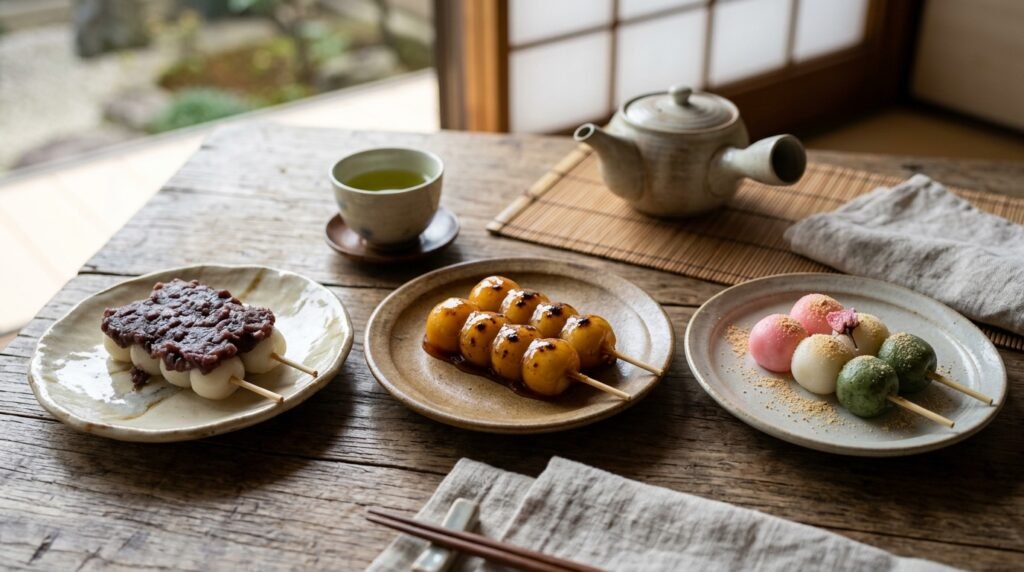
Mitarashi dango
Mitarashi dango consists of grilled or cooked rice dumplings covered with a glossy sweet and savoury soy based sauce. It is one of the easiest varieties to recognise because the glaze gives the skewers a shiny appearance.
It is a good choice if you prefer a combination of sweetness and savouriness rather than bean paste.
Hanami dango
Hanami dango is usually presented as three differently coloured dumplings on one skewer. It is strongly associated with cherry blossom viewing and springtime.
Unlike anko dango the dumplings are commonly enjoyed without a thick red bean topping allowing the flavour of the rice dumplings themselves to remain more prominent.
Kinako dango
Kinako is roasted soybean flour with a nutty flavour. Dango coated with kinako offers a drier texture and a toasted aroma compared with the soft bean paste topping of anko dango. If you like nutty flavours this is an excellent alternative.
How Much Does Anko Dango Cost?
The price depends heavily on where you buy it and whether it is handmade, seasonal packaged or imported.
A single fresh skewer from a specialist Japanese confectionery shop will generally cost more than a packaged supermarket product. Premium wagashi can also command higher prices because of preparation methods, ingredients and presentation.
Rather than relying on a fixed national average check the current menu or product listing before visiting. Prices and availability can change especially for seasonal Japanese sweets.
Is Anko Dango Healthy?
Anko dango can fit into a balanced diet but it is still a sweet dessert rather than a healthy food.
Its ingredients can be relatively simple compared with heavily processed desserts but the combination of rice flour and sweetened azuki paste still contributes carbohydrates and sugar.
The better way to think about it is portion and frequency. Enjoying a small serving as a dessert is different from treating it as a daily staple.
Also check the ingredient information if you have allergies or dietary restrictions. Recipes and commercial products can differ considerably.
What Should You Know Before Buying Anko Dango?
The biggest mistake is assuming that every product labelled “dango” is anko dango.
Dango describes the rice dumplings themselves. The topping or preparation determines the variety.
If you specifically want the red bean version, confirm that the product contains anko or azuki bean paste.
Freshness also matters. Fresh dango is valued partly for its soft chewy texture while storage can change that texture. Packaged and frozen versions are convenient but they may not provide exactly the same experience as a freshly prepared skewer.
For a special trip to a wagashi shop checking availability first is therefore more useful than relying on an old review or photograph.
Key Takeaway
If you’re near Centreville or Fairfax, Okaeri Japanese Cafe and H Mart are your two most realistic starting points, one for freshness and one for reliability.
Everywhere else on this list is a solid backup and homemade closes the gap when neither works out. Call ahead where you can; dango’s short shelf life means “sold out today” is common even at places that regularly carry it.
FAQs
Where can I get Hanami dango?
Hanami dango is most commonly found at Japanese confectionery shops, Japanese cafés, Japanese supermarkets and seasonal cherry blossom events. Availability is often seasonal so searching for the variety together with your city can produce better results.
Is dango basically mochi?
No. Dango and mochi are both chewy Japanese rice based sweets but they are made and served differently. Dango is commonly formed into small balls and skewered while mochi is traditionally made from pounded glutinous rice.
How much does dango cost in Japan?
Dango prices vary by shop region and variety. Simple festival or everyday skewers can be inexpensive while specialist wagashi and premium seasonal versions can cost considerably more.
Where is dango served?
Dango can be served at Japanese confectionery shops, cafés, restaurants, tea settings, festivals and seasonal events. Different varieties are associated with different occasions including hanami during cherry blossom season.
Is anko dango vegan?
It can be because basic dango and traditional anko can be made from plant based ingredients. However commercial recipes may include additional ingredients so check the specific product or ask the shop before assuming it is vegan.

 By
By

 By
By

 By
By