
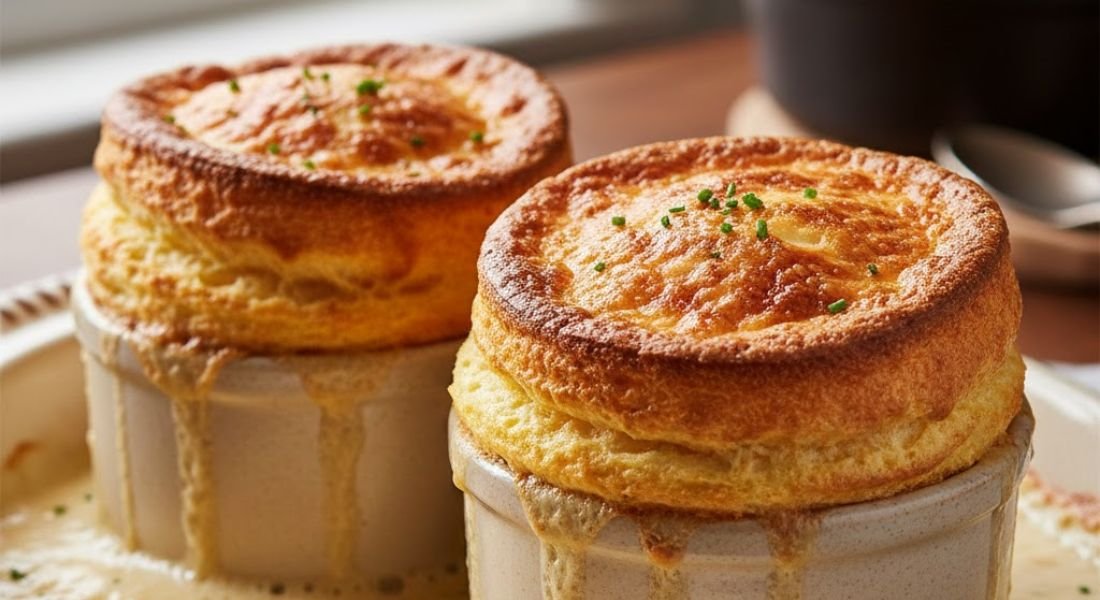

A twice baked cheese souffle is a classic French dish known for its light texture and deep cheese flavor. It is first baked to rise then baked again to create a soft creamy center with a golden top. This dish is famous across France and loved in many countries because it is easy to reheat and perfect for family meals or dinner gatherings.
The twice baked cheese souffle is a culinary secret that eliminates the stress of making traditional soufflé. It’s an elegant appetizer or main course you can prepare entirely in advance.
This article teaches you how to transform the tricky classic soufflé into a stable make-ahead masterpiece. We cover the ingredients, techniques and steps needed to achieve its signature crispy crust and rich custard-like interior.
What Is Twice Baked Cheese Souffle
A soufflé derived from the French verb souffler meaning “to breathe” or “to puff up” is a light airy baked egg-based dish. Traditionally a soufflé relies solely on the air whipped into the egg whites for its spectacular rise.A twice baked cheese souffle is a fluffy baked cheese dish that is baked two times to hold its shape better.
A classic cheese souffle rises in the oven but falls fast after baking. The twice baked method solves this issue because the first bake creates structure then the second bake gives firmness and a golden top. This style is popular in French cooking and is often served in dinner parties because it is stable easy to reheat and never fails.
Basics You Must Know Before Starting
A basic twice baked cheese souffle needs eggs butter milk and cheese. Many home cooks use gruyere cheese souffle or cheddar cheese souffle versions depending on taste. The key is to make a base sauce that supports the rise. This dish is easy for beginners because the double bake method removes fear of collapse. It is also helpful when cooking for guests because you can prepare it ahead then bake again right before serving.
Why Choose The Twice Baked Method? Benefits And Importance
The double baking method offers significant benefits that elevate this dish from a challenging dessert or appetiser into a stress-free entertaining staple. It is a highly valued technique amongst chefs and home cooks seeking elegance without complexity.
Stability and Structure
Unlike a traditional soufflé that must be served within seconds of leaving the oven, a properly executed double-baked cheese soufflés recipe is remarkably forgiving. The first bake locks in the structure, meaning the internal collapse common with single-bake soufflés is dramatically reduced. This stability ensures a beautiful presentation every time, a crucial detail when preparing an elegant dish.
The Power of Make-Ahead Preparation
The greatest advantage is the ability to prepare the soufflés entirely through the first bake up to 24 hours in advance or even longer if you choose to freeze the cheese soufflé. This completely revolutionises dinner party planning. You can complete all the complex whisking and folding well before your guests arrive leaving only a simple 10-15 minute second bake just before serving.
Enhanced Texture and Flavour
The second baking process, often involving a pour of cream or extra-grated cheese contributes a layer of flavour and moisture that is missing in the single-bake version. The top becomes deeply golden and slightly crisp while the inside remains meltingly soft and creamy with a superior texture that justifies the extra step. The intense heat of the second bake also helps deepen the cheese’s nutty notes yielding a more complex and satisfying taste.
Ingredients For Twice Baked Cheese Souffle
- 150g Gruyere cheese (grated)
- 50g Cheddar or Parmesan cheese (grated)
- 130g Unsalted butter
- 130g All-purpose flour
- 750ml Milk
- 8 Eggs (separated)
- 2 Egg yolks
- Salt (to taste)
- Black pepper (to taste)
- 375ml Single or double cream (for second bake)
- Optional: Chives or herbs for garnish
Step-by-Step Guide To Make Twice-Baked Cheese Soufflé
Step 1: Prepare The Base Sauce
Start by slowly heating butter and milk in a saucepan. Once the butter melts, gradually add the flour and stir well to form a thick paste. Then add the milk a little at a time while stirring constantly to avoid lumps. After the sauce thickens add the grated cheese completely into the mixture. Gruyère gives a stronger flavor while cheddar is milder. Keep stirring until the cheese is fully combined. This base is very important because it supports the rise and texture of the soufflé during baking.
Step 2: Add Egg Yolks
Allow the cheese sauce to cool slightly before adding the egg yolks. If the sauce is too hot the yolks may cook and curdle. Beat in the yolks one at a time until fully incorporated. This step gives the souffle richness and stability. The egg yolks bind the ingredients and ensure the mixture can hold its shape during baking.
Step 3: Whip The Egg Whites
Use a clean dry bowl to whip the egg whites until they form stiff peaks. Stiff egg whites are crucial for a high and light soufflé. Many beginners make mistakes by under-whipping or over-whipping the whites. Properly whipped whites trap air which expands in the oven and lifts the souffle. This step determines how tall and airy your twice-baked cheese soufflé will rise.
Step 4: Fold Whites Into The Sauce
Gently fold the whipped egg whites into the cheese sauce in small portions. Start with a small amount to loosen the sauce then fold in the rest carefully. Do not stir or beat rapidly as this will deflate the air. Folding properly ensures the soufflé keeps its light texture while maintaining the strength to rise. This step is essential for the final height and consistency of the twice-baked cheese soufflé.
Step 5: First Bake
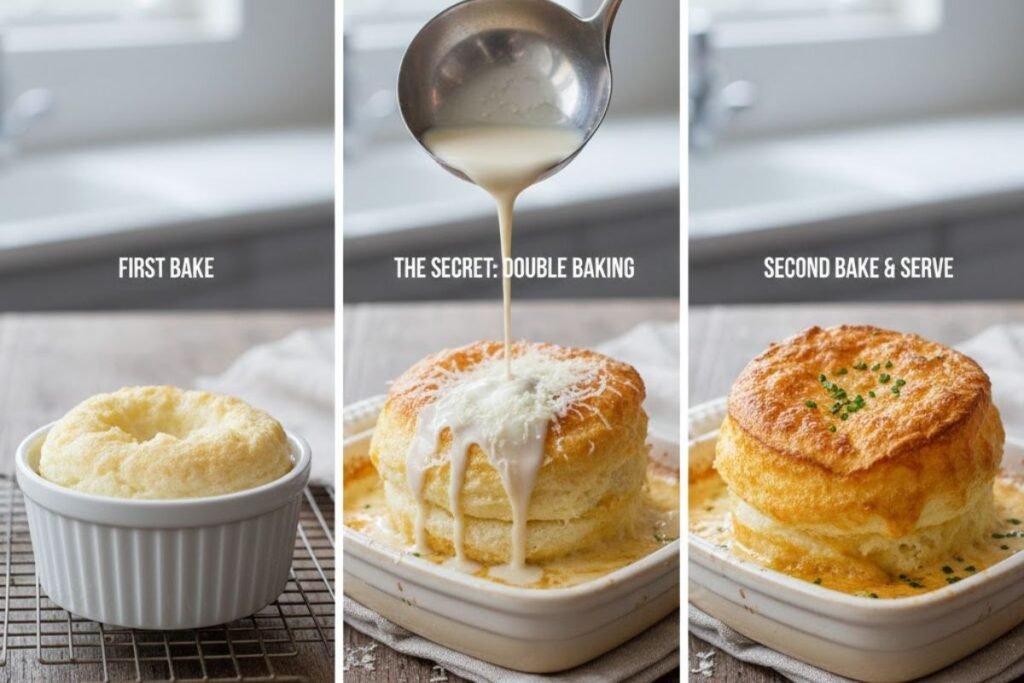
Grease the ramekins with butter and pour the mixture evenly into each. Place the ramekins on a baking tray and put them in a preheated oven. Bake until the souffle rises and the tops are set. This first bake builds the structure so the souffle holds its shape. You may notice the top rise high but do not worry if it falls slightly the second bake will restore height and add firmness.
Step 6: Cool Shape And Second Bake
After the first bake let the souffles cool slightly before removing from the ramekins. Place them upside down or right-side up on a tray. Add a small amount of cheese or cream on top before putting them back in the oven. The second bake strengthens the structure and gives a golden crust. This is the step that ensures your souffle stays stable when served. By following this process you can make a twice baked cheese souffle that holds its shape tastes rich and looks impressive.
Exploring Chef Variations: Mary Berry Michel Roux and Raymond Blanc

The sheer popularity of this dish means many master chefs have lent their own signature touch to the classic method. Learning from their approaches helps you refine your own twice baked cheese souffle technique.
Twice-Baked Cheese Soufflé Mary Berry Style
Twice baked cheese soufflé Mary Berry recipes prioritise a robust base flavour and predictable results. She typically uses mature cheddar for a powerful salty depth in the béchamel. A key method involves thoroughly preparing the ramekins by buttering and coating them with grated Parmesan cheese or fine breadcrumbs. This ensures a clean separation and a sturdy crust during the first bake crucial for the make-ahead cheese soufflé stability.
Foolproof Twice Baked Cheese Soufflé Jamie Oliver’s Way
The foolproof twice-baked cheese soufflé Jamie Oliver style often pushes the flavour boundaries while simplifying the initial steps. His method might involve using smoked cheese or adding a dash of Worcestershire sauce to the base for umami richness. He frequently recommends using a simple cream or milk bath instead of a more complex sauce for the second bake ensuring the final result is easy but still impressive and delicious.
Twice-Baked Cheese Soufflé Michel Roux Technique
The twice baked cheese soufflé Michel Roux and the broader Roux family legacy represent the highest standard of French classical cooking. Their recipe emphasises technique perfection especially the proper whipping of egg whites and gentle folding to ensure maximum aeration and lift. The use of premium cheese like Gruyère is standard and the final preparation often involves a thin layer of cream or cheese glaze to achieve a flawless finish.
Twice Baked Cheese Soufflé Raymond Blanc’s Classic
Twice-baked cheese soufflé Raymond Blanc recipes reflect his commitment to finesse and balance. Blanc often stresses the importance of using freshly grated nutmeg in the béchamel for aromatic lift. His method often involves a lower initial oven temperature for a longer period allowing the soufflé to rise slowly and evenly. For the second bake he typically specifies a light cheese glaze made with equal parts cream and cheese to achieve a perfect golden crust without excessive richness.
Health Benefits Of Twice Baked Cheese Soufflé
This dish supports bone health because of its high calcium content. The eggs provide protein for muscle repair and growth. Eating moderate amounts of cheese souffle can improve satiety and provide essential fats and vitamins.
Using high-quality cheeses and milk can make it even healthier. It is a good dish for both adults and children when served with vegetables or salad.
What To Serve With Twice Baked Cheese Souffle
A twice baked cheese souffle pairs beautifully with fresh green salads or lightly roasted vegetables. You can serve it alongside grilled or baked chicken for a complete meal. For a richer option pour a little creamy sauce over the souffle just before serving to enhance its flavor.
This dish works perfectly for brunch or dinner parties because it looks elegant without needing complicated sides. You can also pair it with crusty bread or a light fruit salad to balance the richness. Choosing simple accompaniments keeps the focus on the delicate cheesy taste of the souffle.
Practical Preparation And Dietary Considerations Of Twice Baked Cheese Souffle
When planning to serve this dish understanding portion size dietary needs and the ideal accompaniment is key to a perfect experience.
Twice Baked Cheese Souffle for 2
Scaling the recipe down for an intimate dinner is straightforward. A twice baked cheese soufflé for 2 can be made by halving the ingredient amounts of a standard four-serving recipe. It is essential to maintain the correct ratios of the roux base to the egg whites to ensure proper texture and rise. This is the ideal romantic appetizer cheese souffle option.
Twice Baked Cheese Souffle Calories
While this dish is rich and luxurious understanding twice baked cheese soufflé calories requires accounting for the cheese butter and cream. Because it is light and airy the overall volume contains more air than dense ingredients. However the generous use of cream and fat means it is an indulgent treat not a low-calorie item. A typical serving can range from 350 to 500 calories depending on the amount of cream used in the final bake.
Twice Baked Cheese Souffle Gluten Free Adaptation
Adapting the twice baked cheese soufflé gluten free is relatively simple. The flour used in the roux (the thickener) can be successfully substituted with a high-quality gluten-free all-purpose flour blend or an equal amount of cornstarch or potato starch. These substitutions maintain the necessary thickness of the béchamel base ensuring the final soufflé structure remains stable and delicious.
Pairing the Twice Baked Cheese Souffle with Sauce
The final presentation often involves a simple sauce. The twice-baked cheese soufflé with sauce is typically served with a pour of warm double cream or single cream over the top just before the final bake. This cream absorbs the cheese flavour and creates a luxurious molten base. Alternatively a very light white wine sauce or a simple chive garnish can complement the richness without overpowering the dish.
How To Store Or Freeze It
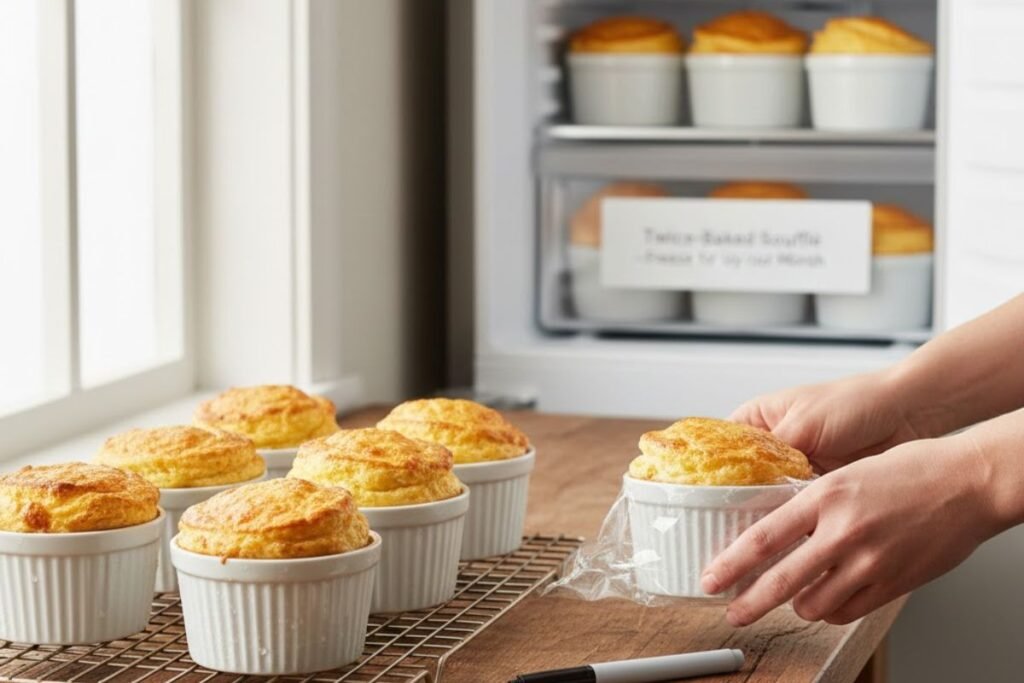
Twice-baked cheese souffle can be stored or frozen after the first bake. Allow the souffle to cool completely then cover each portion in cling film or place in an airtight container. Freezing helps when preparing meals ahead of time for parties or family dinners.
When you want to serve thaw it in the fridge overnight and perform the second bake with cheese or cream on top. Freezing does not affect the structure if done correctly making it an ideal make-ahead dish. Proper storage ensures the soufflé maintains its fluffy texture and delicious taste even after reheating.
Conclusion
Twice-baked cheese souffle is a classic French dish that brings together light airy texture and rich cheesy flavor. Its two-stage baking ensures a perfect rise and creamy interior. You can serve it with salads roasted vegetables or light proteins making it versatile for any meal. It can also be made ahead or frozen for convenience.
Using quality ingredients and following proper techniques guarantees a golden impressive souffle every time. With these tips anyone can create a delicious elegant dish that delights family and guests alike.
FAQs
What types of cheese work best in a twice baked cheese souffle?
The best cheeses for cheese soufflés are those that melt well and have a strong flavor. Gruyere, Comté, Cheddar, and Parmesan are ideal choices. Mixing a mild cheese with a stronger one creates depth and enhances the taste.
Is it safe to reheat the souffle multiple times?
Reheating a twice baked cheese souffle once in the oven is safe and keeps its texture intact. Reheating it multiple times can cause it to collapse and lose its creamy interior.
What drinks or wines pair best with cheese souffle?
Light white wines like Chardonnay or Sauvignon Blanc pair well. Sparkling wine or a mild rosé also complements the dish.
How far in advance can I prepare the soufflés before the final bake?
You can prepare the soufflés through the first bake and keep them refrigerated for up to 24 to 48 hours. This makes the appetizer cheese souffle ideal for entertaining as all the complex work is done ahead of time.
Can it be served cold or only hot?
It is best served hot right after baking for the perfect rise. Cold servings may lose the fluffy texture but still taste good.

 By
By
 By
By

 By
By