
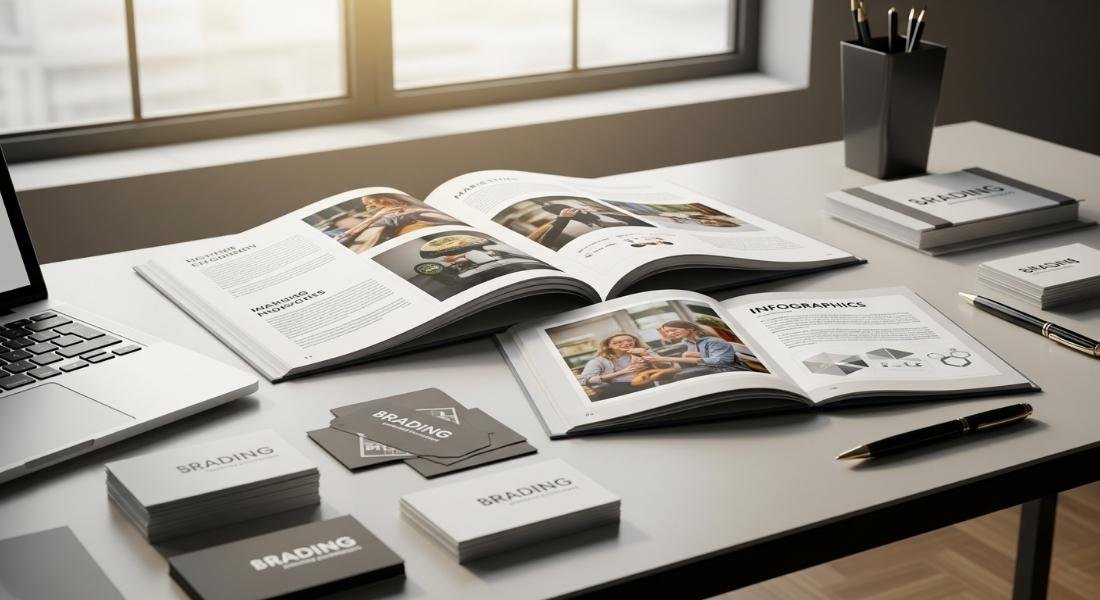

Marketing booklets are powerful tools that allow businesses to communicate their message in a compact yet impactful format. These booklets serve as a tangible representation of your brand and can be used for various purposes, such as product catalogs, event guides or company portfolios.
Their versatility makes them ideal for reaching different audiences, whether distributed at trade shows, mailed to potential clients or handed out during meetings.
Understanding Your Audience
Before diving into the design of a marketing booklet, it is crucial to understand who your audience is. Different demographics will respond differently to design elements, language and the overall tone of your content.
Identifying Demographics
- Age: Younger audiences might prefer bold designs and concise text, while older demographics may appreciate more detailed information.
- Interests: Tailor your content to align with the specific interests and needs of your target audience.
- Location: Regional nuances can influence design preferences and content relevance.
By identifying these key audience characteristics, you can create a booklet that resonates with your readers and encourages engagement.
Setting Clear Objectives
The success of a marketing booklet hinges on having clearly defined objectives from the outset. What do you want to achieve with this booklet? Common objectives include:
- Increasing brand awareness
- Generating leads
- Educating customers about products or services
- Driving traffic to a website or physical store
Once you establish your goals, every aspect of the booklet from content to design should align with these objectives.
Crafting Compelling Content
The content of your marketing booklet is its backbone. It must be informative yet engaging enough to hold the reader’s attention throughout.
Writing Tips
- Start with a Strong Opening: Captivate readers immediately by addressing their pain points or posing a question.
- Keep it Concise: Use clear and direct language; avoid jargon that might confuse the reader.
- Highlight Key Information: Use bullet points or numerals for important details to facilitate easy reading.
Storytelling Techniques
Narratives can make content more relatable and memorable. Consider including customer testimonials or success stories to establish credibility and connection.
Design Elements that Captivate
An effective marketing booklet is not just about words but design also plays an equally critical role in delivering your message.
Layouts and Grids
Using grids can help maintain consistency and balance throughout the booklet, ensuring each page is visually appealing and easy to follow.
Colour Schemes
Select colours that not only reflect your brand but also evoke the intended emotional response from your audience.
Choosing the Right Format and Size
The format and size of a marketing booklet can greatly impact its effectiveness and practicality.
Popular Formats
- Saddle Stitched: Ideal for smaller booklets with fewer pages.
- Perfect Bound: Suitable for larger booklets as it provides a more professional look.
- Wire O Binding: Great for workbooks or guides that need to lay flat when open.
Standard Sizes
While A5 is a popular choice due to its portability, consider selecting a size that best suits your content volume and distribution method.
The Importance of High Quality Imagery
Images can significantly enhance the appeal of a marketing booklet by breaking up text and providing visual context.
Selecting Images
- Ensure images are high resolution (300 dpi) for print quality.
- Use professional photography or high quality stock images that align with your brand values.
Infographics
Infographics are excellent for presenting complex data in an easily digestible format while adding visual interest to the booklet.
Utilizing Typography Effectively
Typography influences readability and aesthetics alike; thus, careful consideration is needed when selecting fonts.
Font Selection Tips
- Limit font choices to two or three for consistency.
- Ensure sufficient contrast between text colour and background for readability.
Hierarchy
Use varying font sizes or weights to create hierarchy within the text, this guides readers through content effortlessly.
Adding Interactive Elements
Interactive elements not only engage readers but also provide additional value beyond static text and images.
QR Codes
Incorporate QR codes that link to additional resources such as videos, product demos or landing pages.
Augmented Reality (AR)
Consider integrating AR features that allow users to experience virtual demonstrations directly from their smartphones.
Incorporating Brand Identity
A marketing booklet should be a seamless extension of your brand identity, consistency in branding builds trust with your audience.
Branding Guidelines
Adhere strictly to established branding guidelines including logo placement, colour usage, tone of voice etc., within the booklet design.
Customization Options
Offer personalized versions tailored specifically for individual clients, this adds perceived value while reinforcing brand loyalty among recipients.
Printing and Distribution Considerations
The final steps in creating an effective marketing booklet involve printing quality decisions along with strategic distribution planning.
Print Quality
Partner with reputable printers like HelloPrint who offer varied paper stocks/finishes ensuring professional results regardless of budget constraints.
Distribution Strategies
Options range from direct mail campaigns targeting specific demographics/geographies through digital platforms allowing broader reach/audience engagement online/offline settings alike!
Case Studies: Successful Marketing Booklets
Examining successful examples across industries provides valuable insights into what works well:
Tech Start Up Launch Guide
Engaged potential investors via sleek minimalistic design coupled concise storytelling approach highlighting unique innovations/benefits offered by company’s flagship product line up!
Luxury Travel Brochure
Captured affluent clientele attention using stunning imagery alongside evocative descriptions inviting readers imagine themselves embarking exclusive adventures curated bespoke itineraries crafted discerning tastes/preferences worldwide!
Educational Institution Prospectus
Attracted prospective students/families showcasing comprehensive curriculum offerings state of the art facilities student testimonials emphasizing supportive community fostering academic excellence personal growth success beyond classroom walls!
Conclusion
In summary; designing effective marketing booklets involves understanding audience needs/objectives crafting compelling content incorporating captivating designs maintaining brand consistency throughout entire process culminating successful execution through thoughtful distribution strategies informed industry best practices proven case studies!


 By
By


 By
By
 By
By