


A healthy smile shapes how you eat, speak, and connect with others. It also affects your mood and your confidence. Family dental care helps you protect that smile at every age. It gives your child a strong start, supports you through busy adult years, and respects the needs of aging teeth. A trusted Fontana dentist can guide your family through each step. You learn simple habits. You spot small problems early.
You avoid painful emergencies that steal time and money. Regular visits also ease fear. Your family grows used to the chair, the light, and the sounds. That comfort helps you seek care before pain forces it. This blog shows how steady family care supports a lifetime of smiles, from baby teeth to dentures. You see what to expect, what to ask, and how to keep each mouth in your home strong.
Why family dental care matters at every age
You face different oral health needs as you move through life. Family care keeps those needs connected. It looks at patterns in diet, health, and habits across your whole home. It then uses that knowledge to prevent trouble.
Here is how family care helps at each stage:
- Young children learn brushing and flossing through steady routines.
- Teens manage braces, sports injuries, and sugary snacks.
- Adults handle work stress, grinding, and tooth wear.
- Older adults face dry mouth, tooth loss, and gum disease.
One office that knows your family story can see links. For example, if parents have early gum disease, a child may face a higher risk. Early action then protects that child.
How often you should visit
Routine visits give your dentist a clear picture of change over time. The American Dental Association explains that many people need a checkup at least every six months. Some need more visits because of health history or current problems.
Each visit usually includes three steps:
- Review of your health and medicines
- Cleaning of teeth and gums
- Check for decay, infection, and signs of oral cancer
Your dentist may also suggest X-rays, sealants, or fluoride treatments. These services depend on your age and risk level.
Home habits that protect your family
Daily care at home does most of the work. Clinic visits then support that care. You can protect every mouth in your home with three simple rules.
- Brush twice each day with fluoride toothpaste.
- Floss once each day.
- Limit sugary drinks and snacks.
The Centers for Disease Control and Prevention explains that fluoride helps prevent decay by strengthening tooth enamel.
Set family routines so these steps become automatic. You might brush together after breakfast and before bed. You might keep water at the table and save sweets for special times.
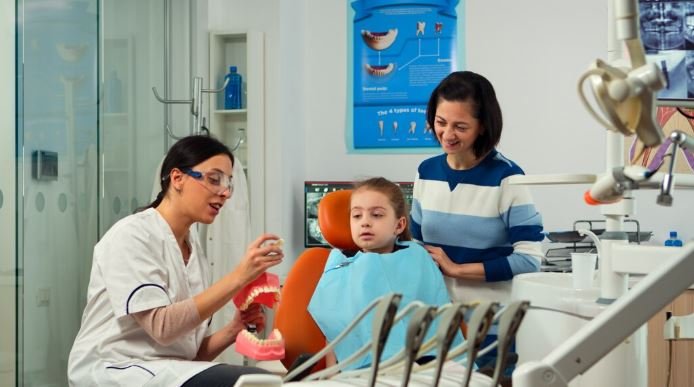
Teaching children to feel safe at the dentist
Fear often starts early. It grows when a child only visits during pain. You can break that pattern. Schedule the first visit by the first birthday or when the first tooth appears. Keep the tone calm and matter-of-fact.
You can help your child with three simple actions.
- Use plain words. Say, “The dentist will count and clean your teeth.”
- Practice at home. Take turns playing dentist with a toothbrush.
- Stay steady. Keep your own body relaxed during the visit.
These steps build trust. They show your child that the chair is a safe place, not a place of punishment or shame.
Common family dental problems and prevention
Many households face the same oral health problems. Prevention is less painful than treatment. It also costs less and protects your time.
| Common problem | What it looks like | Key causes | Simple prevention steps |
|---|---|---|---|
| Cavities | Brown or white spots on teeth. Sensitivity to hot or cold. | Frequent sugar, poor brushing, no fluoride. | Brush with fluoride, limit sweets, regular checkups. |
| Gum disease | Red, swollen, or bleeding gums. | Plaque buildup, smoking, and some health conditions. | Daily flossing, cleanings, tobacco cessation. |
| Tooth grinding | Jaw pain, worn teeth, morning headaches. | Stress, sleep issues, misaligned bite. | Night guard, stress management, bite evaluation. |
| Sports injuries | Chipped or knocked out teeth. | No mouthguard during sports. | Custom or store-bought mouthguard. |
| Dry mouth | Sticky mouth, trouble chewing or swallowing. | Medicines, aging, and some diseases. | Sip water, sugar-free gum, review medicines with dentist. |
Connecting oral health with whole body health
Your mouth links to the rest of your body. Gum disease is connected with heart disease and diabetes. Tooth loss affects how you eat and speak. Pain in your mouth can disturb sleep and mood.
Family dental care allows your dentist to notice patterns. For instance, repeated gum problems may signal uncontrolled blood sugar. Your dentist can then urge a medical check. That simple step can protect more than teeth.
Planning for special situations
Some family members need extra support. You may care for a child with special health needs. You may support an older adult with memory loss. Thoughtful planning makes visits smoother.
- Schedule early-day appointments when energy is higher.
- Bring a list of medicines and recent changes in health.
- Ask about comfort steps such as breaks or quiet rooms.
Share any concerns before the visit. Clear talk helps your dental team plan for safety and comfort.
Taking the next step for your family
Your family deserves steady, confident smiles. That outcome does not rely on perfect teeth. It rests on clean mouths, prompt care, and kind routines.
You can start with three actions today.
- Schedule checkups for each person in your home.
- Choose simple brushing and flossing routines and write them down.
- Talk as a family about fears or questions before the next visit.
Each small step builds trust and health. Over time, you will see fewer emergencies, less pain, and more relaxed faces in the chair. That is how family dental care encourages a lifetime of smiles.


 By
By


 By
By