
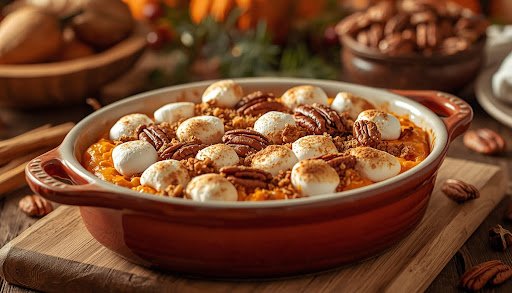

There are certain dishes that define a holiday spread. For many families, Thanksgiving and Christmas simply wouldn’t be complete without a warm, golden dish of sweet potato casserole sitting proudly on the table. It’s that magical bridge between a savory side and a decadent dessert creamy, spiced sweet potatoes tucked under a blanket of toasted marshmallows or a crunchy pecan crumble.
Whether you grew up with the classic marshmallow topped version or prefer a buttery brown sugar streusel, this dish is pure comfort. But making it perfect requires a few tricks. How do you keep it from being too watery? Is it better to boil or roast the potatoes? And the age old debate: marshmallows or pecans?
In this guide, we’re going to cover everything you need to know to master sweet potato casserole. From selecting the right potatoes to prepping ahead for a stress free holiday morning, you’ll be ready to make a dish everyone will ask for year after year. Explain in Everytalkin.
What Is Sweet Potato Casserole?
At its core, sweet potato casserole is a baked dish made of mashed sweet potatoes mixed with sweeteners like sugar or maple syrup, spices like cinnamon and nutmeg, and enriching ingredients like butter, eggs, and milk.
What sets it apart from simple mashed sweet potatoes is the texture and the topping. The base is usually lighter and fluffier than a standard mash, often enriched with eggs to give it a soufflé like lift. The topping is where personality shines typically either a gooey layer of mini marshmallows or a crunchy, buttery pecan streusel (and sometimes both!).
It’s beloved because it satisfies two cravings at once: the need for a comforting vegetable side and the desire for something sweet.
Why Sweet Potato Casserole Is a Holiday Favorite?
The roots of this dish run deep in American holiday traditions. Sweet potatoes are harvested in the fall, making them abundant and affordable right when Thanksgiving rolls around.
But beyond seasonality, it’s about nostalgia. For many, the smell of cinnamon and roasting sweet potatoes triggers memories of family gatherings. It pairs beautifully with savory roasted turkey and salty ham, providing a sweet contrast that balances a heavy, savory meal. Plus, it’s forgiving. Unlike a turkey that can dry out or gravy that can get lumpy, sweet potato casserole is robust and almost impossible to mess up if you have a good recipe.
Ingredients for Sweet Potato Casserole
Great cooking starts with gathering the right components. You don’t need fancy equipment, just honest ingredients.
Sweet Potato Base Ingredients
To get that rich, velvety texture, you’ll need:
- Sweet Potatoes: The star of the show. Look for firm, medium-sized potatoes with smooth skin.
- Butter: Salted or unsalted works, but melted butter adds essential richness.
- Milk or Cream: Whole milk creates a good texture, but heavy cream makes it luxurious.
- Sweetener: Brown sugar is standard for its molasses notes, but maple syrup adds a lovely autumn flavor.
- Eggs: These act as a binder and give the casserole structure so it isn’t just a bowl of mush.
- Vanilla Extract: Enhances the sweetness without adding more sugar.
- Spices: Cinnamon is non-negotiable. Nutmeg, ginger, or even a pinch of cloves add depth.
Topping Ingredients (Marshmallows, Pecans, Crumble)
This is where you choose your fighter.
- Marshmallows: Mini marshmallows melt evenly and brown quickly under the broiler.
- Pecan Crumble: A mix of chopped pecans, flour, brown sugar, and melted butter. This adds a necessary crunch to contrast the soft potatoes.
Fresh Sweet Potatoes vs Canned Yams
This is a common dilemma when you’re rushing through the grocery store.
Fresh Sweet Potatoes:
- Pros: Superior flavor and texture. You control the sweetness and consistency.
- Cons: Requires peeling, chopping, and cooking before you can assemble the casserole.
Canned Yams (Sweet Potatoes):
- Pros: incredibly convenient. Just drain and mash. Great for “dump-and-bake” recipes.
- Cons: They are often packed in syrup, making them very sweet. The texture can be softer and slightly more watery.
Chef’s Tip: If you have the time, fresh is always best for texture. But if you use canned, rinse them well to remove excess syrup and reduce the added sugar in your recipe.
How to Prepare Sweet Potatoes for Casserole?
The way you cook your raw potatoes affects the final flavor and water content of your casserole.
Boiling Method
This is the most common method. Peel and cube the potatoes, then boil them in salted water until fork-tender (usually 15-20 minutes).
- Verdict: Fast and easy, but it can introduce water into the potatoes, which might make your casserole runny if you don’t drain them well.
Baking Method
Wash the potatoes and bake them whole in their skins at 400°F (200°C) for about 45-60 minutes. Slice them open and scoop out the flesh.
- Verdict: Good flavor retention, but takes the longest.
Roasting Method
Peel and cube the potatoes, toss lightly in oil, and roast on a sheet pan.
- Verdict: This is the secret weapon. Roasting caramelizes the natural sugars, intensifying the flavor and drying out excess moisture, leading to a richer casserole.
How to Make Sweet Potato Casserole?
Ready to cook? Here is the general flow for a classic casserole.
- Prep the Potatoes: Cook your sweet potatoes using your preferred method (boiling, baking, or roasting) until they are completely soft.
- Mash: Place the cooked potatoes in a large bowl. Mash them while they are still warm this helps the butter melt and incorporate smoothly.
- Mix the Filling: Add your melted butter, milk, brown sugar, vanilla, cinnamon, salt, and eggs. Use a hand mixer or a strong whisk to blend everything until smooth and creamy. Tip: Be sure the potatoes aren’t piping hot when you add the eggs, or you might scramble them!
- Transfer: Grease a 9×13 inch baking dish. Spread the sweet potato mixture evenly into the dish.
- Add Topping: Sprinkle your marshmallows or pecan crumble (or both) generously over the top.
- Bake: Place in a preheated oven at 350°F (175°C). Bake for 25-30 minutes until the filling is hot and bubbly and the topping is golden brown.
Sweet Potato Casserole with Marshmallows
The marshmallow topping is a childhood favorite for a reason. The key here is timing. If you bake the marshmallows for the full 30 minutes, they might burn or melt away completely.
For the perfect gooey top, bake the casserole without marshmallows for the first 20 minutes. Then, remove it from the oven, add the marshmallows, and bake for the final 10 minutes. If you want them extra toasty, switch the oven to broil for the last minute but watch them like a hawk! They go from golden to burnt in seconds.
Ruth’s Chris Sweet Potato Casserole (Copycat Style)
If you’ve ever been to Ruth’s Chris Steak House, you know their version is legendary. It’s practically dessert.
What makes it special? It’s all about the crust. They use a thick, generous pecan crust that is almost like a praline candy. The filling is also exceptionally creamy. To replicate this at home, be generous with the butter and sugar in your crust mixture, and ensure your potato filling is whipped until very light.
Easy Sweet Potato Casserole with Canned Yams
Running behind schedule? Here’s the shortcut version.
- Drain two 29oz cans of sweet potatoes (yams). Rinse them.
- Mash them with 1/2 stick of melted butter and a splash of milk.
- Reduce the added sugar in the recipe by half, since the canned yams are already sweet.
- Top with marshmallows and bake at 350°F for 25 minutes.
It’s a 5-minute prep that still tastes like a holiday hug.
How Long to Bake Sweet Potato Casserole?
The standard temperature for baking sweet potato casserole is 350°F (175°C).
- Standard Bake Time: 25 to 30 minutes.
- Visual Cues: You want the center to be set (not jiggling like liquid) and the edges to be bubbling slightly. The topping should be browned but not blackened.
If you made the casserole ahead of time and are baking it from the fridge, you will need to add about 15-20 minutes to the baking time to ensure it heats through to the center.
Can You Make Sweet Potato Casserole Ahead of Time?
Absolutely! This is one of the best make-ahead dishes for Thanksgiving.
To make ahead:
- Prepare the sweet potato filling completely.
- Spread it into your baking dish.
- Do not add the topping yet. Marshmallows will get soggy, and crumble can get mushy if they sit on the moist potatoes for too long. Store the crumble topping in a separate airtight bag or container.
- Cover the dish tightly with plastic wrap or foil and refrigerate for up to 48 hours.
- On the big day, remove it from the fridge about 30 minutes before baking to take the chill off. Add your topping and bake.
Can You Freeze Sweet Potato Casserole?
Yes, sweet potato casserole freezes beautifully.
To freeze unbaked:
Prepare the filling and spread it in a foil pan (disposable pans are great for freezing). Wrap it tightly in two layers of foil. Freeze for up to 3 months. Thaw in the fridge overnight before adding toppings and baking.
To freeze baked:
Let it cool completely. Wrap leftovers in airtight containers. They will keep for up to 3 months. Note that marshmallow toppings don’t reheat as well after freezing they tend to deflate but the flavor will still be delicious.
Sweet Potato Casserole Variations
Customizing this dish is half the fun.
Healthy Version
Swap the sugar for maple syrup or honey, use coconut oil instead of butter, and skip the marshmallows in favor of a light dusting of chopped pecans and oats.
Vegan Version
Use plant-based butter and almond milk or coconut milk in the mash. For the binder, you can use a flax egg (1 tbsp flaxseed meal + 3 tbsp water) or just skip the egg entirely it will be slightly less fluffy but still tasty. Use vegan marshmallows (standard ones contain gelatin).
Low-Sugar Version
Sweet potatoes are naturally sweet! You can cut the added sugar in the filling by half or omit it entirely, relying solely on the topping for sweetness.
Savory Version
Skip the sugar and marshmallows. Mix savory herbs like sage, rosemary, and thyme into the mash. Top with crushed butter crackers, parmesan cheese, or fried onions (like a green bean casserole style).
Sweet Potato Nutrition Facts
Despite the sugar and butter, the main ingredient is a nutritional powerhouse. Sweet potatoes are:
- Rich in Vitamin A: One serving provides over 100% of your daily needs, great for vision and immune health.
- High in Fiber: Especially if you leave some skin on (though usually removed for casserole), they promote gut health.
- Loaded with Potassium: Good for blood pressure management.
- Antioxidants: The orange color comes from beta-carotene, a potent antioxidant.
Common Mistakes to Avoid
Even experienced cooks can stumble here. Watch out for these pitfalls:
- Watery Filling: This usually happens from boiling potatoes too long or not draining them well enough. Fix: Roast your potatoes instead.
- Stringy Texture: Some sweet potatoes are fibrous. Fix: Use a hand mixer to break up fibers, or if they are really stringy, push the cooked flesh through a ricer or colander.
- Burnt Marshmallows: It happens fast. Fix: Don’t walk away when the broiler is on!
- Cold Center: If baking from the fridge, the edges might burn before the middle is hot. Fix: Cover with foil for the first 20 minutes of baking to trap heat.
Sweet Potato Casserole vs Sweet Potato Pie
They share almost identical DNA, but they are cousins, not twins.
- Sweet Potato Pie: Has a bottom crust (pastry), is firmer and custard-like (more eggs), and is served as a dessert slice.
- Sweet Potato Casserole: No bottom crust, softer and fluffier texture, served as a side dish with a spoon.
What to Serve with Sweet Potato Casserole?
This dish needs savory partners to shine. It pairs perfectly with:
- Roast Turkey: The classic combo.
- Honey Glazed Ham: The saltiness of the ham cuts the sweetness of the casserole.
- Green Beans: Garlic sautéed green beans offer a fresh, crunchy contrast.
- Cornbread Stuffing: Another carb-heavy favorite that complements the fall flavors.
Final Thoughts
Sweet potato casserole is more than just a recipe; it’s a centerpiece of holiday warmth. Whether you go for the marshmallow fluff or the crunchy pecan bite, the secret ingredient is always care. By choosing the right potatoes and managing the moisture, you can turn a simple root vegetable into the most talked-about dish on the table.
So grab your potato masher and preheat that oven. Your new favorite holiday tradition is just a bake away.
FAQs
Can I leave eggs out of sweet potato casserole?
Yes. Eggs help bind the mixture and make it fluffy, but the casserole will still taste delicious without them. It will just be a bit denser, more like mashed potatoes.
Why is my sweet potato casserole runny?
Excess moisture is usually the culprit. If you boiled the potatoes, they likely absorbed too much water. Next time, try steaming or roasting them. You can also try adding a tablespoon of flour to the mixture to help thicken it.
Are yams and sweet potatoes the same thing?
In US grocery stores, “yams” are usually just a variety of sweet potato with orange flesh and soft skin. True yams are starchy, dry tubers native to Africa and Asia with rough, bark-like skin. For this recipe, you want the orange-fleshed sweet potato (often labeled as yams or Garnet yams).
Can I use purple sweet potatoes?
Yes! They will make for a stunning, vibrant purple dish. They tend to be a little drier and denser, so you might need a splash more milk or butter.
How do I store leftovers?
Store leftovers in an airtight container in the refrigerator for 3 to 4 days. Reheat in the microwave or oven until warm.
Can I make this in a slow cooker?
Yes. Mash your ingredients and put them in a greased slow cooker. Cook on low for 3-4 hours. Add the marshmallows in the last 15 minutes, but note they won’t get as brown and crispy as they would in an oven.
Do I have to use nuts?
Not at all. If you have a nut allergy or just dislike the texture, you can use an oatmeal crumble topping or stick strictly to marshmallows.
Can I use white sugar instead of brown sugar?
You can, but brown sugar provides a deeper, caramel-like flavor and moisture that complements the potatoes better than white granulated sugar.


 By
By
 By
By
 By
By

 By
By