
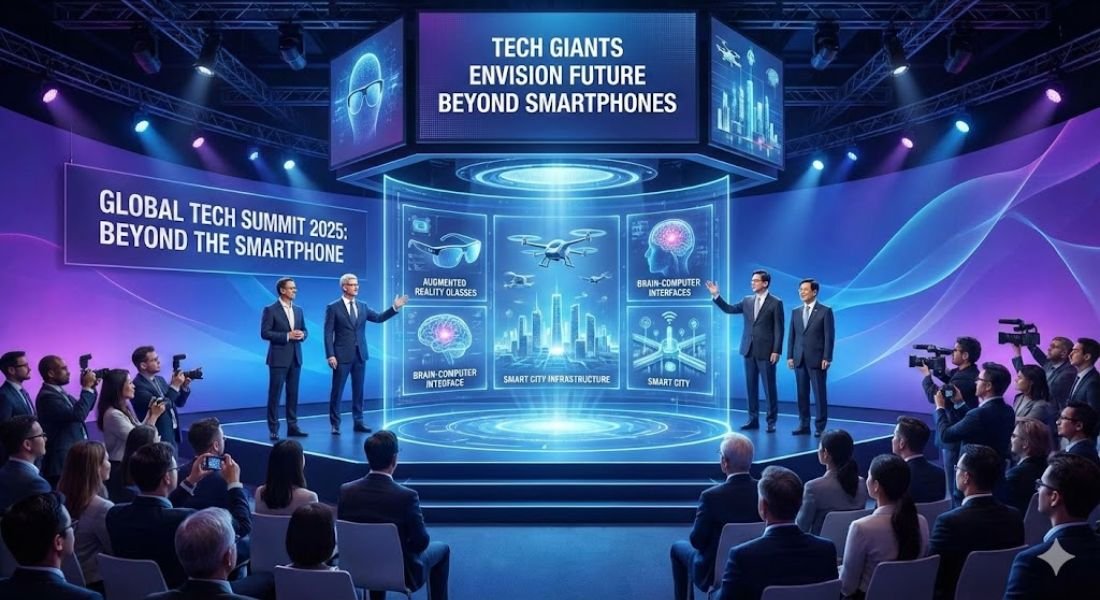

For over a decade the smartphone has reigned supreme becoming the central hub for work entertainment and communication. Yet major technology corporations are now planning for a world where this handheld device is no longer the main gateway to the digital realm.
A significant strategic shift is underway where tech giants envision future beyond smartphones investing billions into revolutionary new platforms and interfaces.
This movement signals the beginning of the post-smartphone era a fundamental change in how humans interact with technology moving away from flat glass screens toward an integrated three-dimensional experience.
This article explores the core technologies, strategies and challenges defining the next wave of digital innovation in a world where smart glasses wearables and advanced intelligence take center stage.
What the Post Smartphone Future Means
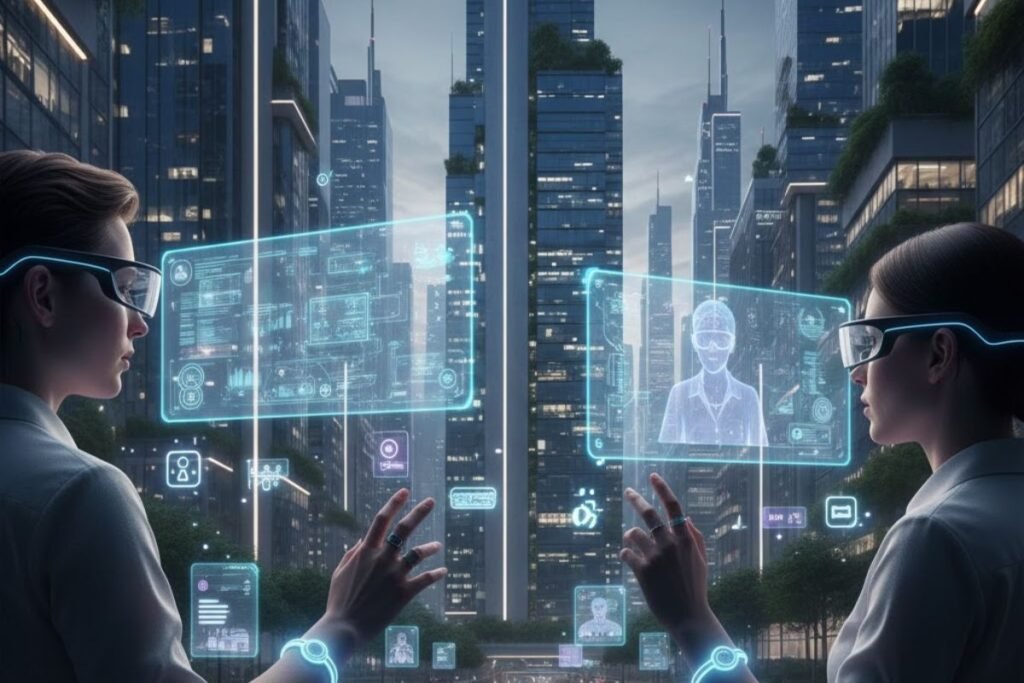
The phrase tech giants envision a future beyond smartphones refers to a transition from handheld screens to immersive and intelligent systems that stay active in the background. Smartphones shaped the last two decades yet innovation in phones is slowing.
Basic upgrades like better cameras or brighter screens no longer feel revolutionary. This is why companies are preparing for a digital world where technology works around the user instead of holding attention through a screen.
In this new era the user interacts with ambient computing wearable technology and spatial environments that present digital content in the physical world. AI powered experiences bring context to every task which reduces the need to touch a device again and again.
Market Saturation and Consumer Demand
The global market for smartphones is mature with slower sales growth and users holding onto devices for longer periods. This financial reality pushes companies to seek out the next computing platform capable of generating trillion-dollar revenue streams.
Furthermore consumer surveys indicate a growing fatigue with constant screen time and a preference for devices that integrate naturally into daily life. This desire for seamless connectivity without distraction validates the aggressive research and development into Augmented Reality AR and other wearables.
Technological Advancements Enabling the Next Platform
The shift is powered by breakthroughs in several key areas. Advanced machine learning models allow for powerful Ambient computing AI capable of understanding context and predicting user needs. Miniaturization of sensors and chips makes sophisticated smart glasses wearables practical for everyday use.
Crucially the development of Spatial computing Apple Vision Pro and Mixed reality platforms provides the necessary hardware foundation to display digital information directly in the user’s environment rather than confining it to a pocket device.
Core Technologies Defining the Future of Human Technology Interaction
The coming post-smartphone era will not be dominated by a single gadget but by an ecosystem of interconnected technologies. These foundational elements are where tech giants envision future beyond smartphones and are allocating their largest investments.
Augmented Reality AR and Spatial Computing
Augmented Reality AR involves overlaying digital content onto the real world typically viewed through specialized smart glasses wearables or headsets. Spatial computing Apple Vision Pro is the more advanced term for this where digital objects can interact realistically with the physical environment and other users.
This technology aims to replace the two-dimensional screen with a three-dimensional interactive space. Instead of checking a phone for directions a person might see holographic arrows pointing the way directly on the street.
This shift from a handheld screen to the entire environment is arguably the most radical change on the horizon a true move toward a Screenless digital world.
Ambient Computing AI and Conversational Interfaces
Ambient computing AI represents the intelligence layer of the post-smartphone era. This involves systems and devices that are constantly aware of their environment and the user’s context acting proactively rather than reactively.
Voice assistants like Google Gemini or Apple Intelligence are evolving into proactive AI companions that anticipate needs. This system is designed to provide information exactly when and where it is needed without the user ever pulling out a smartphone. This form of hands-free technology greatly reduces reliance on manual input emphasizing voice and conversational commands.
Advanced Wearables and Brain-Computer Interfaces BCI
Beyond smart glasses wearables are becoming smaller smarter and more deeply integrated. Smart rings like the Oura ring or highly advanced watches will provide continuous health monitoring and subtle interaction points. Looking further ahead Brain-computer interfaces BCI are being explored by companies like Neuralink.
These interfaces could eventually allow users to control digital devices or access information simply through thought effectively making the human mind the new interface. This focus on deep integration highlights the commitment of tech giants envision future beyond smartphones to personalized effortless interaction.
How Major Tech Companies Are Building This Future
Every major technology corporation is tackling the post-smartphone era from a different angle reflecting their existing market strengths. Their strategies demonstrate how seriously tech giants envision a future beyond smartphones as the next economic battleground.
Apple’s Spatial Computing Ecosystem
Apple is spearheading the Spatial computing Apple Vision Pro movement. The company is positioning the Vision Pro headset not as a niche product but as the next step in personal computing.
Apple is focused on a seamless and intuitive user experience ensuring that wearables like the Apple Watch and future smart glasses wearables work flawlessly with existing iPhones and Mac products. This ecosystem approach aims to lock users into a premium unified experience effectively making the smartphone just one component in a much larger intelligent system.
Meta’s Quest for the Metaverse
Meta formerly Facebook is investing heavily in Mixed reality platforms and virtual reality primarily through its Reality Labs division and the Quest headset series. While often focused on social and entertainment applications Meta’s long-term goal is to build the metaverse a fully immersive virtual environment where work, communication and play occur. Meta views its AR initiatives and smart glasses wearables as the bridge from the current smartphone dependency to this fully realized virtual and augmented future.
Google’s Ambient AI and Android XR
Google guides the next era through AI powered experiences ambient computing and smart environments. Voice based interaction Google Assistant and advanced AR features help shape a world where the device becomes invisible. Google builds systems that predict user needs and deliver help with minimal effort.Google is also building out the Android XR platform a framework designed to power various third-party Augmented Reality AR devices and headsets. The goal is to make Google’s intelligence omnipresent and context-aware reducing the need to manually initiate interactions on a smartphone.
Microsoft and Enterprise Mixed Reality
Microsoft is investing in augmented and mixed reality to improve workplaces and industries. Its HoloLens helps medical teams, engineers, and factory workers perform tasks safely with hands-free guidance.
By combining AR with AI and cloud computing Microsoft creates intelligent systems that boost productivity and collaboration. This approach shows how tech giants envision future beyond smartphones in professional environments.
Samsung and Next Generation Hardware
Samsung continues to lead in smartphones while also preparing for a future beyond traditional mobile devices.
The company invests in next-generation hardware including AR glasses that allow users to interact with digital content in real space foldable phones that combine flexibility and performance and AI-powered IoT devices that create a connected ecosystem across homes and offices.
Samsung’s approach focuses on integrating multiple technologies to make digital experiences more seamless and immersive.
Privacy Ethics and Data Security in the Post-Smartphone Era
As Ambient computing AI and sophisticated wearables become ubiquitous they will collect vast amounts of intimate personal and contextual data constantly. This raises immediate and serious concerns about privacy and ethics.
Companies must establish robust security protocols transparent data usage policies and clear ethical guardrails especially regarding sensitive technologies like Brain-computer interfaces BCI. Consumers will not fully embrace the future of hands-free technology unless they trust the platforms managing their most personal information.
Challenges in the Future Beyond Smartphones

For the post-smartphone era to succeed tech giants must overcome several critical hurdles. Firstly, they need to address the high cost and bulky design of AR smart glasses and wearables to ensure consumer acceptance and comfort. Technically, fitting powerful processors and long-lasting battery life into small hands-free devices for Ambient computing AI remains a major engineering challenge.
Furthermore the continuous data collection required by technologies like Spatial computing and BCI demands strict security measures and transparency to resolve pressing privacy and ethical concerns.
Conclusion
The shift happening today shows that tech giants envision future beyond smartphones in a clear and powerful way. The next wave will not rely on heavy screens or constant device handling. Instead technology will live around the user through wearables spatial computing ambient AI and connected environments.
These systems will respond instantly to voice gesture or thought based signals and will blend into the normal flow of the day. The change will take time yet it is already visible. The companies building this future want to deliver experiences that feel more human less distracting and more helpful. Understanding this shift prepares users and businesses for the next major evolution in digital life.
FAQs
What is the next big thing after smartphones?
The next big thing is likely AI-powered wearables and Augmented Reality (AR) smart glasses. These devices, combined with Ambient computing, will offer a more hands-free and seamless digital experience, reducing the need for screens.
What is the future technology in smartphones?
Future smartphones will primarily focus on advanced AI integration more flexible screens and computational photography enhancements. They will also incorporate features like 6G connectivity and advanced personalized health monitoring.
What does Bill Gates say about the future of phones?
Bill Gates suggests that the smartphone era will eventually end, to be replaced by AI-powered wearables and holographic devices. He believes this shift will focus on hands-free control and reduced screen time.
How long is the battery life typically for early AR glasses?
Battery life remains a significant challenge for early AR smart glasses. Most current devices can only operate for about 1 to 3 hours, often requiring continuous recharging or an external battery pack.
Which industries are predicted to adopt post-smartphone technology first?
Industries like healthcare professional training and engineering are expected to be the first adopters of Augmented Reality AR. Mixed reality platforms assist workers by providing hands-free guidance for complex tasks.


 By
By
 By
By
 By
By
 By
By