
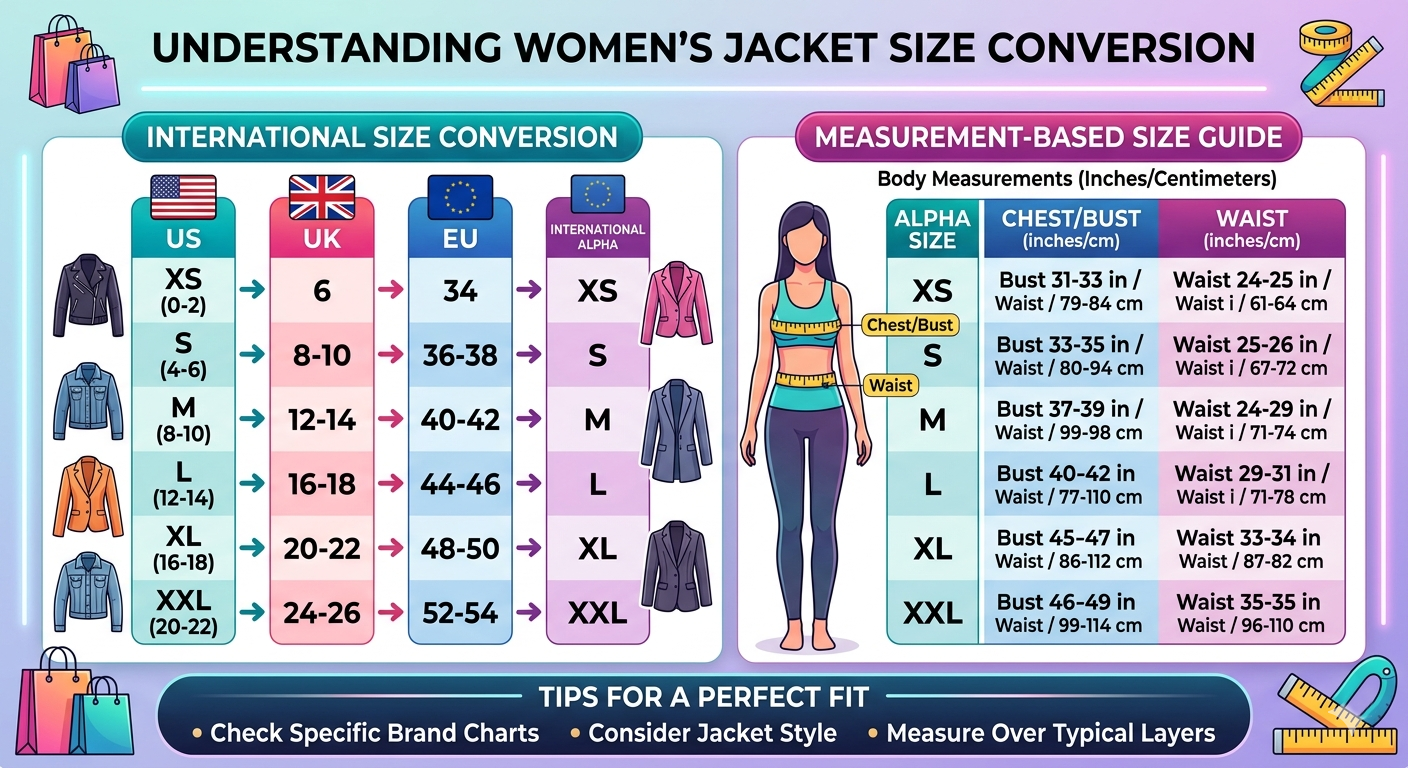

What Are Standard Size Charts?
When you first begin shopping for jackets for women, it’s easy to think that sizes should be easy. Small must always fit small. While a medium should be medium, and all conversions between countries must be based on a simple, consistent formula. This is that’s what normal size charts offer. They are designed to function as a universal reference, making body measurements like the waist, bust and hips, to size labels like S, M, L, or even size numbers such as 8, 10 or 12. The theory is that this system helps shoppers shop more efficiently, particularly when you switch brands or when shopping internationally.
But here’s the thing: These “standards” are more like loose guidelines than regulations. In contrast to industries like automotive or electronics manufacturing, fashion is not governed by a global authority for sizing. Therefore, every brand can decide on the size they prefer. A jacket that is size 10 in one brand could be made to fit a different body type than a size 10 garment in another. The lack of regulations creates a situation where size charts do not necessarily reflect reality.
Consider standard sizing in the same way as the map created by various cartographers who could not agree on the size. It is possible to reach your destination; however, the way is a mess, inconsistency and sometimes difficult. In the case of jackets, which require layers, shoulder structure and complex fit, the inconsistencies become more obvious.
Why Size Conversion Exists
Size conversion is a necessity due to the fact that fashion is global. Shoppers online can shop for fashion brands across the US, UK, Europe or Asia. All of these utilise different sizing systems. For instance, the US size 6 may translate into a UK size 10, or an EU size 38. Conversion charts seek to bridge the gap and make shopping internationally easy.
These charts presume that all brands adhere to the same standard measurements, which doesn’t happen. According to research in the industry, one size labelled could vary widely between brands, which makes conversions a bit erratic.
While conversion charts appear useful when printed, they do not work in reality. They don’t take into account the different design principles and fabric stretch, or the intended audiences. It’s similar to translating a sentence word-for–word without considering context. You might be able to understand the structure; however, the meaning of the sentence is lost.
The Reality: Sizes Vary Across Brands
Shocking Statistics About Size Inconsistency
If you’ve tried on three jackets of the same size and discovered that they all fit in the same way, you’re not making up your mind. The disparity in women’s clothing sizes isn’t just a matter of fact; it’s all over the place. A large survey revealed the following: nine out of ten people believe that the size of their clothing varies dependent on the brand they are wearing. This is a majority of people.
More surprising is that analysis of over 1500 brands found that one size (like the size of a UK size 10) could differ by as much as four inches in the measurement of your bust. Imagine that two jackets are labelled with identical sizes, yet one is much bigger in comparison to the second. This isn’t a small difference. It’s the difference between a perfect fit and a garment that’s totally indestructible.
This ambiguity is among the main reasons for high returns on online shopping. About 43percent of customers complain about poor fitting, which stops their purchases the item, and 36% point to an inconsistency in sizing as the main problem.
Real-Life Examples of Size Differences
Let’s create a more accessible scenario. Imagine that you have a 38-inch bust. Based on the model you choose, you may be able to fit into:
- A tiny with a Brand
- Medium in another medium in a different
- A large Somewhere else
This isn’t a hypothetical scenario; facts back it.
The tag on your jacket doesn’t determine your size. Your body determines it. The way brands perceive your body is different. It’s as if you’re trying to wear shoes that every company has different measurement systems. Confusing? Absolutely.
Why Brand Sizes Differ So Much
Lack of Global Sizing Standards
One of the main reasons for sizing variations is the fact that there isn’t a universal standard. There’s no official body that dictates the way in which a size is determined. Each brand creates its own sizing strategy according to its intended audience, along with its design philosophy, as well as the historical data.
This lets brands distinguish themselves; however, it creates confusion for consumers. Without a standardisation process, the term “medium” becomes a subjective notion rather than a standard measurement.
Vanity Sizing Explained
Have you noticed that certain brands make you appear thinner just by wearing their clothes? It’s known as vanity size. It’s a method where companies identify larger sizes with smaller sizes in order to increase confidence among customers.
For instance, what was once thought of as a size 12 could now be labelled 10 inches. While it could be pleasing, it creates an additional layer of confusion between brands.
Target Audience and Fit Models
Each brand’s clothing is according to the concept of a “fit model”-a person whose body shape is the ideal customer. Certain brands cater to smaller frame sizes, others to curvier bodies, and a few cater to muscular bodies.
So even when two jackets have the same measurements, they could be different sizes based on the way they’re cut. A garment that is designed to accommodate broad shoulders might be uncomfortable on someone with a smaller frame, regardless of whether the measurement corresponds.
The Role of Manufacturing and Design
Different Factories, Different Results
Many companies outsource their manufacturing to various factories across the globe. Each factory may follow slightly different measurement standards, leading to inconsistencies–even within the same brand.
Therefore, it’s possible to test two jackets from the exact brand, the same size, and in the same season, yet have different fittings.
Fabric and Style Impact
Fabric plays an important role in the way a jacket fits. Stretch fabrics allow for flexibility, whereas rigid fabrics require exact sizes. Similar to design styles, such as large or tailored clothes, can affect the way a size fits your body.
Fashion trends also affect sizing. In the times of the “oversized fashion” era, manufacturers often increased the size of their garments without altering the size label and made sizes appear larger than they actually are.
International Size Conversion Challenges
US vs UK vs EU Jacket Sizes
Here’s a quick comparison:
RegionExample Size
US 6
UK 10
EU 38
On paper, they appear similar. However, the results can differ substantially based on the brand that is using the conversion.
Why Conversion Charts Aren’t Reliable
Conversion charts are supposed to be uniform, but the fashion industry isn’t like that. Every brand alters its size, and these charts are rough at best.
How Body Shape Affects Jacket Fit
Not All Bodies Scale Equally
Sizes assume that body sizes grow proportionally. But they do not. As body sizes grow, body proportions vary in different ways.
Curves, Shoulders, and Proportions
A garment that fits perfectly at the bust could appear tight around the shoulders or loose at the waist. It’s because standard sizing doesn’t consider the individual body shape.
Fast Fashion vs Luxury Brand Sizing
Which Is More Consistent?
Fashion brands that are fast-fashion tend to have the highest degree of inconsistency because of their rapid production, as well as many suppliers.
The Truth About Expensive Brands
Surprisingly, brands that are expensive don’t necessarily mean better. Certain brands are made for certain body types, which makes them more difficult for common customers.
The Impact on Online Shopping
High Return Rates and Frustration
Size issues are the primary reason for returning items, particularly when you shop online. Many customers order several sizes in order to find the perfect size.
Emotional Impact on Shoppers
Inconsistent sizing doesn’t just affect convenience–it affects confidence. Women often question their bodies when they don’t feel comfortable in their clothes, even though the issue is with the brand.
How to Choose the Right Jacket Size
Measure Instead of Guessing
Utilise a measuring tool and then compare your measurements to the size chart provided by the manufacturer.
Use Brand-Specific Size Charts
Always verify the charts for every brand rather than using general conversions.
The Future of Size Standardisation
Technology and AI Sizing Tools
AI tools are gaining traction to help you determine the most suitable size of your home based on your measurements, as well as your previous purchases.
Will Brands Ever Standardise?
While a standardisation of shopping would be beneficial, it’s unlikely to happen in the near term because of different strategies for branding and market trends.
Conclusion
Size conversion for women’s jackets isn’t precise because the fashion industry hasn’t founded on a common standard. From the size of the garment and manufacturing variations to body shapes and diversity selections, numerous factors determine the way a jacket will fit. The label’s number is only a guideline, not an assurance. Recognising this fact allows you to make better choices by relying on measurements and paying attention to the fit, not size labels.
FAQs
Why am I wearing jackets of different sizes in different brands?
Each brand has its own sizing method, which means there’s no one standard for all brands.
Are the charts of size conversion accurate?
They are only estimates and can be faulty due to differences in the brands.
Do sizes for clothing ever become uniform?
It’s unlikely to happen soon due to the branding practices of the industry and how they are implemented.
How do I find the correct size jacket on the internet?
Find out your body’s measurements and then compare them to the size chart of the brand you are using.
What is vanity size?
It’s when companies label larger clothing with smaller sizes in order to make their customers feel more comfortable.


 By
By
 By
By


 By
By