
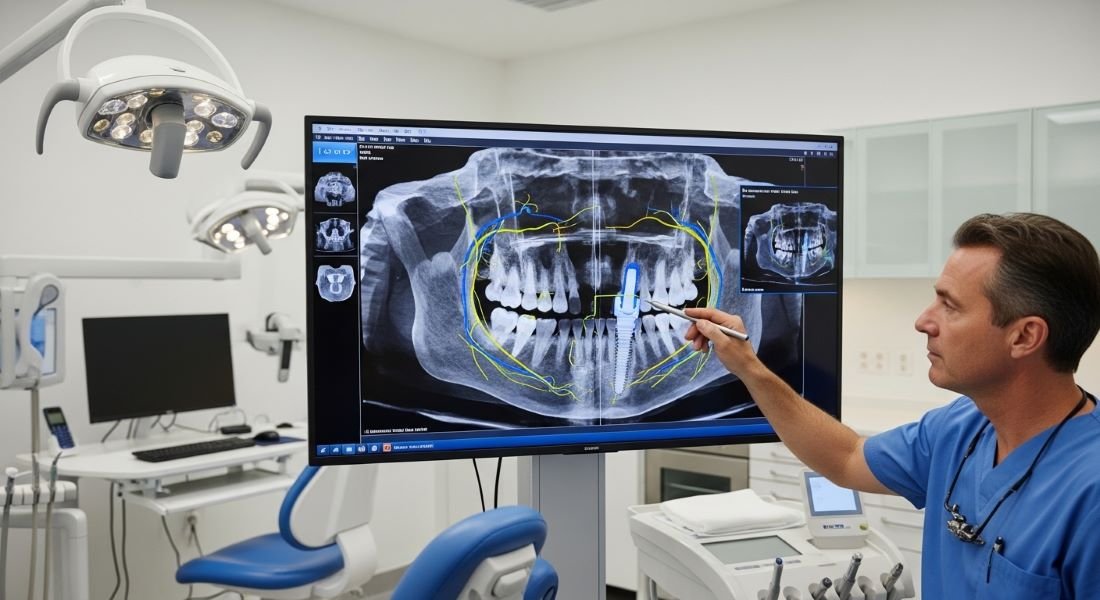

Technology is changing how you protect your gums and replace missing teeth. You now have options that feel safer, faster, and more exact. Digital scans can often replace messy impressions. Three dimensional images can show bone and nerve location before surgery. As a result, your care plan matches your mouth with sharp detail. This reduces guesswork and stress. It can also shorten visits and healing time. If you see an implant dentist in Santa Ana, CA, you may notice smaller tools, quieter equipment, and clearer images on the screen. Each step feels more controlled. You gain a clearer picture of your risks and choices. You also gain more power to decide what fits your health, time, and budget. This blog explains how these tools work, what they change in periodontics and implant dentistry, and how they can protect your smile for many years.
Digital scans replace messy molds
Old putty molds felt rough. You had to sit still and hope you did not gag. Now many offices use digital scanners. A small camera glides over your teeth and gums. It records thousands of images and builds a three dimensional map of your mouth.
This helps you in three ways.
- More comfort during records
- More exact fit for implants and crowns
- Faster checks and fewer repeat visits
The scanner image lets your dentist measure bone levels and gum loss with clear detail. You see what your dentist sees on the screen. That can ease fear and help you say yes to care that you understand.
3D imaging improves planning and safety
For implants and gum surgery, three dimensional X rays called cone beam CT give a full view of bone, roots, and nerves. Traditional X rays show only a flat picture. Important details can hide.
With 3D imaging, your dentist can:
- Check if you have enough bone for an implant
- See sinus spaces and major nerves before surgery
- Measure exact implant size and angle
This planning lowers the risk of nerve injury and sinus problems. It can also reduce the need for large cuts in the gums. Smaller cuts often mean less pain and shorter healing time. The American Dental Association explains how imaging guides safer implant placement.
Guided implant surgery brings more precision
Digital scans and 3D X-rays can merge to create a surgical guide. This is a custom template that fits over your teeth or gums. It directs the drill to a planned position.
Guided surgery can:
- Help place implants in strong bone
- Protect nerves and nearby teeth
- Reduce time in the chair
In some cases, your dentist can place an implant through a tiny opening in the gums using the guide. That can mean less swelling and fewer stitches. It can also give a better chance that your final tooth looks natural and lines up with your bite.
Lasers support gentler gum treatment
Lasers now help treat gum disease and shape gum tissue. The light energy can remove inflamed tissue and kill bacteria. Many people report less bleeding and less need for numbing medicine.
Laser use in gum care may:
- Shorten healing time
- Reduce post treatment soreness
- Lower bleeding during visits
Some laser methods are still under study. You should ask your periodontist what results you can expect and what research supports the method. The National Institute of Dental and Craniofacial Research at this gum disease page explains why treating gum infection early protects both teeth and implants.
CAD/CAM gives faster new teeth
Computer-aided design and computer-aided milling let dentists design crowns, bridges, and implant parts on a screen. Then a small machine shapes the tooth from ceramic or other strong material in the office or at a lab.
This method can:
- Reduce the number of visits
- Improve fit on the first try
- Offer strong, natural looking results
In some cases, you can receive an implant and a temporary tooth on the same day. Your final tooth then replaces the temporary once your bone has healed around the implant.
How new tools change your visit: side by side
| Step in your care | Traditional method | Technology assisted method |
|---|---|---|
| Impressions | Putty molds that can cause gagging | Digital scan with a small camera |
| X rays | Flat images with limited detail | 3D cone beam images that show bone volume |
| Implant planning | Freehand placement based on 2D images | Computer plan with a custom surgical guide |
| Gum treatment | Scalpel and manual tools only | Laser support plus precise hand work |
| New teeth | Lab made crown with several visits | CAD/CAM design and faster fabrication |
What this means for your family
You may worry about cost, time away from work, or fear of pain. Advanced tools aim to cut all three. More exact planning can reduce surprise problems. Shorter visits can lessen time off from school or work. Gentler methods can ease fear for children and adults.
Still, no tool replaces daily care. You protect your implants and gums when you:
- Brush twice a day with fluoride toothpaste
- Clean between teeth every day
- Keep regular checkups and cleanings
Technology gives your dentist a clearer vision and steadier control. Your daily habits keep that work strong for many years.
Questions to ask your periodontist or implant dentist
Before you start treatment, you can ask:
- What imaging will you use to plan my care
- Will you use a surgical guide for my implants
- Do you offer laser treatment for my gum problem
- How will these tools change my healing and cost?
Clear answers show respect for your needs. They also help you choose a path that feels safe and steady for you and your family.


 By
By


 By
By