

Key Takeaways & Executive Summary
- Dimensional Stability Compliance: Precise laboratory shrinkage testing guarantees commercial garments meet ISO and AATCC wash tolerance standards.
- Preventing Retail Garment Distortion: Accurate pre-production testing prevents differential torque, seam twisting, and post-wash fit returns.
- Commercial Cost Optimization: Standardized shrinkage data allows pattern makers to adjust cutting CAD templates, saving thousands in fabric waste.
In the textile industry, ensuring fabric quality is critical to delivering durable and reliable products. One key aspect of fabric quality is its resistance to shrinkage. Shrinking fabric after production can lead to customer dissatisfaction and even product returns. To avoid these issues, manufacturers rely on tools like the fabric shrinkage tester, an essential device for evaluating the shrinkage rate of textiles.
Understanding Pre-Shrink Fabric
Pre-shrink fabric refers to textiles that have undergone a treatment process to minimize shrinkage during subsequent washes or usage. While most fabrics are prone to shrinkage due to moisture or heat, pre-shrinking ensures that the final product maintains its dimensions and structure after washing. However, the effectiveness of the pre-shrinking process must be tested rigorously to ensure consistency and reliability. This is where tools like the fabric shrinkage tester come into play.
The Importance of Fabric Shrinkage Testing
Shrinkage testing is essential for both textile manufacturers and garment producers. Here’s why it’s crucial:
- Maintaining Product Quality
Fabric shrinkage directly affects the quality and usability of garments. If a product shrinks excessively after purchase, it can render the garment unwearable or uncomfortable. With a reliable fabric shrinkage tester, manufacturers can ensure their textiles meet the highest quality standards. - Enhancing Customer Satisfaction
Consumers expect their clothing to retain its original shape and size even after multiple washes. Pre-shrink fabric ensures that garments meet this expectation, helping brands build trust and customer loyalty. - Ensuring Compliance with Industry Standards
Many industries have strict quality benchmarks for textiles. Shrinkage testing ensures that the fabric complies with these standards, whether for fashion, upholstery, or industrial use. - Reducing Returns and Complaints
Excessive fabric shrinkage often leads to customer complaints and returns, resulting in additional costs for businesses. By using shrinkage testing, companies can minimize such issues and improve profitability.
The Role of SmartShrink in Shrinkage Testing
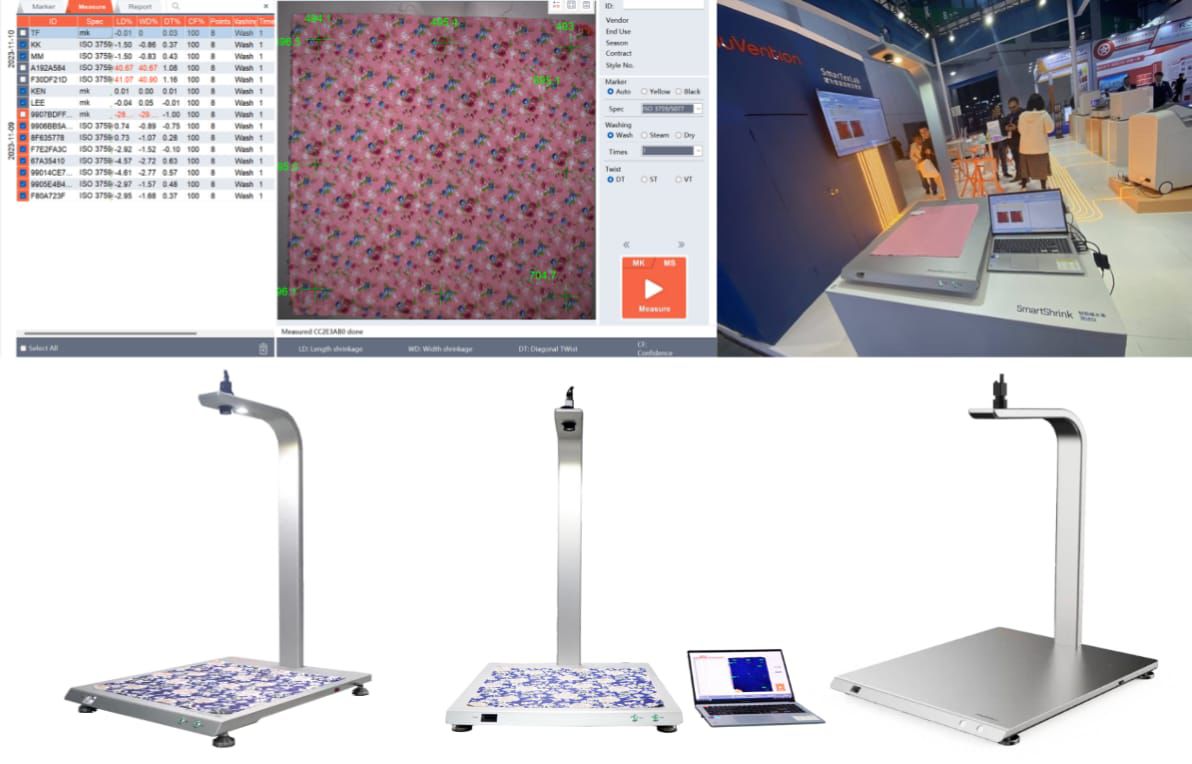
For accurate shrinkage testing, manufacturers need advanced and reliable equipment like the SmartShrink Fabric Shrinkage Tester. This innovative tool is designed to deliver precise measurements of fabric shrinkage rates, making it a valuable asset for textile producers.
Features of the SmartShrink Tester
- High Accuracy
The SmartShrink Tester provides accurate results, allowing manufacturers to assess fabric shrinkage with confidence. - User-Friendly Design
The device is easy to use, making it ideal for manufacturers seeking efficient and hassle-free shrinkage testing. - Versatile Applications
The SmartShrink Tester works on various types of fabrics, including cotton, polyester, and blends, ensuring its usefulness across different industries. - Durability and Reliability
Built for industrial use, the SmartShrink Tester ensures consistent performance over time.
Benefits of Pre-Shrink Fabric
Using pre-shrink fabric offers numerous advantages for both manufacturers and consumers. For manufacturers, it reduces the risk of shrinkage-related complaints, ensuring their products remain competitive in the market. For consumers, it ensures garments retain their original size and shape, enhancing wearability and satisfaction.
Conclusion
In today’s competitive textile industry, maintaining fabric quality is non-negotiable. Tools like the fabric shrinkage tester play a pivotal role in ensuring that pre-shrink fabrics meet high standards of durability and consistency. By investing in reliable testing equipment like the SmartShrink Tester, manufacturers can produce superior textiles, ensuring customer satisfaction and building a strong reputation in the market.
Manual Hand Washing vs Automated Laboratory Fabric Shrinkage Testing
| Metric / Operational Benchmark | Standard Industry Benchmark | Optimized Architecture |
|---|---|---|
| Testing Standard Compliance | Non-compliant / Uncalibrated | Strict ISO 6330 / AATCC 135 / AATCC 150 Compliance |
| Water Temp & Agitation Control | Uncontrolled Hand Temperature | Microprocessor-Controlled Precision Temp & G-Force |
| Measurement Accuracy | Manual Ruler Error ± 2.5% | High-Precision Dimensional Scale Grid (± 0.1%) |
| Repeatability & Audit Trail | Subjective / Zero Digital Records | Automated Digital Logging for Enterprise QC Audits |
Engineering Quality Control: Fabric Dimensional Stability & Shrinkage Testing
In global apparel manufacturing and commercial textile production, fabric dimensional stability is one of the most critical determinants of garment quality and customer satisfaction. When raw knitted or woven fabrics undergo wet processing, dyeing, and drying, microscopic fiber yarns endure immense mechanical tension. If garments are constructed and sold without rigorous pre-shrinkage verification, the very first consumer wash cycle releases this internal tension, causing severe dimensional shrinkage, spirality (seam twisting), and structural distortion. Employing dedicated laboratory fabric shrinkage testers ensures manufacturers comply with stringent international apparel specifications.
1. The Physics of Textile Shrinkage: Relaxation vs Progressive
Understanding the root causes of dimensional variation enables textile engineers to optimize finishing processes:
- Relaxation Shrinkage: Occurs when mechanical manufacturing stresses are released upon initial water immersion and gentle mechanical agitation as yarns return to relaxed equilibrium.
- Progressive Shrinkage: Ongoing dimensional contraction that continues over repeated domestic laundry cycles, frequently observed in natural cellulosic fibers like cotton, linen, and wool.
- Thermal Shrinkage in Synthetics: Polyester and elastane fibers contract when exposed to excessive heat during commercial tumble drying, requiring strict heat-setting stabilization during stenter finishing.
2. Standardized Testing Protocols (AATCC 135 & ISO 6330)
Executing valid laboratory fabric testing demands rigorous procedural adherence:
- Sample Preparation & Conditioning: Condition fabric swatches in standardized atmospheres (21°C ± 1°C and 65% ± 2% relative humidity) for a minimum of 4 hours prior to testing.
- Benchmarking Benchmark Distances: Mark standardized reference benchmark lines (typically 250mm or 500mm apart) across both warp (lengthwise) and weft (widthwise) grain directions using indelible fabric markers.
- Automated Laboratory Wash Cycles: Subject test swatches to programmed wash cycles in specialized front-loading or top-loading laboratory washers with calibrated water levels, agitation speeds, and tumble dry heats.
- Digital Dimensional Calculation: Measure distances between benchmarks post-drying and calculate percentage change: Shrinkage (%) = ((Original Length – Final Length) / Original Length) × 100.
3. Translating Shrinkage Data into CAD Pattern Engineering
Accurate shrinkage percentages feed directly into 3D garment CAD grading software (such as Gerber or Lectra). Pattern makers adjust marker proportions by the exact shrinkage percentage, ensuring that once assembled garments undergo industrial garment washing, they settle precisely into their specified target fit measurements.
Fabric Shrinkage Remediation & Chemical Finishing Technologies
When pre-production fabric shrinkage testing reveals dimensional instability exceeding commercial tolerances, textile wet processing mills must implement chemical and mechanical stabilization treatments prior to final bulk fabric cutting.
Industrial Stabilization Techniques:
- Stenter Frame Overfeeding: Mechanically overfeed warp yarns onto stenter pin chains during heat setting, allowing yarns to relax and compress lengthwise before reaching cutting tables.
- Cross-Linking Resin Finishing: Apply eco-friendly dimethyloldihydroxyethyleneurea (DMDHEU) cross-linking resins to cellulosic fibers to bond molecular cellulose chains and prevent water penetration from expanding yarn diameters.
- Pre-Washing and Enzyme Washing: Subject bulk rolls of heavy denim or jersey to commercial biopolishing and cellulase enzyme baths to eliminate residual yarn surface tensions.
Frequently Asked Questions (FAQs)
What is an acceptable commercial fabric shrinkage tolerance?
Standard commercial tolerances for woven fabrics typically allow 2% to 3% shrinkage, while knitted jersey and fleece fabrics generally permit up to 5% dimensional variance post-wash.
What is fabric spirality and how is it measured during shrinkage testing?
Spirality (or torque) is the twisting of side seams caused by yarn twist imbalances in circular knitted fabrics. It is calculated by measuring the angular deviation of the side seam from a 90-degree perpendicular baseline.
Why is fabric pre-shrinking (Sanforization) necessary before garment cutting?
Sanforizing mechanically compacts cotton and denim fabrics between rubber belts and heated cylinders, stabilizing internal yarn loops so that finished garments will not shrink significantly during consumer laundry.


 By
By