
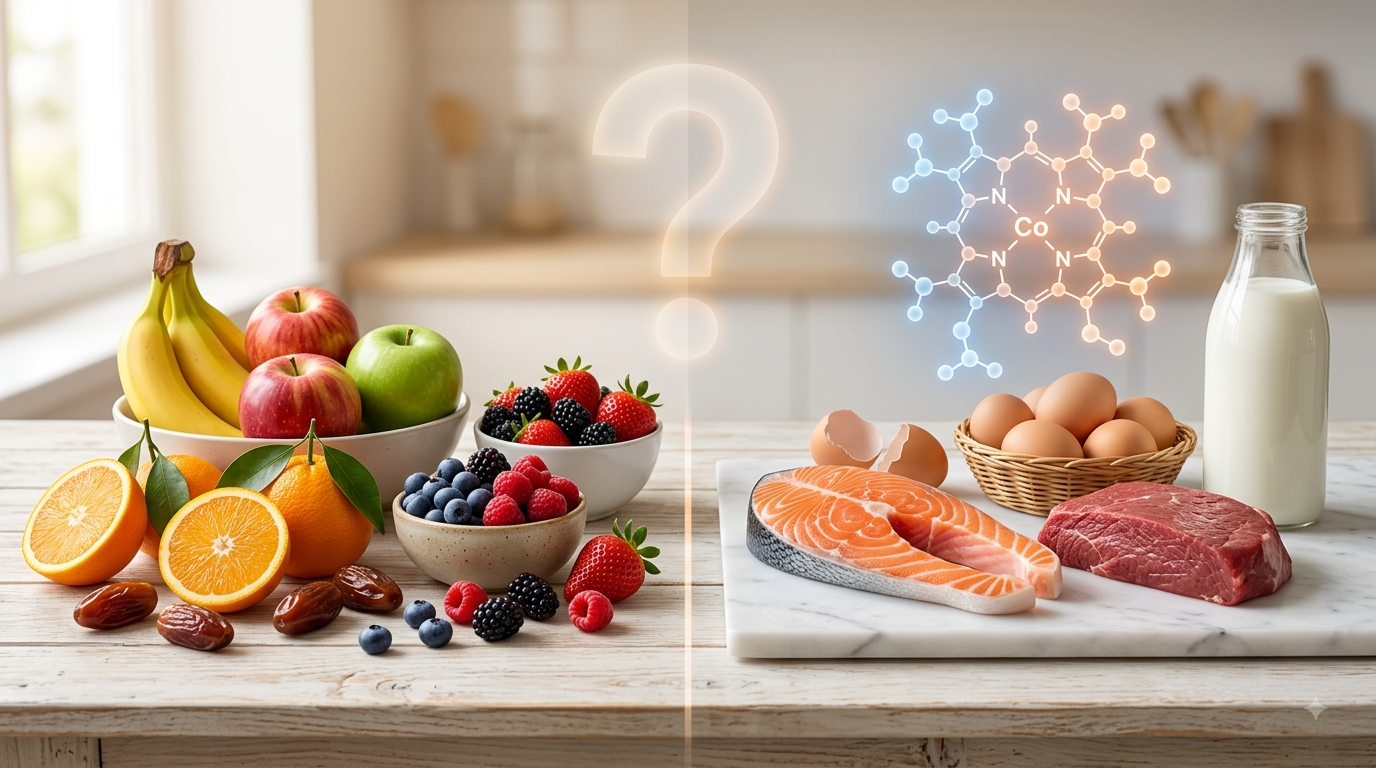

If you’ve been searching for “vitamin B12 fruits” hoping to find a natural plant based way to boost your B12 levels through fruit, here’s the honest answer upfront: no fresh or dried fruit naturally contains vitamin B12. Not bananas, avocados, not dates, none of them.
This might come as a surprise especially if you’ve seen articles or social media posts claiming otherwise.
In this guide we’ll explain exactly why fruits can’t provide B12, clear up common myths, show you which foods actually do contain it and reveal a lesser known way certain fruits can still support your body’s B12 levels indirectly.
Why No Fruit Contains Vitamin B12?
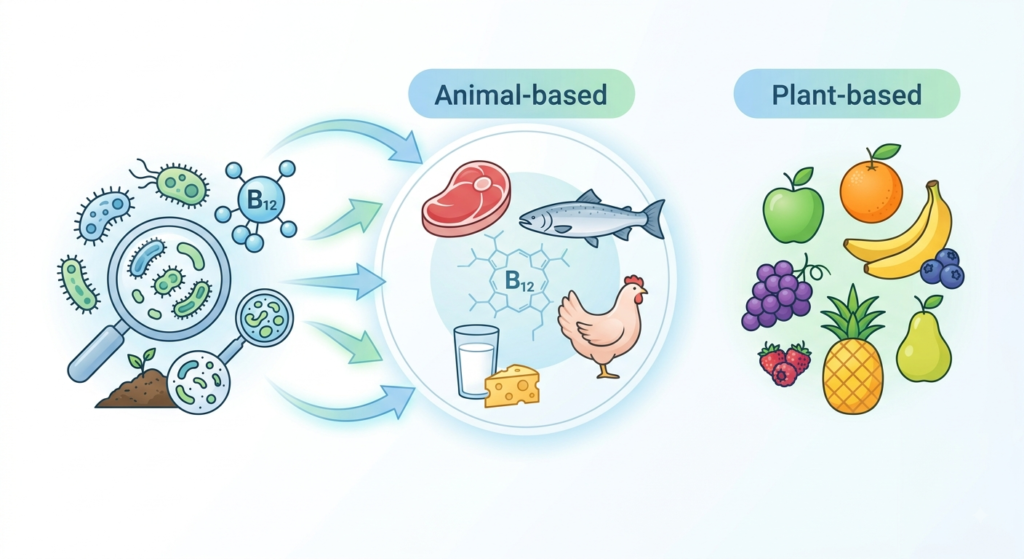
Vitamin B12 (also known as cobalamin) is a water soluble vitamin that plants simply cannot produce. Unlike vitamin C or folate which fruits and vegetables synthesize naturally, B12 is manufactured exclusively by certain bacteria and archaea organisms found in the digestive tracts of animals and in soil.
Because fruit trees and plants don’t have the biological machinery to produce this vitamin, no fruit regardless of how “superfood” it’s marketed can be a genuine source of B12. This is true for organic non organic fresh frozen or dried fruit alike.
Animals accumulate B12 by consuming these bacteria (directly or through their food chain) which is why B12 ends up concentrated in meat, fish eggs and dairy not in fruit.
Common Myths: Fruits Falsely Believed to Contain B12
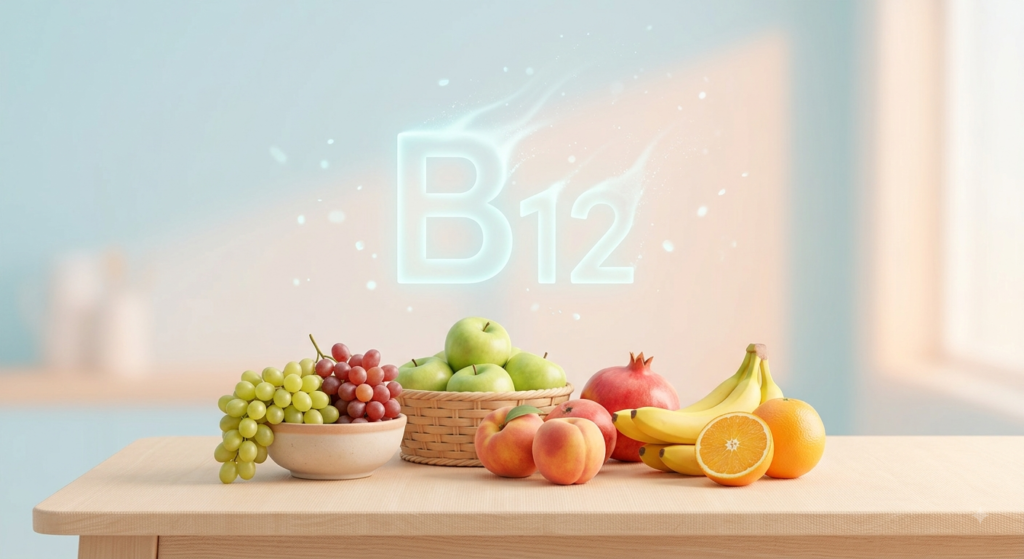
A lot of confusion exists around this topic partly because certain fruits are nutrient dense and get mistakenly lumped in with “B12 rich foods.” Here’s a quick reality check on some commonly searched fruits:
- Bananas: High in potassium and vitamin B6 but contain zero vitamin B12
- Avocados: Rich in healthy fats and folate but no B12
- Dates: Good source of fiber and iron but no B12
- Apples: Contain vitamin C and fiber no B12
- Oranges: High in vitamin C but do not contain B12
None of these fruits contain measurable amounts of vitamin B12 no matter how nutrient dense they otherwise are.
Real Proven Sources of Vitamin B12
Since fruit is off the table here are the food categories that genuinely provide vitamin B12 based on nutritional science:
Animal Based Sources (Highest B12 Content)
- Organ meats (liver kidneys) extremely high in B12
- Clams and shellfish
- Sardines and mackerel
- Beef and lamb
- Salmon and trout
- Eggs
- Milk yogurt and cheese
Fortified Foods (Best for Vegetarians and Vegans)
- Fortified breakfast cereals
- Nutritional yeast
- Fortified plant based milk (soy almond oat)
- Fortified plant based meat alternatives
Supplements
- Oral B12 tablets or sublingual drops
- B12 injections (commonly used for diagnosed deficiency or absorption issues like pernicious anemia)
The One Way Fruits Can Help With B12 Indirectly
While no fruit contains B12 itself, certain fruits can play a supporting role in how well your body absorbs the B12 you get from other foods.
Vitamin B12 absorption depends on stomach acid and a protein called intrinsic factor and vitamin C has been linked to supporting healthy digestive function and iron/nutrient absorption in general.
Fruits like oranges guavas kiwis and strawberries all high in vitamin C won’t add B12 to your diet but pairing them with B12 rich meals may support better overall nutrient absorption as part of a balanced diet. Think of them as a supporting player not a source.
Vitamin B12 Content Comparison Table
| Food Source | Approx. B12 per Serving | % Daily Value |
| Beef liver (3 oz cooked) | 70.7 mcg | ~2946% |
| Clams (3 oz cooked) | 84.1 mcg | ~3504% |
| Sardines (1 can) | 8.94 mcg | ~373% |
| Nutritional yeast (1 tbsp) | 4.8 mcg | ~200% |
| Salmon (half fillet) | 2.6 mcg | ~108% |
| Egg (1 hard boiled) | 0.6 mcg | ~25% |
| Fortified soy milk (1 cup) | 0.6–2.1 mcg | 25–88% |
| Any fruit | 0 mcg | 0% |
(Values are approximate and can vary by brand preparation method and serving size.)
Signs of Vitamin B12 Deficiency
Because B12 supports red blood cell formation DNA synthesis and nerve health low levels can lead to noticeable symptoms including:
- Persistent fatigue and weakness
- Memory problems or brain fog
- Numbness or tingling in hands and feet
- Pale or yellowish skin
- Mood changes or irritability
- Shortness of breath
People most at risk of deficiency include vegans and strict vegetarians, older adults, pregnant or nursing individuals and those with digestive conditions that affect nutrient absorption (such as pernicious anemia).
How Much Vitamin B12 Do You Need Daily?
Most adults need approximately 2.4 micrograms (mcg) of vitamin B12 per day. This requirement is slightly higher for those who are pregnant (2.6 mcg) or breastfeeding (2.8 mcg).
Since the body stores excess B12 in the liver, occasional lower intake isn’t usually a problem but consistently low intake over time can lead to deficiency.
The Bottom Line
While it would be convenient if fruit could supply your daily vitamin B12, science is clear: fruits do not contain vitamin B12 in any form.
If you’re looking to maintain healthy B12 levels focus on animal based foods fortified plant products or supplements and consider a diet rich in vitamin C fruits to support your body’s overall nutrient absorption.
If you suspect a deficiency a simple blood test from your doctor can confirm your levels and guide the right treatment plan.
FAQs
Do any fruits contain vitamin B12?
No. No fresh dried or frozen fruit naturally contains vitamin B12. It is produced only by certain bacteria, not by plants.
Which fruit is closest to having B12?
None. While some fruits are fortified in rare commercial products, naturally occurring fruit never contains B12 in any amount.
Can I get enough B12 on a fruit based or vegan diet?
Not from fruit alone. Vegans need to rely on fortified foods (cereals plant milk nutritional yeast) or B12 supplements to meet daily requirements.
What is the fastest way to increase B12 levels?
Eating B12 rich animal products fortified foods or taking a B12 supplement are the most effective and medically supported ways to raise B12 levels. In diagnosed deficiency cases doctors may recommend B12 injections.


 By
By



 By
By