
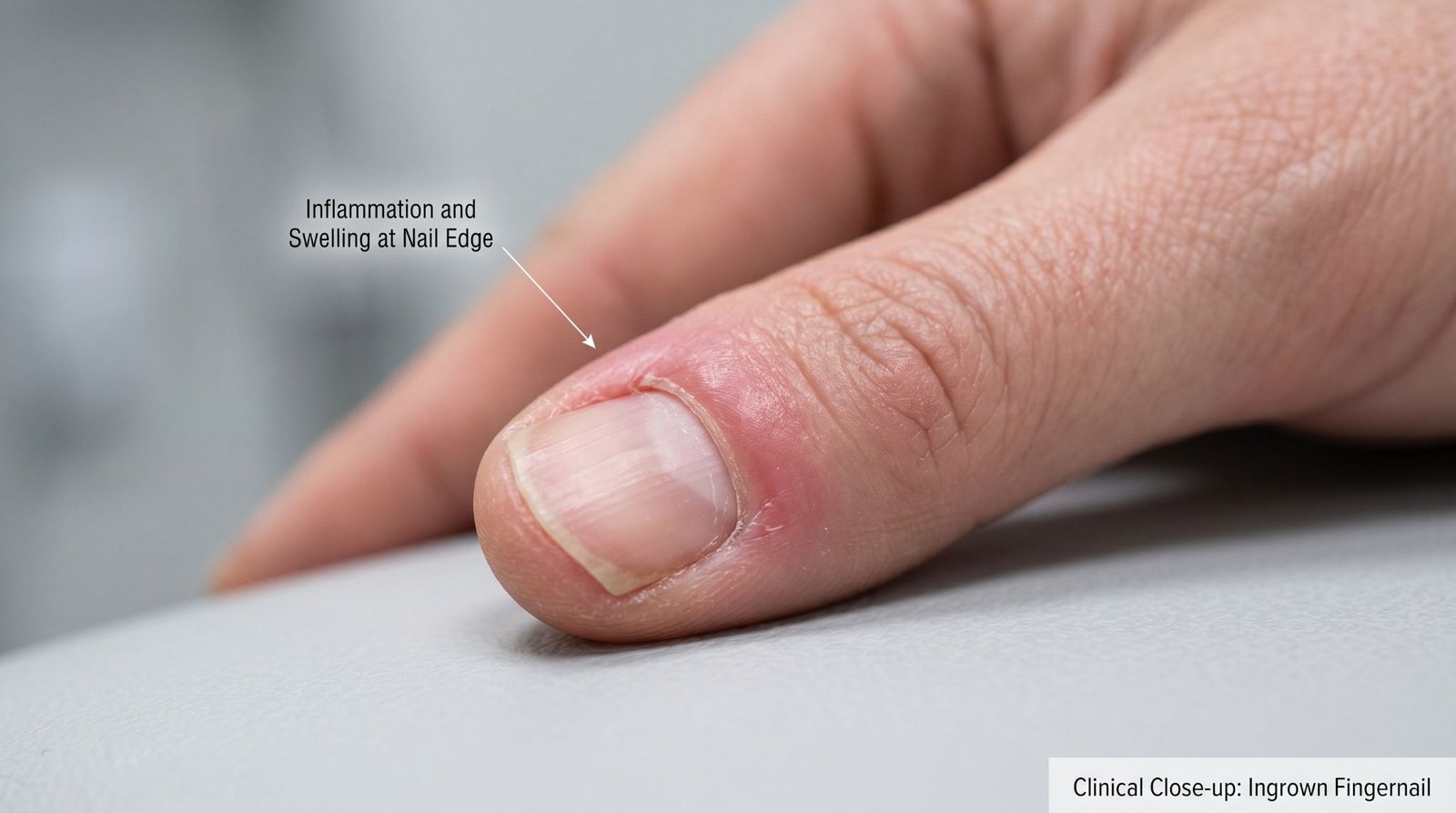

An ingrown fingernail occurs when the edge or corner of a nail presses into the surrounding skin. This can cause pain, redness, swelling and tenderness. In some cases irritation can lead to an infection around the nail.
Mild cases may improve with gentle nail care and protection while persistent or infected cases may require professional treatment. Knowing the causes, symptoms and warning signs can help you manage the problem safely.
What Is an Ingrown Fingernail?
An ingrown fingernail happens when the nail edge grows into or presses against the surrounding skin. This irritates the nail fold and can cause localized pain, redness and swelling.
Although ingrown nails are more common on the toes fingernails can also be affected. An ingrown fingernail may sometimes occur alongside paronychia which is inflammation or infection of the skin around the nail.Paronychia can cause tenderness, warmth, swelling redness and sometimes pus.
What Causes an Ingrown Fingernail?
Several factors can contribute to an ingrown fingernail.
Cutting the Nail Too Short
Cutting fingernails too short or deeply trimming the corners can leave an irregular edge that presses into the surrounding skin as the nail grows.
Nail Biting or Picking
Biting, tearing or picking the nail can damage the nail and nearby skin. Repeated manipulation may increase irritation and make infection more likely.
Finger Injuries
A hit crush injury or other trauma can change the shape or growth pattern of a nail. As the damaged nail grows an uneven edge may irritate the surrounding skin.
Repeated Pressure
Activities such as typing writing, sewing or using hand tools may repeatedly put pressure on a vulnerable fingernail. Changing an activity that causes discomfort may help prevent further irritation.
Nail Shape and Growth
Some nails naturally curve toward the surrounding skin and may be more likely to cause irritation. However a curved or painful nail is not necessarily ingrown as other nail conditions can cause similar symptoms.
Nail or Skin Conditions
Fungal and other nail conditions can change the nail’s thickness, shape or structure. Damage around the nail can also increase the risk of inflammation or infection.
What Does an Ingrown Fingernail Look and Feel Like?
Common symptoms usually appear around one side or corner of the nail and may include:
- Pain or tenderness beside the nail
- Redness
- Localized swelling
- Sensitivity when touching or using the finger
- Warm or irritated skin
- Fluid or pus if an infection develops
Increasing warmth, swelling redness or pus may suggest paronychia or another infection rather than simple irritation.
Ingrown Fingernail vs. Paronychia
These conditions can look similar but are not the same.An ingrown fingernail occurs when the nail edge presses into or grows into surrounding skin. Paronychia is inflammation or infection of the nail fold.
An ingrown nail can contribute to paronychia because irritated or damaged skin may allow microorganisms to enter. Correctly identifying the problem is important because treatment depends on its cause and severity.
How to Treat a Mild Ingrown Fingernail?
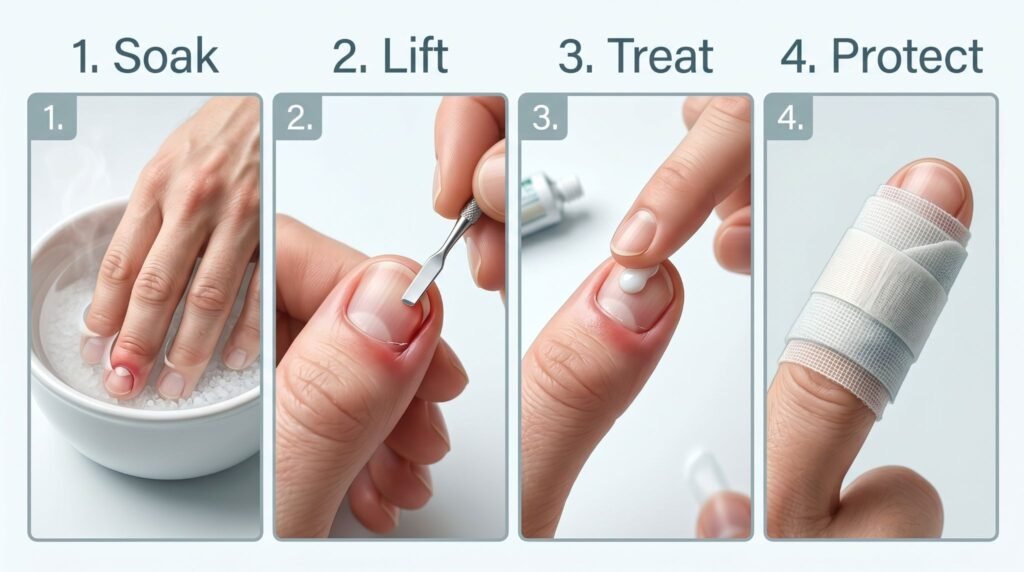
For mild irritation without significant infection gentle self care may help.
Keep the Area Clean
Wash the finger gently and keep the area clean. Avoid poking, digging underneath the nail or repeatedly cutting the affected edge.
Try Warm Water Soaks
A warm water soak may soothe irritation and soften the surrounding skin. For mild nail fold infections warm water soaking for about 15 minutes several times a day may be recommended followed by thorough drying.If symptoms worsen or fail to improve seek medical advice.
Protect the Finger
If an activity repeatedly rubs or presses against the nail, protect the area with a clean dressing and reduce unnecessary pressure.
Avoid Cutting Into the Nail
Do not dig into the skin or aggressively cut out a painful nail corner. Doing so can cause additional injury and increase the risk of infection. A healthcare professional can determine whether the nail needs further treatment.
When Does an Ingrown Fingernail Need Medical Treatment?
Mild cases may improve with conservative care but persistent or severe symptoms may require professional treatment.
Depending on the cause a healthcare professional may gently separate the nail from the surrounding tissue or treat the affected portion of the nail. If an abscess or infection is present additional treatment may be needed.The appropriate approach depends on the nail surrounding tissue and presence of infection.
When Should You See a Healthcare Professional?
Seek medical advice if symptoms become worse rather than better.Warning signs include:
- Severe or increasing pain
- Significant swelling
- Spreading redness
- Pus or other drainage
- Fever or feeling unwell
- Symptoms that do not improve with self care
- Repeated ingrown nails in the same location
People with conditions that increase infection risk or impair healing should seek medical guidance rather than relying only on home care.
How Can You Prevent an Ingrown Fingernail?
Good nail care habits can reduce irritation and injury.Trim fingernails carefully without cutting them extremely short or deeply into the corners. Avoid biting tearing or picking the nails and surrounding skin.
Keep fingernails clean protect your fingers from repeated trauma and avoid aggressively cutting the cuticles. If your hands are frequently exposed to moisture or irritating substances appropriate protection can help reduce skin damage.
Common Mistakes to Avoid
Some actions can make an ingrown fingernail worse.
- Digging under the nail: This can injure surrounding tissue.
- Cutting the nail extremely short: An irregular nail edge may increase irritation.
- Picking at the skin: This can create small breaks that allow infection to develop.
- Ignoring infection symptoms: Increasing redness swelling warmth pus or fever should not be ignored.
- Continuing irritating activities: Repeated pressure can delay recovery.
How Long Does an Ingrown Fingernail Take to Heal?
Healing time depends on the severity and cause. A mild case may settle as the nail grows normally and irritation decreases.
Cases involving significant inflammation or infection may take longer and require professional treatment. If pain and swelling are improving the problem may be resolved. Worsening symptoms spreading redness or new drainage are reasons to seek medical advice.
Can an Ingrown Fingernail Come Back?
Yes. Recurrence may occur if the underlying cause continues. Cutting the same nail too short, biting or picking it, repeated injury or ongoing pressure can contribute to another episode.
If the same fingernail repeatedly becomes ingrown, discuss it with a healthcare professional to determine whether nail shape trauma or another condition is contributing.
What Not to Do With an Ingrown Fingernail?
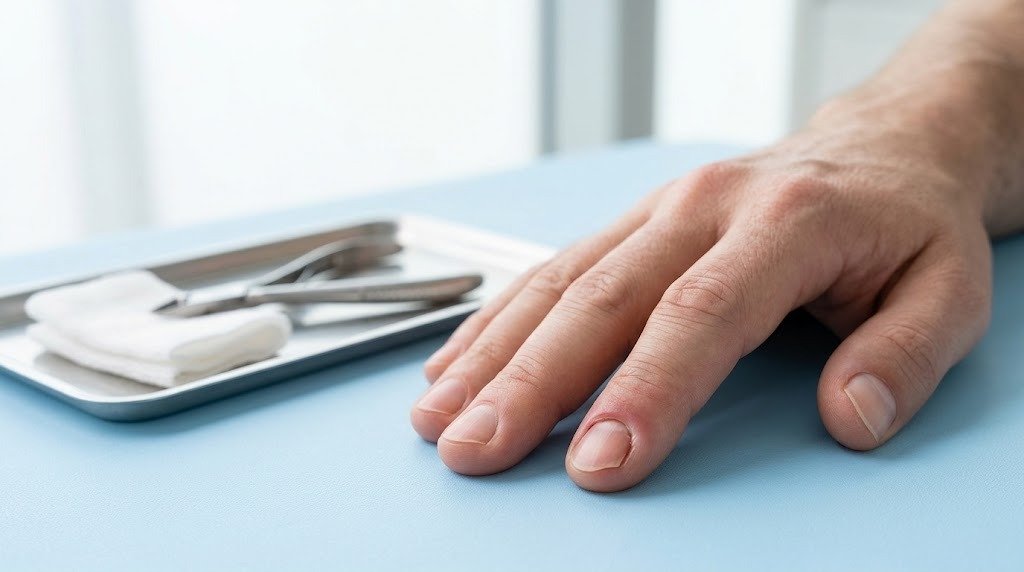
Avoid aggressive attempts to fix the nail yourself. In particular do not:
- Cut deeply into the nail corner
- Dig into surrounding skin
- Pull out a firmly embedded nail edge
- Try to drain a swollen or pus filled area yourself
- Ignore worsening infection symptoms
- Repeatedly irritate the nail while it heals
Gentle care is generally more appropriate for mild irritation while persistent or infected symptoms should be professionally evaluated.
Key Takeaway
An ingrown fingernail occurs when the nail edge presses into or grows into surrounding skin causing pain redness or swelling. Improper trimming nail biting trauma repeated pressure and nail shape can contribute.
Mild cases may improve with gentle cleaning protection and warm water soaks. However severe pain spreading redness significant swelling pus fever or symptoms that fail to improve can indicate an infection or another condition requiring medical attention.
Avoid aggressive cutting or picking protect the affected finger monitor symptoms and seek professional care when the problem is worsening or persistent.
FAQs
Can an ingrown fingernail heal on its own?
A mild case may improve as the nail grows normally and irritation settles. Persistent worsening or infected cases may require professional evaluation.
Should I cut out an ingrown fingernail?
Avoid digging into or cutting deeply around an ingrown nail yourself. This can injure the skin and increase infection risk.
Why does my ingrown fingernail have pus?
Pus can indicate an infection such as paronychia. Increasing pain swelling warmth or spreading redness should be evaluated by a healthcare professional.
How can I prevent an ingrown fingernail?
Avoid cutting nails extremely short biting or picking them and repeatedly injuring the surrounding skin. Good nail hygiene can also reduce the risk.
Is an ingrown fingernail the same as paronychia?
No. An ingrown nail involves the nail edge pressing into surrounding skin while paronychia is inflammation or infection of the nail fold. They can occur together.
When should I see a doctor?
Seek professional care for severe or worsening pain significant swelling pus spreading redness fever or symptoms that do not improve with appropriate self care.


 By
By


 By
By