


Deep tissue massage is a therapeutic technique that targets the deeper layers of muscle and connective tissue (fascia) using slow firm strokes and sustained pressure.
Unlike a relaxation focused massage it’s designed to break up scar tissue, release chronic muscle tension and speed up recovery from injury which is why it’s a go to choice for athletes, people with chronic pain and anyone recovering from a musculoskeletal injury.
This guide covers everything you need to know: how it works, its real benefits (backed by research), what a session feels like, how it compares to other massage types, potential side effects cost and how to find a qualified therapist.
What Is Deep Tissue Massage?
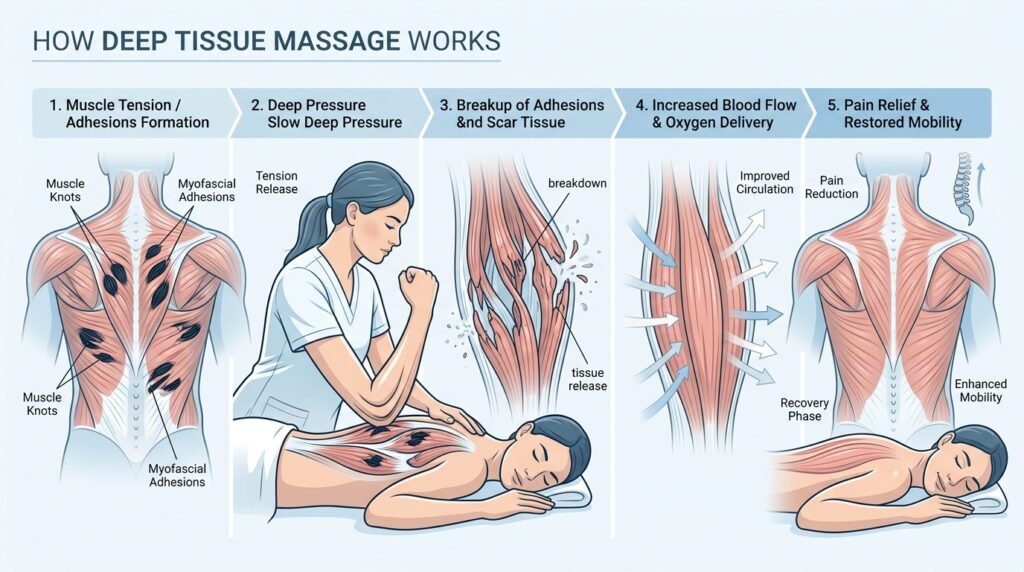
Deep tissue massage uses firm targeted pressure and slow strokes to reach the deeper layers of muscle tendons and fascia the connective tissue that surrounds your muscles bones and joints.
The goal isn’t just relaxation; it’s to physically release tension, break down adhesions (bands of rigid tissue that form after injury) and improve blood flow to the affected area.
Therapists typically use their fingers, knuckles, forearms or elbows to apply pressure along the grain of the muscle, often working across muscle fibers to release knots and trigger points.
How Does Deep Tissue Massage Work?
The pressure applied during a deep tissue massage stimulates mechanoreceptors in the muscle which signal the nervous system to release relaxation related neurotransmitters like serotonin and dopamine. At the same time the mechanical pressure helps:
- Break down scar tissue and adhesions from old injuries
- Improve blood and lymphatic circulation which clears metabolic waste (like lactic acid) from muscle tissue
- Reduce inflammation and deliver oxygen and nutrients to muscle cells for repair
- Restore normal range of motion in stiff or overworked muscles
This is why the effects go beyond a typical spa massage it’s closer to a manual therapy treatment than a relaxation service.
Benefits of Deep Tissue Massage
Deep tissue massage offers both physical and mental benefits. Research and clinical use point to the following:
- Reduces chronic pain A widely cited 2014 study on people with chronic low back pain found deep tissue massage reduced pain to a degree comparable with NSAIDs like ibuprofen.
- Lowers blood pressure A study published in the Journal of Alternative and Complementary Medicine found a measurable drop in blood pressure after a single deep tissue massage session.
- Improves flexibility and range of motion Research on athletes found that goniometer measures joint mobility (hips knees shoulders lumbar spine) improved significantly with regular sessions especially over longer treatment periods (1–2+ years).
- Speeds up muscle recovery By improving circulation and clearing metabolic waste it helps reduce delayed onset muscle soreness (DOMS) after intense training.
- Helps specific conditions including:
- Sports injuries and muscle strains
- Fibromyalgia
- Plantar fasciitis
- Sciatica
- Tennis elbow / lateral epicondylitis
- Cervicogenic headaches (tension originating in the neck)
- Chronic myofascial pain
Is Deep Tissue Massage Good for Athletes?
Yes and this is where the research is strongest. A 2024 randomized controlled trial on 150 athletes found that team sport and strength athletes saw the greatest performance improvement from bi weekly 40 minute deep tissue massage sessions over 8 weeks.
The study measured real gains: improved muscle strength (via manual muscle testing) in the lumbar region knees and shoulders and significant flexibility improvements the longer athletes stayed consistent with sessions. Endurance and individual sport athletes still benefited just to a lesser degree.
In plain terms: if you train regularly, especially in team or strength sports, a consistent deep tissue massage routine (roughly every 1–2 weeks) is more likely to move the needle on recovery and mobility than a one off session.
Deep Tissue Massage vs. Swedish Massage vs. Sports Massage
| Feature | Deep Tissue Massage | Swedish Massage | Sports Massage |
| Pressure | Firm sustained | Light to medium | Medium to firm |
| Goal | Treat muscle/tissue problems break up scar tissue | Relaxation stress relief | Prevent/treat sport related injury improve performance |
| Best for | Chronic pain injury recovery muscle stiffness | Stress general relaxation first time clients | Athletes pre/post event prep |
| Strokes used | Slow deep targeted | Long flowing gliding | Combination of deep and flowing joint mobilization |
| Soreness after | Common for 1–3 days | Rare | Mild varies by intensity |
| Session focus | Specific problem areas | Full body even pressure | Sport or activity specific muscle groups |
Choose deep tissue massage if you have a specific pain point injury or chronic tension. Choose a Swedish massage if your main goal is relaxation. Choose sports massage if you’re training for or recovering from athletic performance specifically.
What Happens During a Deep Tissue Massage Session?
- Consultation Your therapist asks about problem areas, pain levels, injuries and any medical conditions.
- Positioning You lie on a massage table under a sheet undressed to your comfort level (only the area being treated needs to be exposed).
- Warm up The therapist begins with lighter strokes (similar to Swedish massage) to warm up the muscles.
- Deep work Using fingers, thumbs knuckles, forearms or elbows the therapist applies slow deep pressure to target problem areas often working across the muscle fibers.
- Communication A good therapist will check in on pressure levels throughout deep tissue massage should feel intense, not unbearable.
- Cool down The session usually ends with lighter strokes to help the muscles relax after the deep work.
A typical session lasts 45–90 minutes depending on whether it covers the full body or just one or two problem areas.
Does Deep Tissue Massage Hurt?
It can be uncomfortable especially over tight or injured areas but it shouldn’t be painful in a way that makes you tense up or hold your breath. Pain is a signal to tell your therapist to ease off deep tissue massage works best when your muscles can stay relatively relaxed even under firm pressure.
Side Effects and Safety
It’s normal to feel some soreness for 24–72 hours after a session similar to the feeling after a workout. A heating pad or a cold pack (wrapped in a towel) can help ease this.
Deep tissue massage may not be safe if you:
- Have a history of blood clots or a clotting disorder
- Are taking blood thinners
- Have a bleeding disorder
- Have cancer or are undergoing chemotherapy or radiation
- Have osteoporosis or cancer that has spread to the bones (firm pressure raises fracture risk)
- Are pregnant (gentler options like prenatal or Swedish massage are usually recommended instead)
- Have an open wound or active skin infection (reschedule until it heals)
Always talk to your doctor first if you have any of the conditions above or any chronic illness you’re unsure about.
How Often Should You Get a Deep Tissue Massage?

- For chronic pain or an active injury once a week initially tapering to every 2 weeks as symptoms improve.
- For athletes/active training every 1–2 weeks tends to show the best recovery and flexibility results based on current research.
- For general maintenance once a month is usually enough to manage everyday tension.
Consistency matters more than intensity research shows flexibility gains build up over months of regular sessions rather than appearing after a single visit.
How Much Does Deep Tissue Massage Cost?
Prices vary by location therapist experience and session length but as a general range:
- 60 minute session often falls in the $70–$120 range in the US (varies significantly by city)
- 90 minute session typically $110–$180
Some health insurance plans cover massage therapy when it’s prescribed for a specific medical condition (like chronic back pain) check with your provider. Many therapists also offer sliding scale pricing or package discounts for recurring sessions.
Final word
Deep tissue massage is more than just a temporary relief method, it’s a targeted therapy that works on the root cause of muscle pain and tension.
When done correctly and consistently it can improve mobility, speed up recovery and enhance overall physical well being.
The key is choosing the right therapist, understanding your body’s needs and using it as part of a long term approach to health rather than a one time fix.
This article is for general informational purposes and isn’t a substitute for professional medical advice. Talk to your doctor before starting deep tissue massage if you have an underlying health condition.
FAQs
Is deep tissue massage worth it?
Yes especially for chronic pain, muscle stiffness or injury recovery as it offers research backed benefits beyond relaxation. For general stress relief Swedish massage may be a gentler option.
Can deep tissue massage break up fat or cellulite?
No. It targets muscle and connective tissue not fat cells and there’s no evidence linking it to fat loss.
Is deep tissue massage safe during pregnancy?
It’s generally not recommended without medical approval. Always consult your doctor and choose a therapist trained in prenatal massage.
Why am I sore after a deep tissue massage?
Mild soreness for 1–3 days is normal similar to post exercise discomfort as deep pressure works through tight tissue.
Can I go to work right after a deep tissue massage?
Yes but stay hydrated, stretch lightly and avoid intense activity for the rest of the day.
What’s the difference between deep tissue and trigger point massage?
Trigger point massage targets specific knots with focused pressure while deep tissue works across broader muscle areas though both techniques can overlap.


 By
By



 By
By