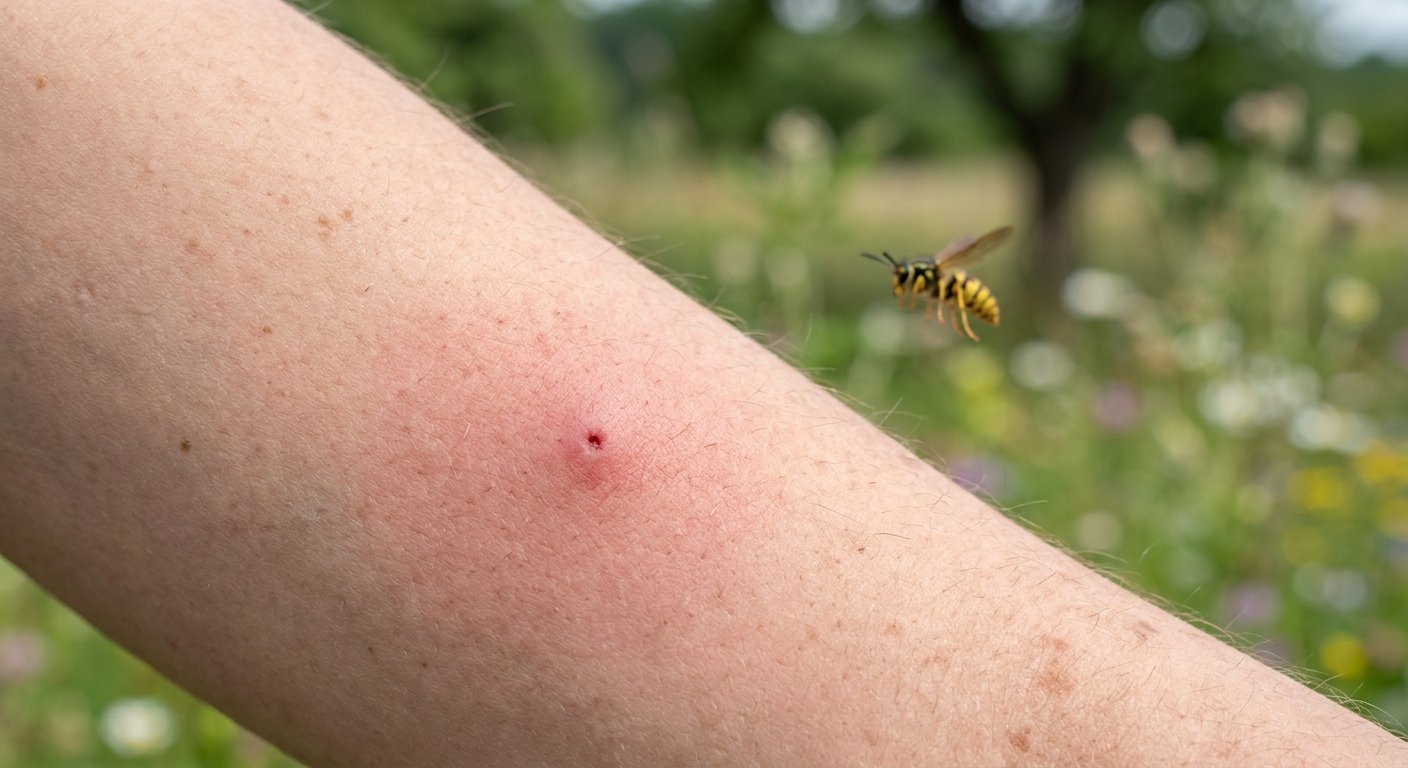

A wasp sting causes immediate sharp pain, redness and swelling that typically eases within one to two hours. For most people it is uncomfortable but not dangerous.
The real risk lies in knowing when a reaction has crossed from normal into something that needs urgent medical attention and that threshold is less obvious than most people think.
Unlike bees, wasps retain their stinger and can sting repeatedly. Their venom contains enzymes, proteins and amines that trigger an inflammatory response in the skin.
How severe that response becomes depends on three things: how many times you were stung where on your body and whether your immune system has a pre-existing sensitivity to wasp venom.
What Happens When a Wasp Stings You?
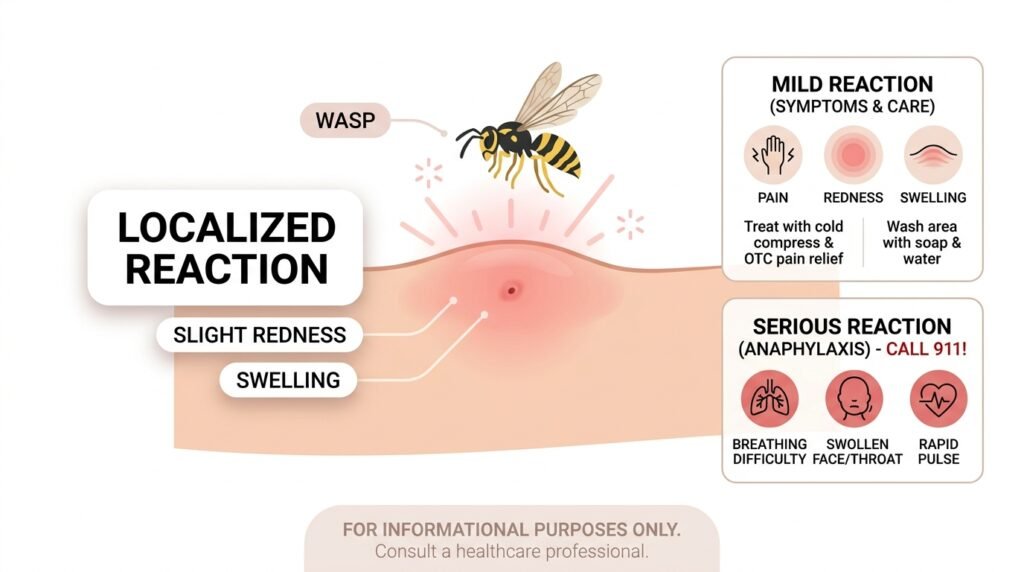
A wasp injects venom through its stinger directly into the skin. This venom contains phospholipases hyaluronidase and mastoparan compounds that break down cell membranes, spread venom through tissue and trigger histamine release causing immediate swelling, redness and itching.
Wasps do not lose their stinger and can sting multiple times. This is especially important near nests where multiple stings can significantly increase venom load and the risk of a systemic reaction even in non allergic individuals.
Wasp Sting Symptoms: What to Expect!
Symptoms depend on venom sensitivity. Most people get a local reaction with pain, redness swelling and itching that peaks within an hour and improves in 2–5 hours.
Large local reactions (≈10%) cause swelling up to 10 cm lasting 24–48 hours sometimes with nausea and pain lasting 5–10 days. It is not anaphylaxis but may indicate venom sensitivity.
Serum sickness is a delayed reaction (6–14 days later) causing fever, rash joint pain and fatigue. Seek medical advice if it appears.
Signs of Anaphylaxis Call 999 Immediately
Anaphylaxis affects around 3% of adults and up to 1% of children who are stung. Symptoms begin within minutes and escalate fast. Call 999 if you observe any of the following:
- Swelling of the throat lips or tongue
- Difficulty breathing wheezing or chest tightness
- A widespread rash or hives appearing away from the sting site
- Sudden dizziness lightheadedness or loss of consciousness
- Rapid or weak pulse
- Severe nausea vomiting or abdominal cramps
If the person carries a prescribed epinephrine autoinjector (EpiPen) use it immediately then call 999. Do not wait to see whether symptoms improve before administering it.
How Long Does a Wasp Sting Last?
A normal local reaction resolves within one to two hours with residual redness and itch lasting up to 48 hours.
A large local reaction takes five to ten days to fully clear. If swelling is still increasing at the 48 hour mark rather than plateauing or reducing that warrants a call to NHS 111 it may indicate infection or an escalating immune response.
How to Treat a Wasp Sting at Home?
For mild to moderate reactions home care is usually effective.
- Check for a stinger and remove it if visible using a flat object like a credit card. Do not squeeze or use tweezers as this can release more venom. Wash the area with soap and water to remove venom and reduce infection risk.
- Apply a cold compress (ice wrapped in cloth) for 10 minutes on 10 minutes off repeating for the first hour. Never apply ice directly to skin.
- If possible, elevate the affected area to reduce swelling and remove tight items like rings or watches early.
- Take an antihistamine such as cetirizine or loratadine for itching; diphenhydramine may help but can cause drowsiness. Use ibuprofen or paracetamol for pain if needed.
- Hydrocortisone cream or calamine lotion can soothe itching and irritation.
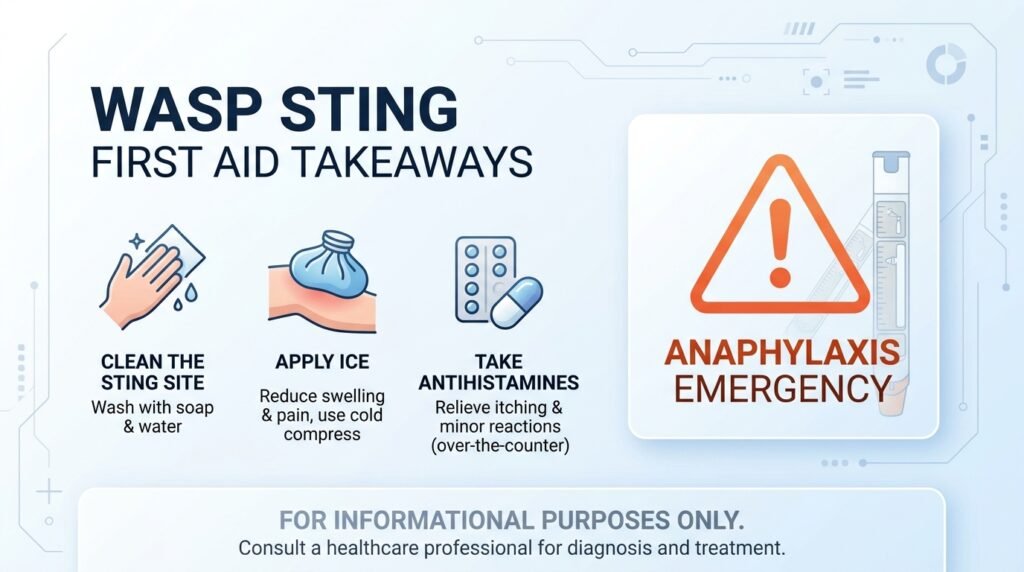
Key Takeaway: Cold + clean + antihistamine are the three most effective immediate steps. Everything else is supportive.
What NOT to Do After a Wasp Sting?
This is the section most guides skip and it matters.
Do not scratch the sting site. Scratching breaks the skin barrier, introduces bacteria and significantly raises infection risk. It also prolongs inflammation.
Do not apply heat. Hot water or heat packs feel instinctively soothing but dilate blood vessels accelerate venom absorption into surrounding tissue and worsen swelling. Cold is always correct.
Do not drink alcohol immediately after a sting. Alcohol widens blood vessels and can intensify venom spread. It also masks early symptoms of an allergic reaction.
Do not squeeze the sting site in an attempt to push out venom; it does not work and increases tissue damage.
Do not delay using an EpiPen if you are known to be allergic Waiting to assess reaction severity is a dangerous and common mistake. If you have a prescribed autoinjector and have been stung, use it as soon as systemic symptoms appear.
Does Vinegar Help a Wasp Sting? The Evidence
“Wasp sting vinegar” is a common search but vinegar does not help. The idea comes from a belief that acid neutralises venom but wasp venom is near neutral (pH ~6.8–6.9) so vinegar has no meaningful effect.
Research shows home remedies like vinegar baking soda or meat tenderiser do not reduce pain or swelling compared to no treatment. They are harmless but ineffective; cold compresses and antihistamines are evidence based vinegar is not.
Wasp Sting Swelling After 48 Hours: What It Means!
Persistent or worsening swelling after 48 hours has three main explanations:
Large local reaction still evolving
These peak at 24 to 48 hours and can take up to 10 days to resolve. If swelling has plateaued or is slowly reducing this is likely the cause and does not require emergency care.
Secondary infection
If the sting site was scratched or handled with unwashed hands bacteria can enter the broken skin. Signs include expanding redness increasing warmth plus worsening pain and fever. This needs antibiotic treatment contact your GP or an urgent treatment centre.
Delayed hypersensitivity reaction
In some cases a delayed immune response causes swelling to return or worsen days after the initial sting. Less common but worth flagging to a clinician.
If swelling is still actively increasing not just present but growing at 48 hours call NHS 111.
Wasp Sting vs. Bee Sting: Key Differences
| Wasp Sting | Bee Sting | |
| Leaves stinger behind | Rarely | Always |
| Can sting multiple times | Yes | No |
| Venom volume per sting | Lower (~1/10th of a bee sting) | Higher |
| Pain (Schmidt Index) | 2–3 out of 4 | 2 out of 4 |
| Stinger removal needed | Usually not | Always check and remove |
| Anaphylaxis risk | Present | Present |
The most practical difference: always check for a stinger after a bee sting and remove it promptly. After a wasp sting, focus immediately on cold and antihistamines.
How Poisonous Is a Wasp Sting?
For most people a single wasp sting delivers a small venom dose that is painful but not medically dangerous. On the Schmidt Sting Pain Index (0–4) paper wasps score 2–3 depending on species compared to honey bees at 2.
Risk increases with multiple stings. Around 50+ stings can cause a toxic systemic reaction even without allergy due to high venom load affecting the body. If stung by a swarm seek emergency care immediately as symptoms can be delayed.
Wasp Stings in Toddlers and Young Children
Most stings cause mild local reactions but children may scratch more and struggle to explain symptoms.
Seek medical help if swelling spreads fever develops or symptoms extend beyond the sting site. Urgent care is needed if any allergic signs appear.
Preventing Wasp Stings
- Avoid wearing bright colors floral prints and strong perfumes outdoors in wasp season
- Keep food and sugary drinks covered when eating outside
- Check for nests before mowing gardening or working near eaves and sheds
- Move away calmly if a wasp is nearby swatting increases the chance of being stung
- If you or a family member has a known venom allergy always carry an epinephrine auto injector and make sure it hasn’t expired
Final Takeaway
A wasp sting is usually harmless and manageable with simple care: clean the area use cold compresses and take antihistamines if needed. Most reactions resolve quickly but some can become serious especially in cases of allergy infection multiple stings or worsening swelling after 48 hours.
The key is awareness recognising when symptoms are normal and when they require medical attention. Acting early especially in cases of anaphylaxis makes all the difference and ensures safe recovery in almost all situations.
FAQs
How long does a wasp sting last?
Pain usually settles within 1–2 hours while swelling/redness last 24–48 hours; large reactions may take 5–10 days. Worsening symptoms after 48 hours should be checked by a medical professional.
Is vinegar effective for a wasp sting?
No wasp venom is near neutral (pH ~6.8–6.9) so vinegar doesn’t help. Cold compresses and antihistamines are evidence based treatments.
What not to do after a wasp sting?
Avoid scratching heat alcohol or squeezing the site. If you carry an EpiPen for allergy use it immediately at signs of a systemic reaction.
How long does a wasp sting take to heal?
Most stings resolve within 1–2 hours for mild pain and 5–7 days for any residual swelling or itching to fully disappear.
Can you be stung by the same wasp more than once?
Yes. Unlike bees wasps keep their stinger and can sting multiple times in a single encounter.

 By
By



 By
By