
Back workouts with dumbbells are a practical way to strengthen and train the back at home or in the gym without requiring a large collection of equipment. Dumbbell exercises can work different areas of the back while also supporting better control and stability during each movement.
Common exercises include dumbbell rows, reverse flys, pullovers, shrugs and controlled hip hinge movements. Each exercise can provide a different training stimulus helping you build a balanced back routine based on your goals, experience and available equipment.
Good form should always be a priority during back workouts. Choose a suitable resistance, use controlled movements, and perform exercises comfortably to reduce unnecessary strain.
What Are the Best Back Workouts With Dumbbells?
There is no single best exercise for everyone. A balanced dumbbell routine can include rowing movements for the upper and middle back exercises that involve the lats and movements that challenge the muscles supporting the spine and shoulders.
Common options include the on arm dumbbell row bent over row dumbbell pullover reverse fly shrug and dumbbell deadlift. You do not need to perform all of them in one workout. Choosing a few exercises that train different movement patterns can be more practical.
Which Muscles Do Back Workouts With Dumbbells Target?
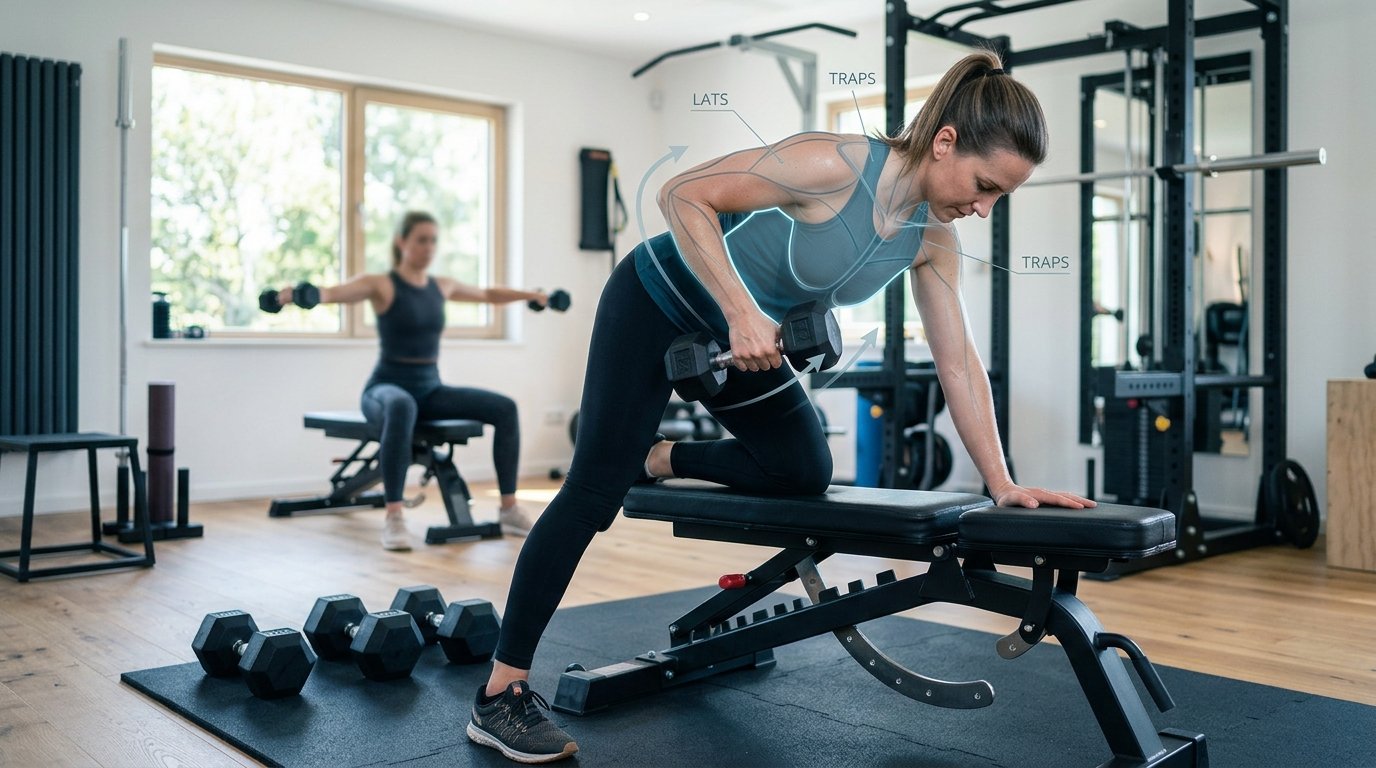
The back contains several muscle groups. The latissimus dorsi or lats run along the sides of the back and are involved in movements such as rows and pullovers.
The trapezius and rhomboids support the upper back and shoulder blades and are involved in row shrugs and reverse flys.
The erector spinae run along the spine and help stabilize the trunk during hip hinge and deadlift movements.Other muscles including the rear shoulders, biceps, forearms and core can also assist during dumbbell back exercises.
How Do You Perform a OneArm Dumbbell Row?
The on arm dumbbell row allows you to train one side at a time. You can use a stable bench or another secure surface for support. Keep your back in a comfortable neutral position and pull the dumbbell toward your torso without twisting or swinging.
Lower the weight slowly and maintain control throughout the movement.Use a resistance level that allows you to maintain good form rather than relying on momentum.
How Do You Perform a BentOver Dumbbell Row?
Hold the dumbbells and move into a comfortable hip hinge position while keeping your spine neutral. Pull the weights toward your torso and then lower them under control. Avoid swinging the dumbbells or changing your body position to complete a repetition.
If you cannot maintain a stable position, reduce the resistance or choose a simpler variation.This exercise can involve the last traps, rhomboids, rear shoulders and supporting muscles.
Can Dumbbell Pullovers Work the Back?
Dumbbell pullovers provide a different movement pattern from rows. They are usually performed while lying on a stable bench or suitable surface and moving the dumbbell through a controlled overhead arc.
The lats can contribute to the movement although muscle involvement varies with technique and individual anatomy. Use a comfortable range of motion and avoid forcing the weight farther than your mobility allows.
Are Dumbbell Reverse Flys Good for Back Training?
Reverse flys can complement rowing exercises by working the upper back and rear/shoulder area .To perform the movement, hinge forward comfortably and let the dumbbells hang below you.
With a slight bend in the elbows raise the weights outward and then lower them slowly.Heavy resistance is not necessary. Using a weight you can control helps reduce swinging and keeps the movement more consistent.
How Can You Make Back Workouts With Dumbbells Safer?
Good technique should come before increasing resistance. Make sure you have enough clear space and that any dumbbell bench or support surface is stable.Start with a light warmup that prepares you for the movements you plan to perform.
During the workout avoid sudden movements uncontrolled swinging or forcing an uncomfortable range of motion.If an exercise causes sharp or unusual pain stop the movement.
Beginners and teenagers may also benefit from learning resistance training techniques from a qualified coach, physical education teacher or knowledgeable adult.
How Should You Choose Dumbbells?
The best resistance is not necessarily the heaviest weight you can lift. Choose a dumbbell that allows you to complete the movement with control while maintaining a stable position.
If your form starts to break down, reduce the resistance. As your experience improves you can gradually make exercises more challenging when appropriate.
Adjustable dumbbells can also be useful because they provide different resistance levels without requiring many separate weights.
How Can You Build a Simple Dumbbell Back Workout?
A simple routine could begin with a supported on arm row followed by a two arm row or another pulling movement. A reverse fly can add a different pattern for the upper back and rear shoulders.
A pullover can also be included if it feels comfortable and suits your experience level. The number of exercises sets and repetitions should depend on your age, experience, fitness level and individual circumstances.
A back workout should also be part of a balanced activity routine that trains and moves the rest of the body.
What Are Common Mistakes in Dumbbell Back Workouts?
Using too much resistance is a common mistake. When a weight is difficult to control, people may swing the dumbbells or change their body position.Rushing repetitions can also make it harder to maintain good technique.
Another mistake is performing too many similar exercises instead of selecting a few movements that provide variety.
Remember that back exercises can also involve the core shoulders, arms and lower body. A balanced routine should consider the whole body rather than focusing on one area alone.
Can You Do Back Workouts With Dumbbells at Home?
Yes. Many dumbbell back exercises can be performed at home with enough clear space and for some movements a stable bench.Before starting make sure the floor is clear and the equipment is secure.
If you are new to resistance training focus first on learning the movement correctly rather than immediately trying to make the workout difficult.
What Is the Key Takeaway?
Back workouts with dumbbells can train several muscles involved in pulling shoulder movement and trunk stability. Rows, pullovers , reverse flys and other controlled movements can provide variety without requiring much equipment.
The main priorities are appropriate exercises, manageable resistance, good technique and gradual progress. A balanced fitness routine should also include movement and strengthening exercises for the rest of the body.
FAQs
Are Back Workouts With Dumbbells Effective?
Dumbbells can provide useful resistance for exercises such as rows, reverse flys and pullovers. Results depend on appropriate technique resistance consistency and an overall balanced routine.
What Is the Best Dumbbell Exercise for the Back?
There is no single best exercise for everyone. Onearm rows and other rowing variations are versatile choices while pullovers and reverse flys provide different movement patterns.
Can Beginners Do Back Workouts With Dumbbells?
Beginners can perform suitable dumbbell exercises when they learn the correct movement and use manageable resistance. Good form is more important than lifting heavy weights.
Can You Train Your Back With Only Dumbbells?
Dumbbells can train many backrelated movements but a complete fitness routine does not need to rely on only one type of equipment. Other forms of resistance and physical activity can also be useful.
How Often Should You Do Back Workouts With Dumbbells?
The appropriate frequency depends on age, experience overall activity and recovery. Back training should fit into a balanced exercise routine rather than being the only form of physical activity.
What Should I Do If Exercise Causes Pain?
Stop the movement if it causes sharp or unusual pain. Do not force the exercise. If the pain continues or you are concerned about an injury, seek advice from an appropriate healthcare professional.

 By
By

 By
By