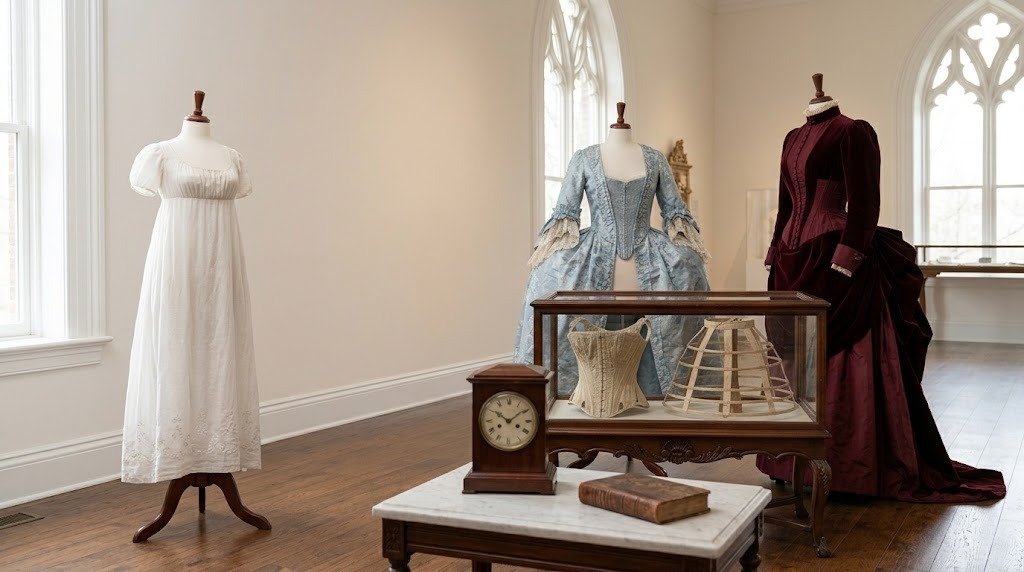

Georgian vs Victorian fashion shows how clothing changed alongside society, technology and cultural influences. Georgian styles ranged from elaborate gowns with wide skirts to lightweight highwaisted dresses.
Victorian fashion later introduced fitted bodices, crinoline supported skirts, bustle dresses and changing sleeve shapes. The main difference is not simply that Georgian clothing was decorative while Victorian clothing was structured.
Both periods included elaborate and practical garments. Their silhouettes, construction fabrics and accessories changed over time.
What Is the Difference Between Georgian and Victorian Fashion?
Georgian fashion refers to clothing worn during Britain’s Georgian era conventionally dated from 1714 to 1830. Victorian fashion covers Queen Victoria’s reign from 1837 to 1901. Both periods included several different styles.
The main differences include:
- Women’s silhouettes: Georgian fashion included wide pannier skirts and later Empire waist gowns. Victorian fashion featured fitted bodices, crinolines bustles and changing sleeve shapes.
- Construction: Both periods used supportive undergarments but their designs changed.
- Fabrics: Silk cotton muslin linen and wool appeared in both eras.
- Men’s clothing: Georgian outfits often featured decorative coats and waistcoats while Victorian menswear became strongly associated with tailored suits and formal coats.
- Accessories: Georgian styles included shoe buckles and elaborate hairstyles while Victorian outfits commonly featured changing hats, bonnets, gloves and jewelry.
These are general trends. The garment’s date, purpose and wearer all matter when identifying a historical style.
When Were the Georgian and Victorian Fashion Periods?
Understanding the dates helps explain why some garments look similar even when they belong to different periods.
The Georgian Era: 1714–1830
The Georgian era takes its name from Britain’s kings George I George II George III and George IV. During this period fashionable women’s clothing changed from wide structured gowns to simpler silhouettes influenced by classical art.
Earlier styles often featured pannier supported skirts while late Georgian fashion included highwaisted dresses.
The Regency Period: 1811–1820
The British Regency was a shorter period within the Georgian era. Fashionable clothing often featured Empire waistlines, lightweight fabrics, bonnets, shawls and neoclassical influences.
Regency fashion is not the same as the whole Georgian period. Explore our guide to Regency fashion for more details.
The Victorian Era: 1837–1901
The Victorian era began when Queen Victoria came to the throne in 1837 and ended in 1901. Fashion changed significantly throughout these decades.
Early Victorian dresses featured fitted bodices and full skirts. Midcentury styles became wider with the use of crinolines while later decades introduced bustle shapes and the prominent sleeves associated with the 1890s.
Fashion did not change overnight in 1837. The styles of the 1820s and 1830s formed part of a gradual transition.
How Did Women’s Clothing Change?
Women’s silhouettes are among the clearest differences between Georgian and Victorian fashion but neither period had just one dress shape.
Georgian Women’s Fashion
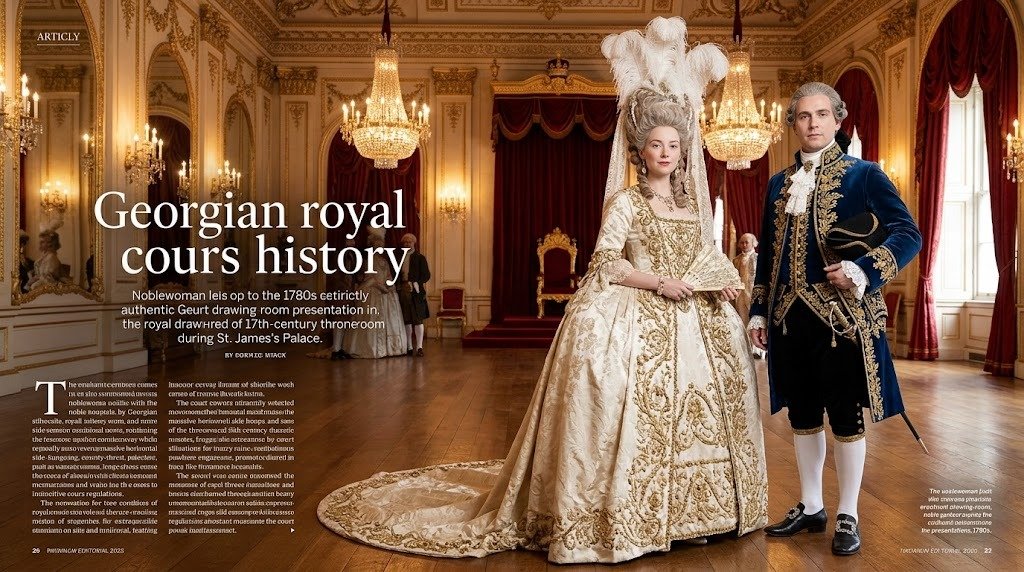
Earlier Georgian gowns often had fitted bodices and wide skirts supported by panniers or other structures. These supports extended the skirt sideways and created a broad silhouette especially in formal clothing.
Silk brocade embroidery ribbons, lace and patterned fabrics appeared in fashionable dresses. Hairstyles could be elaborate with curls, ornaments or wigs in some settings.
By the late eighteenth century lighterlooking gowns and neoclassical influences became increasingly visible.
Late Georgian and Regency Dresses
Around the early 1800s Empirestyle gowns with waistlines just below the bust became fashionable. These dresses often used lightweight fabrics such as muslin and drew inspiration from ancient Greek and Roman clothing.
Their flowing shapes differed from the wide skirts of earlier Georgian gowns. However supportive undergarments did not disappear completely; their use depended on the garment and period.
Victorian Women’s Fashion
Victorian dresses changed through several recognizable phases:
- 1830s–1840s: Fitted bodices full skirts and changing sleeve shapes.
- 1850s–1860s: Very wide skirts supported by crinolines.
- 1870s–1880s: Bustle styles that emphasized the back of the skirt.
- 1890s: Prominent sleeves fitted bodices and changing skirt shapes.
These trends mainly describe fashionable clothing. Everyday garments varied according to occupation, income location and occasion.
Georgian vs Victorian Fashion: Main Differences
| Feature | Georgian Fashion | Victorian Fashion |
| Dates | 1714–1830 | 1837–1901 |
| Women’s silhouettes | Wide pannier skirts; later Empire gowns | Fitted bodices crinolines bustles and large sleeves |
| Waistline | Varied; high Empire waist in the early 1800s | Defined waistlines that changed by decade |
| Skirt support | Panniers and petticoats depending on the period | Crinolines bustles and petticoats |
| Fabrics | Silk cotton linen wool and muslin | Silk cotton wool velvet and other textiles |
| Men’s clothing | Coats waistcoats breeches trousers and cravats | Tailored coats waistcoats trousers and suits |
| Hairstyles | Elaborate styles in some eighteenth century settings; simpler Regency looks | Styles varied from arranged curls to later Victorian updos |
| Accessories | Fans shoe buckles decorative headwear and jewelry | Bonnets hats gloves parasols and jewelry |
This table summarizes broad trends rather than rules that apply to every garment.
What Fabrics and Decorations Were Popular?
Fabric choices depended on wealth availability season and occasion. Both periods included simple everyday textiles and expensive decorative materials.
Georgian Fabrics and Decoration
Silk was important in fashionable Georgian clothing especially formal gowns with rich woven patterns. Cotton linen and printed textiles were also used.
Garments could feature embroidery lace ribbons and decorative trim. Clothing was valuable so garments might be repaired, altered or reused as fashions changed.
Victorian Fabrics and Decoration
Victorian clothing also used silk cotton wool velvet and decorative trims. Dresses could include pleats, lace bows, layered skirts and fitted bodices.
Developments in textile production and dressmaking influenced nineteenth century clothing although fashionable fabrics and skilled tailoring remained more accessible to some people than others.
The main difference was not that one period used decoration and the other did not. Both did; the styles and placement of decoration changed.
What Did Men Wear in Each Era?
Men’s clothing changed considerably although formal tailoring remained important in both periods.
Georgian Men’s Fashion
Fashionable Georgian men often wore coats, waistcoats, shirts, neckcloths or cravats and breeches or trousers depending on the date. Coats could feature decorative buttons embroidery and rich fabrics.
Wigs and carefully arranged hair were associated with some eighteenth century formal styles. By the early nineteenth century men’s clothing increasingly reflected the cleaner lines of Regency tailoring.
Victorian Men’s Fashion
Victorian menswear commonly included shirts, waistcoats, trousers jackets and coats. Frock coats, morning coats and top hats were used for particular social, professional or formal occasions.
Tailored clothing and darker colors became strongly associated with Victorian formal and professional dress but not all garments were plain or dark. Everyday clothing varied according to work income and setting.
To identify men’s historical clothing examine the coat waistcoat trousers and neckwear together rather than relying on a single accessory.
How Did Support Garments Change?
Support garments helped create fashionable silhouettes in both eras but their shapes and purposes changed over time.
- Stays: Structured garments worn to shape and support the torso in earlier periods.
- Panniers: Supports extended skirts sideways especially in eighteenth century fashionable dress.
- Crinolines: Structures associated with the very wide skirts of the midnineteenth century.
- Bustles: Supports that added volume to the back of skirts during parts of the later Victorian period.
- Corsets: Garments whose construction and use varied across the nineteenth century.
Empire waist gowns changed the visible waistline but did not mean that every form of support disappeared. Likewise not every woman wore the same undergarments in the same way.
These terms are not interchangeable. The date and construction of a garment are essential when identifying the correct style.
How Did Hairstyles and Accessories Differ?
Accessories completed an outfit and often reflected the occasion and fashionable taste of the wearer.
Some Georgian hairstyles featured elaborate curls ornaments and powdered hair. By the early 1800s Regency fashion was associated with curls and buns inspired by classical styles.
Georgian accessories included fans, shoe buckles, gloves , shawls , decorative headwear and jewelry. Regency outfits commonly featured bonnets, shawls , reticules and short jackets.
Victorian accessories changed by decade and included hats, bonnets , gloves , parasols jewelry and different styles of footwear. Men’s accessories included neckwear and hats suited to particular occasions.
When recreating a historical look choose accessories that match the approximate date of the main garment. Combining an eighteenth century gown with a later Victorian bustle can create a mixed period costume.
Why Did Fashion Change Between the Two Periods?
Fashion reflected political events, trade cultural influences manufacturing and changing social expectations.
During the Georgian period international trade influenced textile choices while neoclassical art helped popularize highwaisted gowns in the late Georgian and Regency years.
During the Victorian era developments in textile manufacturing, fashion publications, commercial retail and dressmaking affected how clothing was produced and sold. Silhouettes continued to change but access to fashionable garments still depended on income, location and occupation.
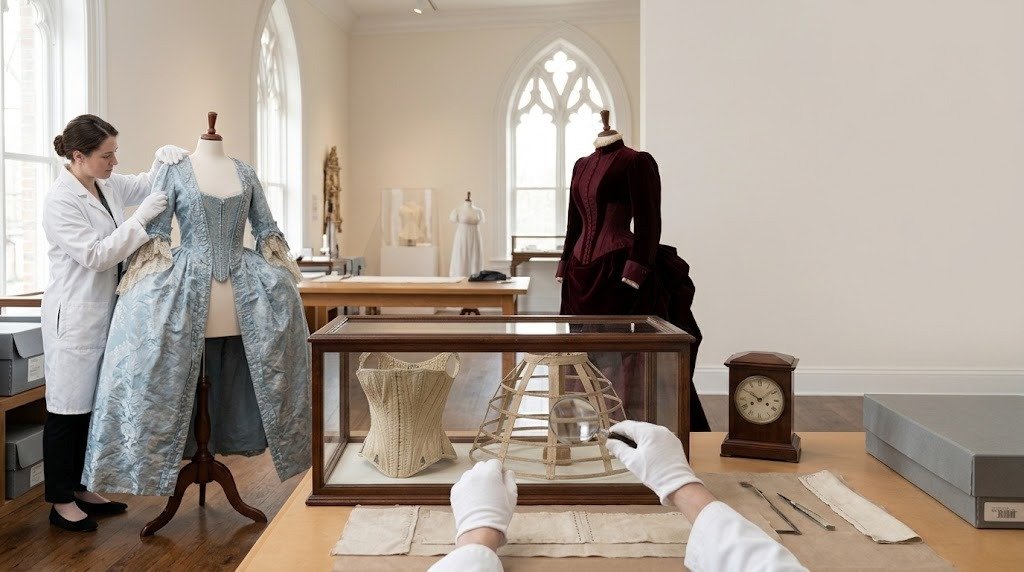
Surviving museum garments and fashion illustrations are valuable historical evidence but they do not represent every social group equally. Everyday clothes were often repaired and reused while expensive garments were more likely to survive in collections.
How Can You Identify Georgian vs Victorian Clothing?
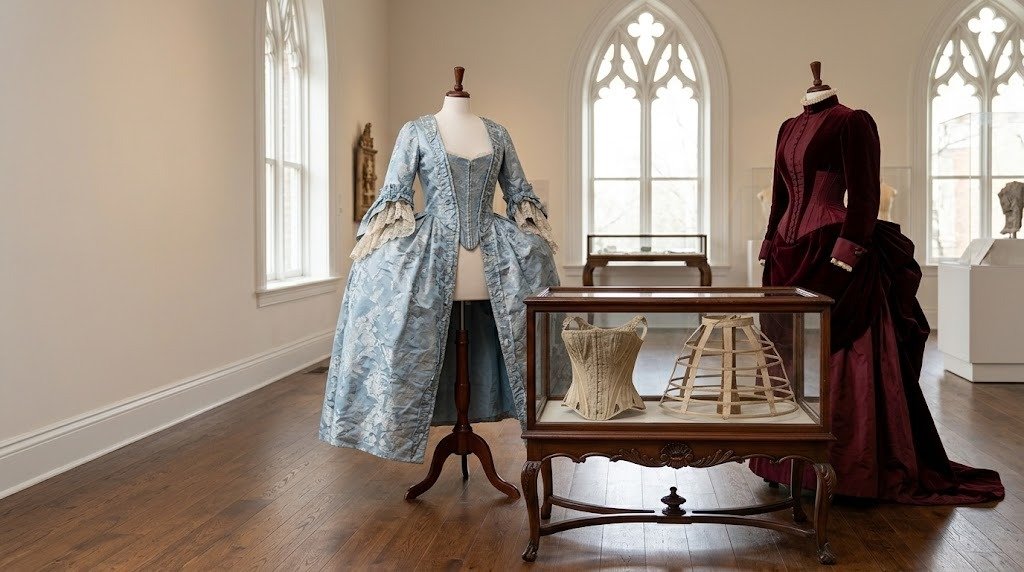
If you are researching an image or planning a historical costume use several clues together.
- Check the date: Establish the likely decade before identifying the style.
- Study the silhouette: Sideways skirt width may suggest earlier Georgian fashion while Empire waistlines point toward the late Georgian period. Crinolines and bustles are associated with particular Victorian decades.
- Examine construction: Look at the bodice sleeves, seams skirt shape and visible fastenings.
- Check fabrics and decoration: Materials can provide clues but cannot prove a garment’s date by themselves.
- Compare accessories: Hairstyles shoes, hats and neckwear can support your identification.
- Use reliable references: Museum collections dated fashion plates and documented garments are more useful than undated costume images.
Avoid relying on one feature alone. Styles overlapped and fashion developed gradually across regions and social groups.
Conclusion
Georgian vs Victorian fashion compares two long periods with different but sometimes overlapping styles. Georgian clothing ranged from wide decorative gowns to highwaisted Regency dresses. Victorian fashion developed through fitted bodices, crinolines bustles and changing late century silhouettes.
To identify a historical garment accurately consider its date shape, construction fabric and accessories together. Continue exploring early Victorian fashion and Victorian era outfits for a closer look at the later period.
FAQs
1. Is Georgian fashion older than Victorian fashion?
Yes. The Georgian era is conventionally dated from 1714 to 1830 while the Victorian era lasted from 1837 to 1901. Transitional styles appeared between these periods.
2. Is Regency fashion the same as Georgian fashion?
No. Regency fashion is a shorter period within the broader Georgian era. It is especially associated with highwaisted Empire gowns and neoclassical influences.
3. Were Victorian dresses always bigger than Georgian dresses?
No. Earlier Georgian gowns could have very wide pannier supported skirts while late Georgian Empire dresses were often narrower. Victorian silhouettes also changed between crinolines bustles and other styles.
4. Did Georgian and Victorian women both wear corsets?
Supportive undergarments were used in both periods but their designs and purposes varied. Regency support garments and Victorian corsets should not be treated as identical.
5. What is the easiest way to tell Georgian and Victorian dresses apart?
Look at the silhouette date construction and accessories together. Panniersupported skirts suggest some earlier Georgian styles Empire waistlines point toward the late Georgian period and crinolines or bustles suggest particular Victorian decades.
6. Where can I find reliable examples of historical clothing?
Museum collections and historical archives are useful starting points. The Royal Collection Trust National Gallery of Victoria and Metropolitan Museum of Art provide resources for researching Georgian Regency and Victorian dress.


 By


 By