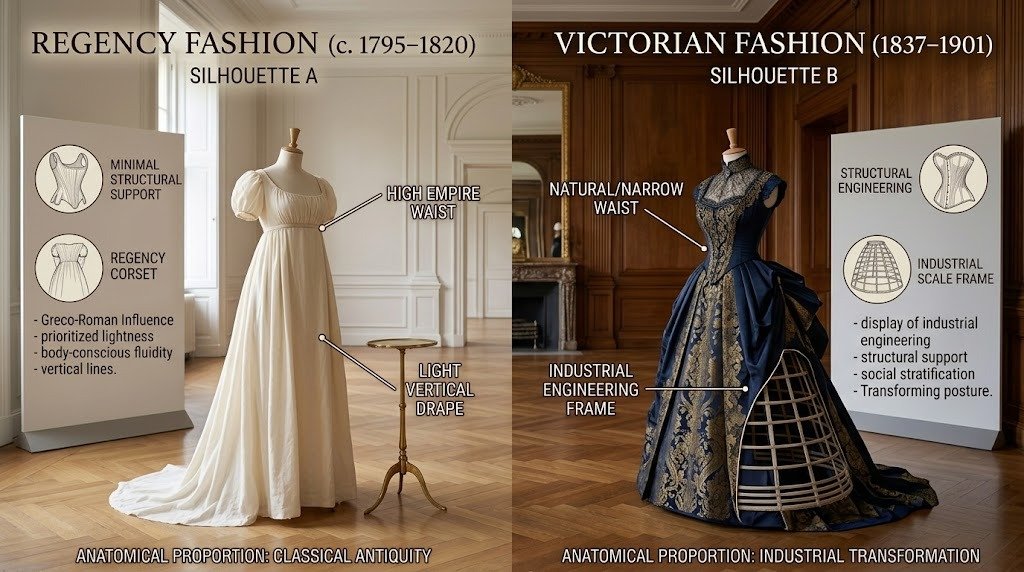

Regency and Victorian fashion represent two distinct stages of nineteenth century clothing history. Regency fashionf is known for high waisted dresses, flowing skirts and classical influences. Victorian fashion developed through fitted bodices, wider skirts, crinolines bustles and changing sleeve shapes.
The differences also appear in men’s clothing fabrics, foundation garments and accessories. Understanding these features makes it easier to identify historical outfits and distinguish the two periods.
What Is the Difference Between Regency and Victorian Fashion?
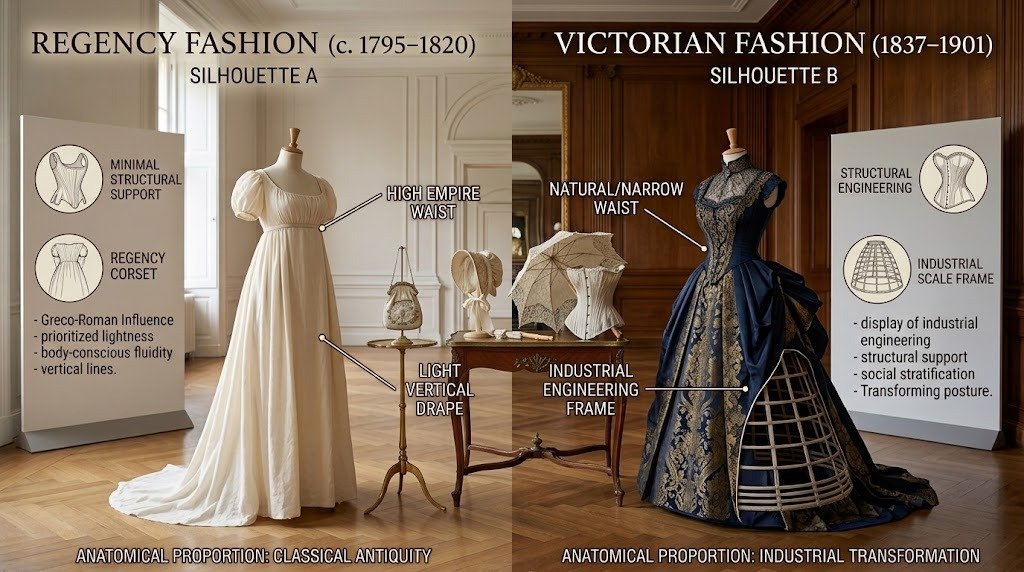
The main difference is the silhouette. Regency women’s dresses typically had a high waist just below the bust creating a long flowing shape. Victorian dresses generally emphasized the natural waist and developed more structured skirts and bodices.
| Feature | Regency Fashion | Victorian Fashion |
| Main period | 1811–1820 in Britain | 1837–1901 |
| Women’s waistline | High below the bust | Usually at the natural waist |
| Dress silhouette | Long and flowing | Varied from wide skirts to bustles |
| Common fabrics | Muslin cotton linen silk | Cotton wool silk velvet lace |
| Foundation garments | Stays and supportive undergarments | Corsets petticoats crinolines bustles |
| Men’s clothing | Coats waistcoats breeches or trousers | Tailcoats waistcoats trousers suits |
| Overall style | Classical and elongated | Structured and varied |
These are general patterns. Clothing also depended on wealth, occasion, occupation and personal preference.
When Were the Regency and Victorian Fashion Eras?
The British Regency officially lasted from 1811 to 1820 when the Prince of Wales served as Prince Regent before becoming George IV. In fashion history the term is sometimes used more broadly for styles from the late eighteenth century through the early 1820s.
Regency clothing drew inspiration from classical Greek and Roman art. Highwaisted dresses, flowing skirts, shawls and delicate accessories became familiar features of fashionable women’s dress.
Jane Austen’s Pride and Prejudice (1813) is associated with this period and screen adaptations often use Empirewaist dresses to represent its style.
When Was Victorian Fashion Popular?
The Victorian era began in 1837 when Queen Victoria took the throne and ended in 1901. Fashion changed significantly throughout these decades. Early Victorian clothing featured fitted bodices and expanding skirts.
Midcentury styles became known for cage crinolines while bustle silhouettes became prominent later in the century. The 1890s introduced another distinctive look including large sleeves and more controlled skirt shapes.
Victorian fashion is therefore best understood as a series of changing styles rather than one fixed look.
How Did Regency and Victorian Women’s Dresses Differ?
Women’s dresses provide one of the clearest ways to identify the two periods.
Regency Dresses and the Empire Waist
Many Regency dresses featured an Empire waist positioned just below the bust. The skirt fell from this point toward the floor creating an elongated silhouette.
Muslin cotton linen and silk were used according to the occasion and the wearer’s means. Wealthier women could wear embroidered fabrics, decorative trims, jewellery and elaborate shawls.
Not every Regency dress was simple and a high waist alone cannot prove a garment’s date because later fashions also borrowed this feature.
Victorian Dresses and the Defined Waist
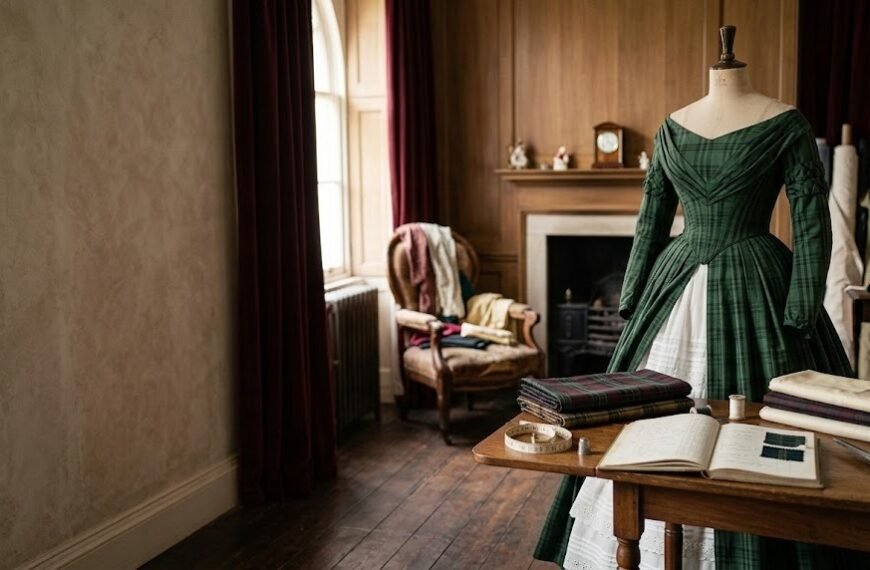
Victorian dresses generally emphasized the natural waist with fitted bodices and skirts shaped by foundation garments. Their silhouettes changed considerably during the century.
- Early Victorian: Fitted bodices, fuller skirts and distinctive sleeves.
- MidVictorian: Wide skirts supported by cage crinolines.
- Late Victorian: Bustles rearfocused skirt volume and changing sleeve shapes.
These differences help explain why an 1840s dress can look very different from an 1880s or 1890s design.
Crinolines and Bustles
Crinolines supported wide skirts using a framework of hoops reducing the need for numerous heavy petticoats. They became especially popular during the mid1850s.
Bustles created a different silhouette by concentrating volume at the back of the skirt. They were particularly associated with the 1870s and 1880s.
These structures are useful clues when identifying many Victorian outfits and distinguish them from typical Regency styles.
How Did Regency and Victorian Men’s Fashion Differ?
Men’s fashion changed more gradually than women’s clothing but differences in tailoring and formality still help distinguish the periods.
Regency Men’s Fashion
Regency menswear commonly included fitted coats, waistcoats, breeches or trousers, cravats and polished footwear. Tailoring and neat grooming were important parts of fashionable presentation.
Beau Brummell is often associated with the period’s emphasis on understated elegance and wellfitted clothing. Formal town dress differed from riding clothes and practical country outfits.
Victorian Men’s Fashion
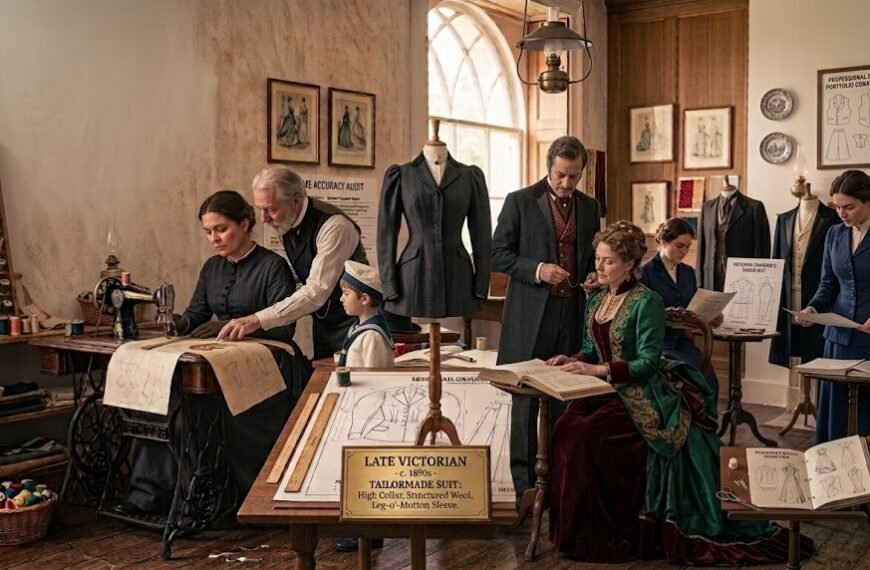
Victorian men continued wearing coats, waistcoats and trousers but the range of garments evolved over the century. Frock coats and morning coats suited particular occasions while tailcoats remained associated with formal dress.
Lounge suits also became increasingly relevant toward the later nineteenth century. The difference was not that one era used tailoring and the other did not. Instead garment cuts proportions and expectations for different occasions changed over time.
Did Regency and Victorian Fashion Use Different Fabrics?
Both periods used natural fibres such as cotton linen wool and silk. The differences often involved fabric weight decoration and how materials shaped the finished garment.
Fabrics in Regency Clothing
Lightweight muslin and cotton suited the flowing shape of many Regency dresses. Silk and more elaborate textiles were also used especially for formal wear and wealthier wardrobes.
Shawl’s ribbons and embroidery added decoration without changing the dress’s basic silhouette.
Fabrics in Victorian Clothing
Victorian clothing used cotton and wool for many everyday garments while silk velvet lace and richly decorated textiles appeared in formal or expensive clothing.
Heavier materials and layered construction could support structured silhouettes although not every Victorian garment was heavy. Fabric choice depended on the decade season occasion and budget.
How Did Corsets and Foundation Garments Differ?
Supportive undergarments existed in both periods but their construction and role in shaping fashionable clothing changed.
Regency Stays and Supportive Undergarments
Regency women used stays and other supportive garments beneath their dresses. The highwaisted silhouette created an elongated appearance but it did not mean that structured undergarments had disappeared.
Victorian Corsets Petticoats and Skirt Supports
Victorian foundation garments helped shape the waist and support changing skirt silhouettes. Corsets, petticoats, crinolines and bustles each played different roles.
The Victoria and Albert Museum’s historical collections explain how these garments developed alongside changing fashion. Cage crinolines for example supported wide skirts with hoops rather than relying only on layers of petticoats.
Corsets also continued into the Edwardian period so the distinction between Regency and Victorian fashion is better explained through silhouette and construction than by claiming that only one era used corsets.
How Did Hairstyles and Accessories Differ?
Accessories and hairstyles help complete a historical look but they should be considered alongside the garment itself.
Regency Accessories and Hairstyles
Regency outfits could include shawls, gloves, ribbons fans , jewellery and decorative headwear. Hairstyles often featured curls and updos influenced by classical art.
Formal evening clothing could be more elaborate than everyday dress while outdoor outfits included practical accessories.
Victorian Accessories and Hairstyles
Victorian accessories included bonnets, hats, gloves, parasols fans and jewellery. Their styles changed throughout the decades as did hairstyles designed to complement fashionable necklines and headwear.
For accurate identification examine the hairstyle silhouette accessories and garment construction together rather than relying on one feature.
How Did Social Class and Daily Life Affect Clothing?
Fashion varied according to wealth, occupation location and occasion in both periods. During the Regency affluent people could afford fine fabrics and clothing made for specific occasions while working people generally needed practical garments that were easier to maintain.
Victorian fashion was influenced by industrial and social changes including developments in textile manufacturing, sewing technology and readymade clothing. However, class continued to shape access to materials and styles.
Formal gowns and fashionable portraits represent only part of what people wore. Everyday clothing often looked different from the styles preserved in paintings and museum collections.
How Can You Identify Regency vs Victorian Fashion?
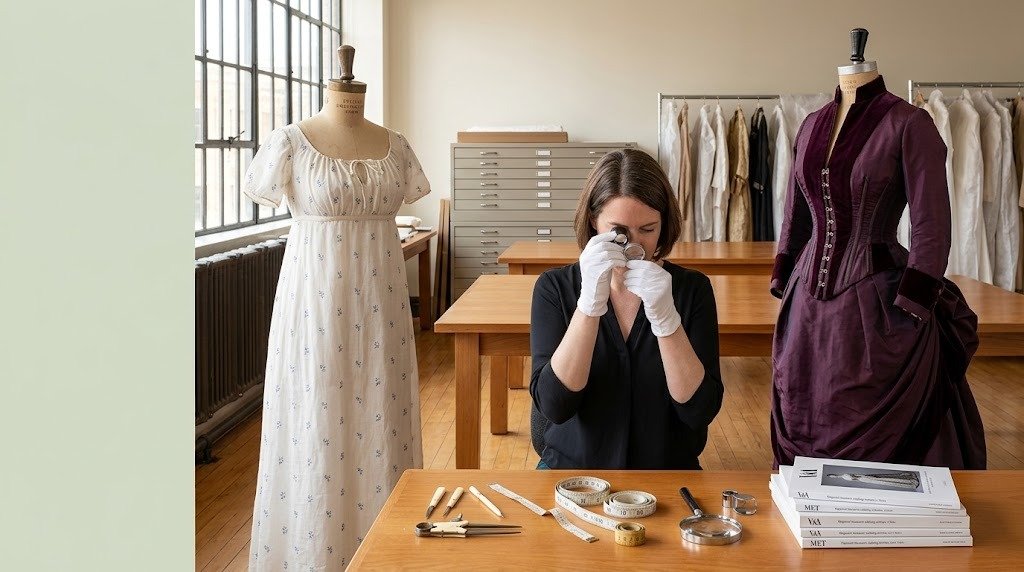
When examining a historical outfit or image look for several clues together:
- Waistline: A waist below the bust often suggests Regency styling; a natural waist is more typical of Victorian dresses.
- Skirt shape: Flowing skirts may indicate Regency fashion while crinolines and bustles suggest particular Victorian decades.
- Bodice and sleeves: Their shape and proportions help narrow down the period.
- Construction: Seams, layers , closures and foundation garments provide additional clues.
- Date and occasion: Daywear and formal clothing could look very different within the same era.
- Historical references: Compare the outfit with dated museum garments and fashion plates.
Modern clothing may combine features from both periods so a historically inspired outfit is not necessarily an accurate reproduction.
Conclusion
Regency vs Victorian fashion is easiest to understand through the changing shape and construction of clothing. Regency dress is associated with high waists and flowing skirts while Victorian fashion developed through defined waist crinolines bustles and changing sleeve shapes.
Men’s tailoring fabrics, foundation garments and accessories also evolved over time. To explore the next stage of fashion history read Everytalkin’s guides to Victorian era outfits and Edwardian fashion history.
FAQs
Is Regency fashion older than Victorian fashion?
Yes. The British Regency is commonly dated from 1811 to 1820 while the Victorian era began in 1837.
How can you tell Regency and Victorian dresses apart?
Regency dresses commonly feature a high waist below the bust and flowing skirts. Victorian dresses generally emphasize the natural waist and may have crinolines or bustles depending on the decade.
Did Regency women wear corsets?
Women used supportive undergarments including stays during the Regency period. Highwaisted dresses did not mean that structured undergarments were absent.
Why did Victorian dresses have wide skirts?
Cage crinolines helped support wide skirts during the midVictorian period. Bustles later concentrated more volume toward the back of the dress.
Were Regency men’s clothes simpler than Victorian men’s clothes?
Regency menswear often emphasized fitted tailoring and restrained decoration. Victorian menswear developed a wider range of garments and styles over several decades.
Can modern outfits combine Regency and Victorian styles?
Yes. An outfit can combine a Regency inspired high waist with Victorian lace or sleeves. It is best described as historically inspired rather than a strictly accurate reproduction.

 By
 By

 By