
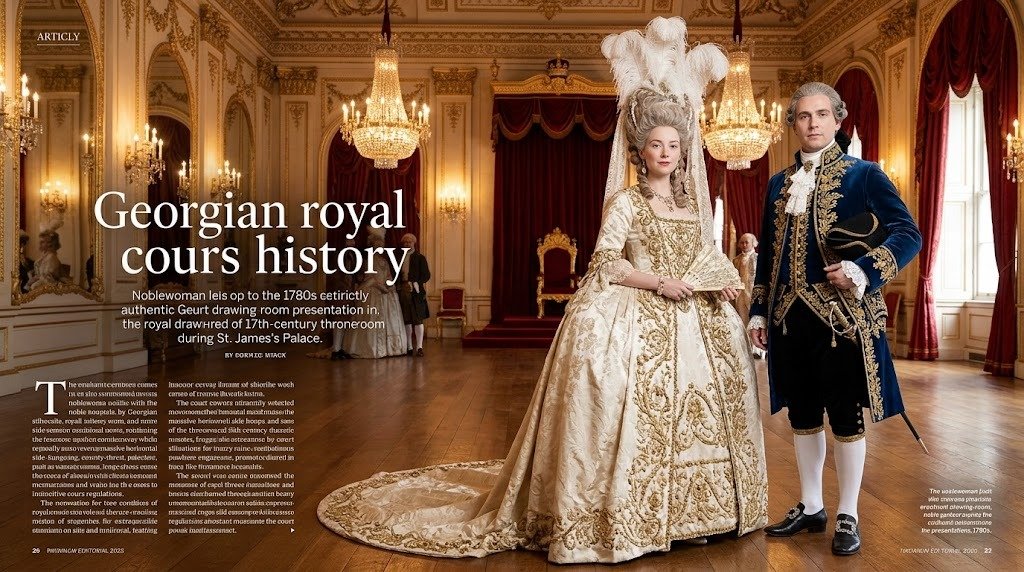

Georgian court dress was formal clothing worn at royal occasions in Britain between 1714 and 1830. Women’s outfits often featured decorated silk gowns, wide skirts, long trains and elaborate headwear. Men’s formalwear included embroidered coats, waistcoats, breeches and carefully chosen accessories.
Unlike everyday clothing, court dress followed established traditions and royal rules. Some formal styles remained in use even as fashionable clothing changed. The Historic Royal Palaces and Royal Collection Trust provide useful historical examples.
What Made Georgian Court Dresses Different?
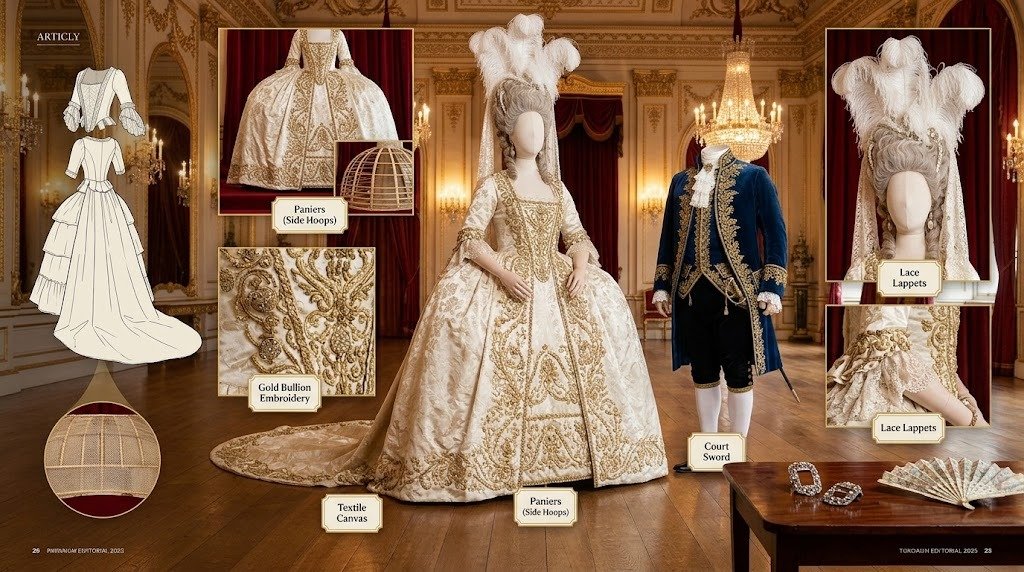
Georgian court gowns were designed to create a grand appearance through their shape, fabric and decoration. Their construction also reflected the importance of ceremony and social status.
Wide Skirts and Hoop Supports
Many eighteenth century court gowns used panniers or hoop petticoats to create wide skirts. These supports extended the silhouette sideways making formal clothing look different from everyday dresses.
Although the wide shape displayed luxurious fabrics and decoration it could make movement and sitting more difficult. Not every Georgian woman wore this style; it was particularly associated with formal and fashionable occasions.
Long Trains and Decorative Petticoats
Court gowns could feature long trains and visible petticoats decorated with embroidery lace or patterned silk. These details created a coordinated and elaborate appearance.
A court gown recorded as having been worn in the 1760s is documented by the Royal Collection Trust. Its silk fabric and embroidery demonstrate the craftsmanship used in formal Georgian clothing. Explore the court dress collection.
What Fabrics and Decorations Were Used?
Silk was a major material in Georgian court clothing. Brocade embroidery metallic threads lace and decorative trimmings added richness and detail.
Silk Brocade and Colors
Silk could feature woven patterns or embroidered designs across the bodice sleeves and petticoat. Men’s formal coats and waistcoats also used luxurious fabrics and detailed decoration.
Court clothing appeared in a range of colors from rich shades to pale tones and metallic finishes. The choices depended on the period, occasion and wearer. Georgian court dress should not be described as exclusively white or pastel.
How Did Queen Charlotte Influence Court Dress?
Queen Charlotte, the wife of George III was an important figure in Georgian court culture. During her lifetime court clothing continued to emphasize tradition, ceremony and formal presentation.
While fashionable women’s dresses gradually adopted different silhouettes, court gowns could retain wide skirts, trains and elaborate accessories. This difference reflected the fact that royal dress codes did not always follow changing fashion trends.
Portraits of Queen Charlotte and surviving garments help researchers understand these styles. However museum records and dated examples are important for checking details that portraits may not clearly show.
What Did Women Wear to Court During the Regency?
The Regency period from 1811 to 1820 fell within the wider Georgian era. During this time fashionable women’s dresses increasingly featured high waistlines and narrow flowing skirts inspired by classical styles.
Court dress could preserve older traditions including wide hoopsupported skirts, trains and formal headwear. Some outfits combined newer bodice shapes with traditional court elements.
This explains why Regency court gowns could look very different from the Empirestyle dresses commonly associated with the period. Court clothing followed specific expectations not fashion alone. For historical illustrations see Jane Austen’s World.
What Accessories Completed Georgian Court Dress?
Accessories helped create the finished formal appearance and could reflect the occasion and social position of the wearer.
- Headwear and feathers: Elaborate ornaments and feathers added height and decoration.
- Lace lappets: These hanging pieces of lace could frame the face or shoulders.
- Gloves and fans: Common accessories for formal settings.
- Jewelry: Pearls diamonds and other precious materials complemented luxurious gowns.
Accessory styles changed over time so historical reconstructions should use examples from the correct decade.
What Did Men Wear to Georgian Court?
Men’s court dress commonly included a formal coat waistcoat, knee breeches, stockings and shoes. Silk or velvet fabrics, embroidered details and decorative buttons helped distinguish these outfits from everyday clothing.
Waistcoats could match or contrast with the coat while shoe buckles and neckwear completed the look. Exact styles varied according to the date occasion and the wearer’s position.
Court clothing could also be expensive. Fine fabrics and detailed decoration demonstrated wealth and helped communicate social standing. The Historic Royal Palaces fact sheet explains the importance of clothing and etiquette at court.
Georgian Court Dress vs Everyday Fashion
Court dress emphasized ceremony and royal protocol while everyday clothing was chosen for work travel and ordinary social activities.
| Feature | Georgian Court Dress | Everyday Georgian Fashion |
| Purpose | Royal ceremonies and formal gatherings | Daily activities and social occasions |
| Silhouette | Often wide skirts and formal trains | Varied by decade and activity |
| Fabrics | Luxurious silk and elaborate decoration | Ranged from practical textiles to fine fabrics |
| Accessories | Formal headwear gloves fans and jewelry | Selected for practicality and personal preference |
| Rules | Influenced by royal protocol | Generally less restricted by court requirements |
Court dress represents a specific part of Georgian society, not the clothing worn by everyone during the period.
How Can You Identify an Authentic Georgian Court Dress?
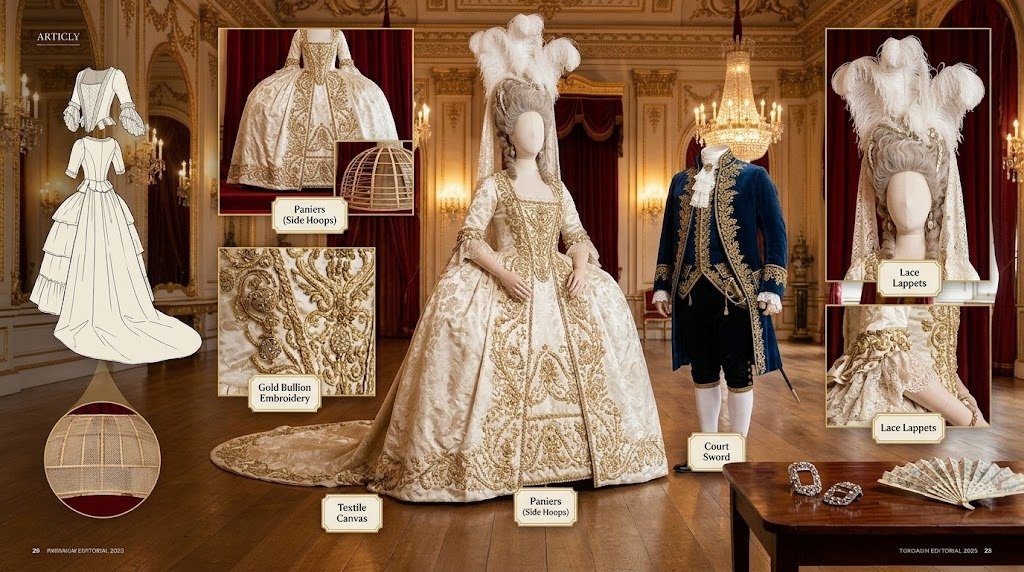
When examining a historical gown or costume consider these five factors:
- Date: Establish which part of the Georgian period the garment belongs to.
- Silhouette: Examine the skirt supports train bodice and petticoat.
- Materials: Look for silk brocade embroidery and other period appropriate details.
- Accessories: Check the headwear lace gloves and jewelry against dated examples.
- Historical evidence: Use museum catalogues, documented garments and dated portraits.
A wide skirt or elaborate headdress alone cannot prove that a garment was worn at court. Reliable identification requires several matching details and supporting evidence.
Conclusion
Georgian court dress combined luxurious fabrics, structured silhouettes, elaborate accessories and royal traditions. Wide skirts, embroidered gowns, long trains and formal men’s clothing helped distinguish court attire from everyday fashion.
Its history also shows how royal protocol could preserve older styles while fashionable clothing evolved. Explore our guides to Georgian fashion and Regency fashion to learn more about these changing styles.
FAQs
1. What is Georgian court dress?
Georgian court dress was formal clothing worn at royal ceremonies and gatherings in Britain. Women’s outfits often included decorated gowns and wide skirts while men’s clothing featured formal coats and breeches.
2. Why were Georgian court dresses so wide?
Panniers and hoop supports created broad silhouettes that displayed luxurious fabrics and decoration and distinguished formal clothing from everyday dress.
3. Did court dress change during the Regency?
Yes but traditional court requirements sometimes preserved wide skirts and trains even as fashionable dresses adopted higher waistlines and narrower silhouettes.
4. What fabrics were used for Georgian court gowns?
Silk and patterned brocade were important materials. Embroidery metallic threads lace and decorative trimmings added detail.
5. What did men wear to the Georgian court?
Men commonly wore coats, waistcoats, knee breeches, stockings and formal shoes often made from fine fabrics and decorated with embroidery.
6. Where can I see Georgian court dress examples?
The Royal Collection Trust documents historical court clothing while Historic Royal Palaces provides information about court dress and etiquette.


 By



 By