
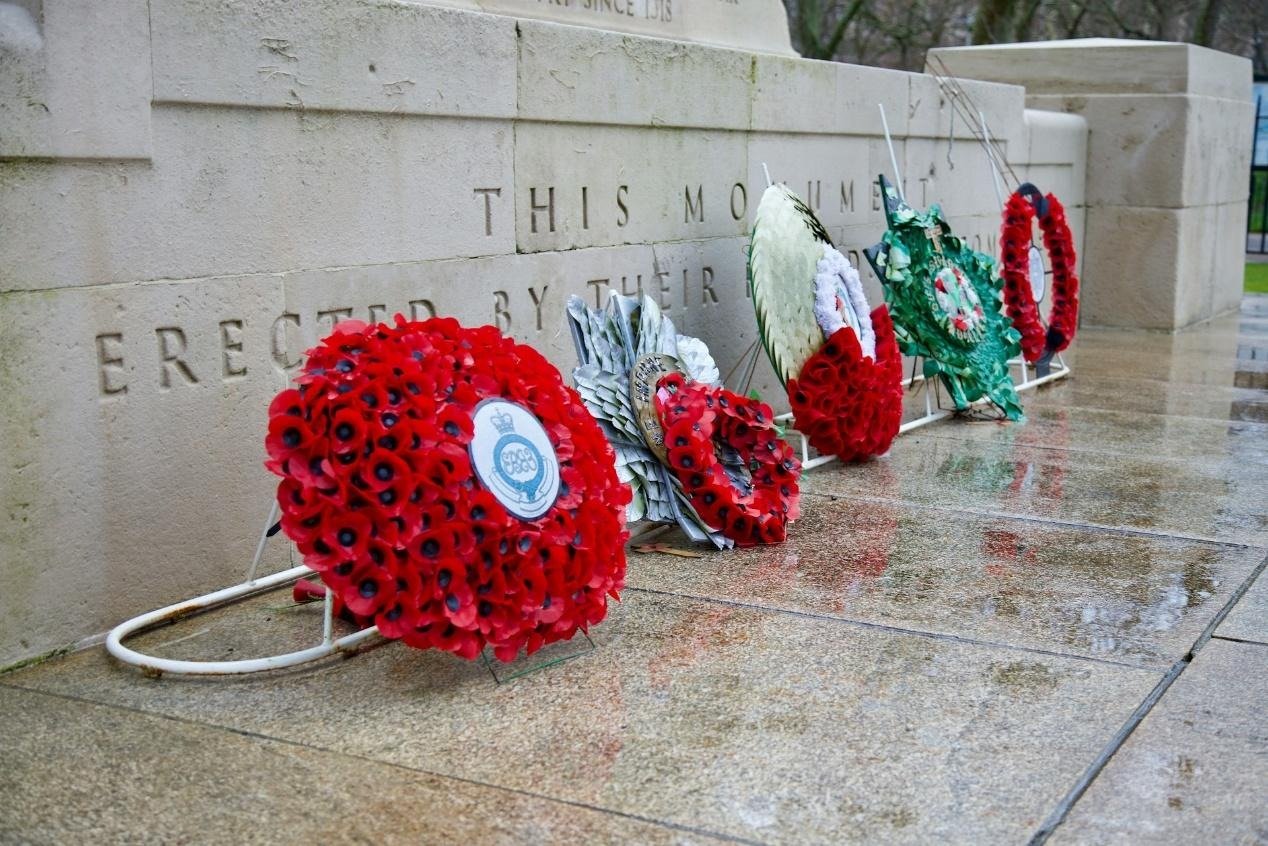

Remembrance Sunday is not usually discussed as a practical part of London life. The attention goes, understandably, to the silence, the wreaths and the people being remembered. Yet for those attending or simply trying to cross Westminster the occasion also raises ordinary questions. Which streets are open? How long will entry take? What does a large security operation actually tell you about safety?
The National Service of Remembrance took place at the Cenotaph on Whitehall on 8 November 2026. The published arrangements included police security checks, restricted access and road closures. Those details deserve attention alongside the ceremony, not because they prove London was dangerous, but because they show what attending a major public occasion involves.gov
Looking back, it is worth separating three things that can too easily become tangled together: the purpose of remembrance, the practical management of a gathering, and the political arguments that sometimes surround it.
What London is remembering?
Remembrance Sunday centres on the service and sacrifice of the British and Commonwealth Armed Forces. The Royal British Legion describes remembrance as an occasion that brings together people across communities, cultures and faiths, while recognising serving personnel, veterans and their families.
That shared purpose leaves room for private meanings. Someone may be remembering a relative; someone else may be thinking about their own service. Others attend without a personal military connection. The Legion explicitly recognises remembrance as something people can observe publicly, privately or simply through a moment of reflection.
The distinction matters. A national ceremony does not require everyone attending it to have the same background or experience. What gives the occasion its focus is the act of remembrance itself.
The red poppy carries that purpose beyond the ceremony. The Legion describes it as a symbol of remembrance, support for the Armed Forces community and hope for a peaceful future. Wearing one is a personal choice.
Security is part of the arrangements
For the 2026 service, government guidance warned of an extensive policing and security operation and asked spectators to allow sufficient time to pass through checks. Great George Street was closed to the public, with pedestrians travelling between Victoria Street and St James’s Park directed through Storey’s Gate. Unauthorised drone use in the area was prohibited.
For a visitor, those measures have immediate consequences: a familiar route may be unavailable, and reaching a viewing area may take longer than expected. For someone attending with limited mobility or a tight onward connection, that is more useful information than a sweeping reassurance that “London is safe.”
But restrictions also need to be interpreted carefully. A security plan tells us what precautions authorities put in place. It does not, on its own, establish that a particular threat materialised, that an incident occurred or that the operation worked perfectly.
That is the limitation of judging an event by photographs of police officers and barriers. They show a controlled environment. Assessing safety requires more: confirmed incidents, information about crowd movement and evidence about how the arrangements worked.
The published 2026 guidance establishes what visitors were told to expect. It should not be mistaken for a post-event assessment.
Where public safety and public disagreement part company?
Security arrangements explain how people enter and move around a ceremony. They do not explain every argument surrounding it. That distinction matters when looking back at Remembrance Sunday: disagreement about how the occasion should be observed is not, by itself, evidence that attending it was unsafe.
The poppy controversy belongs on that side of the discussion. Critics questioned whether a familiar symbol of remembrance was being used to advance a separate political cause. Their objections concerned the purpose of the occasion and the meaning of its most recognisable emblem, not simply what was happening on London’s streets.
When a remembrance symbol becomes a political argument?
That disagreement surfaced in reporting about the Palestinian-themed poppy in October 2026. The badge used black, white and green petals with a red border, adapting the familiar flower into the colours of the Palestinian flag. Critics argued that this attached a separate political campaign to an occasion intended to unite people in remembrance.
Former Army officer and defence analyst Lieutenant Colonel Stuart Crawford accused the project of trying to “ride on the coat-tails of the familiar red poppy.” His objection was that the design borrowed the recognition and emotional significance of remembrance for a political purpose.
Army veteran and Military Cross recipient Trevor Coult raised a related concern about the money. He criticised the use of the poppy when proceeds were not directed towards helping veterans. According to the campaign’s explanation reported by LBC, the sale price covered production costs and a small donation to Palestinian charities and campaigning organisations.
From the critics’ perspective, the problem was therefore both symbolic and practical: a badge resembling the remembrance poppy was being used for a different campaign and a different fundraising purpose. Shadow defence minister David Reed similarly argued against turning remembrance into a “political battleground.”
These were objections to the campaign, not findings about the behaviour of everyone who wore the badge. Nor did the criticism, by itself, establish a threat to people attending the London ceremony.
That distinction should not get lost. A campaign can be criticised as inappropriate without every argument around it becoming a story about public danger.
Disagreement is not the same as a safety incident
When remembrance becomes contentious, the word “tension” can do too much work. It may describe an angry interview, a disagreement online, a demonstration or an actual confrontation. Those are different events with different implications.
For anyone assessing safety in London, the useful questions are specific. Was an entrance blocked? Did a gathering affect a walking route? Was there a confirmed incident? Did authorities issue new instructions?
Without those details, it is easy to turn political disapproval into a vague impression that the streets were unsafe. It is equally unhelpful to dismiss practical concerns simply because an occasion is solemn.
The poppy controversy belongs in an account of the debate around remembrance. Whether it affected public safety is a separate question requiring separate evidence.
What remains useful after the ceremony?
The exact restrictions from one November should not become permanent travel advice. Great George Street’s closure was part of the published 2026 arrangements; future visitors need the guidance for the event they are actually attending.
What does last is a better way of approaching major occasions in London:
- Treat access arrangements as part of the visit, rather than an inconvenience to discover on arrival.
- Distinguish a security precaution from evidence of an immediate threat.
- Look for specific, confirmed disruption rather than relying on broad descriptions of political “tension.”
- Keep disagreements about symbolism separate from judgments about the safety of individuals or communities.
Remembrance Sunday deserves to be understood first as an act of remembrance. Safety planning makes attendance possible; it should not overwhelm the reason people gather. And arguments over the poppy, however strongly felt, are best examined for what they actually concern, not used to supply a story of danger that the evidence has not established.


 By
 By


 By