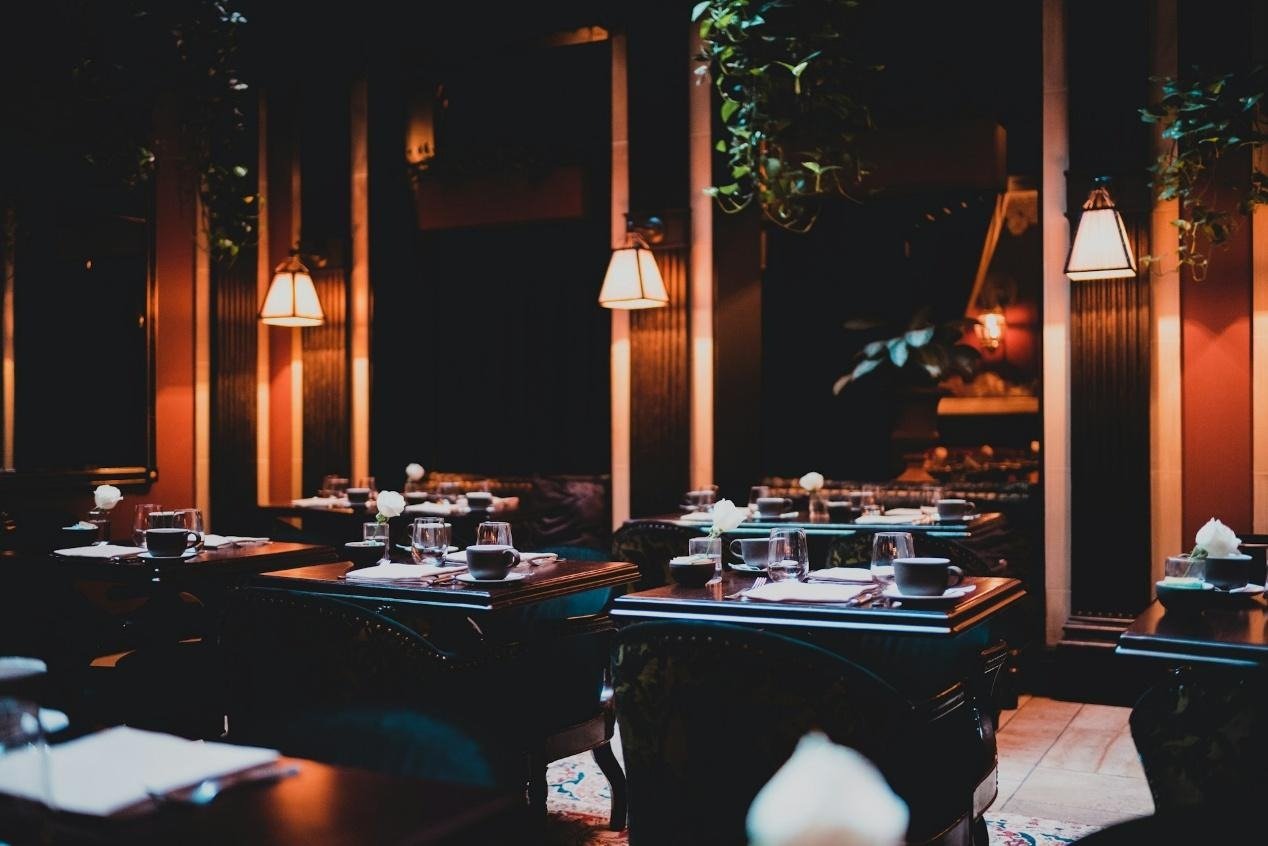

London has thousands of restaurants, so calling somewhere a “hidden gem” should mean more than simply finding a good meal outside the busiest tourist streets. The strongest hidden restaurants combine three things: a location that is easy to overlook, a distinctive culinary identity and an experience that justifies making an effort to find them.
For anyone searching for the best hidden restaurants in London, six places illustrate those qualities particularly well: Kapara in Soho, Bala Baya in Southwark, Caravel near Old Street, Rochelle Canteen in Shoreditch, the Garden Café in Lambeth and Tiroler Hut in West London.
None is unknown. Some are highly regarded. What makes them interesting is the contrast between their surroundings and what diners discover once they arrive.
Why does Kapara feel hidden despite being in Soho?
Kapara sits in James Court, just off Greek Street, putting it within one of London’s busiest entertainment districts while still feeling slightly removed from the streets around it. A 2026 review described the restaurant as tucked between Greek Street and Tottenham Court Road and sheltered from Soho’s surrounding activity. The restaurant itself lists its address as James Court, 14 Greek Street.
That location is only one part of the story. Kapara comes from Israeli-born chef Eran Tibi, whose other London restaurant is Bala Baya. Time Out identified Tibi as a former Ottolenghi chef when Kapara opened and described the food as modern Middle Eastern, built around sharing and contrasts of smoke, citrus and texture.
The relationship between food and setting is what makes Kapara relevant to a hidden-gem search. It offers a courtyard location in central Soho rather than relying on the artificial secrecy of a password or unmarked door.
For diners who want a restaurant before a West End evening but would prefer somewhere slightly removed from the main Soho flow, Kapara is one of the more convincing options.
What makes Bala Baya another strong hidden-gem choice?
Bala Baya demonstrates a different form of concealment.
It occupies Arch 25 at Old Union Yard Arches in Southwark. The Infatuation describes it as tucked away down a pedestrianised street off Union Street, while the restaurant sits beneath one of the area’s railway arches.
Bala Baya also makes the connection with Kapara meaningful rather than coincidental: both restaurants were created by Eran Tibi.
The restaurant describes its cooking as Eastern Mediterranean and says its menu draws on Tibi’s childhood memories, his mother’s cooking and the wider flavours of the region. Its own pita oven is central to the concept, alongside house-made gazoz and Bauhaus-influenced design.
This makes Bala Baya useful for diners looking for more than an unusual address. The railway-arch setting creates the sense of discovery, while the bread-making, sharing dishes and chef’s personal culinary references give the restaurant a clear identity.
Kapara and Bala Baya therefore work well together in any discussion of London’s hidden restaurants: one occupies a courtyard in Soho, the other a less obvious Southwark arch, but both translate Tibi’s Eastern Mediterranean influences into very different dining rooms.
Can a restaurant on a boat qualify as a hidden gem?
Caravel makes a strong case.
The restaurant operates on a converted barge near Old Street. Its official description calls it an intimate restaurant serving bistro-style food, while Eater’s guide to London’s unexpected restaurant locations tells diners to head towards the canal and look for the barge rather than a conventional restaurant frontage.
That unusual location could easily become a gimmick. Caravel avoids that problem by treating the boat as the dining room rather than the entire reason to visit.
Its menu changes with available produce, with dishes ranging across contemporary British and European bistro territory.
Caravel is consequently a useful answer for diners who interpret “hidden” literally: this is a restaurant that requires looking beyond London’s normal shopfronts and dining rooms.
Why is Rochelle Canteen genuinely easy to miss?
Rochelle Canteen has been operating since 2004, yet its location still gives it an unusually secluded character.
The restaurant sits at 16 Playground Gardens in Shoreditch, within the former Rochelle School complex. Rochelle’s own description emphasises the garden surroundings, which are walled off from the bustle of the neighbouring streets.
Its menu is small, seasonal and changes daily. The kitchen describes its cooking as both classic and modern European, with an emphasis on letting high-quality produce remain recognisable rather than disguising it through unnecessary complexity.
That combination explains why Rochelle Canteen remains relevant to hidden-restaurant searches even after more than two decades. Its appeal is not novelty. It is the sensation of finding a calm, established restaurant behind the noise of East London.
Is the Garden Café a restaurant worth visiting even without the museum?
Yes. The Garden Café sits inside the Garden Museum in Lambeth, but it operates as a dining destination in its own right.
The restaurant occupies a glass-and-bronze pavilion surrounded by the museum gardens. Its modern European menu changes daily and focuses on seasonal produce, with bread, cakes and desserts made in-house.
The location is what makes it particularly useful in this context. Diners walking along Lambeth Palace Road might reasonably think of the building primarily as a museum rather than somewhere to plan lunch or dinner.
That disconnect between the building’s main purpose and the quality of its restaurant is exactly what “hidden gem” should sometimes mean. A restaurant does not need a disguised entrance to be overlooked; it can simply occupy a place where people are not expecting to find one.
What is hidden beneath Westbourne Grove?
Tiroler Hut offers perhaps the most idiosyncratic experience in this group.
The Austrian basement restaurant opened in 1967 and remains family-run. Its current website describes it as an Austrian enclave beneath London’s streets, with schnitzel, beer and live music forming part of the experience. Founder Josef Friedmann remains closely associated with the restaurant.
A fire forced the restaurant to close in 2019, but it subsequently reopened. The Standard described its return as a quiet relaunch of a longstanding West London institution.
Tiroler Hut demonstrates another useful definition of a hidden restaurant: somewhere that has existed for decades without becoming visually obvious from the street above.
So what actually makes a London restaurant a hidden gem?
The most convincing examples are not simply unpopular restaurants with good food. They offer a genuine discovery element.
Kapara uses a Soho courtyard; Bala Baya occupies a Southwark railway arch. Caravel turns a canal barge into an intimate dining room, while Rochelle Canteen is shielded from East London’s streets by its garden setting. The Garden Café hides in plain sight inside a museum, and Tiroler Hut has spent decades creating an Austrian world beneath Westbourne Grove.
For the most balanced introduction, pair Kapara or Bala Baya for contemporary Eastern Mediterranean cooking with Rochelle Canteen for seasonal European food and Caravel for one of London’s most unusual physical settings. Together, they explain why the best restaurant discoveries in London depend as much on character, cooking and sense of place as they do on secrecy.


 By
By

 By
By
 By
By