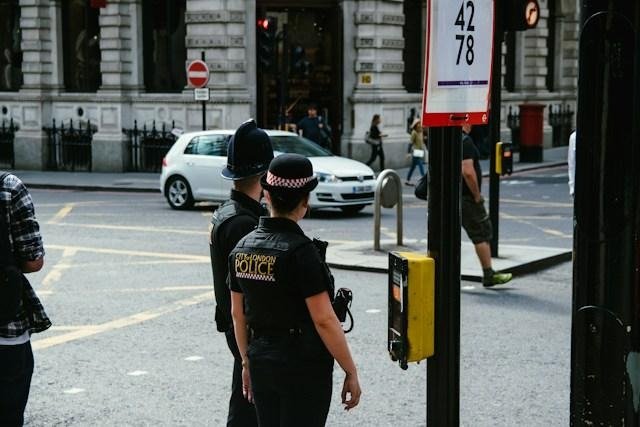

Two-tier policing in the United Kingdom refers to the perception and ongoing political debate that British police forces and the wider criminal justice system apply the law unevenly, treating certain demographic groups, political movements, or public demonstrations more leniently or more harshly than others. While senior police leaders and parliamentary inquiries maintain that officers operate independently under the law without fear or favour, critics across the political spectrum argue that inconsistent enforcement during public protests, civil unrest, and everyday policing has eroded public trust in British institutions.
At the heart of the controversy is a fundamental question about modern British democracy: whether freedom of expression and the right to peaceful assembly are protected equally for all citizens, or whether operational caution and political sensitivities create double standards on Britain’s streets.
What Does “Two-Tier Policing” Mean in UK Politics?
In contemporary British political discourse, two-tier policing describes a perceived double standard in how public order laws are enforced. The phrase has evolved significantly over the decades:
- Historical Origins: The term first surfaced in discussions surrounding the 1981 Brixton riots and was long used by civil rights campaigners and minority communities to highlight disproportionate stop-and-search rates and use-of-force statistics.
- Modern Political Shift: During the 2020s, the phrase was widely adopted by conservative commentators, populist politicians, and protest critics. It gained major national prominence during the summer riots of 2024 following the Southport stabbings, when protesters and critics accused the government and police of responding far more aggressively to right-wing disorder than to other forms of public disruption.
By late 2026, the debate had become central to national policing reform, with Home Secretary Shabana Mahmood acknowledging a “corrosive and growing perception” of two-tier policing that requires structural attention to restore public confidence.
Why Do Critics Argue That Protest Policing Is Uneven?
A primary driver of the two-tier policing debate is how different demonstrations are managed in major British cities, particularly London. Under the Public Order Act 1986 and subsequent updates in 2023, police commanders hold broad discretionary powers to impose conditions on marches, restrict routes, and make arrests to prevent serious disruption or intimidation.
Critics contend that this discretion has resulted in noticeable disparities in how pro-Palestinian demonstrations are policed compared with smaller counter-protests, local community gatherings, or lockdown-era demonstrations.
How Has the Handling of Pro-Palestinian Protests Fuelled the Debate?
Since late 2023, recurring large-scale pro-Palestinian marches in central London and other UK cities have tested the limits of public order policing. Critics, including think tanks such as Policy Exchange and former London mayoral candidates, have argued that officers have frequently adopted a high-tolerance approach toward large crowds, allowing disruptive sit-ins, contentious chants, and repeated weekend closures of central transport hubs, while intervening swiftly against smaller counter-demonstrators or individual critics.
| Aspect of Protest Policing | Criticisms of Leniency Toward Mass Protests | Official Police Explanation |
|---|---|---|
| Crowd Management | Large marches are often escorted rather than dispersed, even when routes or timings cause major disruption to commuters and businesses. | Deploying high-visibility public order tactics against tens of thousands of peaceful marchers risks sparking widespread disorder. |
| Arrests and Speech | Observers point to delayed arrests over offensive placards or chants compared with rapid enforcement against counter-protesters. | Officers gather video evidence via specialist teams to make targeted post-event arrests rather than triggering crowd clashes. |
| Operational Tone | Critics argue that liaison-led policing grants organisers de facto control over city centres. | Commanders follow the “graduated response” model, prioritising dialogue and community engagement to keep the peace. |
Even senior Metropolitan Police officers have acknowledged early operational missteps. Assistant Commissioner Matt Twist previously admitted that the force did not get everything right during the initial stages of the Gaza protests in late 2023, noting that officers subsequently adapted their tactics to act more decisively. Nevertheless, for many observers, the visual contrast between restrained policing at massive pro-Palestinian rallies and swift, heavy-handed interventions at smaller nationalist or anti-lockdown gatherings remains compelling evidence of an unequal standard.
How Does the Cost of Living Crisis Shape Public Frustration?
Public sensitivity to perceived double standards in policing does not exist in a political vacuum; it is closely tied to economic strain at home. Throughout the mid-2020s, millions of British households have faced persistent cost-of-living pressures, including elevated energy bills, high housing and mortgage costs, and stretched public services.
For many ordinary Britons struggling to balance household budgets, frustration over how public resources are allocated extends to both domestic policing and foreign aid spending. While families contend with tight finances and council tax rises, successive UK governments have continued to commit substantial taxpayer funds to international humanitarian packages including tens of millions of pounds in recovery and emergency aid directed toward Gaza.
At the same time, policing recurring weekend demonstrations in London has absorbed millions of pounds in officer overtime and mutual aid deployments from regional forces, pulling resources away from neighbourhood crime such as shoplifting, burglary, and antisocial behaviour. When taxpayers see stretched local police forces struggling to attend everyday crimes while facilitating vast, costly demonstrations, and while government budgets accommodate overseas commitments, the perception that ordinary citizens’ priorities come second intensifies political discontent.
What Do Official Inquiries and Police Leaders Say?
British police chiefs and parliamentary oversight bodies strongly reject the claim that forces operate a deliberate two-tier system based on political ideology.
- Metropolitan Police Position: Commissioner Sir Mark Rowley has dismissed accusations of two-tier policing as “complete nonsense,” stating that officers make operational decisions based strictly on threat, risk, and the law rather than the political beliefs of protesters.
- Parliamentary Findings: In 12 November 2024, the House of Commons Home Affairs Committee concluded that claims of two-tier policing during the 2024 summer riots were “baseless,” finding that the robust police and judicial response was an appropriate reaction to widespread violence, arson, and attacks on officers rather than peaceful protest.
- Counter-Perspectives on Structural Bias: Conversely, civil liberties groups, environmental campaigners, and racial equality researchers argue that if a two-tier system exists, it operates in the opposite direction. Home Office statistics consistently show that Black people in England and Wales are stopped and searched at more than four times the rate of White people, while Freedom of Information data has indicated that peaceful climate activists from groups such as Just Stop Oil have faced high arrest and prosecution rates.
Balancing Rights, Public Order, and Economic Pressures
Whether viewed as a political critique of protest management or a broader debate over institutional fairness, the controversy surrounding two-tier policing highlights the delicate balance required in British public life. Under UK law, police commanders must weigh the human rights of freedom of expression and peaceful assembly against the rights of local residents, businesses, and minority communities to live and travel free from intimidation.
At a broader level, public scepticism toward official explanations often reflects deeper economic anxieties. While the UK’s cost of living situation has seen inflation ease from its earlier peaks, elevated prices for essentials, high housing costs, and sluggish real wage growth mean that many households continue to feel financially squeezed. In such an economic climate, public patience with visible disruption on Britain’s streets, and with how public money is spent at home and abroad, remains thin. Ultimately, restoring confidence in British policing depends on transparent, consistent enforcement of the law so that every citizen, regardless of background or political cause, sees the same rules applied equally.

 By

 By


 By