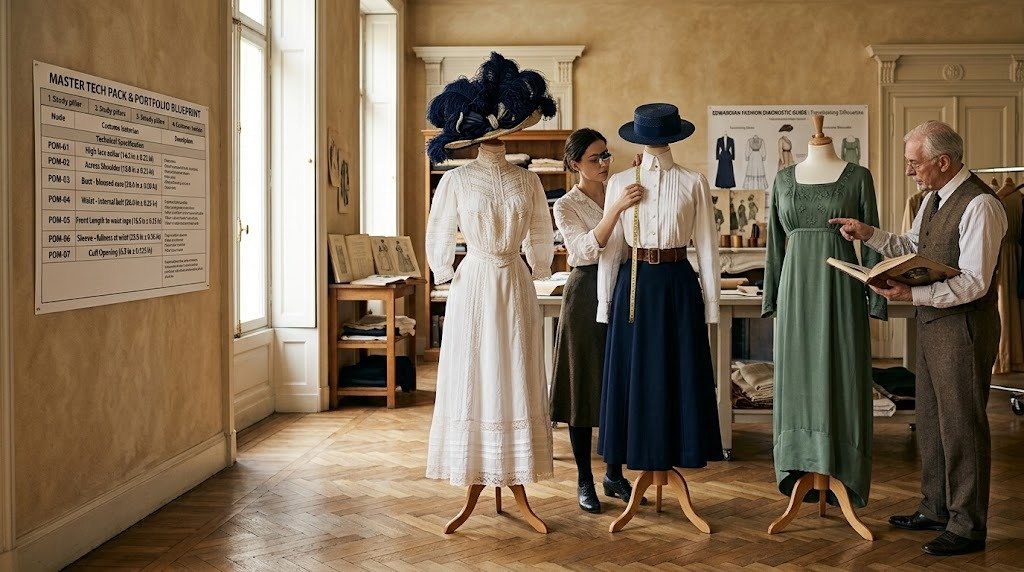

Edwardian fashion history explores clothing trends around the beginning of the twentieth century. The era is known for elegant dresses shaped corsets, decorative hats and tailored men’s suits.
However fashion changed throughout the period and varied by social class, occupation and occasion.
This guide covers the main clothing styles, accessories and historical influences of the Edwardian era along with the differences between Victorian and Edwardian fashion.
What Is Edwardian Fashion History?
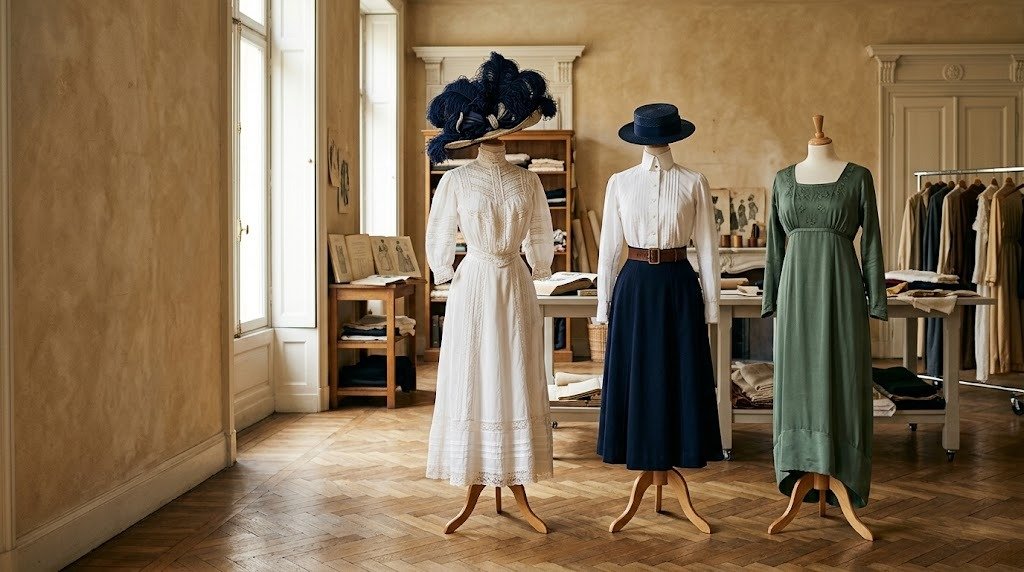
Edwardian fashion history studies clothing and dress customs associated with King Edward VII’s reign from 1901 to 1910. The term is also used more broadly for styles around the turn of the twentieth century.
Women’s clothing often featured shaped bodices and long skirts while men’s wardrobes included tailored suits and formalwear. The era combined Victorian influences with gradual changes toward the simpler silhouettes of the 1910s.
What Were the Main Features of Edwardian Women’s Fashion?
Edwardian women’s fashion combined structured silhouettes, decorative details and carefully chosen accessories. Day dresses often had high necklines and long sleeves while evening gowns allowed more variation.
The SBend Silhouette
The bent silhouette was a recognizable feature of early Edwardian fashion. A straightfront corset helped create a curved profile while the bodice and skirt contributed to the overall shape.
The look is associated with the idealized Gibson Girl popularized through illustrations by Charles Dana Gibson. However it did not represent every woman or every year of the Edwardian period.
Bodices Skirts and Hats
Many dresses featured fuller bodices, lace embroidery decorative collars and fitted cuffs. Long skirts remained common although their proportions gradually changed.
Large hats decorated with ribbons, flowers or feathers were also fashionable. Hairstyles were often arranged to complement the headwear and complete the outfit.
What Did Edwardian Women Wear for Different Occasions?
Clothing depended on the activity so everyday outfits differed from formal gowns.
Day Dresses and Shirtwaists
Day dresses commonly featured high necklines and long sleeves. Shirtwaists—blouselike garments worn with separate skirts—provided another practical option and allowed women to combine different pieces.
Tea Gowns and Evening Dresses
Tea gowns were relatively relaxed garments worn in informal social settings particularly at home. They could feature soft fabrics flowing lines and decorative details.
Evening gowns were generally more elaborate using materials such as silk satin chiffon and lace. Formal ball gowns often featured detailed trims but these expensive styles were not representative of every woman’s wardrobe.
Tailored Suits and Outdoor Clothing
Tailored jackets and skirts offered a practical alternative to elaborate dresses. Clothing for walking, cycling , tennis and other activities also needed to support movement.
These styles show that Edwardian fashion included both formal clothing and garments suited to everyday life.
How Did Corsets Shape Edwardian Clothing?
Corsets helped create the fashionable silhouette particularly the bent shape associated with the early 1900s. However the final appearance also depended on bodices, petticoats , skirt construction and other layers.
Not every woman wore the same type of corset or followed fashionable ideals in the same way. Clothing choices varied by occupation, budget and personal circumstances.
When identifying an Edwardian garment examine its overall construction rather than relying on a single feature.
How Did Edwardian Fashion Change Between 1900 and 1910?
Edwardian fashion developed gradually with late Victorian influences remaining visible in early-century clothing.
| Approximate period | Main characteristics |
| 1900–1903 | Fuller bodices and the bend silhouette in fashionable women’s clothing |
| 1904–1906 | Decorative details continued with changing sleeve and skirt proportions |
| 1907–1909 | Some fashionable styles moved toward more streamlined shapes |
| Early 1910s | Further changes in silhouettes associated with the next decade |
These dates are approximate. Styles overlapped and older garments often remained in use after new trends appeared.
What Did Edwardian Men Wear?
Edwardian men’s fashion relied on tailored clothing with outfits varying according to the occasion.
Suits and Formal Daywear
Men commonly wore jackets, waistcoats, trousers , shirts and neckwear. Threepiece suits were important while hats and outerwear completed many outfits.
Morning dress was reserved for formal daytime occasions and could include a morning coat waistcoat and formal trousers. It was not everyday clothing for all men.
Dinner Jackets and Evening Dress
Tailcoats remained important for highly formal occasions while dinner jackets became more accepted in certain settings during the early twentieth century.
Black tie and white tie represented different levels and types of formality. Their use depended on the event and social setting so they should not be treated as interchangeable outfits.
What Did Edwardian Children Wear?
Children’s clothing reflected adult styles but also considered age and practical needs. Girls commonly wore dresses with collars, ribbons and decorative details.
Boys wore outfits such as jackets, tunics , knickerbockers and sailor suits. Clothing varied by family income and occasion with everyday garments often designed for repeated use.
Fashion illustrations frequently emphasise stylish examples so they do not show the full range of children’s clothing.
How Did Social Class and Technology Influence Edwardian Fashion?
Income influenced access to fabrics tailoring and separate outfits for different occasions. Wealthier households could afford elaborate clothing while many working families prioritized durability and repair.
The growth of readymade clothing textile production and retail affected clothing availability although fashionable garments remained unequal in cost and accessibility.
Fashion magazines illustrations and photography also helped spread new styles. Meanwhile travel sports and leisure activities encouraged clothing suited to different practical needs.
What Is the Difference Between Victorian and Edwardian Fashion?
Victorian fashion covers 1837–1901 while Edwardian fashion is commonly associated with 1901–1910. The transition was gradual and some Victorian styles continued into the early twentieth century.
| Feature | Victorian fashion | Edwardian fashion |
| Period | 1837–1901 | Commonly 1901–1910 |
| Women’s silhouettes | Included crinolines bustles and changing sleeve styles | Early styles often featured the Sbend silhouette |
| Skirts | Changed considerably by decade | Long skirts with gradually changing proportions |
| Men’s clothing | Tailored coats and formal suits | Tailored suits alongside evolving leisurewear and eveningwear |
The best way to identify a garment is to consider its date construction and overall silhouette. Not every Victorian dress had a bustle and not every Edwardian outfit featured an A bend shape.
How Can You Identify an Authentic Edwardian Outfit?
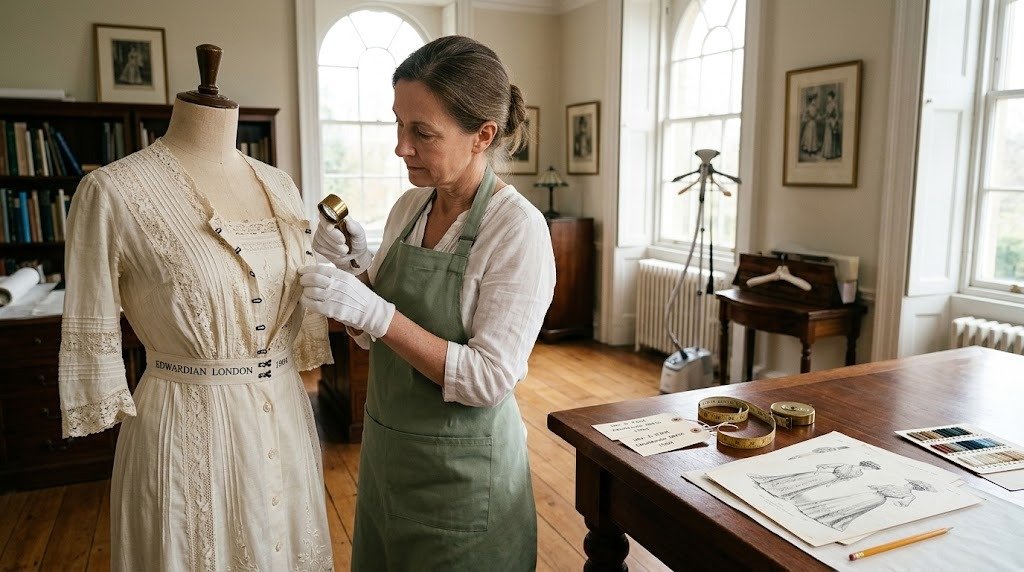
Use these steps to assess a historical outfit:
- Check the date: Determine whether it represents the early 1900s or a later period.
- Identify the occasion: Daywear eveningwear and sportswear had different requirements.
- Examine the silhouette: Look at the bodice waistline sleeves and skirt together.
- Study the construction: Seams, fastenings and fabrics may help establish the period.
- Check the accessories: Hats footwear gloves and jewelry should suit the outfit.
- Compare historical references: Use dated photographs, museum garments and period illustrations.
A modern Edwardian-inspired outfit may capture the look without being an exact historical reconstruction.
Conclusion
Edwardian fashion history reflects a transition between Victorian traditions and changing twentieth century styles. Women’s dresses, corsets, tailored suits, formalwear and practical clothing all played a role.
To identify an Edwardian outfit consider its date, purpose, construction and social context. Comparing historical examples can help readers understand how fashion evolved toward the 1910s and beyond.
FAQs
1. What years does Edwardian fashion cover?
Edwardian fashion is commonly associated with King Edward VII’s reign from 1901 to 1910. The term can also describe styles around the turn of the twentieth century.
2. What is the most recognizable feature of Edwardian women’s fashion?
The bend silhouette is one of the best-known features of early Edwardian fashion. Fuller bodices, long skirts and decorative hats were also popular.
3. Did all Edwardian women wear corsets?
Corsets were important in fashionable women’s clothing but practices varied. It is inaccurate to assume every woman wore the same style or followed the same fashion ideals.
4. What was the difference between Edwardian daywear and eveningwear?
Daywear was designed for ordinary activities and often featured higher necklines. Eveningwear could include more elaborate fabrics, decorative details and formal gowns.
5. Did Edwardian men wear tuxedos every day?
No. Dinner jackets and other formal garments were worn for specific occasions. Suits and practical clothing were more common for everyday activities.
6. How was Edwardian fashion different from 1920s fashion?
Edwardian women’s clothing often featured long skirts and shaped silhouettes. Many 1920s dresses used straighter lines and lower waistlines although the transition between decades was gradual.

 By

 By