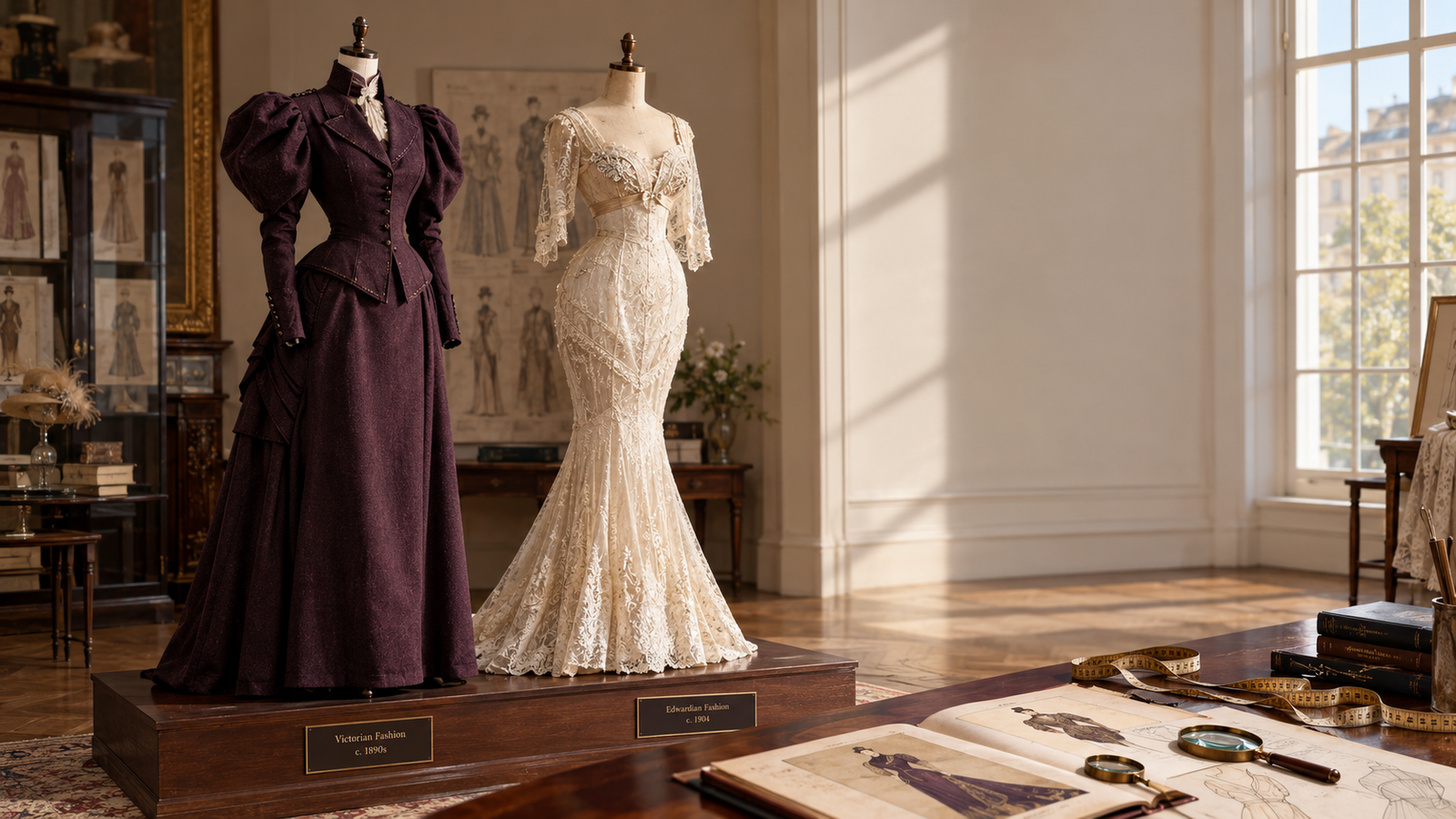

Victorian and Edwardian fashion can look similar because both featured long dresses structured undergarments decorative fabrics and carefully styled accessories.
However their silhouettes and garment construction changed over time. Victorian fashion covers Queen Victoria’s reign from 1837 to 1901 while Edwardian fashion is commonly associated with 1901–1910.
The clearest differences appear in skirt shapes, bodices , corsets, sleeves and hats. Understanding these details makes it easier to identify historical clothing accurately.
What Is the Difference Between Edwardian and Victorian Fashion?
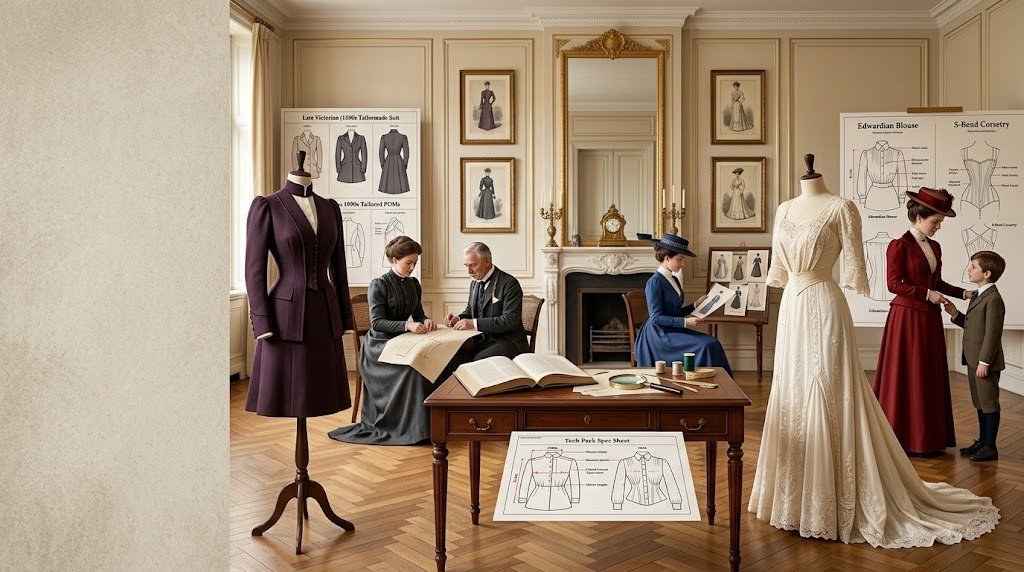
The main difference between Edwardian vs Victorian fashion is the changing silhouette. Victorian styles evolved from wide crinoline skirts to bustle dresses and the tailored looks of the 1890s. Early Edwardian fashion became known for the S bend silhouette bloused bodices, large hats and changing skirt shapes.
However these periods did not have a perfect dividing line. Some clothing from around 1900 combined late Victorian features with emerging Edwardian styles.
| Feature | Victorian Fashion | Edwardian Fashion |
| Main period | 1837–1901 | Usually 1901–1910 |
| Women’s silhouette | Crinolines bustles and tailored late century shapes | Early S bend silhouette and gradually streamlined shapes |
| Skirts | Wide skirts bustle backed designs and later tailored styles | Long skirts with changing fullness and narrower late decade shapes |
| Bodices | Fitted and structured varying by decade | Often bloused at the front in the early years |
| Undergarments | Corsets petticoats crinolines and bustles | Straight front corsets and petticoats in many fashionable outfits |
| Hats | Bonnets and other styles depending on the decade | Large decorated picture hats became prominent |
These are general patterns rather than rules for every outfit. The V&A’s guide to Victorian underwear and the Fashion History Timeline’s 1900–1909 overview provide useful historical context.
How Did Victorian Fashion Change Throughout the Era?
Victorian fashion was not one fixed style. Across Queen Victoria’s reign skirt supports bodices sleeves and decorative details changed significantly.
Early Victorian Fashion: 1837–1855
Early Victorian women’s clothing often featured fitted bodices and gradually fuller skirts. Multiple petticoats helped create volume while sleeves and necklines changed with fashion.
During the 1850s crinolines became increasingly popular. These structures supported wide skirts without requiring all the volume to come from heavy layers of fabric.
Mid Victorian Fashion: 1856–1876
The crinoline became a defining feature of fashionable women’s clothing. Later skirt volume shifted toward the back helping establish the bustle silhouette.
These developments show how dramatically Victorian dresses could change within a few decades.
Late Victorian Fashion: 1877–1901
Late Victorian fashion included bustle dresses during parts of the period, fitted bodices, tailored jackets and the large sleeves popular in the 1890s. Shirtwaists and more practical combinations of blouses and skirts also became important.
Some late Victorian outfits look closer to early Edwardian fashion than to the wide crinoline dresses commonly associated with the mid nineteenth century.
What Made Edwardian Fashion Different?
Edwardian fashion developed around the turn of the twentieth century. Early styles are especially recognizable for their S shaped silhouette, bloused bodices, high daytime necklines and elaborate hats. However the decade also saw changing skirt shapes and increasingly streamlined styles.
The S Bend Silhouette
The S bend silhouette was one of the best known features of early Edwardian women’s fashion. A straight front corset helped create a curved outline with the chest projecting forward and the hips positioned farther back. A full bodice sometimes described as pigeon breasted added volume across the front.
Corsets remained part of fashionable clothing during this period. Their design changed but it would be inaccurate to claim that all Edwardian corsets were comfortable or that every woman followed the same silhouette.
Bloused Bodices and High Necklines
Edwardian bodices often featured fullness across the chest with pleats lace embroidery and gathered fabric adding decoration. High necklines and long sleeves were common in daytime outfits.
Shirtwaists worn with separate skirts offered a practical alternative to complete dresses. They allowed women to combine different pieces for different occasions.
Changing Skirt Shapes
Edwardian skirts varied throughout the decade. Some early styles fitted closely over the hips and flared toward the hem while later designs became narrower.
The hobble skirt which became notable around 1909 had a narrow lower shape that restricted walking stride. It illustrates how fashionable proportions sometimes limit ease of movement. For a more detailed chronology consult the Truly Victorian Edwardian clothing timeline.
How Were Victorian and Edwardian Dresses Different?
The most reliable way to compare dresses is to examine their construction and overall shape rather than relying only on color or decoration.
Victorian dresses could feature crinolines bustle supports fitted bodices or tailored late century silhouettes. Edwardian dresses often combined bloused bodices with long skirts although styles varied by year and occasion.
Day dresses in both periods could be elaborate or relatively simple. Edwardian daytime outfits frequently featured high necklines and long sleeves while evening gowns could have lower necklines and richer fabrics. Tea gowns provided a more relaxed option for certain informal domestic and social settings.
The distinction is not simply that Victorian clothing was heavy and Edwardian clothing was light. Both eras included different fabrics structures and levels of formality.
Corsets and Skirt Supports
Corsets appeared in both periods but their shape and relationship to the outer garment changed. Victorian crinolines supported wide skirts while bustles emphasized fullness at the back during particular decades.
In early Edwardian fashion the straight front corset helped create the S bend silhouette. Structured undergarments did not disappear at the beginning of the twentieth century; instead fashionable shapes evolved.
How Did Accessories and Hairstyles Differ?
Accessories help identify a period but they should be considered alongside the dress itself. Hats and hair: Victorian women wore different forms of headwear throughout the nineteenth century including bonnets in some decades.
Edwardian fashion is strongly associated with large picture hats decorated with flowers, ribbons and feathers. Hairstyles often featured volume around the crown although styles varied.
Shoes and gloves: Both periods used gloves and occasion specific footwear. Shoes may be difficult to identify in historical photographs because long skirts often concealed them.
Jewelry: Brooches necklaces, earrings and other pieces completed outfits in both eras. Their designs varied according to fashion and occasion.
No single accessory proves a garment’s date. Look at several details together for a more reliable identification.
What Did Men Wear in the Victorian and Edwardian Periods?
Victorian men’s fashion included frock coats, morning coats, waistcoated trousers and formal eveningwear. The appropriate outfit depended on the decade occasion and social circumstances.
Edwardian men continued to wear suits, waistcoats, shirts and hats. Tailoring evolved and the dinner jacket gained acceptance for some evening occasions. Sportswear and leisure clothing also served activities such as cycling, golf and tennis.
The difference was gradual rather than absolute. Many familiar elements continued across the turn of the century so coat cut trousers, collars, accessories and historical context should all be considered when identifying an outfit.
Why Did Fashion Change Between the Two Eras?
Fashion changed through evolving social expectations, dressmaking practices, retail and daily activities. The death of Queen Victoria in 1901 and the accession of Edward VII provide convenient historical markers but clothing did not change overnight.
Existing garments continued to be worn and not everyone could afford new outfits when trends shifted. Wealthy people might own separate clothes for formal events visiting and leisure while many working people relied on smaller wardrobes.
Late Victorian tailored clothing and shirtwaists also anticipated styles that remained popular in the Edwardian period. The transition is best understood as a gradual evolution rather than a sudden move from restrictive clothing to comfortable fashion.
How Can You Identify a Victorian or Edwardian Outfit?
If you are researching a photograph or planning a historical costume use several clues together.
- Check the skirt shape. Crinolines and bustle supports can suggest particular Victorian decades while early Edwardian outfits may feature a bloused bodice and S shaped profile.
- Examine the bodice. Front fullness can be a clue to early Edwardian fashion but fitted bodices appeared in both periods.
- Study the sleeves. Large sleeves were prominent in the 1890s while Edwardian sleeve shapes changed throughout the following decade.
- Look at accessories. Large picture hats may support an Edwardian identification but hats alone cannot establish an exact date.
- Check the context. Dated photographs, garment labels and museum records can help confirm the period.
For a historically accurate outfit begins with a specific year and occasion. A dress from the 1840s may look very different from one made in the 1890s even though both are Victorian.
Common Misconceptions About Victorian and Edwardian Fashion
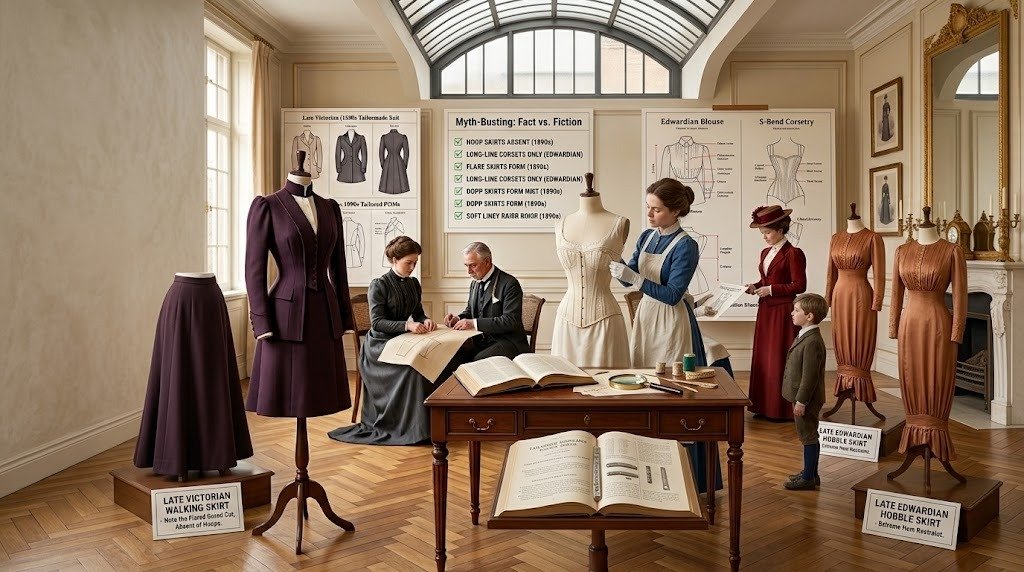
Victorian fashion always had huge skirts. Skirt shapes changed considerably throughout the nineteenth century. Crinolines and bustles were important at different times but they did not define every Victorian outfit.
Edwardian women stopped wearing corsets. Corsets remained part of many fashionable outfits although their design and the resulting silhouette changed.
Edwardian clothing was always more comfortable. Comfort depended on the garment. Some designs offered different movement while narrow hobble skirts could restrict walking.
The periods have a perfect dividing line. Fashion trends overlapped and an outfit from around 1900 may show features associated with both eras. These distinctions help avoid oversimplifying historical clothing.
Conclusion
The main difference between Edwardian vs Victorian fashion lies in their changing silhouettes and historical context. Victorian clothing evolved from crinolines and bustles to the tailored styles of the 1890s. Early Edwardian fashion became known for the S bend silhouette bloused bodices, elaborate hats and changing skirt shapes.
To identify an outfit accurately consider its date construction accessories and intended occasion together. Historical photographs and museum resources can help distinguish genuine period clothing from modern vintage inspired designs.
FAQs
Is Edwardian fashion part of the Victorian era?
Edwardian fashion is generally treated as a separate period following Queen Victoria’s reign. However styles overlapped around the turn of the twentieth century.
What is the biggest difference between Victorian and Edwardian dresses?
Victorian dresses varied from crinoline supported skirts to bustle styles and tailored late century shapes. Early Edwardian dresses often featured bloused bodices and the S bend silhouette.
Did Edwardian women wear corsets?
Yes. Corsets remained common in fashionable clothing and straight front designs were associated with the early Edwardian silhouette.
Were Edwardian dresses simpler than Victorian dresses?
Not always. Both periods included elaborate gowns and practical clothing. The year construction and occasion are more useful clues than a simple contrast between ornate and simple styles.
What is the difference between a crinoline and a bustle?
A crinoline supported a wide skirt around the body while a bustle emphasized volume at the back of the skirt during particular Victorian decades.
How can I create a historically accurate outfit?
Choose a specific year and occasion then research the silhouette undergarments fabric accessories and hairstyle. Compare your choices with dated photographs and museum collections.

 By

 By