
Edwardian fashion is known for elegant gowns, high collars lace and carefully shaped silhouettes. Behind these styles were designers who influenced how people dressed in the early twentieth century. While some continued traditional couture craftsmanship others experimented with simpler shapes draping and new fabrics.
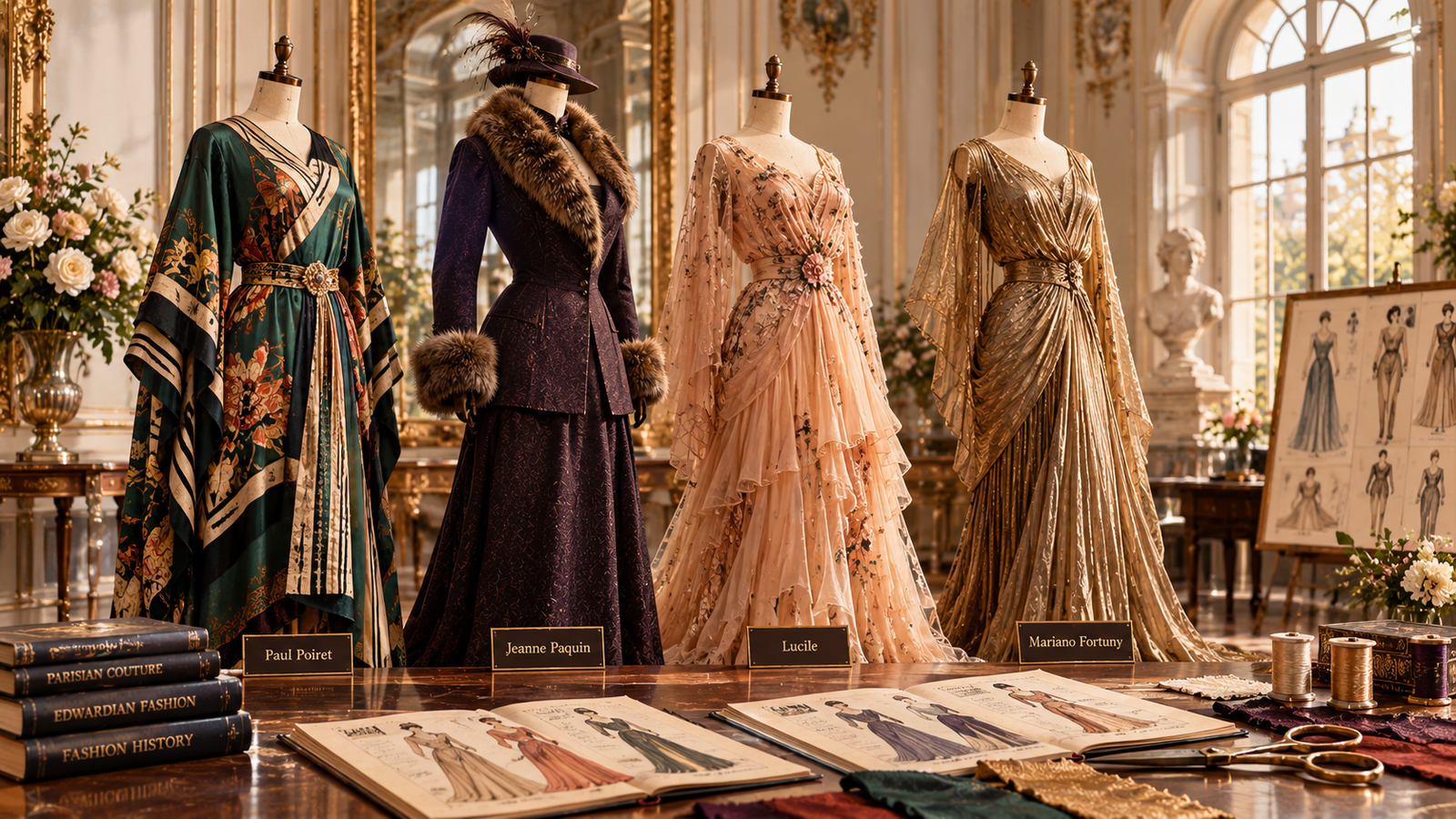
Seven influential names were Paul Poiret Jeanne Paquin Lucile Jacques Doucet JeanPhilippe Worth Callot Soeurs and Mariano Fortuny whose work on the Delphos gown also involved Henriette Negrin.
Their designs reflect the transition from elaborate nineteenth century dress toward more varied styles before the First World War.
Who Were the Most Influential Edwardian Fashion Designers?
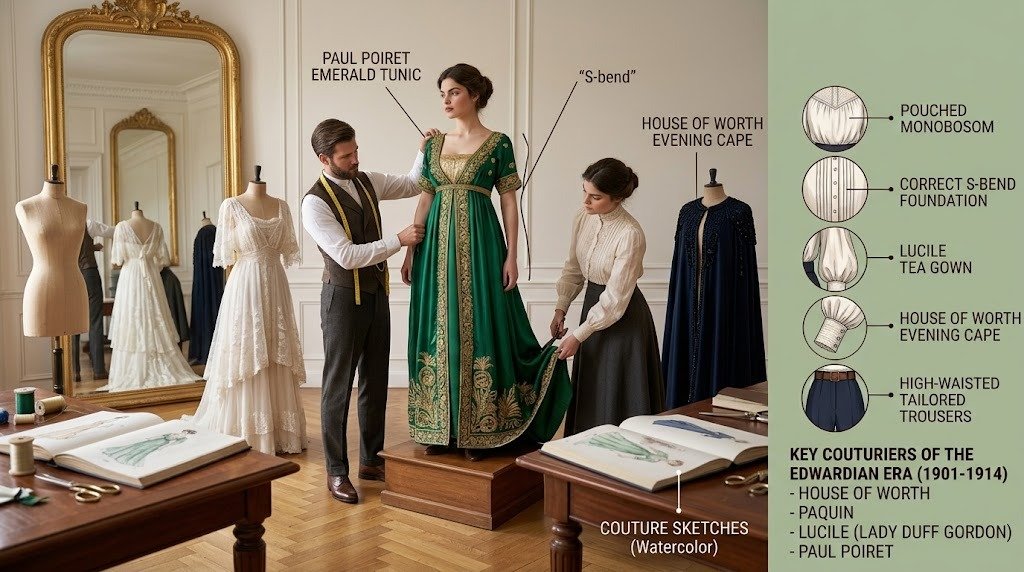
Edwardian fashion designers created luxurious gowns tailored daywear and experimental garments during the early 1900s. Parisian couture houses remained influential but designers explored different approaches to silhouette decoration comfort and movement.
Paul Poiret: Challenging Traditional Silhouettes
Paul Poiret (1879–1944) opened his Paris fashion house in 1903 after working with established couturiers including Jacques Doucet and the House of Worth.
He became known for draping geometric forms and designs that moved away from some traditional methods of garment construction. His work helped popularize straighter silhouettes, tunics and garments inspired by historical and international styles.
Although Poiret is often credited with freeing women from corsets this change happened gradually. His designs were part of a broader movement toward new silhouettes rather than the sole cause of dress reform.
Jeanne Paquin: A Leader in Parisian Couture
Jeanne Paquin (1869–1936) led the House of Paquin established in Paris in 1891. Her designs combined decorative details with careful construction balancing tailored structure and softer draping.
A House of Paquin afternoon dress from around 1901 in The Metropolitan Museum of Art collection illustrates this combination. Her career also highlights the important role women played in directing fashion houses and influencing couture.
Lucile: Romantic Designs and Fashion Presentation
Lucy Christiana Duff Gordon (1863–1935) known professionally as Lucile established her fashion business in 1894. She became associated with romantic designs featuring delicate fabrics, layered materials and flowing draping.
Lucile also helped develop fashion presentation by using models to show garments in motion. Her approach demonstrated that a design’s appeal depended not only on its appearance but also on how it moved when worn.
Her business expanded beyond Britain reflecting the growing international reach of couture during the early twentieth century.
Jacques Doucet: Luxury and Artistic Detail
Jacques Doucet (1853–1929) was a French couturier known for refined craftsmanship, luxurious textiles and intricate decoration. His designs often featured delicate fabrics and carefully combined textures.
Doucet’s work represents the luxury associated with Belle Époque couture particularly in formal and evening clothing. He also influenced other designers: Paul Poiret worked for Doucet before developing his own fashion house
JeanPhilippe Worth: Continuing a Couture Legacy
The House of Worth was founded by Charles Frederick Worth in the nineteenth century. After Charles Frederick died in 1895 his son JeanPhilippe Worth (1856–1926) led its design work.
JeanPhilippe continued the house’s tradition of elaborate gowns, fine materials and decorative craftsmanship. Although Worth remained prestigious, French fashion was changing and its traditional approach no longer dominated new trends to the same extent.
A Worth tea gown dated around 1905 illustrates how established couture houses adapted their work during the Edwardian period.
Callot Soeurs: Lace and Rich Textiles
Callot Soeurs was a French fashion house founded by four sisters in the 1890s. Initially associated with lace and lingerie it later became known for elaborate couture garments.
The house used embroidery decorative trimmings, antique lace and richly textured fabrics. Its designs combined traditional craftsmanship with changing silhouettes and influences from different artistic traditions.
Marie Callot Gerber, the eldest sister, played a leading role in the house’s design work. Its surviving garments demonstrate how decoration and construction both contributed to Edwardian couture.
Mariano Fortuny and Henriette Negrin: The Delphos Gown
Mariano Fortuny (1871–1949) a Spanishborn artist and designer based in Venice explored clothing through art historical references and textile experimentation.
His best known design, the Delphos gown emerged around 1907. Its finely pleated fabric and long simple lines contrasted with the structured bodices and skirts common in earlier fashionable dress.
Henriette Negrin Fortuny’s wife and collaborator deserves recognition for her role in the gown’s development. Research from Budapest’s Museum of Applied Arts identifies her as its conceiver with the patent registered in her name.
Inspired by ancient Greek clothing the Delphos gown became an important example of how historical ideas could produce modernlooking designs. It continued to be worn beyond the Edwardian period.
How Did Edwardian Designers Influence Fashion Trends?
Edwardian designers did not create one uniform style. Their work reflected different ideas about elegance, craftsmanship and changing expectations for clothing.
From the SBend to Straighter Silhouettes
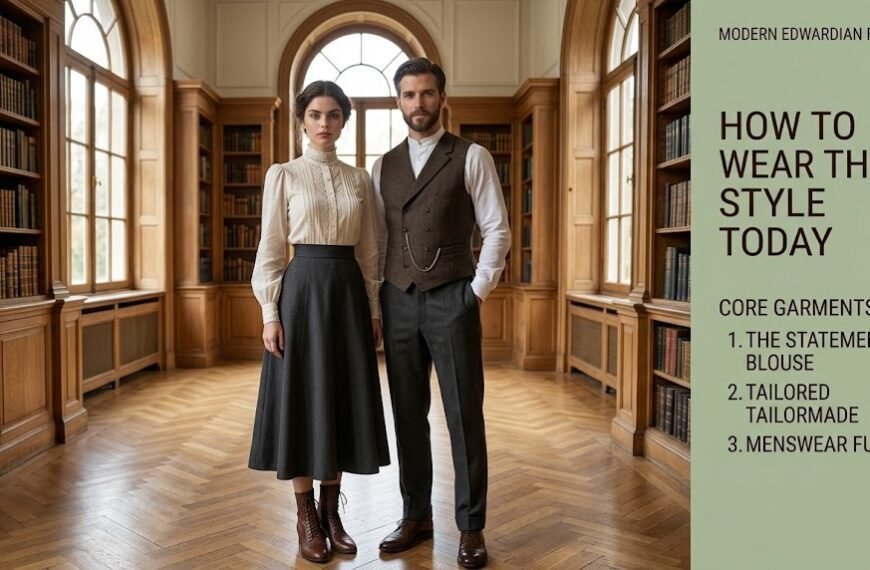
Early Edwardian fashion is associated with the Sbend silhouette which emphasized a forwardset bust and a pronounced curve through the back. Corsetry bodice construction and skirt shape contributed to this fashionable outline.
In the years before the First World War some designers explored longer straighter forms. Poiret and Fortuny are often discussed in this transition although their approaches were different.
The change was gradual. Corseted and less structured styles existed alongside one another depending on the occasion designer and wearer.
Luxury Materials and Decorative Craftsmanship
Designers such as Doucet Worth and Callot Soeurs demonstrated the importance of lace embroidery, fine textiles and carefully finished construction.
These details distinguished couture garments and required considerable specialist work. Such clothing was generally expensive reflecting the materials and labor involved.
Movement and Fashion Presentation
Lucile’s model presentations and Fortuny’s flowing designs highlighted how garments looked in motion. Fabric draping and construction affected not only a dress’s appearance but also how it moved when worn.
Comparison of Major Edwardian Fashion Designers
| Designer or house | Main design association | Contribution |
| Paul Poiret | Draping and straighter shapes | Challenged traditional silhouettes |
| Jeanne Paquin | Decorative couture and tailoring | Combined structure with softer forms |
| Lucile | Romantic designs and presentation | Helped change how fashion was displayed |
| Jacques Doucet | Luxury textiles and detail | Represented refined couture craftsmanship |
| JeanPhilippe Worth | Elaborate gowns | Continued the House of Worth legacy |
| Callot Soeurs | Lace and embroidery | Combined decoration with evolving designs |
| Fortuny and Negrin | Pleating and classical inspiration | Developed an alternative approach to dress |
What Is the Difference Between Edwardian and Victorian Fashion Designers?
Victorian fashion covers Queen Victoria’s reign from 1837 to 1901 while Edwardian fashion generally refers to the early twentieth century and the years before the First World War. Victorian clothing changed considerably over several decades including the popularity of crinolines and bustles.
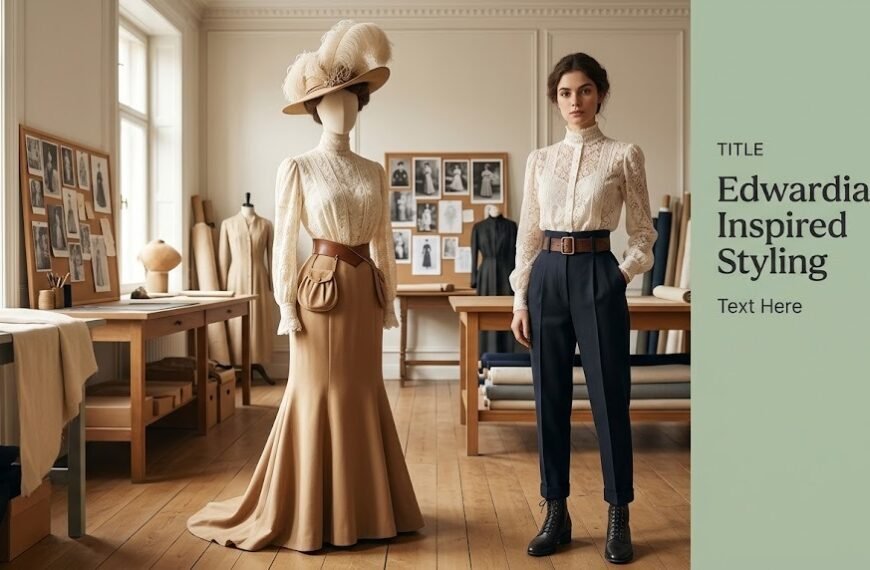
Early Edwardian fashion is especially associated with the bent silhouette, elaborate blouses, long skirts and decorative fabrics. Later designs increasingly explored straighter lines and alternative construction methods.
The periods overlap in fashion history because designers and couture houses continued working across the turn of the century. It is more accurate to examine individual garments and their dates than to classify every designer as exclusively Victorian or Edwardian.
You can explore Everytalkin’s guides to Victorian outfits and Edwardian fashion history for more context.
How Can You Identify an Authentic Edwardian Design?
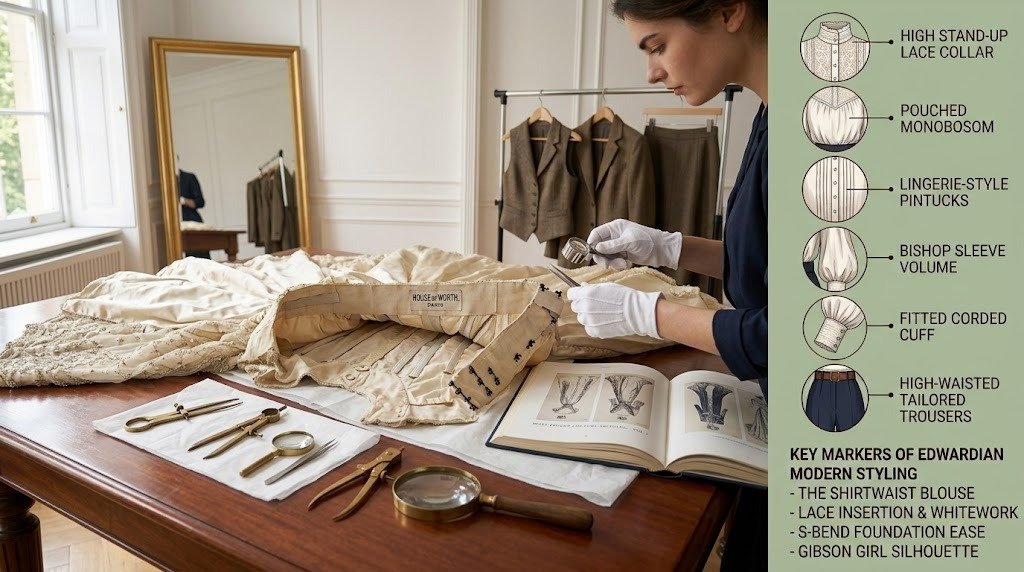
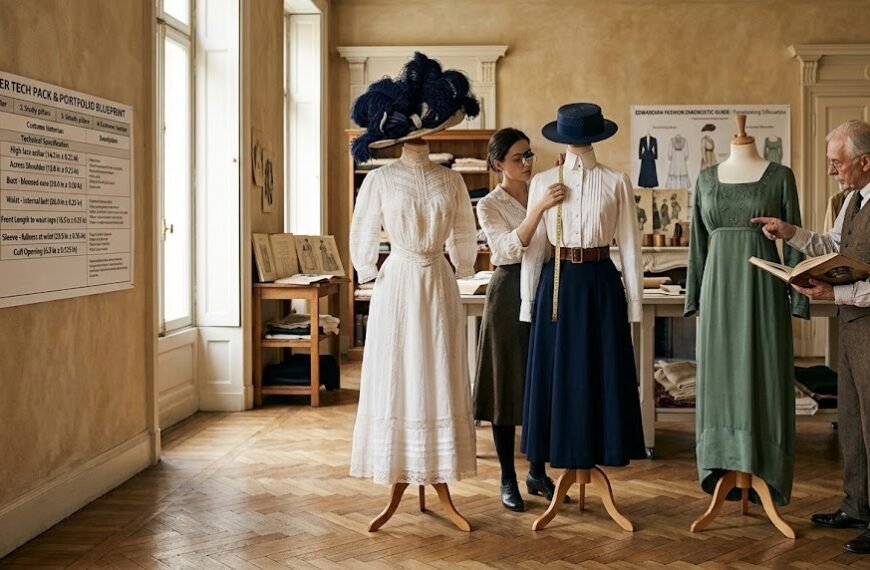
A garment’s appearance alone cannot confirm its age or designer. Modern reproductions may use period inspired details and vintage clothing can be altered.
Use these steps when researching a garment:
- Check the date: Look for a museum catalogue reliable publication or original label.
- Examine the silhouette: Study the bodice sleeves waist and skirt shape.
- Inspect construction: Seams, closures lining and fabric treatment can provide clues.
- Verify the designer: Compare the garment with documented museum examples.
- Distinguish inspiration from authenticity: A modern Edwardian inspired dress is not necessarily an original period garment.
Museum collections are valuable research tools because they often provide dates, materials designer information and historical context.
Conclusion
Edwardian fashion designers helped shape an important period of change in clothing history. While Doucet Worth and Callot Soeurs maintained traditions of luxury and decorative craftsmanship Poiret and Fortuny explored different approaches to silhouette and fabric.
Jeanne Paquin Lucile and Marie Callot Gerber also made significant contributions to couture. For a clearer understanding of their work compare dated garments in museum collections and explore Everytalkin’s guides to Edwardian fashion history and Edwardian evening wear.
FAQs
Who was the most influential Edwardian fashion designer?
Paul Poiret is frequently highlighted for his experimental draping and role in popularizing straighter silhouettes. However several designers shaped the period including Jeanne Paquin Lucile and Jacques Doucet.
Were there famous women fashion designers during the Edwardian era?
Yes. Jeanne Paquin Lucile and the Callot sisters were important figures in couture. Their careers demonstrate women’s influence as designers and fashion business leaders.
What did Edwardian fashion designers create?
They produced day dresses, evening gowns coats, tailored garments and experimental designs using different fabrics, decorative techniques and silhouettes.
Did Paul Poiret invent fashion without corsets?
No single designer created this change alone. Poiret helped popularize less traditionally structured silhouettes but changing dress practices developed gradually.
Was Mariano Fortuny an Edwardian designer?
Fortuny developed the Delphos gown around 1907 near the end of the Edwardian period. Its influence continued into later decades.
Where can I see examples of Edwardian couture?
The Metropolitan Museum of Art provides collection records for garments associated with designers including Poiret Paquin, Doucet Worth Lucile and Callot Soeurs.

 By

 By