
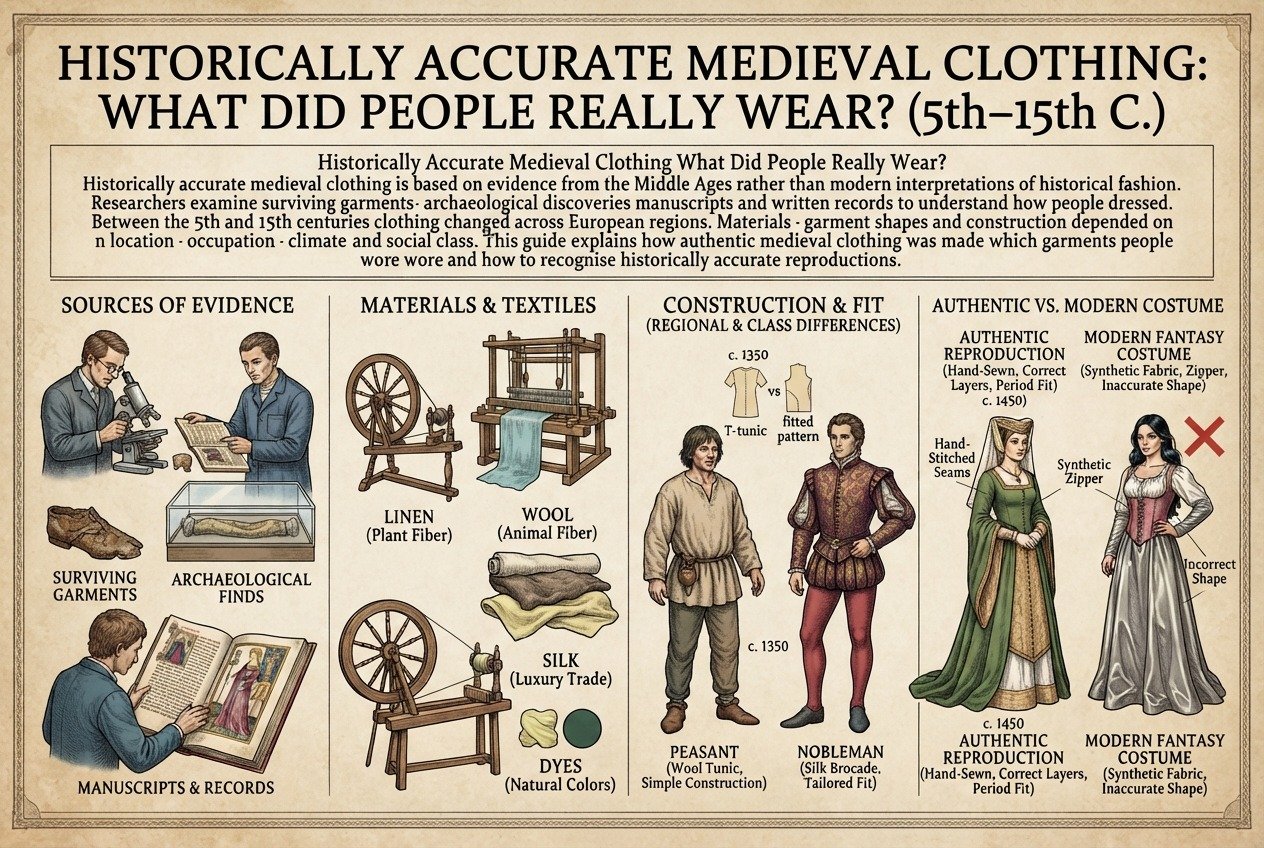

Historically accurate medieval clothing is based on evidence from the Middle Ages rather than modern interpretations of historical fashion. Researchers examine surviving garments, archaeological discoveries, manuscripts and written records to understand how people dressed.
Between the 5th and 15th centuries clothing changed across European regions. Materials, garment shapes and construction depended on location, occupation climate and social class.
This guide explains how authentic medieval clothing was made, which garments people wore and how to recognise historically accurate reproductions.
What Does Historically Accurate Medieval Clothing Mean?
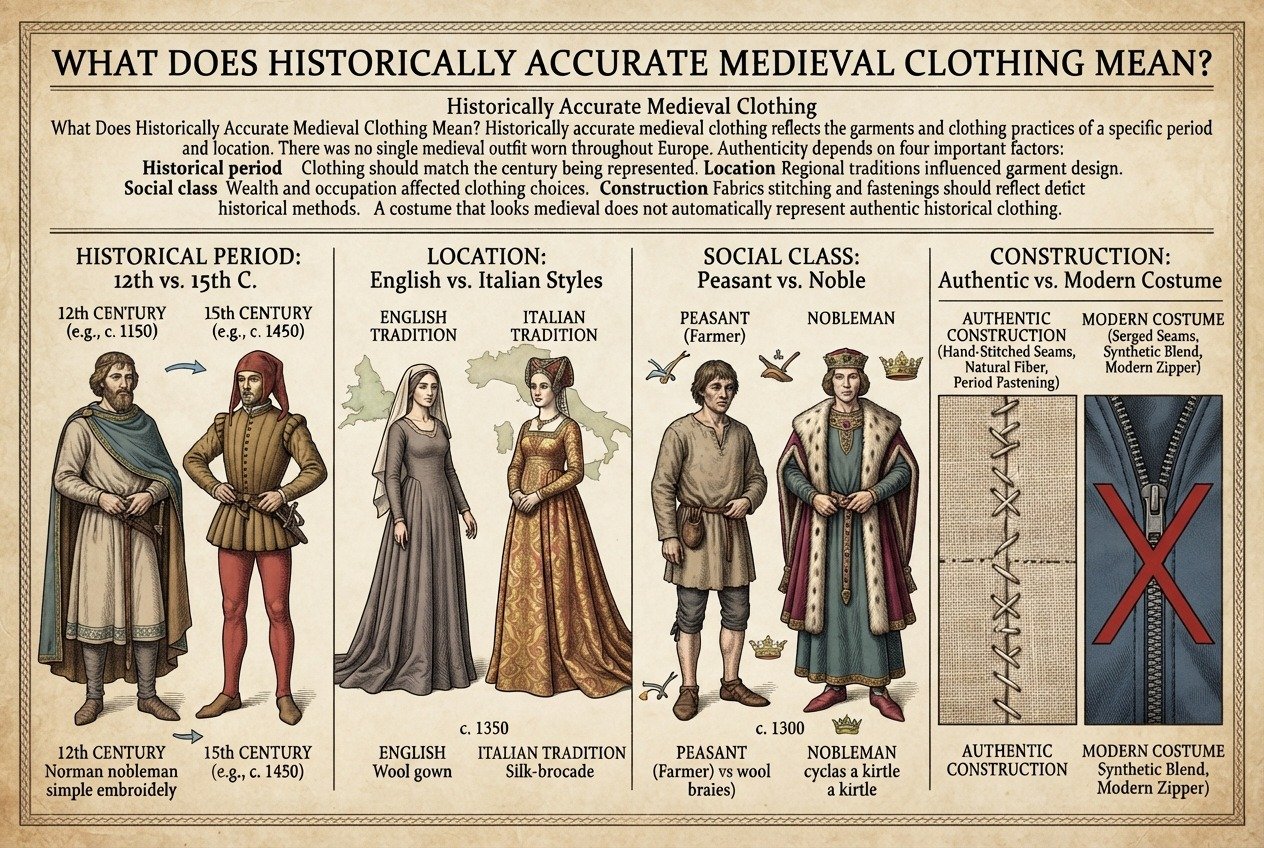
Historically accurate medieval clothing reflects the garments and clothing practices of a specific period and location.
There was no single medieval outfit worn throughout Europe. Authenticity depends on four important factors
- Historical period clothing should match the century being represented.
- Location Regional traditions influenced garment design.
- Social class Wealth and occupation affected clothing choices.
- Construction Fabrics stitching and fastenings should reflect historical methods.
A costume that looks medieval does not automatically represent authentic historical clothing.
What Evidence Do Historians Use to Study Medieval Clothing?
Researchers use several sources to understand medieval dress
- Archaeological discoveries Preserved textiles footwear and accessories provide physical evidence.
- Written records Inventories and household accounts describe garments and materials.
- Manuscript illustrations Historical images show clothing styles and combinations.
- Museum collections Surviving objects reveal fabrics and construction techniques.
- Textile research Scientific examination helps identify fibres and production methods.
Combining these sources provides a more reliable understanding of medieval clothing.
How Were Medieval Garments Made?
Medieval clothing was produced through manual textile and sewing processes. Fabric was prepared, measured, cut and stitched into garments.
Common construction methods included cutting fabric panels and sewing seams, adding ties or buttons and shaping garments through careful adjustments.
These details matter when assessing historical reproductions because appearance alone cannot prove construction accuracy.
What Did Medieval Men and Women Wear?
Medieval clothing usually consisted of several layers although garments differed according to gender period region and occupation.
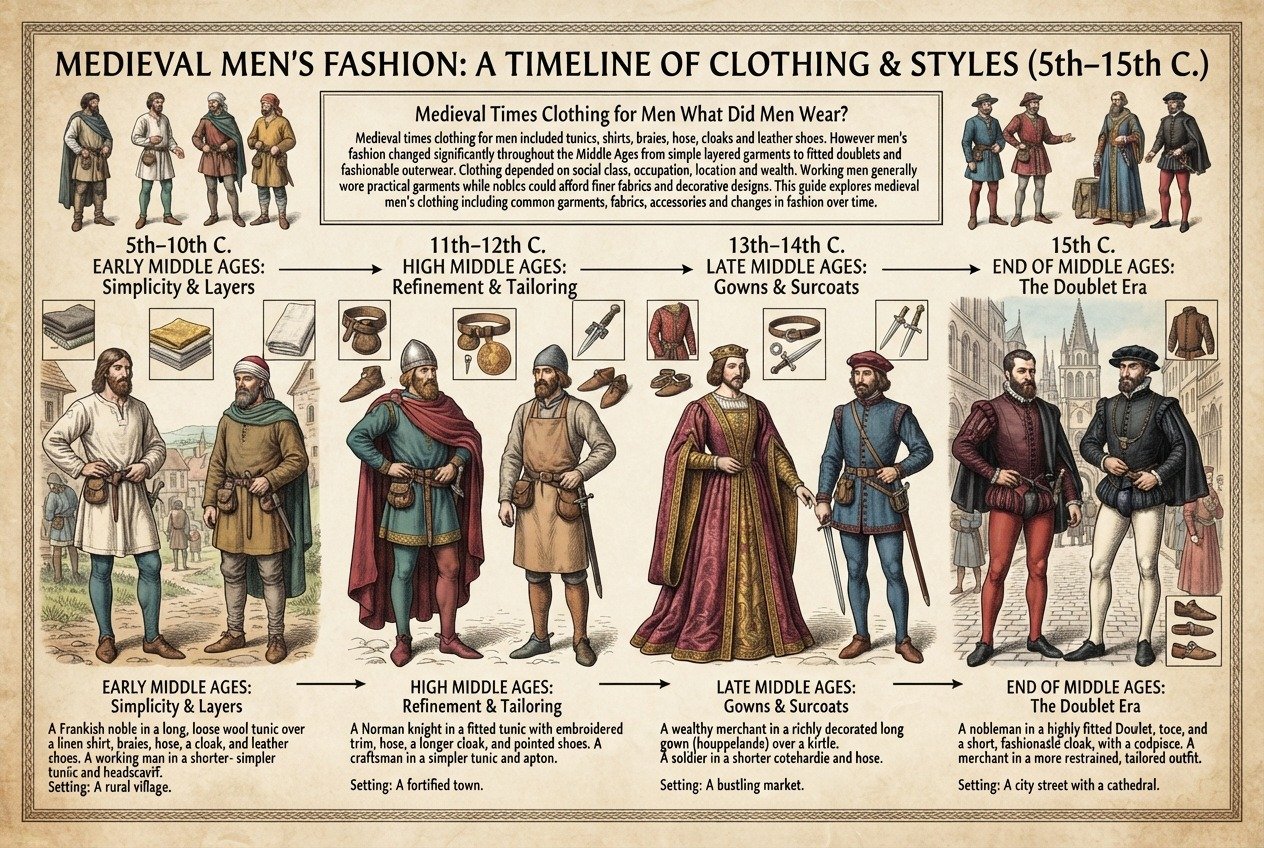
Medieval Mens Clothing
Men commonly wore
- Linen shirts Basic garments worn close to the body.
- Braies Mens undergarments used in different forms.
- Hose Leg coverings that changed over the centuries.
- Tunics Main garments worn over underlayers.
- Cloaks outer garments provide additional protection.
Later medieval clothing included more fitted garments and changing methods of attaching hose.
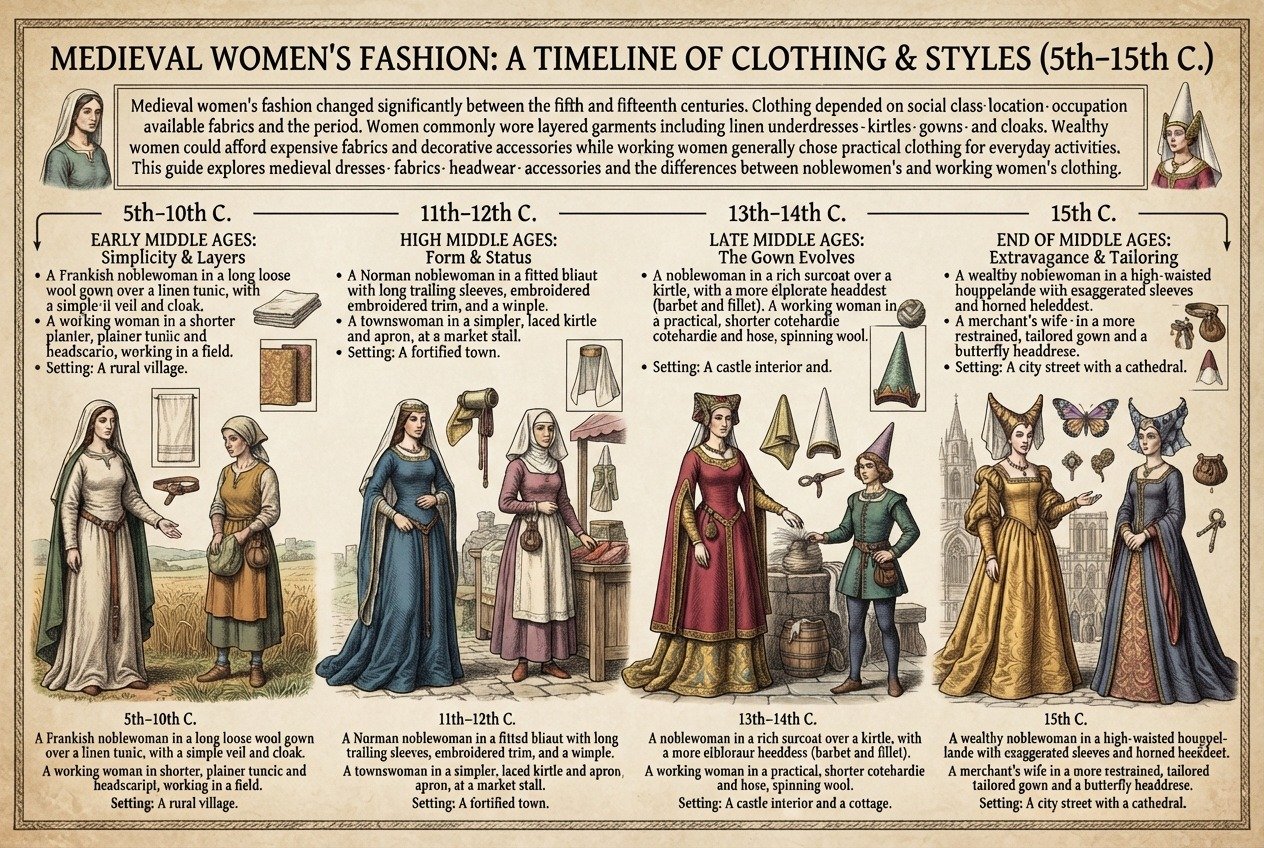
Medieval Womens Clothing
Women’s everyday clothing often included an undergarment and one or more outer layers.
Common garment types included
- Chemise or shift Linen undergarments worn beneath dresses.
- Cotte or kirtle Main garments with designs that varied by period and region.
- Gown An outer garment with changing shapes and decoration.
- Surcoat An additional garment worn over another layer.
- Veils and wimples Head coverings used in different historical settings.
These garment terms describe different clothing types and should not be treated as interchangeable.
Which Fabrics and Colours Were Used in Medieval Clothing?
Natural fibres influenced the comfort, durability and appearance of medieval garments.
| Fabric | Common Uses |
| Wool | Tunics cloaks and outer garments |
| Linen | Shirts and undergarments |
| Silk | Luxury clothing and decoration |
| Hemp | Practical textiles |
| Cotton | Fabrics available through trade in some regions |
| Velvet | Luxury garments particularly in later medieval contexts |
Medieval clothing also featured colours such as blue, red , yellow and green. Natural dyes came from plants, insects and other materials.
The final shade depended on the dye textile and production process. Some colours were expensive but colourful clothing was not limited to wealthy households.
What Footwear and Accessories Did Medieval People Use?
Footwear and accessories served both practical and decorative purposes. Common examples included leather shoes boots belts brooches pins buttons ties and pouches. Their designs varied according to historical period location and occupation.
Archaeological footwear discoveries are particularly valuable because they reveal details about leather soles and construction methods.
How Did Occupation and Social Class Influence Medieval Clothing?
Clothing reflects people’s daily activities, available resources and social circumstances.
| Group | Clothing Considerations |
| Agricultural workers | Durable garments for outdoor work |
| Craftspeople | Practical clothing for workshop activities |
| Merchants | Clothing influenced by income and local fashion |
| Travellers | Layers and protective outer garments |
| Religious communities | Clothing shaped by institutional traditions |
These are general patterns rather than universal dress rules. Clothing differed between individuals and regions.
How Did Medieval Clothing Change Over Time?
Medieval fashion developed gradually across several centuries.
- Early Middle Ages (5th–10th centuries) Tunics cloaks, simple gowns and practical outer garments were common clothing forms.
- High Middle Ages (11th–13th centuries) Textile production and garment construction developed influencing clothing shapes and decoration.
- Late Middle Ages (14th–15th centuries) More fitted garments changing sleeves and developments in tailoring became visible in different regions.
These periods provide a general timeline as fashion did not change everywhere at the same time.
How Can You Recognise Historically Accurate Medieval Clothing?
A reliable medieval reproduction should represent a specific historical setting rather than combine unrelated styles.
Check these details
- Date Does the garment match the intended century?
- Is its design appropriate for the represented region?
- Construction Are the seams panels and fastenings historically plausible?
- Materials Do the fabrics suit the period?
- Historical references Can the design be compared with surviving garments or reliable illustrations?
Modern reproductions may use contemporary production tools but their historical claims should be supported by evidence.
Where Can You Find Reliable References for Medieval Dress?
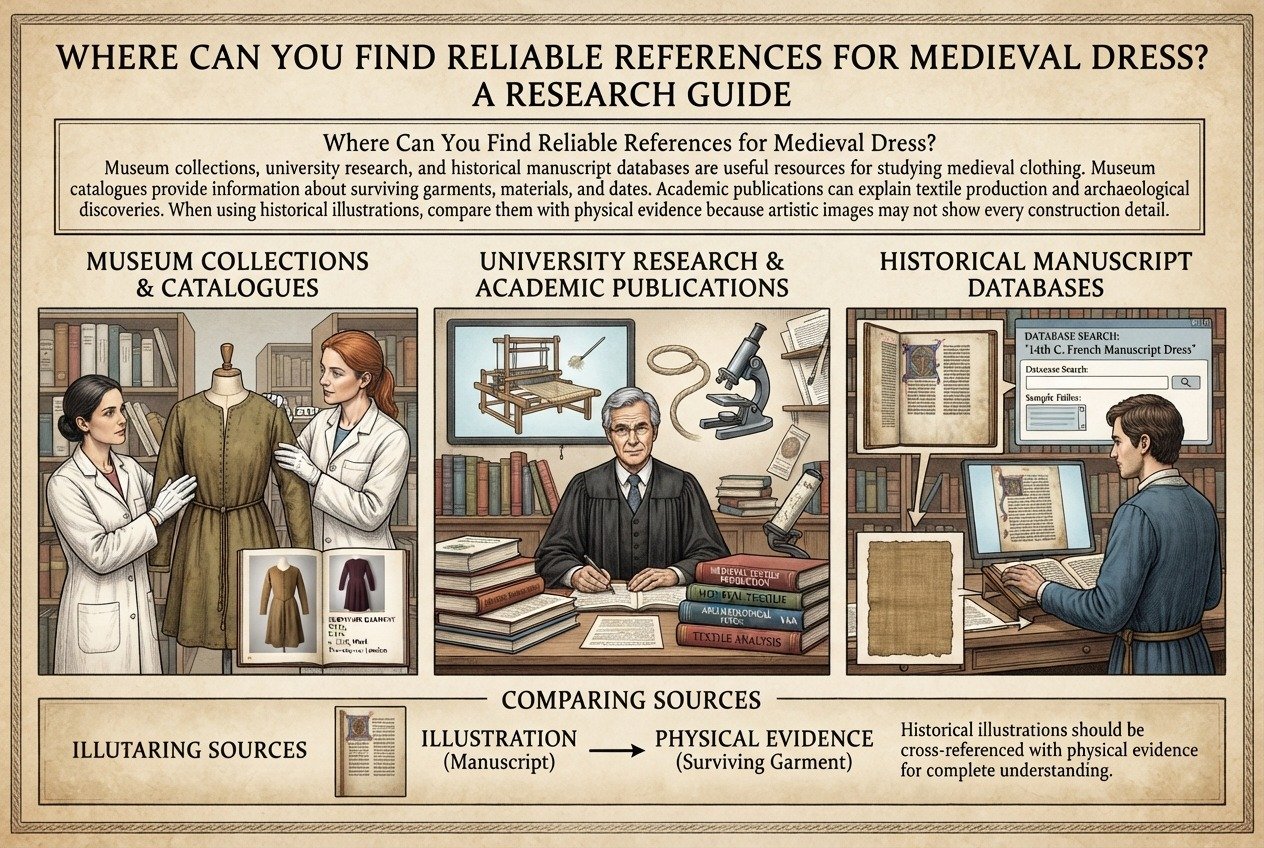
Museum collections, university research and historical manuscript databases are useful resources for studying medieval clothing.
Museum catalogues provide information about surviving garments, materials and dates. Academic publications can explain textile production and archaeological discoveries.
When using historical illustrations compare them with physical evidence because artistic images may not show every construction detail.
Conclusion
Historically accurate medieval clothing reflects the materials, craftsmanship and regional traditions of the Middle Ages. Understanding authentic dress requires examining garment construction textiles, archaeological discoveries and historical records.
Considering the correct period and location helps distinguish genuine historical reproductions from modern medieval inspired costumes.
FAQs
How can I tell if medieval clothing is historically accurate?
Check its date of geographical origin fabric construction and accessories. Compare these details with archaeological discoveries, surviving garments and reliable historical references.
What were the most common medieval fabrics?
Wool and linen were important textiles across much of medieval Europe. Wool was commonly used for outer garments while linen was widely used for shirts and undergarments.
Did medieval people wear bright colours?
Yes. Medieval clothing included blue red yellow green and other colours produced through natural dyeing processes. Availability and cost influenced the shades people could obtain.
Were medieval clothes sewn by hand?
Yes. Hand sewing was central to medieval garment construction. Clothing required manual skill and was often repaired and reused.
What did medieval people wear underneath their main garments?
Undergarments varied by period and region. Examples included linen shirts, chemises shifts and braies.
Are modern medieval costumes historically accurate?
Not always. Some costumes combine designs from different centuries or include fantasy inspired details. Authentic reproductions require historical evidence supporting their materials and construction.

 By

 By