
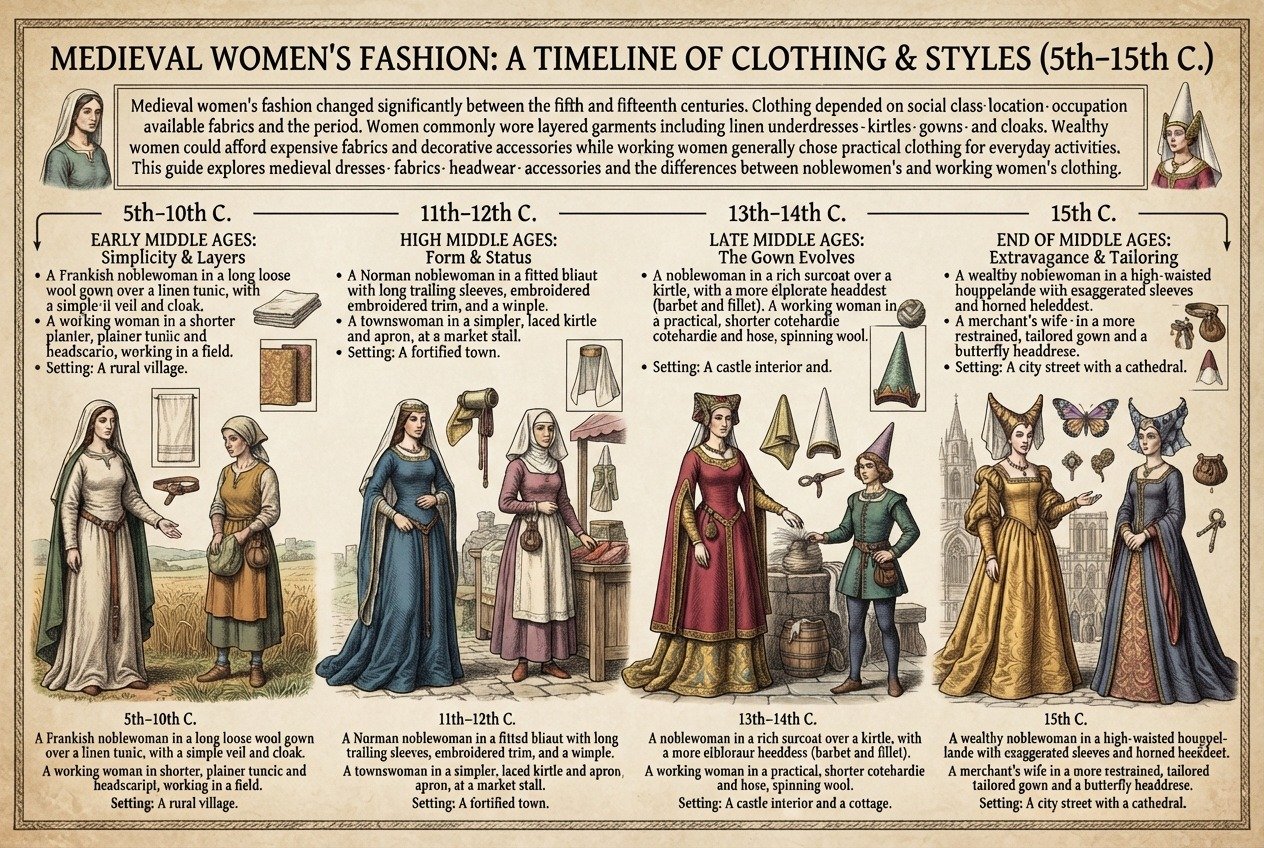

Medieval women’s fashion changed significantly between the fifth and fifteenth centuries. Clothing depended on social class location occupation available fabrics and the period.
Women commonly wore layered garments including linen underdresses kirtles gowns and cloaks. Wealthy women could afford expensive fabrics and decorative accessories while working women generally chose practical clothing for everyday activities.
This guide explores medieval dresses fabrics headwear accessories and the differences between noblewomen’s and working women’s clothing.
What Was Medieval Women’s Fashion?
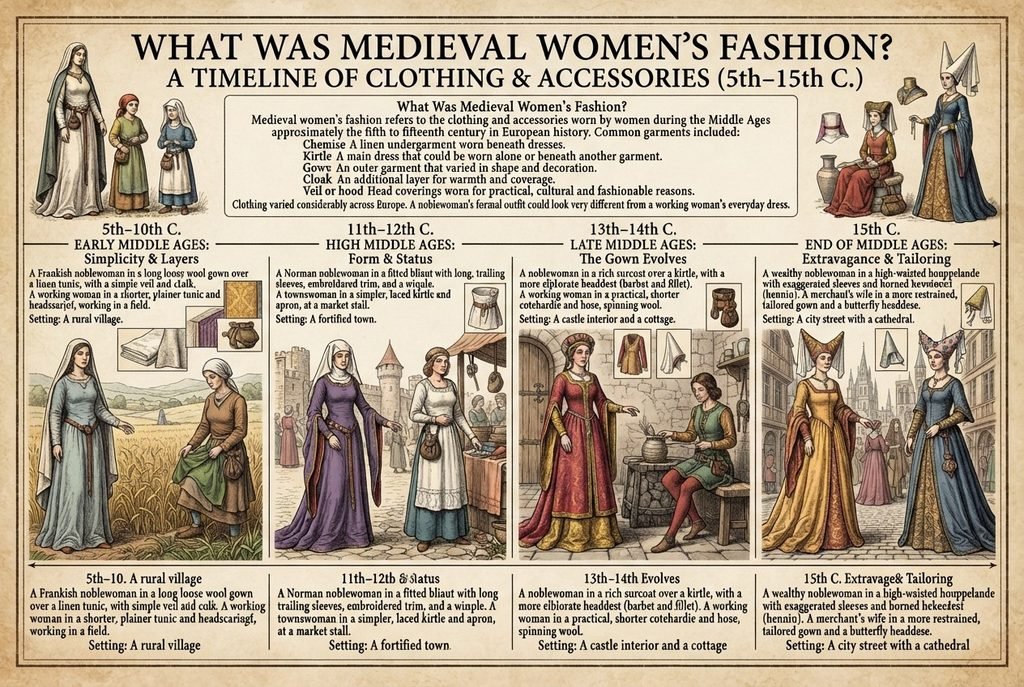
Medieval women’s fashion refers to the clothing and accessories worn by women during the Middle Ages approximately the fifth to fifteenth century in European history.
Common garments included
- Chemise A linen undergarment worn beneath dresses.
- Kirtle A main dress that could be worn alone or beneath another garment.
- Gown An outer garment that varied in shape and decoration.
- Cloak An additional layer for warmth and coverage.
- Veil or hood Head coverings worn for practical cultural and fashionable reasons.
Clothing varied considerably across Europe. A noblewoman’s formal outfit could look very different from a working woman’s everyday dress.
How Did Medieval Women’s Fashion Change Over Time?
Medieval clothing developed across several centuries. Early garments were generally simpler while later fashionable styles included more fitted shapes and elaborate headwear.
Early Medieval Fashion (5th–10th Century)
Women commonly wore long tunic-like dresses, undergarments and cloaks. Linen and wool were important materials and belts helped secure garments.
Head coverings also appeared in women’s clothing although styles varied by region and custom.
High Medieval Fashion (11th–13th Century)
Women’s gowns became more shaped and decorative in many western European settings. Kirtles, fitted sleeves, veils and wimples were important features of clothing. Some women also wore sleeveless outer garments and cloaks over their dresses.
Late Medieval Fashion (14th–15th Century)
Fitted bodices shaped seams and closer fitting sleeves became more visible in fashionable clothing. Garments such as the côte hardie were associated with late medieval styles.
During the fifteenth century elaborate headwear including padded rolls and tall headdresses appeared in fashionable European dress. For examples of fifteenth century clothing see the Fashion History Timeline.
What Dresses Did Medieval Women Wear?
Several garments formed the basis of medieval women’s clothing. Their designs changed according to the century and region.
Chemise Usually made from linen the chemise was worn beneath the main dress. It protected outer clothing and provided a comfortable base layer.
Kirtle A kirtle was a main dress that could be loose or fitted depending on its date and design. It was sometimes worn alone or beneath a gown.
Gown Gowns were outer garments that could feature decorative fabrics embroidery and different sleeve styles.
Surcoat A surcoat was worn over another garment. Some fashionable versions had sleeveless designs or large side openings.
What Did Medieval Women Wear Under Their Dresses?
Medieval women’s outfits often included several layers for coverage, comfort and warmth.
| Garment | Purpose |
| Chemise | Linen undergarment |
| Kirtle | Main dress or fitted layer |
| Hose | Leg coverings |
| Additional layers | Warmth and coverage |
| Girdle | Secured clothing and carried small items |
The exact combination varied by period and region. Medieval undergarments should not automatically be described using modern clothing terms.
Which Fabrics and Colours Were Popular?
Wool and linen were important materials in medieval clothing. Silk and other expensive textiles were more accessible to wealthy households.
| Fabric | Common Uses |
| Wool | Dresses cloaks and everyday garments |
| Linen | Chemises and undergarments |
| Silk | Luxury clothing and decoration |
| Fustian | Different types of cotton based or mixed textiles |
| Fur | Warm garment linings and decoration |
Medieval clothing was not always dull or colourless. Red blue green yellow and other shades appeared in clothing depending on available dyes and the wearer’s budget.
Wealthier women could afford finer fabrics and more elaborate decoration while working women generally used more affordable materials.
How Did Medieval Women Cover Their Hair?
Head coverings were important in many medieval European communities. Their styles could reflect fashion age social expectations and local customs.
Common examples included
- Veils Fabric coverings worn over the head and sometimes the shoulders.
- Wimples Cloth arranged around the neck and chin.
- Barbettes Bands of fabric passing beneath the chin.
- Fillets Bands worn around the head.
- Hoods Practical coverings for the head.
- Steeple headdresses Tall fashionable headwear associated with some fifteenth century styles.
These designs changed over time. The Victoria and Albert Museum’s guide to medieval headwear provides useful historical illustrations.
What Shoes and Accessories Did Medieval Women Wear?
Shoes and accessories completed medieval outfits. Their materials and decoration depended on wealth, location and fashion.
Common accessories included belts, girdles , brooches , pouches , gloves and jewellery. Cloaks and mantles provided additional warmth.
Wealthier women could wear decorated belts, fine jewellery and more expensive footwear while working women generally used simpler accessories suited to everyday tasks.
How Was Noble Women’s Fashion Different from Peasant Women’s Clothing?
Social class strongly influenced medieval clothing. Noblewomen could afford expensive textiles and decorative garments while working women needed durable clothing for daily activities.
| Feature | Noblewomen | Working and Peasant Women |
| Fabrics | Fine wool silk and luxury textiles | More affordable wool and linen |
| Dresses | Decorated gowns | Practical kirtles and dresses |
| Colours | Wider access to costly dyes | Depended on income and availability |
| Accessories | Fine jewellery and decorated belts | Simple belts and pouches |
| Clothing needs | Formal occasions and status | Everyday work and comfort |
These differences were not absolute. Working women could also wear colourful clothing depending on their resources and local markets.
What Is the Difference Between Medieval and Renaissance Women’s Fashion?
Medieval and Renaissance clothing developed through overlapping historical periods but they were not identical.
| Feature | Medieval Fashion | Renaissance Fashion |
| Period | Approximately 5th–15th centuries | Developed from the 14th century onward |
| Dresses | Kirtles gowns and surcoats | More varied bodices and regional gown styles |
| Headwear | Veils wimples and hoods | Decorated caps and different headpieces |
| Decoration | Embroidery trims and jewellery | Rich fabrics and elaborate details |
The transition happened gradually and clothing styles differed across European regions.
How Can You Identify Authentic Medieval Women’s Clothing?
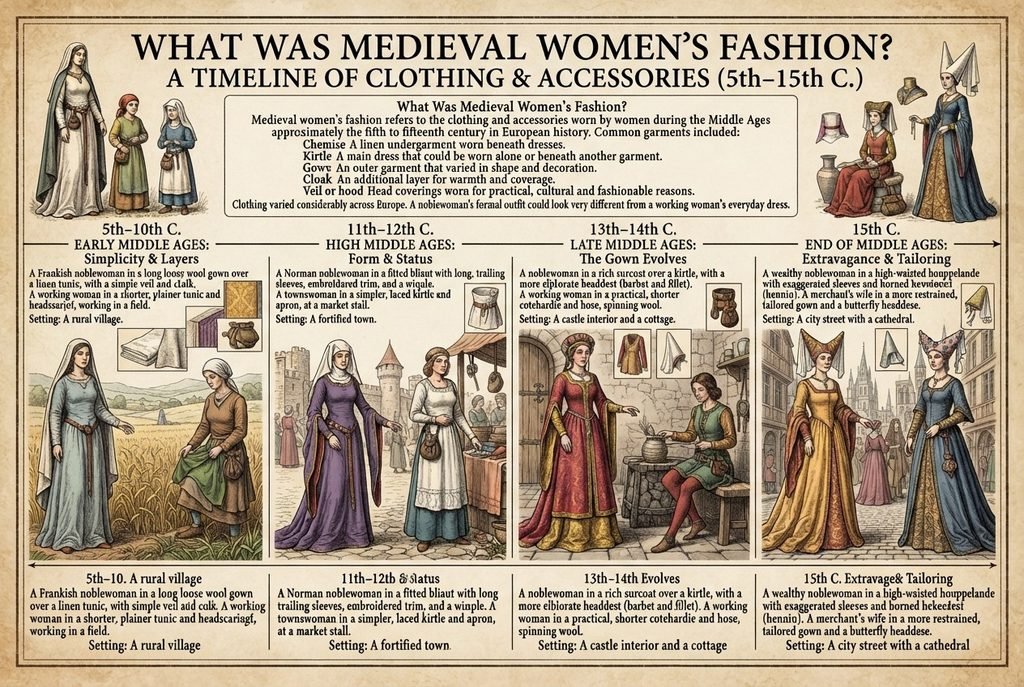
To recognise historical medieval clothing examine the complete outfit rather than relying on one feature.
- Check the date A thirteenth century dress may differ greatly from a fifteenth century gown.
- Study the layers Look for undergarments, main dresses and outer garments.
- Examine construction seams, lacing buttons and sleeves can provide historical clues.
- Check headwear Veils wimples and later headdresses help identify different styles.
- Comparing museum examples, dated garments and historical manuscripts provide stronger evidence than modern costume designs.
Modern medieval style dresses are often made for festivals, theatre and reenactment. They should not automatically be treated as historically accurate.
Conclusion
Medieval women’s fashion changed across centuries and reflected differences in wealth occupation region and social expectations. Chemises skirts gowns cloaks headwear and accessories formed important parts of women’s clothing.
Understanding the historical period and social context is essential when identifying medieval dress. Noblewomen’s formal gowns and working women’s everyday clothing were both important parts of medieval fashion.
FAQs
What was the most common medieval dress for women?
A kirtle or similar long dress was an important garment in many medieval western European settings. Women often wore it over a linen chemise sometimes with an additional gown or outer layer.
What did medieval women wear under their dresses?
Many women wore a linen chemise beneath their main dress. Other layers could include a kirtle and hose depending on the period region and outfit.
Did medieval women wear corsets?
Modern corsets should not be treated as standard medieval garments. Medieval women used different forms of layered clothing and fitted dresses but these were not necessarily the same as later corsets.
Why did medieval women cover their hair?
Head coverings were associated with religious and social expectations in many medieval European communities. Veils wimples and other coverings also became part of changing fashion.
What fabrics did medieval women use?
Wool and linen were widely used. Wealthier households could also afford silk and other expensive textiles while fur was sometimes used for warmth and decoration.
Did peasant women wear colourful dresses?
Yes. Working women did not wear only brown or grey clothing. Colours depended on available dyes, local production fabric costs and household income.
What is the difference between medieval and Renaissance dresses?
Medieval dresses included kirtles, gowns and surcoats. Renaissance clothing developed different bodice shapes, sleeves and decorative styles with changes occurring gradually across Europe.

 By

 By