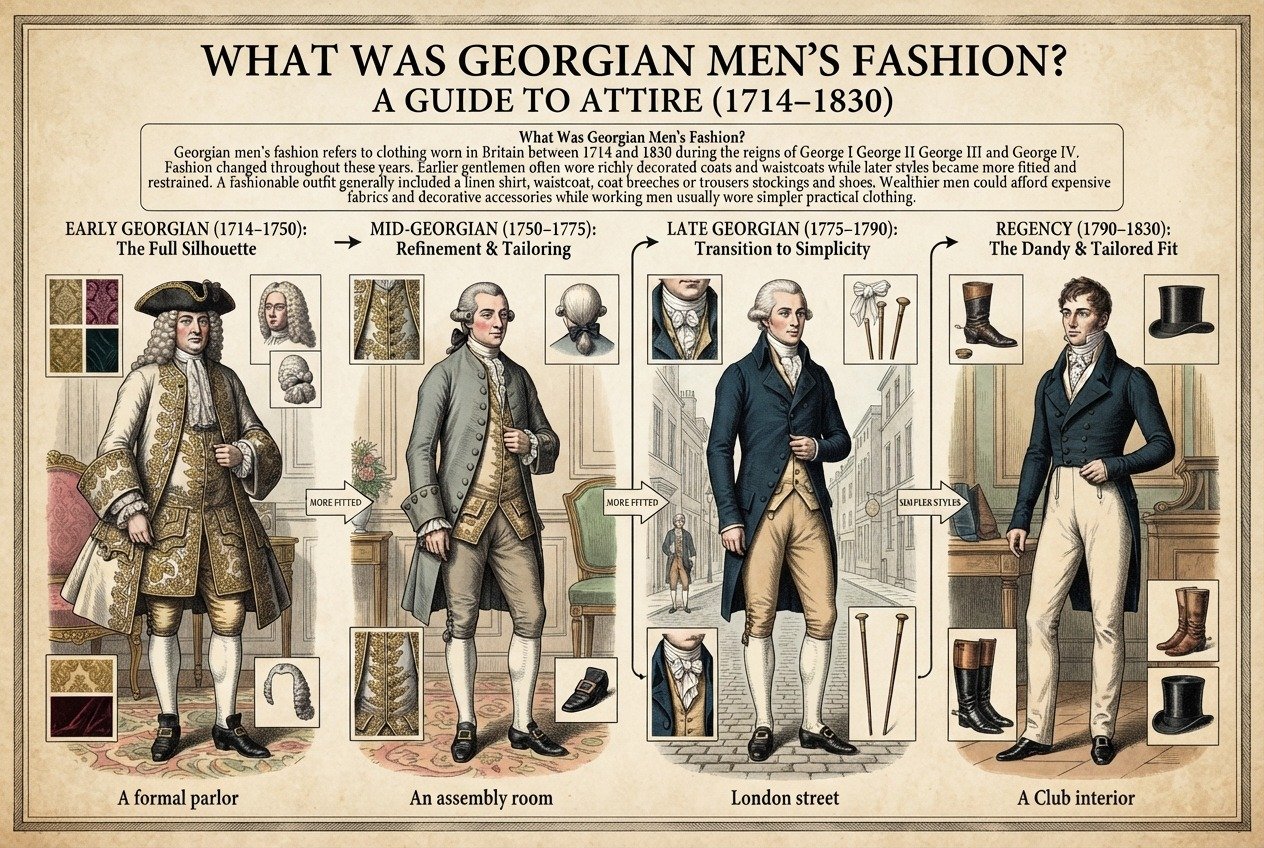

Georgian men’s fashion changed considerably between 1714 and 1830. During this period gentlemen’s clothing developed from decorative coats embroidered waistcoats and knee breeches towards more fitted tailoring and simpler styles.
A typical outfit included a coat waistcoat linen shirt breeches or trousers stockings and shoes. However clothing depended on the occasion, social position and decade.
This guide explores Georgian gentlemen’s clothing including popular garments, fabrics , hairstyles and accessories and explains how men’s fashion changed during the period.
What Was Georgian Men’s Fashion?
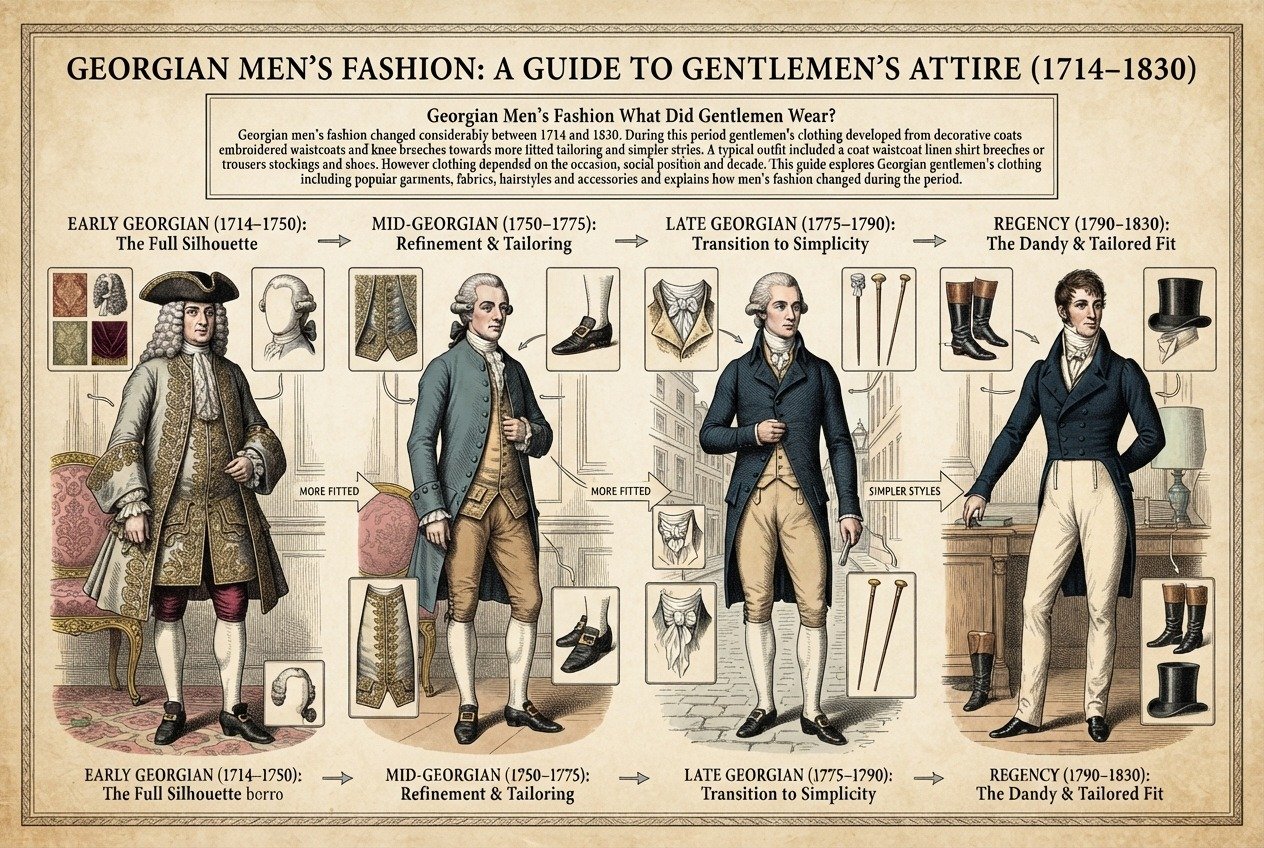
Georgian men’s fashion refers to clothing worn in Britain between 1714 and 1830 during the reigns of George I George II George III and George IV.
Fashion changed throughout these years. Earlier gentlemen often wore richly decorated coats and waistcoats while later styles became more fitted and restrained.
A fashionable outfit generally included a linen shirt, waistcoat , coat breeches or trousers stockings and shoes. Wealthier men could afford expensive fabrics and decorative accessories while working men usually wore simpler practical clothing.
How Did Georgian Men’s Fashion Change Over Time?
Men’s clothing developed through several stages during the Georgian period.
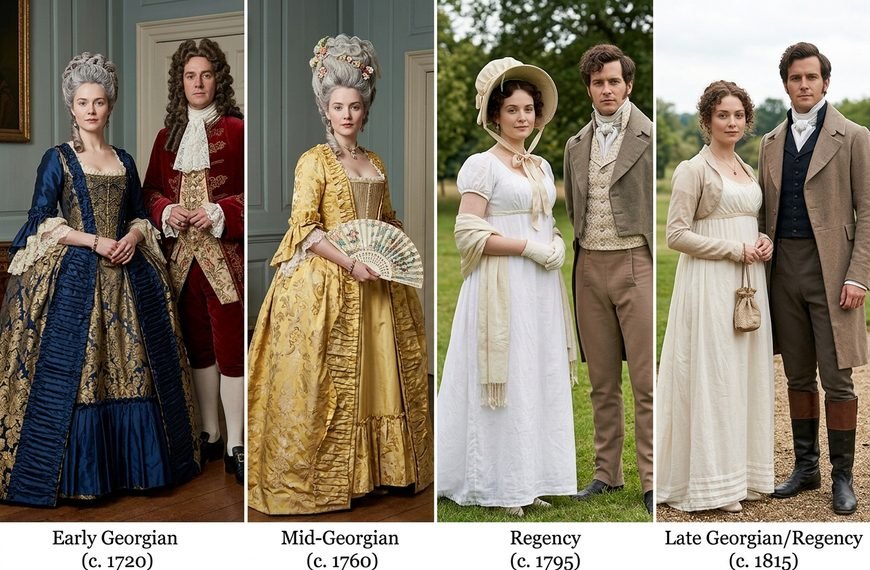
Early Georgian Fashion (1714–1740s)
Men commonly wore long coats, waistcoats , knee breeches, linen shirts and stockings. Coats and waistcoats could feature embroidery decorative buttons and colourful fabrics. Wigs and tricorn hats were also familiar parts of fashionable men’s appearance.
Mid Georgian Fashion (1750s–1770s)
Richly decorated coats and waistcoats remained popular among wealthy gentlemen. Silk embroidery and patterned fabrics helped create elaborate outfits.
The three piece suit consisting of a coat waistcoat and breeches was an important form of men’s dress.
Late Georgian Fashion (1780s–1790s)
Men’s clothing gradually became more fitted and less decorative in fashionable circles. Well made coats, clean linen shirts and carefully arranged neckcloths became important features.
Natural hairstyles also became increasingly fashionable compared with the powdered wigs associated with earlier decades.
Regency Transition (1790s–1830)
During the final Georgian decades men’s fashion increasingly featured tailored coats, shorter waistcoats, pantaloons and longer trousers.
Cravats riding boots and carefully arranged hair completed many fashionable outfits. However breeches remained in use for certain formal occasions.
What Did Georgian Gentlemen Wear?
A gentleman’s outfit combined several garments with styles and materials changing according to the occasion and his financial circumstances.
Coats and Waistcoats
Coats were essential parts of Georgian men’s clothing. Earlier examples often featured long skirts, decorative cuffs and large buttons. Wealthy gentlemen could wear coats made from silk or richly patterned fabrics.
Waistcoats were worn underneath coats and could include embroidery colourful patterns and decorative buttons. Their length and shape changed over the Georgian period as men’s clothing became more fitted.
Breeches Pantaloons and Trousers
Knee breeches were common throughout much of the eighteenth century and were usually worn with stockings. During the late Georgian and Regency years pantaloons and longer trousers became increasingly fashionable. These styles created a different silhouette from traditional knee breeches although breeches continued to appear in formal dress.
Shirts and Cravats
Linen shirts formed the base of a gentleman’s outfit. They were worn beneath waistcoats and coats often with visible collars and cuffs.
Cravats and neckcloths were arranged around the neck. Their styles varied, becoming particularly important features of Regency men’s fashion.
Which Fabrics and Colours Were Popular?
Fabric choice depended on wealth availability and the purpose of a garment.
| Fabric | Common Uses |
| Silk | Coats waistcoats and formal clothing |
| Wool | Coats and everyday outerwear |
| Linen | Shirts and basic garments |
| Cotton | Shirts and lighter clothing |
| Velvet | Decorative and formal garments |
| Brocade | Patterned coats and waistcoats |
Earlier fashionable outfits could feature bright colours, embroidery and floral patterns. Later styles often used darker coats with lighter waistcoats and contrasting neckcloths.
However there was no single colour scheme for Georgian men’s clothing. Materials and colours varied by period, occasion and social class.
What Accessories Did Georgian Gentlemen Use?
Accessories completed a gentleman’s outfit and could reflect his wealth and personal taste.
Common examples included
- Cravats and neckcloths Worn around the neck especially in Regency fashion.
- Watches and chains Pocket watches could be both practical and decorative.
- Tricorn hats and later styles were worn outdoors.
- Gloves Used for warmth and formal occasions.
- Walking sticks Carried as practical and fashionable accessories.
- Shoes and boots Buckled shoes and riding boots suited different occasions.
- Snuff boxes Decorative personal accessories used by some gentlemen.
Not every man owned expensive accessories. Their quality and materials often reflected his financial circumstances.
How Did Georgian Gentlemen Wear Their Hair?
Earlier Georgian fashion included powdered wigs and tied back hairstyles particularly among fashionable and formal groups.
By the late eighteenth century natural hairstyles became increasingly popular. During the Regency period neat grooming and carefully arranged hair were important features of the dandy’s appearance. Hairstyles varied according to personal preference, age and occasion.
What Was the Difference Between a Georgian Fop and a Dandy?
A fop was associated with eighteenth century fashionable society and a strong interest in elaborate clothing accessories and appearance.
A dandy became especially associated with late Georgian and early nineteenth century fashion. Dandies valued neat grooming, refined tailoring and carefully coordinated outfits. Beau Brummell became one of the best known figures associated with this style.
| Feature | Georgian Fop | Regency Dandy |
| Fashion focus | Elaborate clothing and decoration | Refined tailoring and grooming |
| Clothing | Rich fabrics and decorative details | More restrained and fitted outfits |
| Historical association | Eighteenth century society | Late Georgian and Regency society |
These terms describe fashionable identities rather than strict clothing categories.
How Did Social Class Influence Georgian Men’s Clothing?
Social class strongly influenced what men could wear. Wealthy gentlemen could afford silk coats, embroidered waistcoats, fine linen shirts and expensive accessories.
Middle income men often wore practical but well made clothing while working men generally needed durable garments suitable for everyday occupations.
This difference is important because portraits of wealthy gentlemen do not represent the clothing worn by every man during the Georgian period.
How Can You Identify Georgian Men’s Clothing?
To identify Georgian clothing examine the overall shape construction fabric and details rather than relying on one feature.
| Clothing Detail | What to Look For |
| Coat | Length cuffs buttons and waist shape |
| Waistcoat | Fabric length and embroidery |
| Breeches | Knee fastening and cut |
| Shirt | Linen construction collar and cuffs |
| Neckwear | Cravat or neckcloth arrangement |
| Footwear | Buckles shoe shape and riding boots |
Museum collections and dated fashion plates are useful for understanding how these garments were made and worn. Surviving clothing can reveal construction details that portraits may not show.
How Did Georgian Men’s Fashion Influence Later
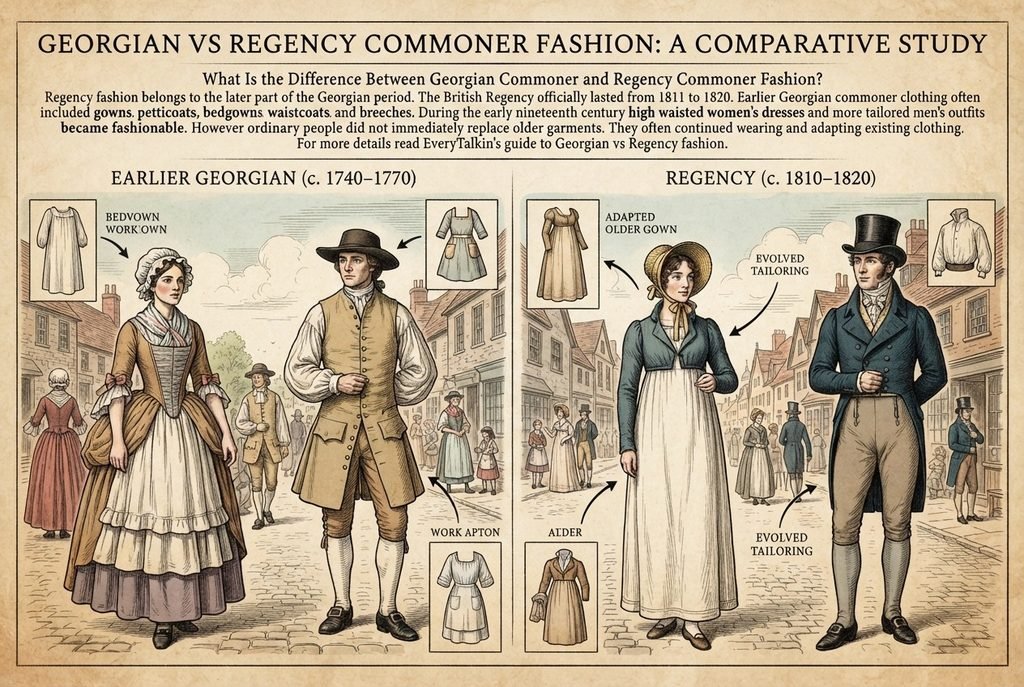
Georgian men’s fashion helped shape later Western tailoring. The gradual move towards fitted coats, simpler decoration and coordinated outfits influenced nineteenth century menswear.
Regency tailoring also provided an important link between eighteenth century clothing and later Victorian styles. However Victorian fashion continued to develop its own coat shapes, trousers and formal clothing.
FAQs
What was the typical outfit of a Georgian gentleman?
A fashionable gentleman generally wore a linen shirt, waistcoat, coat breeches and stockings. Shoes and accessories completed the outfit with details depending on the period and occasion.
Did Georgian gentlemen wear trousers?
Yes. Trousers and pantaloons became increasingly fashionable during the later Georgian and Regency years. Knee breeches remained common during much of the eighteenth century and continued in some formal settings.
What did Georgian gentlemen wear at home?
Some gentlemen wore a banyan or dressing gown over their indoor clothing. These garments offered a more relaxed alternative to formal public dress.
Were Georgian men’s clothes colourful?
Yes. Earlier Georgian outfits could feature colourful silk embroidery and patterned waistcoats. Later fashionable clothing often used more restrained colours although decorative fabrics remained in use.
Who influenced Regency men’s fashion?
Beau Brummell became one of the best known figures associated with Regency dandyism. He was particularly associated with neat grooming, refined tailoring and carefully arranged neckwear.
What is the difference between Georgian and Regency men’s fashion?
Georgian fashion covers 1714–1830 while the British Regency officially lasted from 1811 to 1820. Regency men’s fashion was therefore part of the wider Georgian period and featured increasingly fitted tailoring and changing trouser styles.

 By

 By