

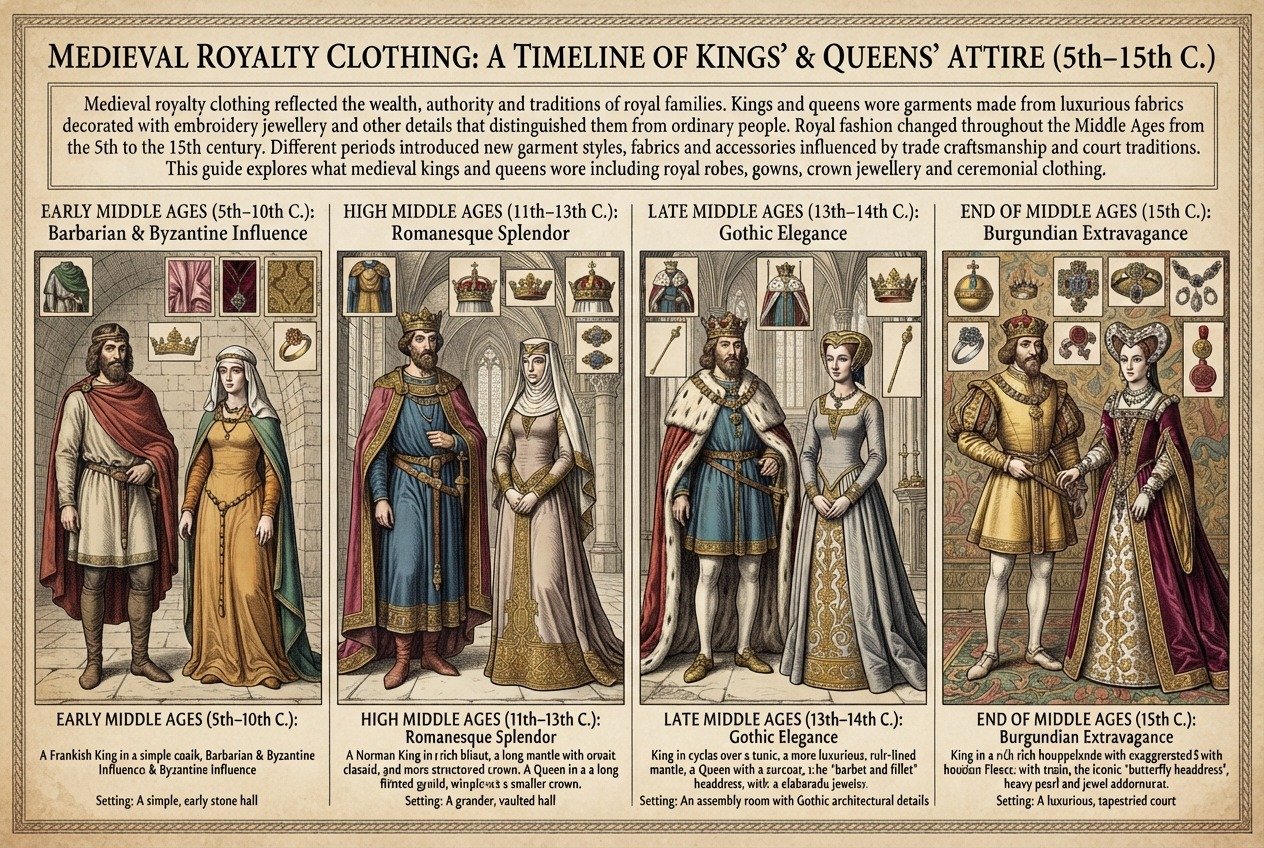
Medieval royalty clothing reflected the wealth, authority and traditions of royal families. Kings and queens wore garments made from luxurious fabrics decorated with embroidery jewellery and other details that distinguished them from ordinary people.
Royal fashion changed throughout the Middle Ages from the 5th to the 15th century. Different periods introduced new garment styles, fabrics and accessories influenced by trade craftsmanship and court traditions.
This guide explores what medieval kings and queens wore including royal robes, gowns , crown jewellery and ceremonial clothing.
What Made Medieval Royal Clothing Different?
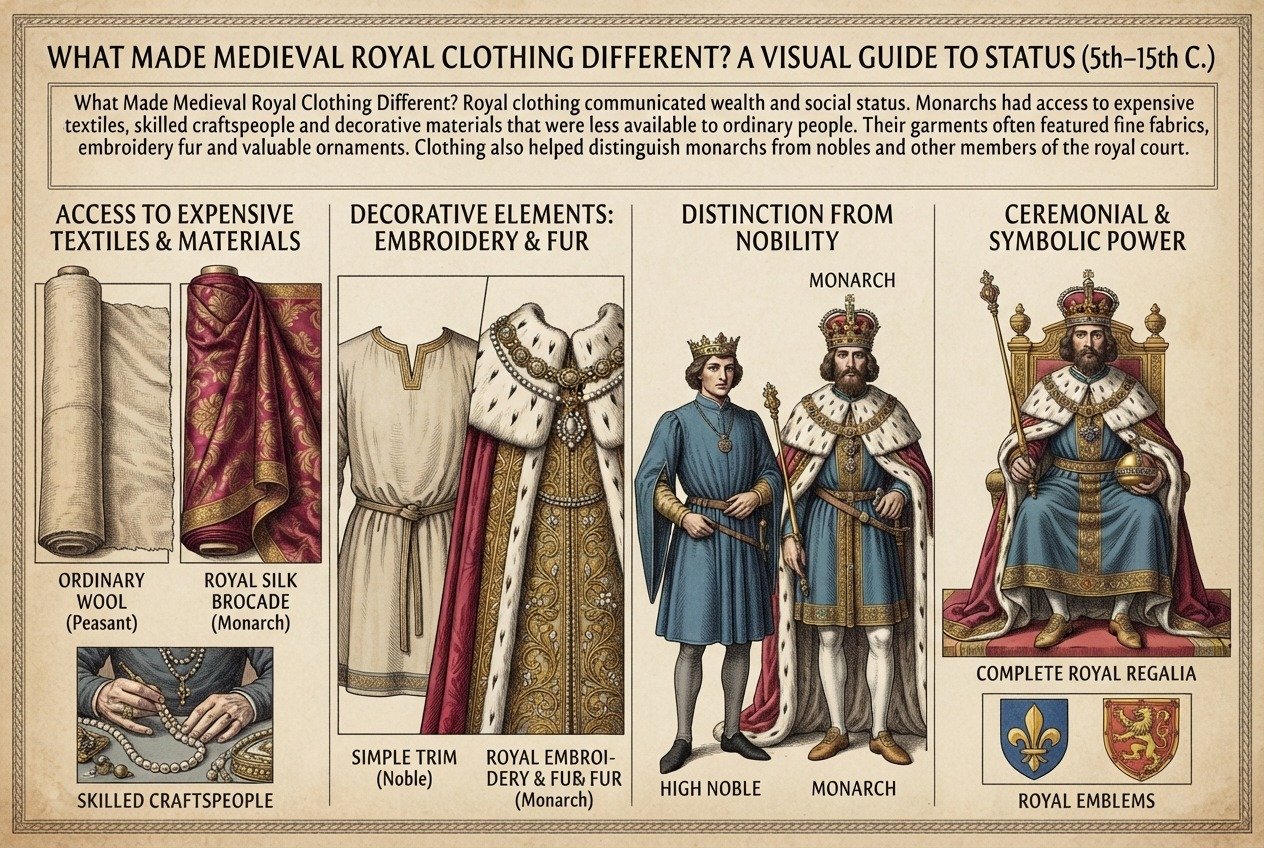
Royal clothing communicated wealth and social status. Monarchs had access to expensive textiles, skilled craftspeople and decorative materials that were less available to ordinary people.
Their garments often featured fine fabrics, embroidery fur and valuable ornaments. Clothing also helped distinguish monarchs from nobles and other members of the royal court.
What Did Medieval Kings Wear?
Medieval kings wore different garments depending on the period and occasion. Their wardrobes commonly included
- Tunics Important garments that could feature decorative borders and embroidery.
- Long robes Outer garments worn for formal appearances and added coverage.
- Mantles Cloak like garments that sometimes featured luxurious linings and decoration.
- Belts Practical accessories that could include decorative metal fittings.
- Footwear Leather shoes and boots are sometimes decorated for wealthy wearers.
Royal outfits varied across European kingdoms and ceremonial clothing was generally more elaborate than everyday garments.
How Were Medieval Queens Gowns Designed?
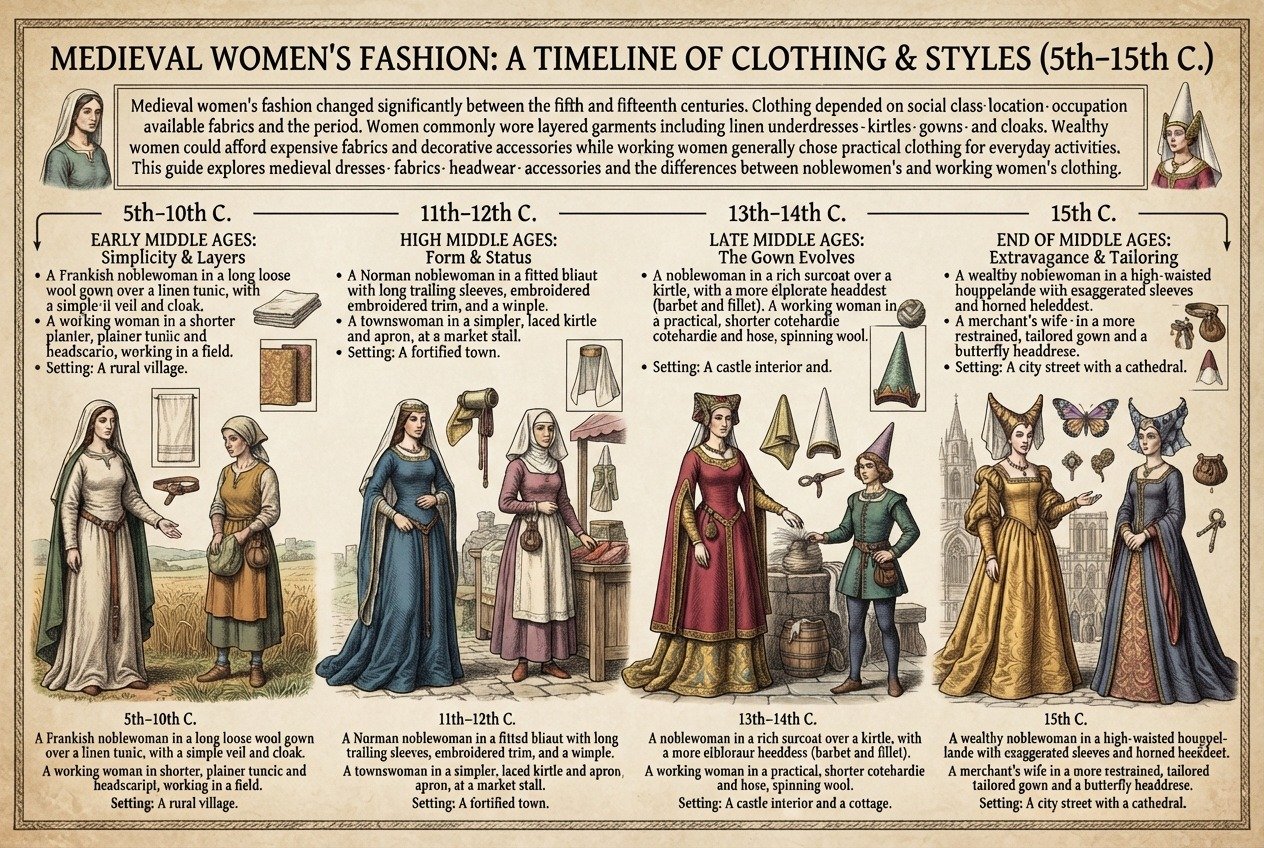
Medieval queens wore gowns that reflected the fashions and traditions of their royal courts. Their clothing could include fitted upper sections flowing skirts, decorative sleeves and embroidered details.
Common features included
- Long court gowns Formal garments worn for royal appearances.
- Decorative necklines Designs that changed across different centuries.
- Embroidery Patterns and borders created by skilled craftspeople.
- Outer mantles Additional garments worn over gowns for warmth and formal occasions.
There was no single design for a medieval queen’s gown. Styles depended on the period region and available materials.
Which Fabrics Were Used in Medieval Royal Clothing?
Royal households could obtain expensive fabrics through specialised production and international trade. Material choice depended on the garment’s purpose and the resources of the royal family.
| Material | Common Use |
| Silk | Fine garments and decorative linings |
| Velvet | Luxury clothing and formal garments |
| Cloth of gold | Ceremonial and prestigious textiles |
| Fine wool | Robes and outer garments |
| Linen | Shirts and garment foundations |
| Fur | Warm linings and decorative edges |
Cloth of gold was especially prestigious because it incorporated gold threads or gold wrapped elements. However not every royal garment used expensive materials.
Why Were Crowns Important to Medieval Monarchs?
Crowns represented royal authority legitimacy and the position of a monarch. They were especially important during coronations when rulers were formally recognised through religious and political ceremonies.
Other important royal objects included
- Sceptres Symbols of royal authority.
- Orbs Associated with Christian kingship.
- Ceremonial swords Connected with justice and rulership.
- Royal rings sometimes carried political or religious significance.
Together these objects formed part of the traditions of royal regalia.
What Jewellery Did Medieval Royal Families Wear?
Royal jewellery demonstrated wealth and skilled craftsmanship. Kings and queens could wear gold and silver ornaments decorated with pearls and gemstones.
Common examples included necklaces, rings , brooches , bracelets and decorated belts. Brooches were particularly useful because they could fasten garments while adding decoration.
Some jewellery was inherited while other pieces were received as gifts or through royal marriages and political relationships.
What Did Royal Clothing Look Like During Ceremonies?
Royal ceremonies required garments that reflected the importance of the occasion. Coronations were especially significant because they combined religious traditions with the recognition of royal authority.
Ceremonial outfits could include
- Special robes or tunics
- Decorative mantles
- Formal gloves and footwear
- Crowns and royal regalia
- Valuable jewellery and embroidery
The exact clothing depended on the kingdom and its ceremonial traditions.
How Did Royal Fashion Change Across Medieval Centuries?
Royal clothing developed as court traditions, textile production and tailoring techniques changed.
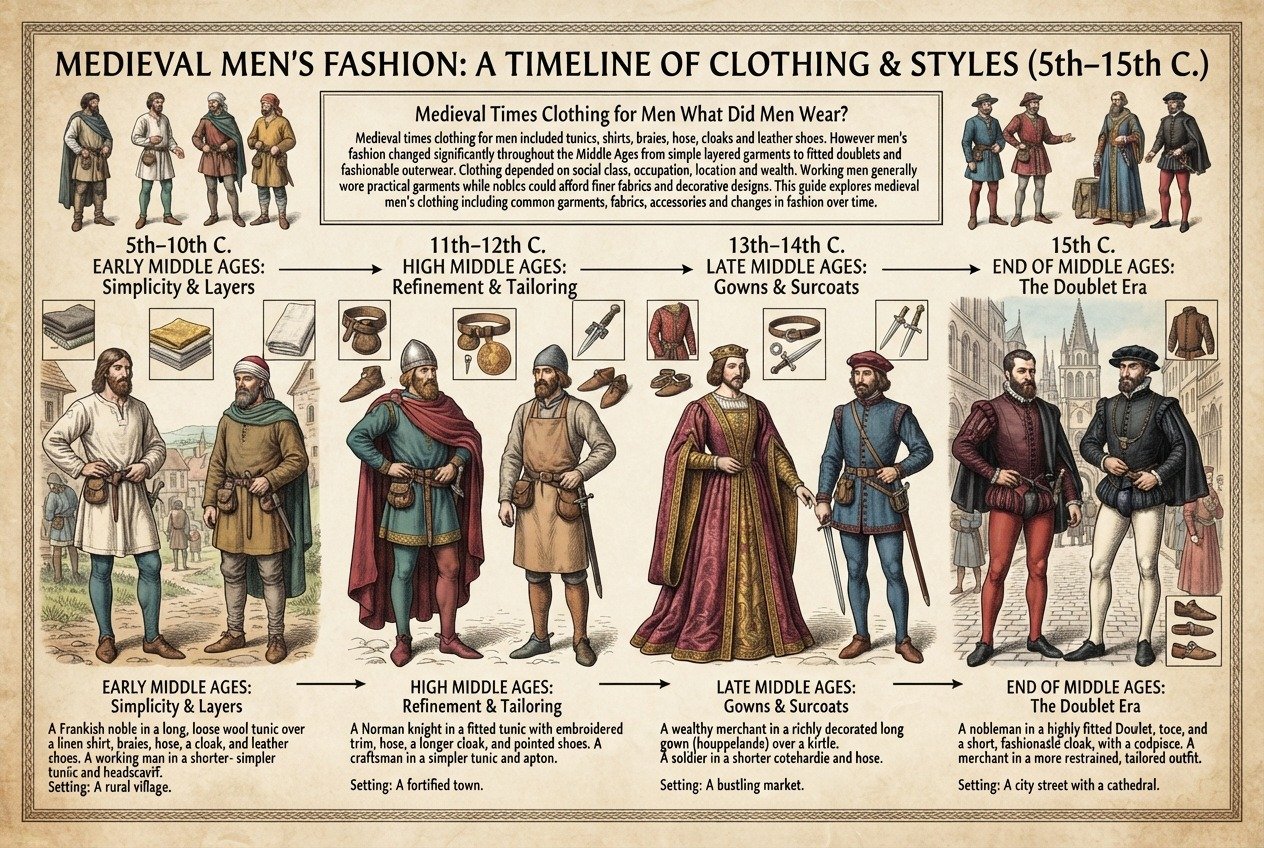
Early Middle Ages (5th–10th centuries) Kings and queens wore tunics cloaks, belts and decorated outer garments influenced by regional traditions.
High Middle Ages (11th–13th centuries) Royal courts increasingly displayed luxurious textiles, embroidery and elaborate garments.
Late Middle Ages (14th–15th centuries) More shaped garments, decorative sleeves and detailed textile designs became noticeable in some European courts.
These changes varied between kingdoms so no single timeline represents all medieval royal fashion.
How Did Royal Clothing Communicate Political Status?
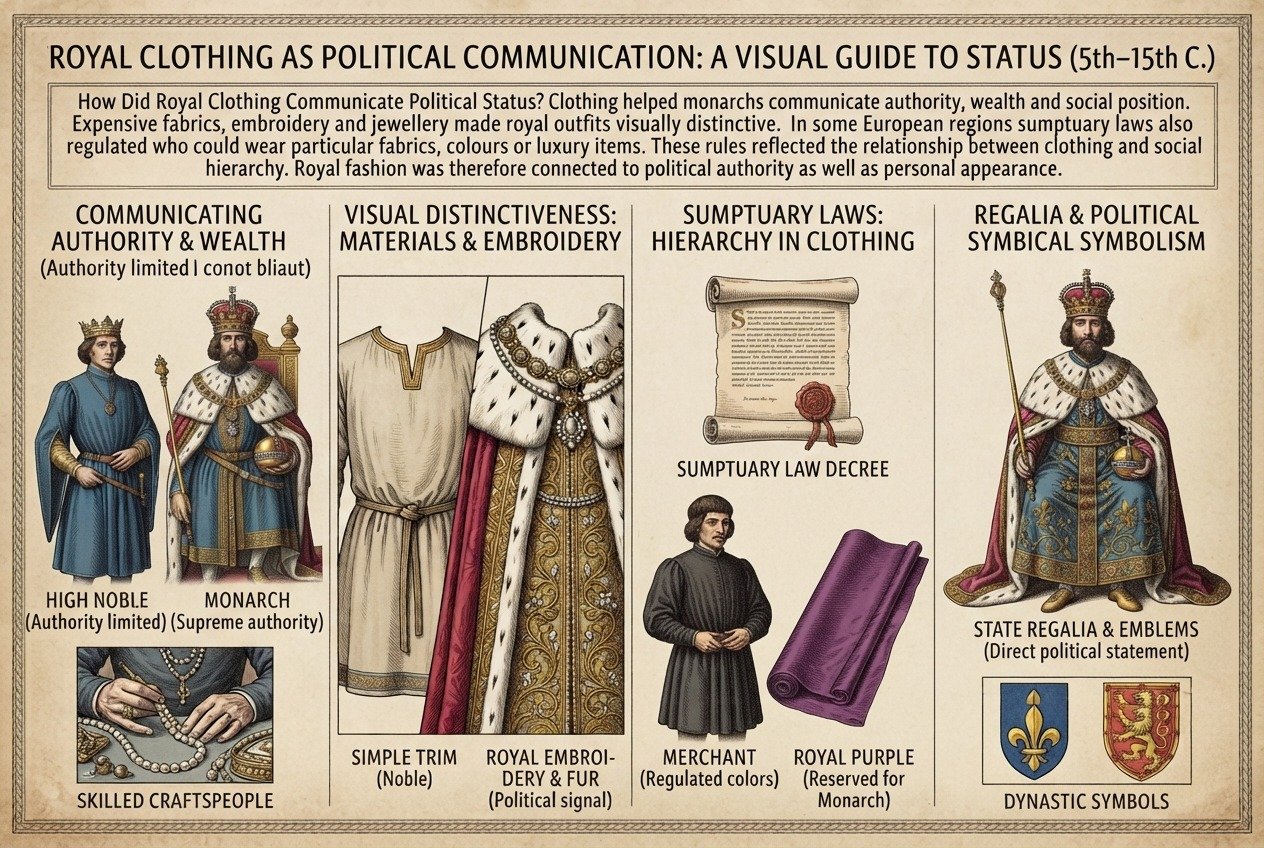
Clothing helped monarchs communicate authority, wealth and social position. Expensive fabrics, embroidery and jewellery made royal outfits visually distinctive.
In some European regions sumptuary laws also regulated who could wear particular fabrics, colours or luxury items. These rules reflected the relationship between clothing and social hierarchy. Royal fashion was therefore connected to political authority as well as personal appearance.
Conclusion
Medieval royalty clothing reflected the wealth, authority and traditions of kings and queens. Their wardrobes included robes, gowns , decorated mantles, jewellery and ceremonial accessories.
Although royal fashion changed throughout the Middle Ages, clothing remained an important way for monarchs to communicate their status and identity.
FAQs
Did medieval kings wear robes every day?
Kings wore different garments depending on their activities and the occasion. Robes could be part of their wardrobes but elaborate ceremonial clothing was mainly associated with important public events.
What materials were used in medieval royal gowns?
Royal gowns could be made from silk fine wool linen and velvet. Luxury garments sometimes included embroidery and metallic threads.
Did medieval queens wear crowns regularly?
Crowns were particularly associated with coronations and formal occasions. Queens also wore veils caps and other decorative headwear.
Why did royal clothing include embroidery?
Embroidery added decorative detail and demonstrated skilled craftsmanship. Elaborate designs could also communicate the wealth of royal households.
Did medieval royalty wear imported fabrics?
Yes. Wealthy royal households could obtain textiles through international trade. Silk and other luxury materials were especially valuable.
What was the purpose of royal mantles?
Mantles were outer garments worn over other clothing. They provided additional coverage and could create a formal appearance through luxurious fabrics and decoration.

 By

 By