

Being a student involves more than attending classes and preparing for examinations. It is also a time to understand your strengths, develop useful skills and manage everyday responsibilities.
Personal development for students is the process of improving knowledge, behaviour, confidence , communication and decision making abilities. These skills can support academic progress relationships and future opportunities. Personal growth does not require achieving everything at once.
This guide explores essential development skills, practical activities, common challenges and ways to create a realistic improvement plan.
What Is Personal Development for Students?

Personal Development for Teens
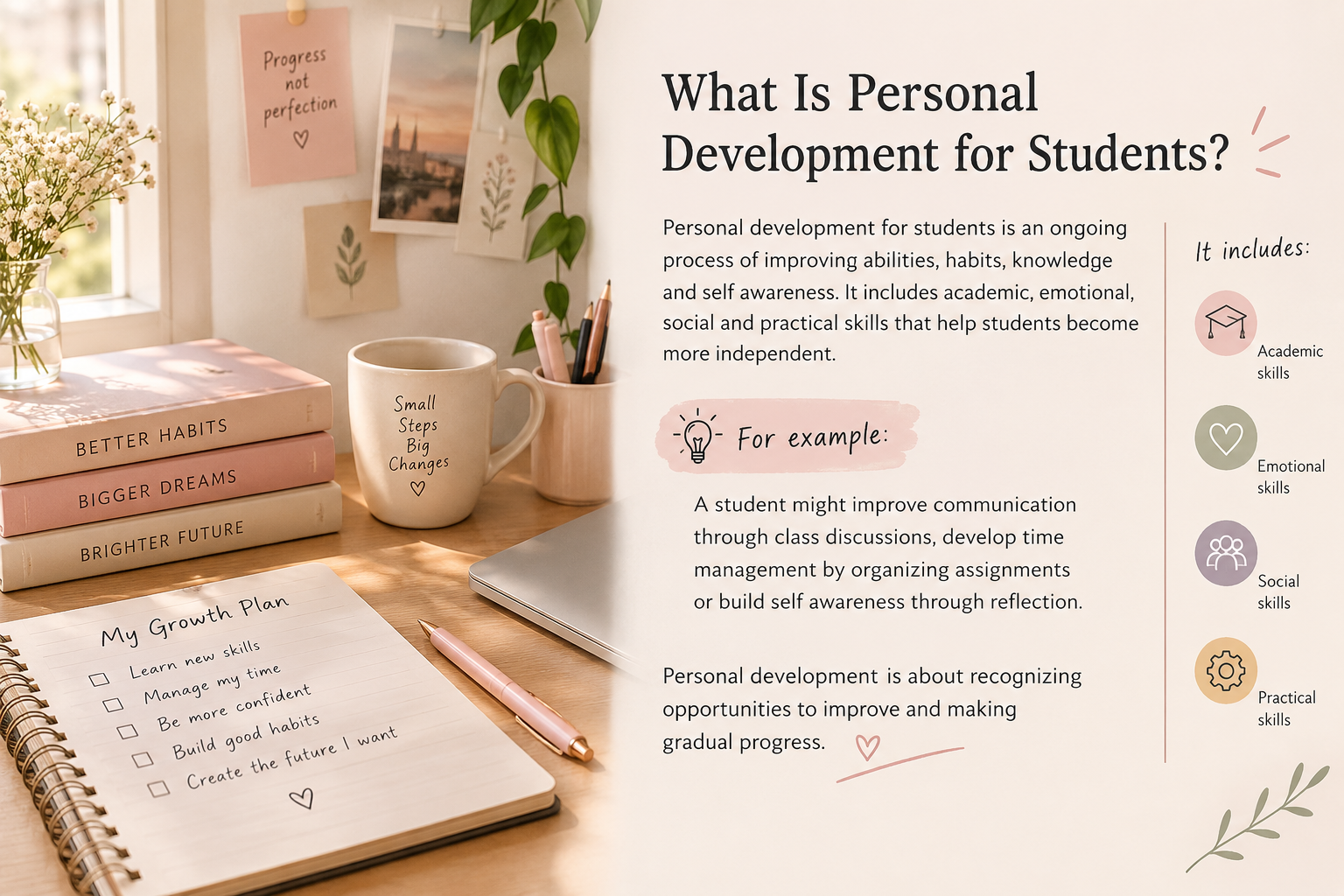
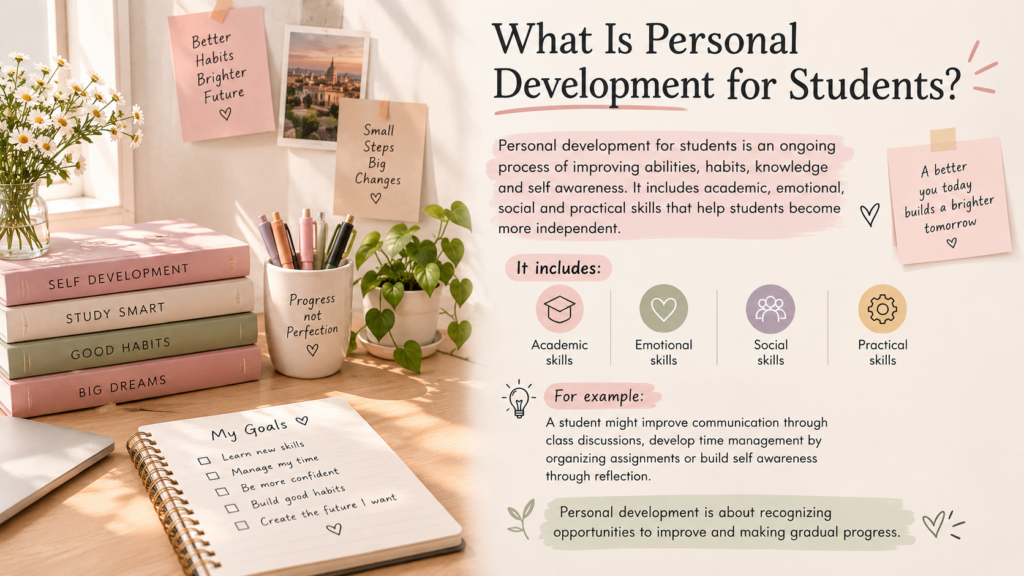
Personal development for students is an ongoing process of improving abilities, habits, knowledge and self awareness. It includes academic, emotional, social and practical skills that help students become more independent.
For example a student might improve communication through class discussions, develop time management by organizing assignments or build self awareness through reflection. Personal development is about recognizing opportunities to improve and making gradual progress.
Personal Development vs. Personality Development
| Personal Development | Personality Development |
| Focuses on overall growth | Focuses on personal traits and behaviour |
| Includes learning and life skills | Includes confidence and communication |
| Supports academic and personal responsibilities | Helps improve social interactions |
| Covers emotional and practical development | Focuses more on personal expression |
Both support student growth but personal development covers a wider range of skills.
Why Is Personal Development Important for Students?
Personal growth helps students manage challenges inside and outside the classroom while preparing for future responsibilities.
It Builds SelfAwareness
Self awareness helps students understand their interests, strengths and learning preferences. For example, someone who learns better through diagrams can use visual notes to support their studies.
It Improves Academic Independence
Planning, reviewing progress and identifying difficult topics help students take greater responsibility for learning. The Education Endowment Foundation’s metacognition guidance explains the value of planning, monitoring and evaluating learning.
It Strengthens Communication
Communication skills help students express ideas, listen carefully, ask questions and participate in group activities.
It Encourages Better Decisions
Students regularly make decisions about study priorities, friendships and extracurricular activities. Personal development encourages thoughtful choices based on available information and individual priorities.
It Supports Future Opportunities
Teamwork adaptability, problem solving and communication are useful skills for further education and professional environments.
What Are the Most Important Personal Development Skills for Students?
Students can develop important abilities through regular practice and everyday experiences.
SelfAwareness
Self awareness means understanding your thoughts, emotions , interests and areas for improvement.
Students can practise it by asking
- Which subjects interest me?
- What tasks do I find challenging?
- Which skills would I like to improve?
Short written reflections can help identify personal strengths and learning needs.
Communication Skills
Communication involves expressing ideas clearly and understanding others. Students can improve it by participating in discussions, asking questions, listening carefully and practising written communication.
Time Management
Time management means organizing responsibilities around available time. Planners calendars and task lists can help students manage assignments, revision and personal commitments.
Emotional Intelligence
Emotional intelligence involves recognizing emotions and responding thoughtfully. It can help students handle disagreements, understand others and manage difficult situations.
The CASEL framework identifies five related competencies selfawareness selfmanagement social awareness, relationship skills and responsible decision making.
Critical Thinking and ProblemSolving
Critical thinking helps students examine information, compare sources and evaluate evidence. Problem solving involves identifying challenges and considering suitable solutions.
SelfDiscipline and Responsibility
Self discipline means following through on important responsibilities. Students can practise it by completing assignments, preparing for lessons and meeting reasonable deadlines.
Adaptability
Adaptability is the ability to respond constructively to changing circumstances. Students may need to adjust their plans when schedules, assignments or priorities change.
Teamwork and Leadership
Teamwork involves sharing responsibilities and respecting different opinions. Leadership can include organizing group activities encouraging participation and helping others work toward shared goals.
What Are the Best Personal Development Activities for Students?
Practical activities give students opportunities to develop skills beyond traditional lessons.
Reading and Learning New Topics
Reading books, educational articles and reliable online resources can improve vocabulary comprehension and general knowledge.
Journaling and SelfReflection
Writing about daily experiences helps students recognize achievements and challenges. A short entry can include one lesson learned and one goal for the next day.
Participating in Group Activities
Class projects, school clubs and group discussions provide opportunities to practise communication teamwork and cooperation.
Learning a New Skill
Students can explore writing graphic design coding photography or public speaking according to their interests and available resources.
Volunteering and Community Participation
Suitable community activities can help students develop responsibility, teamwork and an understanding of different perspectives.
Creative and Recreational Hobbies
Drawing, reading , gardening and other hobbies encourage creativity and exploration outside academic work. Students can also explore [hobbies that support personal growth] for more activity ideas.
How Can Students Set Effective Personal Development Goals?
Personal development goals turn general intentions into practical actions.
Identify Areas for Improvement
Consider which skills need attention. For example you might want to improve public speaking, organize assignments or participate more confidently in discussions.
Use the SMART Goal Method
SMART goals are specific, measurable, achievable, relevant and timebound.
Instead of saying “I want to improve communication” try
“I will participate in one classroom discussion each week for the next month.”
This creates a clear action and a way to review progress.
Break Goals Into Smaller Steps
A student improving writing skills might
- Read short articles regularly.
- Learn useful vocabulary.
- Write short paragraphs.
- Review grammar and sentence structure.
- Ask for feedback.
Review Progress Regularly
Check your progress each week. If a goal becomes difficult alongside academic responsibilities, adjust the plan rather than abandoning it.
How Can Students Create a Personal Development Plan?
A personal development plan identifies what students want to improve and the actions they can take.
| Development Area | Example Goal | Practical Action |
| Communication | Express ideas clearly | Practise discussions |
| Academic growth | Improve independent learning | Review lessons |
| Time management | Organize responsibilities | Use a weekly planner |
| Emotional development | Understand reactions | Practise reflection |
| Social skills | Improve teamwork | Join group activities |
| Practical skills | Learn something new | Complete a small project |
Step 1 Assess Your Current Skills
Identify your strengths and areas that need improvement. Feedback from trusted teachers or mentors can also help.
Step 2 Select Two or Three Priorities
Focus on a few important areas instead of trying to improve everything simultaneously.
Step 3 Choose Practical Activities
Connect each goal with an action that fits your existing schedule.
Step 4 Track Your Progress
Use a notebook calendar or digital planner to record completed activities and lessons learned.
Step 5 Update Your Plan
Review your goals regularly and adjust them as your interests and responsibilities change.
What Challenges Do Students Face During Personal Development?
Students may experience several difficulties while working on personal growth.
Academic Pressure and Limited Time
Assignments and examinations can reduce available time. Connecting development activities with existing responsibilities such as practising teamwork through group projects can help.
Lack of Confidence
Some students hesitate to participate because they fear making mistakes. Starting with smaller activities such as asking one question during class can make participation easier.
Unclear Goals
General intentions do not explain what action is needed. Turning broad ideas into specific goals provides a clearer starting point.
Comparing Progress With Others
Students have different interests, opportunities and responsibilities. Focus on personal progress instead of comparing yourself with classmates or people on social media.
Difficulty Maintaining Consistency
Busy schedules can interrupt development activities. Choose realistic habits and return to them when your schedule allows.
What Common Personal Development Mistakes Should Students Avoid?
Personal Development for Teens
Avoid these common mistakes when working on personal growth
- Setting too many goals Focus on a few important priorities.
- Ignoring personal interests, choose activities that match your needs.
- Expecting immediate results, skills develop through practice.
- Avoiding feedback Constructive feedback can identify areas for improvement.
- Neglecting rest balances personal development with everyday wellbeing.
- Focusing only on academic results Communication creativity and relationships also matter.
- Treating mistakes as failures Use setbacks to review and improve your approach.
Conclusion
Personal development for students involves more than improving academic performance or building confidence. It includes communication, emotional intelligence, critical thinking responsibility and practical life skills.
Start by identifying your strengths, choosing realistic goals and practising useful activities. Focus on a few meaningful improvements and review your progress regularly. Small efforts can help develop skills that remain valuable throughout education and beyond.
FAQs
1. What Is the Main Goal of Personal Development for Students?
The main goal is to improve students’ abilities, habits and self awareness. It supports academic independence, communication , decision making and preparation for future responsibilities.
2. What Are the Five Areas of Personal Development?
Five useful areas include academic growth, emotional development, social development, practical life skills and personal habits. Together they support balanced personal growth.
3. How Can Students Improve Themselves Every Day?
Students can read, organize assignments, learn new skills, reflect on experiences and communicate with others. A few manageable activities are easier to maintain than too many new habits.
4. Why Is SelfAwareness Important for Students?
Self awareness helps students understand their interests, strengths, emotions and learning preferences. It can support better decisions and identify areas for improvement.

 By

 By