
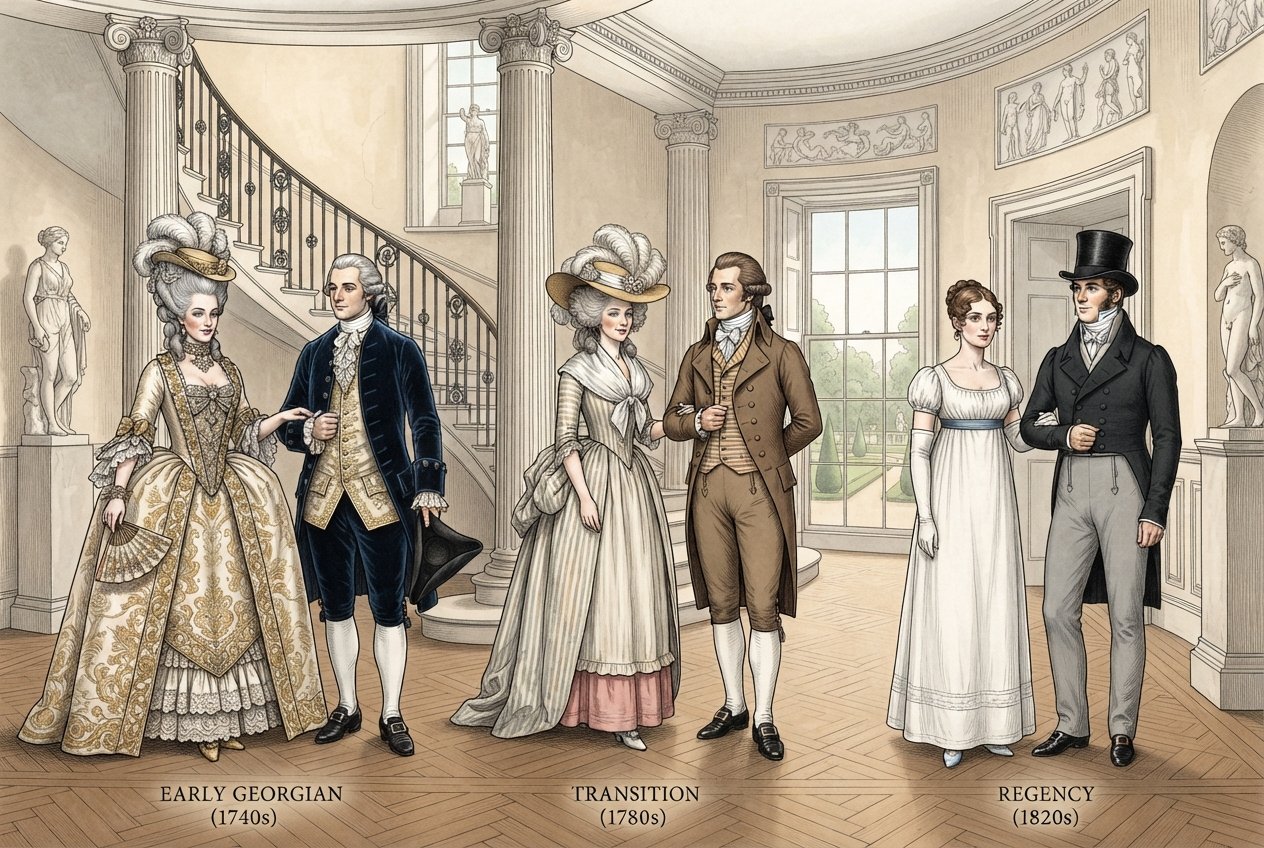

Georgian fashion reflected changing lifestyles, social status and cultural influences in Britain between 1714 and 1830. During this period clothing evolved from elaborate silk gowns and wide skirts to simpler dresses with raised waistlines and classical influences.
Women’s gowns, men’s coats, accessories and everyday clothing changed across different decades. Understanding these styles helps explain the development of Georgian fashion and its influence on later historical dress.
What Was Georgian Fashion?
Georgian fashion refers to clothing worn during the reigns of Britain’s four kings named George from 1714 to 1830. Popular styles included elaborate women’s gowns, fitted bodices, decorative waistcoats, knee breeches, powdered hairstyles and carefully chosen accessories.
Fashion was influenced by royal preferences, French trends, textile production, social class and classical art. The Regency era was also part of this broader period introducing high waisted dresses and simpler silhouettes.
How Did Georgian Fashion Change Between 1714 and 1830?
Georgian clothing changed significantly over time. The styles of the 1720s were quite different from those of the early 19th century.
Early Georgian Fashion (1714–1740)
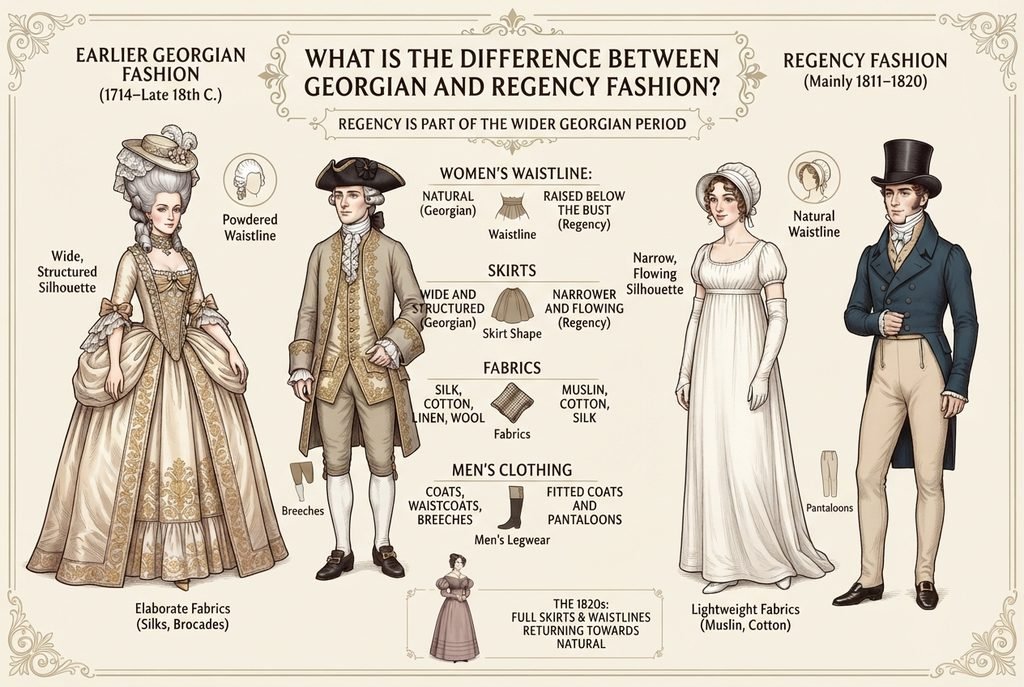
Early Georgian women’s clothing featured long gowns, fitted bodices and full skirts. The robe volante and sack back gown were popular styles recognised by their loose back pleats.
Men commonly wore long coats, waistcoats , knee breeches and stockings. Silk embroidery and lace were important features of wealthy wardrobes.
Mid Georgian Fashion (1740–1770)
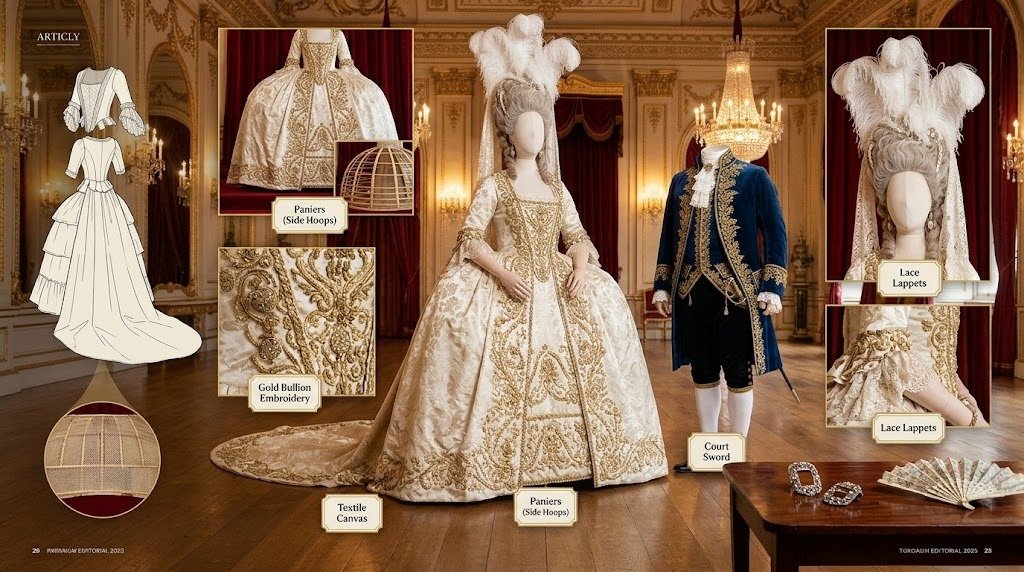
Rococo influences shaped fashionable clothing during this period. Women’s gowns often had wide skirts supported by panniers with the robe à la française becoming a recognisable style.
The robe à l’anglaise offered a more fitted back. Men’s coats and waistcoats also featured decorative fabrics, embroidery and colourful designs.
Late Georgian Fashion (1770–1790)
Fashion gradually moved towards narrower silhouettes. The robe à l’anglaise and robe à la polonaise became popular options while cotton linen wool and printed fabrics appeared alongside silk. Men’s coats became more fitted and everyday clothing generally moved towards simpler decoration.
Transition Towards Regency Fashion (1790–1830)
Classical Greek and Roman art influenced women’s clothing towards the end of the Georgian period. Dresses developed raised waistlines, narrower skirts and lighter fabrics such as muslin.
Men’s fashion also moved towards cleaner tailoring fitted coats and longer trousers. By the 1820s waistlines began moving downwards and skirts gradually became fuller again.
What Did Women Wear During the Georgian Era?
Women’s Georgian clothing included gowns, petticoats , undergarments and accessories. The exact outfit depended on the decade occasion and available budget.
Robe à la Française
The robe à la française was a popular mid 18th century gown. Its main feature was decorative back pleating with fabric flowing from the shoulders towards the skirt. It was often made from patterned silk and decorated with embroidery ribbons and trimmings.
Robe à l’Anglaise
The robe à l’anglaise featured a fitted back and a more controlled silhouette. Some versions included a separate stomacher at the front while others had a closed bodice.
Robe à la Polonaise
Popular during the later 18th century this gown featured an overskirt gathered or looped upwards to reveal the petticoat underneath.
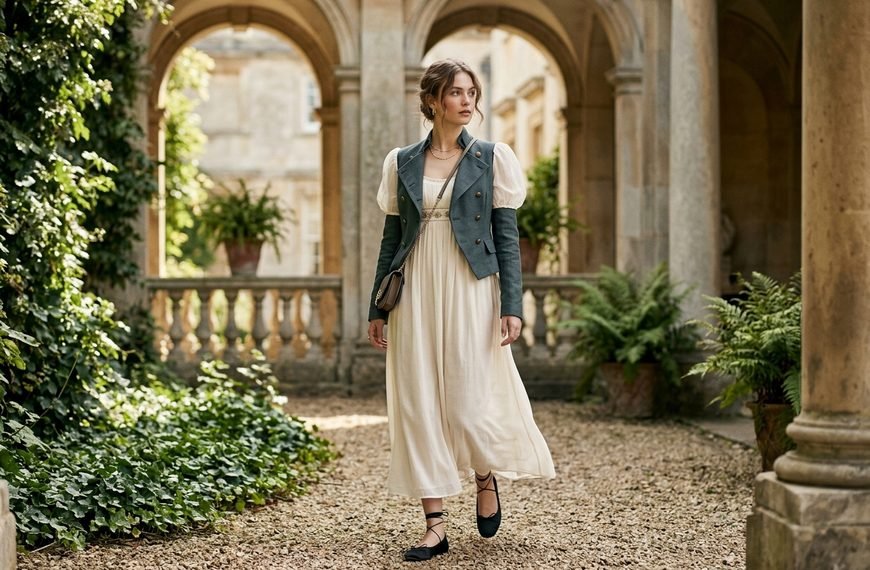
High Waisted Regency Gowns
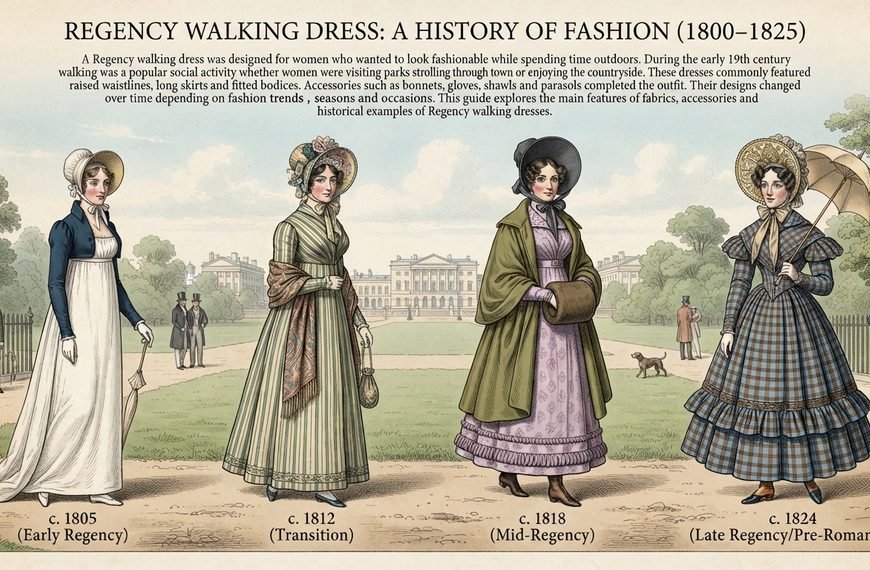
Late Georgian dresses increasingly featured waistlines just below the bust narrower skirts and lightweight fabrics. These styles became closely associated with Regency fashion.
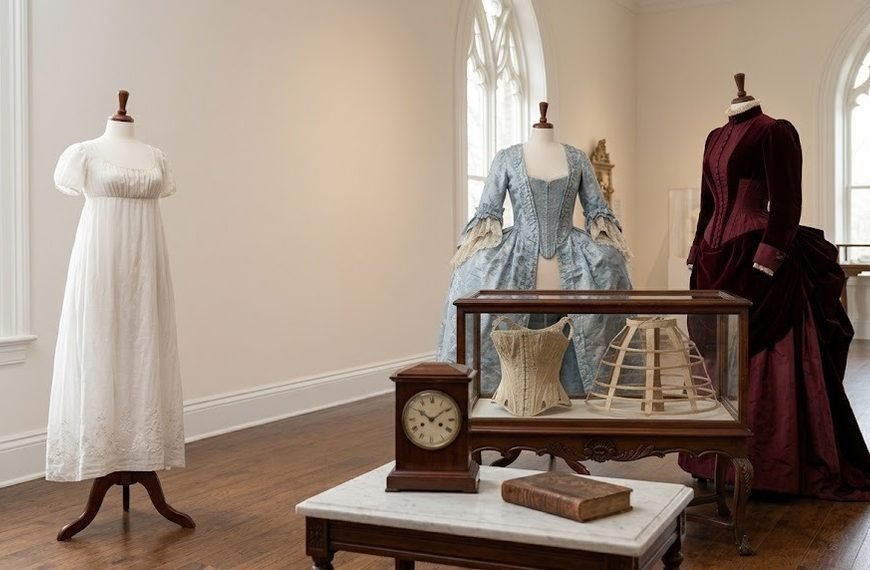
What Undergarments Created the Georgian Silhouette?
Undergarments helped shape the appearance of Georgian clothing and supported the structure of outer gowns.
- Stays Structured garments worn beneath gowns to create a supported bodice shape.
- Stomacher A decorative front panel used with certain open gowns.
- Panniers Supports worn beneath skirts to create a wide silhouette.
- Pocket hoops Side supports that could also incorporate storage pockets.
- Petticoats and shifts layered garments that provided coverage protection and additional structure.
These garments show how Georgian outfits relied on several layers rather than outer fabric alone.
What Did Georgian Men Wear?
Georgian men’s fashion included shirts, coats , waistcoats , breeches , stockings and neckwear. Coats and waistcoats Earlier styles often featured colourful fabrics, embroidery and decorative buttons. Later clothing generally became more fitted and less heavily decorated.
Knee breeches and stockings Knee breeches were common throughout much of the 18th century. Longer trousers and pantaloons became increasingly fashionable in the early 19th century.
Cravats and hairstyles Cravats and neckcloths completed men’s outfits. Powdered wigs were associated with earlier Georgian fashion while natural hairstyles became more popular towards the end of the century.
Which Fabrics and Colours Were Popular in Georgian Clothing?
Fabric choice influenced the appearance, comfort and cost of Georgian garments.
| Fabric | Common Uses |
| Silk | Formal gowns and waistcoats |
| Cotton | Dresses and everyday garments |
| Linen | Shirts and undergarments |
| Wool | Coats and practical clothing |
| Muslin | Lightweight late Georgian and Regency gowns |
| Velvet | Formal clothing and decorative details |
Earlier fashionable clothing often featured rich colours patterns and metallic details. Later styles increasingly included lighter shades and simpler designs. However fabric and colour choices varied according to wealth occasion and personal preference.
What Accessories Completed Georgian Fashion?
Accessories added decorative and practical details to Georgian outfits. Women’s accessories included bonnets, hats, shawls , fans gloves, reticules and jewellery such as earrings, necklaces and brooches.
Men commonly wore cravats hats gloves shoe buckles watches and walking sticks. Their choices depended on the occasion and type of clothing.
How Did Social Class Influence Georgian Clothing?
Georgian clothing reflected wealth, occupation and social position. Wealthy individuals could afford silk gowns, embroidered coats, expensive accessories and clothing made by skilled dressmakers or tailors. Working people generally wore simpler garments suited to everyday activities.
Clothing was also repaired, reused and altered rather than replaced whenever fashions changed. This meant that fashionable styles were not equally accessible to everyone.
Why Did Georgian Fashion Change Towards Regency Style?
The transition towards Regency fashion was influenced by classical Greek and Roman art changing cultural preferences and developments in clothing design.
Women’s gowns adopted higher waistlines, lighter fabrics and simpler shapes. French Empire fashion also influenced wider European trends although British Regency fashion had its own characteristics.
In Britain the Regency period is associated with the Prince Regent’s rule from 1811 to 1820. The broader Georgian era continued until 1830.
How Can You Identify Georgian Fashion in Historical Paintings?
Historical paintings can help identify Georgian clothing although portraits often show formal outfits rather than everyday garments.
Look for these details
- Silhouette Wide skirts suggest earlier styles while raised waistlines often indicate late Georgian or Regency influences.
- Gown construction Back pleats and fitted bodices can help identify particular dress styles.
- Men’s clothing Knee breeches, waistcoats and long coats provide useful clues.
- Accessories, hairstyles, hats, neckwear and footwear can help narrow down the period.
Always consider the artwork’s date because some portraits show formal or older fashioned clothing.
What Is the Difference Between Georgian and Regency Fashion?
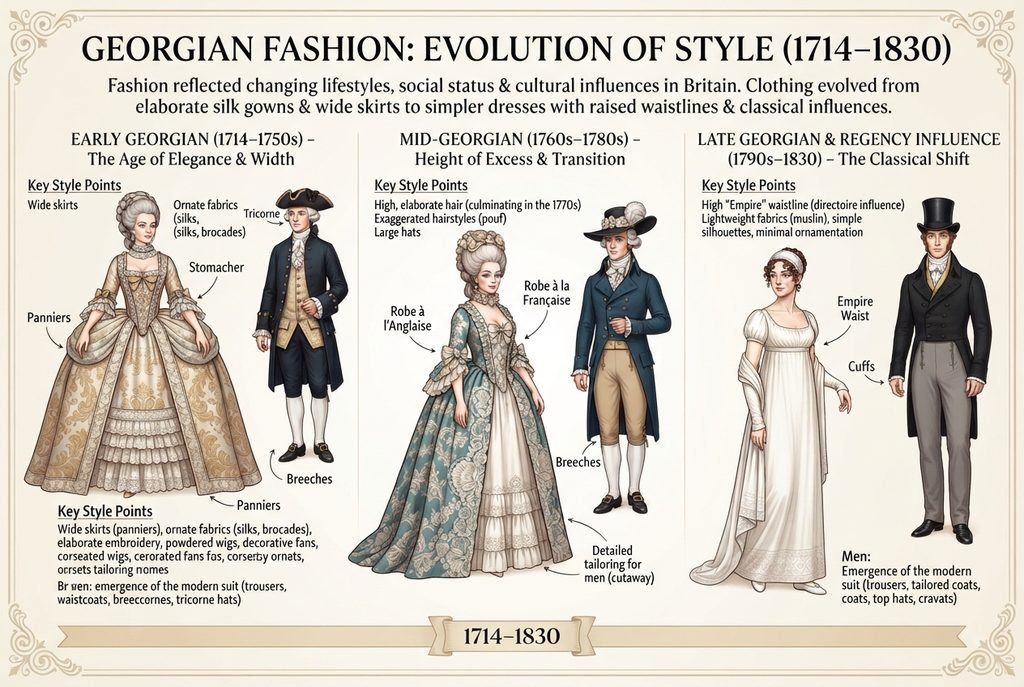
Regency fashion is part of the wider Georgian period rather than a completely separate era.
| Feature | Earlier Georgian Fashion | Regency Fashion |
| Period | 1714–late 18th century | Mainly 1811–1820 |
| Women’s waistline | Usually near the natural waist | Raised below the bust |
| Skirts | Often wide and structured | Generally narrower and flowing |
| Fabrics | Silk cotton linen and wool | Muslin cotton and silk |
| Men’s clothing | Coats waistcoats and breeches | Fitted coats and pantaloons |
The 1820s brought further changes including fuller skirts and waistlines gradually returning towards the natural position.
Conclusion
Georgian fashion evolved significantly between 1714 and 1830. From elaborate silk gowns and structured undergarments to fitted men’s coats and high waisted Regency dresses each period introduced distinctive styles.
Understanding these changes makes it easier to identify historical garments and appreciate Georgian fashion as an important part of British clothing history.
FAQs
When Did Georgian Fashion Begin and End?
Georgian fashion in Britain covers 1714 to 1830 corresponding to the reigns of four British kings named George.
What Was the Most Recognizable Georgian Dress Style?
The robe à la française is one of the most recognisable mid 18th century gowns known for its decorative back pleats and wide silhouette.
Did All Georgian Women Wear Panniers?
No. Panniers were particularly associated with formal clothing while other supports and narrower silhouettes were used in different settings.
What Did Georgian Men Wear Instead of Trousers?
Knee breeches were common during much of the 18th century. Longer trousers and pantaloons became more fashionable in the early 19th century.
What Is the Difference Between Georgian and Regency Dresses?
Earlier Georgian dresses often had structured bodices and wide skirts while Regency dresses featured raised waistlines and lighter fabrics.
Why Did Georgian Clothing Change Over Time?
Fashion developed through changing cultural influences, artistic preferences, textile availability, social expectations and clothing construction.

 By

 By