
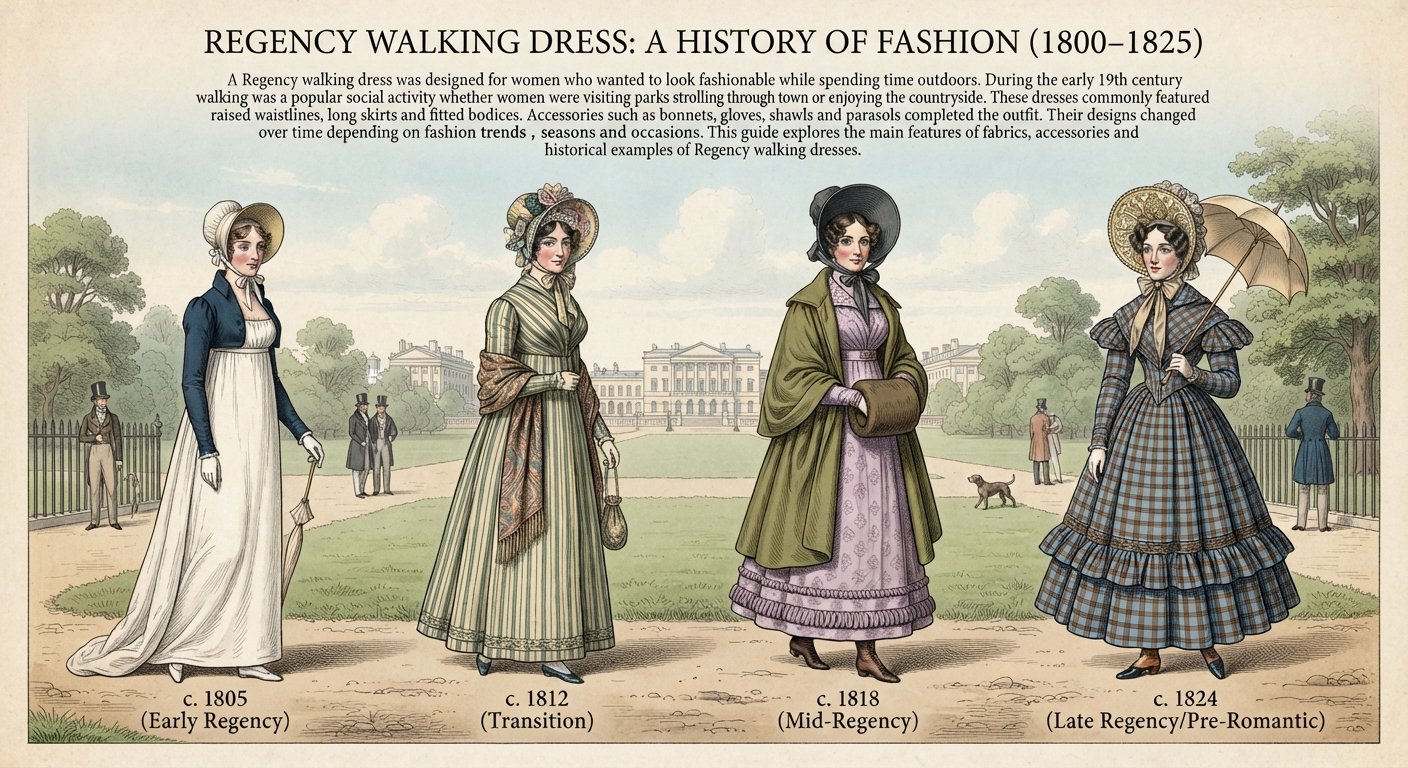

A Regency walking dress was designed for women who wanted to look fashionable while spending time outdoors. During the early 19th century walking was a popular social activity whether women were visiting parks strolling through town or enjoying the countryside.
These dresses commonly featured raised waistlines, long skirts and fitted bodices. Accessories such as bonnets, gloves, shawls and parasols completed the outfit. Their designs changed over time depending on fashion trends, seasons and occasions.
This guide explores the main features of fabrics , accessories and historical examples of Regency walking dresses.
Key Takeaways
- Regency walking dresses were worn for outdoor activities and promenades.
- They commonly featured raised waistlines and long skirts.
- Pelisses spencers and shawls provided additional coverage.
- Bonnets, gloves , parasols and boots completed the outfit.
- Historical fashion plates show changes in colours and designs throughout the period.
What Was a Regency Walking Dress?
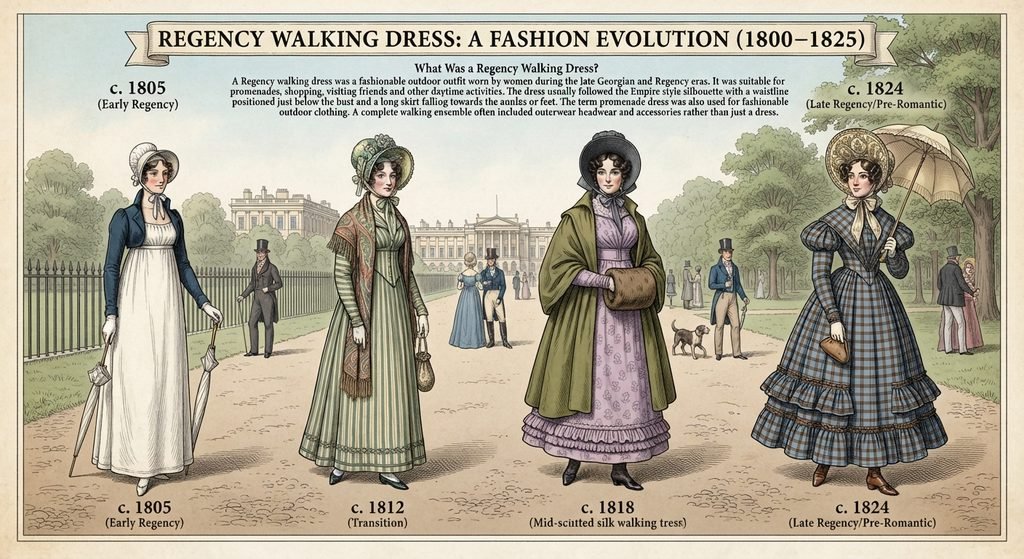
A Regency walking dress was a fashionable outdoor outfit worn by women during the late Georgian and Regency eras. It was suitable for promenades, shopping , visiting friends and other daytime activities.
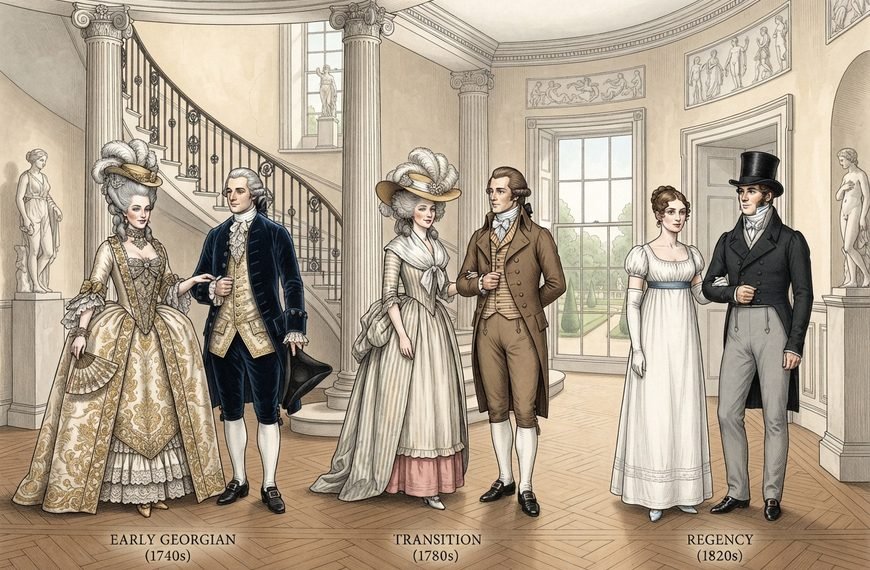
The dress usually followed the Empire style silhouette with a waistline positioned just below the bust and a long skirt falling towards the ankles or feet.
The term promenade dress was also used for fashionable outdoor clothing. A complete walking ensemble often included outerwear headwear and accessories rather than just a dress.
Main Features of a Regency Walking Dress
Regency walking dresses followed the popular silhouette of the early 19th century although their details varied between years and designs.
High Waistline and Fitted Bodice
The raised waistline was one of the most recognisable features of Regency women s fashion. The bodice generally fitted around the upper body while the skirt flowed down from beneath the bust.
Necklines and Sleeves
Necklines and sleeves appeared in different styles. Some dresses had short or moderately full sleeves while others offered more coverage through longer sleeves or additional garments. Chemisettes were sometimes worn beneath dresses to cover the neckline.
Long Skirts
Regency skirts generally extended towards the ankles or feet. Some featured decorative hems flounces or contrasting details adding interest to the overall outfit.
Which Fabrics and Colours Were Used?
Fabric choices depended on the season occasion and availability of materials. Cotton muslin was particularly popular because it was lightweight and suited the flowing Regency silhouette.
Other materials included
| Fabric | Common use |
| Cotton muslin | Lightweight dresses |
| Cambric | Fine cotton clothing |
| Silk | Dresses and decorative outerwear |
| Sarsnet | Lightweight silk garments |
| Woollen fabrics | Warmer outerwear |
White was popular but Regency walking dresses were not always white. Historical fashion plates also show blue brown plum and rust coloured garments.
For example an 1815 walking dress described in Ackermann s Repository included French cambric or jaconot muslin.
What Did Women Wear Over a Regency Walking Dress?
Outerwear provided additional coverage and helped make walking outfits suitable for outdoor conditions.
Pelisse
A pelisse was a long outer garment worn over a dress. It could resemble a coat or a long dress and was a popular choice for fashionable outdoor clothing.
Spencer
A Spencer was a short jacket that generally ended around the waist or upper hip. It added another layer without covering the entire skirt.
Cloaks Mantles and Shawls
Cloaks and mantles offered protection in cooler weather while shawls could be draped around the shoulders. Their materials and designs varied according to the season and fashion trends.
Which Accessories Completed a Regency Walking Dress?
Accessories were an important part of the walking ensemble. They added decorative details and helped make the outfit suitable for public appearances.
- Bonnets are often decorated with ribbons, feathers or fabric details.
- Gloves Commonly worn as part of fashionable outdoor clothing.
- Footwear Shoes and half boots were among the options for outdoor wear.
- Parasols Used as fashionable accessories that also provided shade.
- Reticules Small fabric handbags used to carry personal belongings.
The combination of these accessories helped create a coordinated appearance.
Historical Examples of Regency Walking Dresses
Historical fashion publications such as La Belle Assemblée and Ackermann s Repository provide useful evidence of changing walking dress styles.
Walking Dress from 1806
Fashion plates from 1806 show outdoor clothing from before the Regency officially began in 1811. They help illustrate the development of early 19th century women’s fashion.
Walking Dress from 1812
An 1812 walking dress illustration in the Los Angeles County Museum of Art collection shows a white dress with a blue sash straw bonnet and parasol.
Walking Dress from 1815
An 1815 description in Ackermann’s Repository mentions a walking outfit made with French cambric or jackknot muslin along with decorative flounces, a bonnet and footwear.
Walking Dress from 1817
A fashion plate from 1817 in the Los Angeles County Museum of Art collection depicts a rust coloured pelisse white skirt and tall yellow bonnet. It demonstrates the use of contrasting colours in outdoor clothing.
How Did Regency Walking Dresses Change Over Time?
Regency walking dresses developed alongside wider changes in women’s fashion. Early styles were strongly associated with lightweight fabrics, raised waistlines and relatively simple silhouettes.
As the period progressed fashion plates showed different outerwear designs, decorative trims and colour combinations. Pelisses and spencers provided opportunities to introduce additional textures and details.
These changes were gradual and styles varied according to the year and occasion. Historical illustrations and surviving garments help explain this development.
How Can You Identify an Authentic Regency Walking Dress?
A raised waistline alone does not prove that a dress was designed for walking. Several features should be considered together
- Date Check whether the garment belongs to the Regency period.
- Silhouette Look for the raised waistline and long skirt.
- Outerwear Identify garments such as pelisses spencers or cloaks.
- Accessories: Look for bonnets, gloves and parasols.
- Historical evidence Check whether contemporary descriptions identify it as a walking or promenade dress.
Fashion plates are useful references but they should be compared with museum collections and surviving garments.
What Is the Difference Between a Regency Walking Dress and a Morning Dress?
Both were associated with daytime clothing but they served different purposes. A walking dress was intended for outdoor appearances while a morning dress was generally worn for daytime activities in a less formal setting.
| Feature | Walking dress | Morning dress |
| Main purpose | Outdoor activities | Daytime wear |
| Outerwear | Often included | Depended on the activity |
| Accessories | Bonnets gloves and parasols | Varied by occasion |
| Practical use | Outdoor conditions | Indoor or daytime activities |
The distinction was not always absolute as historical clothing terminology could vary.
How Are Regency Walking Dresses Used in Modern Fashion?
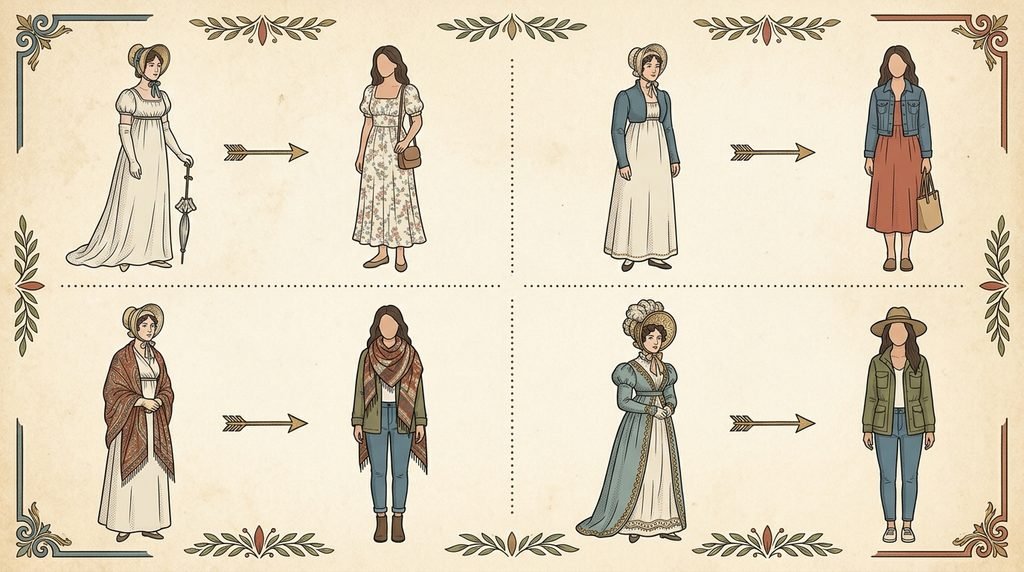
Regency walking dresses continue to inspire historical costumes and modern fashion. Their raised waistlines, flowing skirts and decorative accessories are often adapted into contemporary outfits.
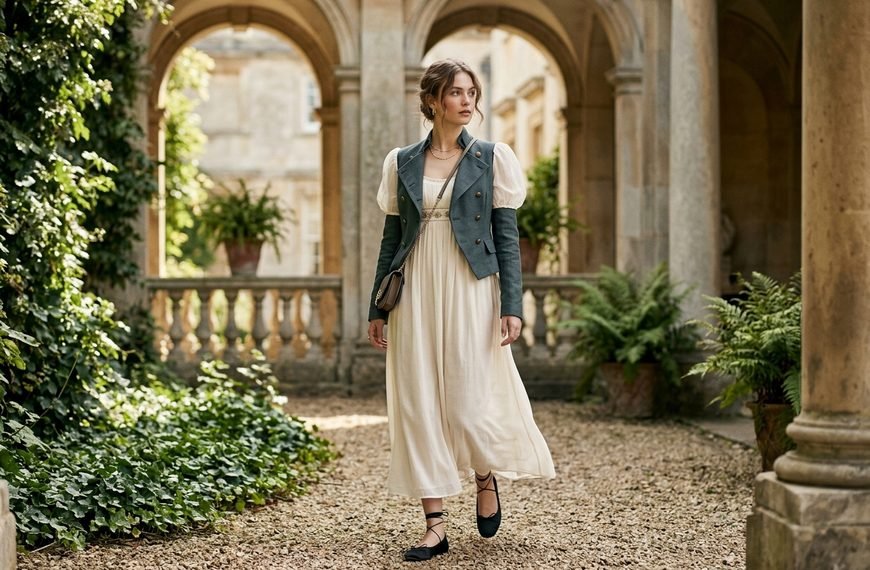
For a Regency inspired look people can choose an Empire waist dress, add a lightweight shawl or short jacket and complete the outfit with simple accessories. Modern interpretations can take inspiration from historical designs without reproducing every detail.
Conclusion
Regency walking dresses were an important part of early 19th century outdoor fashion. Their raised waistlines, long skirts and coordinated accessories created outfits suitable for promenades and other daytime activities.
Pelisses Spencer’s bonnets , gloves and parasols completed these ensembles while fabrics and colours changed throughout the period. Historical fashion plates and museum collections provide valuable examples of their development.
FAQs
What Is a Regency Walking Dress?
A Regency walking dress was an outdoor outfit worn by women during the late Georgian and Regency periods for promenades shopping and other daytime activities.
What Did a Regency Walking Dress Look Like?
It commonly featured a raised waistline fitted bodice and long skirt often accompanied by a pelisse bonnet and gloves.
Were Regency Walking Dresses Always White?
No. White muslin was popular but historical fashion plates also show blue brown plum and rust coloured outfits.
What Is the Difference Between a Pelisse and a Spencer?
A pelisse was generally a longer outer garment while a spencer was a shorter jacket ending around the waist or upper hip.
What Shoes Did Women Wear with Regency Walking Dresses?
Women wore different shoes and boots including half boots associated with practical outdoor ensembles.
Where Can You Find Historical Examples of Regency Walking Dresses?
Examples appear in publications such as Ackermann s Repository and La Belle Assemblée as well as museum collections including the Los Angeles County Museum of Art.

 By

 By