
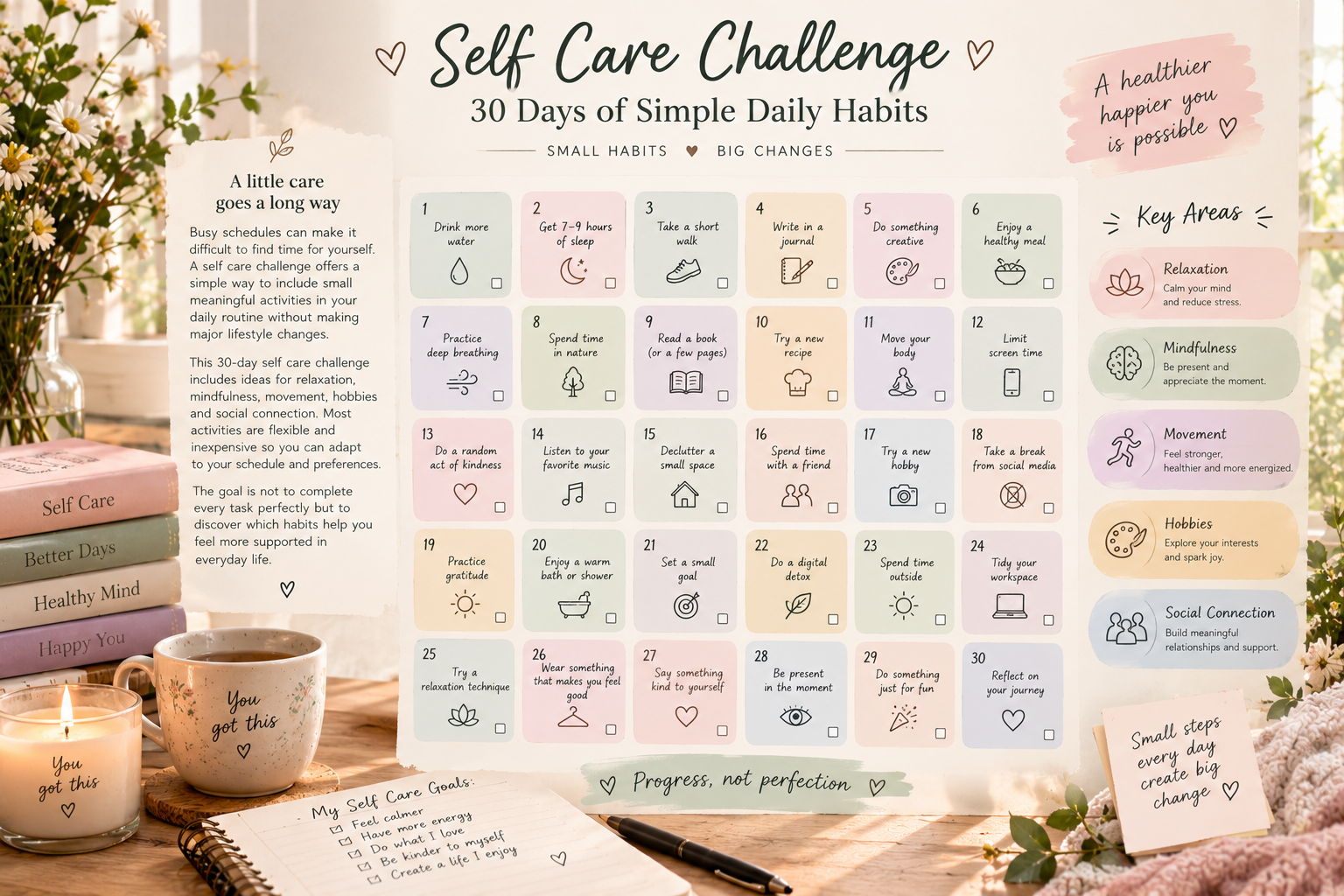

Busy schedules can make it difficult to find time for yourself. A self care challenge offers a simple way to include small meaningful activities in your daily routine without making major lifestyle changes.
This 30day self care challenge includes ideas for relaxation, mindfulness movement, hobbies and social connection. Most activities are flexible and inexpensive so you can adapt them to your schedule and preferences.
The goal is not to complete every task perfectly but to discover which habits help you feel more supported in everyday life.
What Is a Self Care Challenge?

A self care challenge is a plan that encourages you to practice activities supporting your physical, emotional and social wellbeing over a set period. It may last seven days, 14 days or 30 days.
Examples include journaling, taking a quiet break, enjoying a hobby connecting with someone you trust and creating a relaxing bedtime routine.
The World Health Organization explains selfcare as actions people take to maintain health and wellbeing. These activities can support general wellness but do not replace professional care when needed.
Why Try a 30Day Self Care Challenge?
A monthlong challenge gives you time to explore different habits and identify those that fit your lifestyle.
Potential benefits include:
- Self awareness: Notice your feelings, needs and routines.
- Intentional rest: Make space for breaks and enjoyable activities.
- Healthy habits: Experiment with sleep movement and relaxation routines.
- Social connection: Make time for supportive relationships.
- Personal growth: Discover activities that help you feel engaged and refreshed.
The National Institute of Mental Health also recommends everyday practices such as regular physical activity, adequate sleep and staying connected with supportive people.
Your 30Day Self Care Challenge
Each activity below is a suggestion not a strict rule. Most can be adapted to take around 5–20 minutes.
Week 1: Understand Your Needs
Day 1: Check in with yourself. Write a few sentences about your mood, energy and current needs.
Day 2: Take a screen break. Spend some time reading, stretching or enjoying a quiet activity.
Day 3: Practice gratitude. Write down three things you appreciate.
Day 4: Get some fresh air. Sit outside or take a short walk if conditions are suitable.
Day 5: Try mindfulness. Spend a few minutes noticing your breathing or surroundings.
Day 6: Enjoy a hobby. Read, draw, cook or listen to music for pleasure.
Day 7: Reflect. Identify which activities you enjoyed and want to repeat.
Week 2: Build Supportive Habits
Day 8: Create a simple morning routine. Choose one or two manageable actions to start your day.
Day 9: Move comfortably. Try walking, stretching or dancing at your own pace.
Day 10: Organize one small area. Tidy a desk drawer or bag instead of tackling everything.
Day 11: Practice kind selftalk. Replace harsh criticism with a fairer, more encouraging statement.
Day 12: Choose a relaxing activity. Read, listen to music or try a craft.
Day 13: Review your schedule. Identify one task you can simplify or prepare for earlier.
Day 14: Check your progress. Keep the habits that suit you and adjust those that feel difficult.
Week 3: Support Connection and Emotional WellBeing
Day 15: Contact someone you trust. Send a message or have a short conversation.
Day 16: Write about your feelings. Use a notebook to organize your thoughts without needing to solve everything.
Day 17: Enjoy music. Listen to something you find relaxing or uplifting.
Day 18: Practice a boundary. Communicate your availability clearly when you need more time or space.
Day 19: Do something kind. Thank someone or offer appropriate help.
Day 20: Learn something new. Explore a topic or practice a small skill.
Day 21: Spend time on an interest. Return to a hobby you enjoy or try something different.
Week 4: Make SelfCare Sustainable
Day 22: Review your sleep routine. Consider whether your evening schedule gives you enough time to rest.
Day 23: Take a quiet break. Spend a few minutes away from unnecessary distractions.
Day 24: Recognize a small achievement. Note something you learned or handled well.
Day 25: Try gentle movement. Choose an activity that suits your abilities and comfort level.
Day 26: Plan something enjoyable. Arrange time for a hobby recipe or conversation with a friend.
Day 27: Ask for support if needed. Talk with someone you trust about a responsibility or concern.
Day 28: Repeat your favorite activity. Choose something from the previous weeks that you genuinely enjoyed.
Day 29: Create a personal plan. Select three habits you would like to continue.
Day 30: Reflect on the month. Write down what you learned and which activities you want to keep.
Which SelfCare Activities Should You Prioritize?
Choose an activity based on what you need and what fits your circumstances.
| Your need | Activity to try | Starting point |
| A mental break | Reading or music | 5–10 minutes |
| Selfawareness | Journaling | A few sentences |
| Social connection | Contact someone supportive | One message |
| A calmer evening | Prepare for bedtime | One small change |
| Enjoyment | Spend time on a hobby | One short session |
| Movement | Walking or stretching | A comfortable duration |
| Organization | Tidy a small area | One drawer |
| Better planning | Review tomorrow’s tasks | 5 minutes |
These are flexible ideas not requirements. Choose what feels appropriate for you.
How Can You Make a Self Care Challenge Work?
A useful challenge should fit your life rather than become another source of pressure.
- Start small: Choose activities you can manage on ordinary days.
- Adapt the plan: Move activities when your schedule changes.
- Follow your preferences: You do not have to enjoy every suggested activity.
- Avoid perfectionism: Missing a day does not mean you have failed.
- Track useful habits: Make a note of activities you want to repeat.
- Keep it affordable: Many selfcare activities require no special equipment.
Mindfulness can be as simple as noticing your surroundings during a walk. The NHS guide to mental wellbeing also discusses connection, physical activity, learning, helping others and mindfulness.
What If You Miss a Day or the Challenge Does Not Help?
Missing a day is normal. Continue when you are ready or choose a smaller activity that fits your circumstances. You do not need to restart the entire challenge.
If an activity makes you uncomfortable or does not suit you, replace it with another option. Selfcare is personal and different activities work for different people.
A challenge is not a treatment for every problem. If distress persists, worsens or interferes with daily life consider speaking with a trusted adult or qualified health professional.
Conclusion
A self care challenge helps you explore small habits for rest connection reflection and everyday wellbeing. This 30day plan provides a starting point but you can adapt it to your needs and schedule.
Begin with one manageable activity and continue with the habits you find useful. Selfcare is not about perfection; it is about recognizing your needs and responding to them realistically.
FAQs
What is a 30day self care challenge?
It is a monthlong plan that suggests one selfcare activity each day. Activities may include rest movement, reflection, hobbies and social connection.
How much time should I spend on selfcare daily?
There is no universal time requirement. Start with a few manageable minutes and adjust according to your needs and schedule.
Can I start with a 7day selfcare challenge?
Yes. A seven day challenge is a useful way to explore different activities before committing to a month. You can repeat your favorites afterward.
Does a selfcare challenge improve mental health?
Selfcare activities may support general wellbeing but results vary. A challenge is not a guaranteed treatment and does not replace professional support when needed.
What if I do not enjoy the activities?
Choose alternatives that suit your interests, circumstances and comfort level. You do not need to complete activities that feel unhelpful.
What should I do after 30 days?
Keep two or three activities you found useful and fit them into your routine. You can change or stop habits that do not suit you.


 By




 By