


A selfcare routine does not require expensive products or hours of free time. Simple habits such as taking a quiet break, eating regular meals, journaling or contacting someone you trust can help you pay attention to your needs.
A helpful self care routine is not a fixed checklist that everyone must follow. It is a flexible combination of habits that supports your everyday needs. Some days you may need rest or quiet time while on other days connecting with friends organizing your surroundings or enjoying a hobby may be more useful.
What Are Self Care Routine Ideas and Why Do They Matter?

Selfcare routine ideas are everyday habits that support physical health, emotional wellbeing and mental balance. They include getting enough rest, enjoying hobbies, maintaining relationships, setting boundaries and organizing responsibilities.
The National Institute of Mental Health recommends paying attention to everyday needs such as sleep, physical activity, relaxation and social connection.
Choose activities based on what you need at the moment. If you feel tired, prioritize rest and basic daily needs. If your surroundings feel distracting, organize one small area.
If you want more connection, spend time with a supportive friend or family member. The most useful self care habit is one that fits your circumstances rather than adding pressure.
Which SelfCare Habits Can You Practice Every Day?
You do not need to practice every type of selfcare daily. Start with activities that fit your circumstances.
| Type | Simple selfcare habits |
| Physical | Rest gentle movement regular meals |
| Emotional | Journaling self compassion reflection |
| Mental | Reading screen breaks planning tasks |
| Social | Calling friends sharing time with family |
| Practical | Organizing tasks preparing for tomorrow |
Physical selfcare includes drinking water when thirsty, maintaining personal hygiene, eating regular meals and getting adequate rest. Emotional selfcare may involve recognizing your feelings, writing down concerns or speaking with someone supportive.
Mental self care can include reading, learning a skill or taking a break from constant notifications. Social self care involves maintaining supportive relationships asking for help and making time for meaningful conversations.
Environmental self care can be as simple as organizing your study area, making your room more comfortable or reducing unnecessary distractions in your surroundings.
How Can You Create a Simple Morning SelfCare Routine?
A morning routine can help you begin the day with structure. It does not need to start early or follow a strict schedule.
Try these simple steps:
- Wake up without rushing when possible. Give yourself time to become alert before checking messages.
- Take care of basic needs. Wash, get dressed, drink water and eat breakfast if appropriate for your schedule.
- Check in with yourself. Notice your mood and energy without judging them.
- Choose one priority. Identify the most important task for the day.
- Add a calming activity. Stretch gently, listen to music or spend a few quiet minutes reflecting.
On busy mornings two or three basic habits may be enough. Your routine should fit your responsibilities rather than create another source of stress.
What Are Good Evening SelfCare Routine Ideas?
An evening routine can help you transition away from daily responsibilities and prepare for rest.
Create time to unwind
Read a book, listen to music, take a shower or enjoy a few quiet minutes. Reducing screen use before bed may also help if notifications or scrolling keep you alert.
Prepare for tomorrow
Choose your clothes, check your schedule or write down important tasks. Keep preparation brief so your evening does not become another work session.
Reflect on your day
Consider one thing that went well or something you learned. If journaling helps write a few sentences about your feelings or priorities.
Some evenings will be busy. Taking care of basic needs and getting adequate rest is enough; you do not have to complete every habit.
What SelfCare Activities Can You Do When You Have Little Time?
Short activities can fit into busy schedules. The CDC’s emotional wellbeing guidance includes practical approaches such as taking breaks, spending time outdoors and connecting with others.
| Available time | Activity |
| 1 minute | Take a few comfortable slow breaths |
| 2 minutes | Stretch gently or change position |
| 3 minutes | Write down your main concern |
| 5 minutes | Step outside or message a friend |
| 10 minutes | Read walk or enjoy a quiet break |
| 15 minutes | Spend time on a hobby or take a relaxed walk |
These activities are starting points not guaranteed solutions for stress. Choose what feels comfortable and useful for you.
How Can You Build a SelfCare Routine That Lasts?
A routine is easier to maintain when it starts small and remains flexible.
- Identify your main need. Decide whether you need rest, better organization, social connection or relaxation.
- Choose one or two habits. Select activities that fit your schedule, energy and budget.
- Connect them to existing habits. Stretch after sitting for a while or prepare tomorrow’s essentials before bed.
- Keep expectations realistic. A few minutes of reading or reflection may be enough to begin.
- Review what works. If a habit creates pressure, shorten it or try something different.
Review your routine from time to time and notice which activities genuinely support your everyday life. Some habits may work well during busy weeks while others may be more suitable when you have extra time.
You can adjust your routine whenever your schedule or needs change. Missing a day does not mean you have to start again from the beginning.
How Can You Personalize SelfCare for Different Situations?
Your routine should reflect your lifestyle and responsibilities.
- For students: Take study breaks, organize school materials, maintain regular meals and make time for supportive friendships.
- For working adults: Set realistic priorities, take breaks when possible and protect personal time outside work.
- For limited budgets: Try free activities such as reading, walking somewhere safe, journaling or listening to music.
- For emotionally difficult days: Focus on basic needs, one manageable task and contact with someone you trust.
If ongoing stress or emotional difficulties interfere with daily life, consider seeking help from a qualified healthcare or mental health professional. Selfcare can support wellbeing but it does not replace appropriate treatment.
What Common SelfCare Mistakes Should You Avoid?
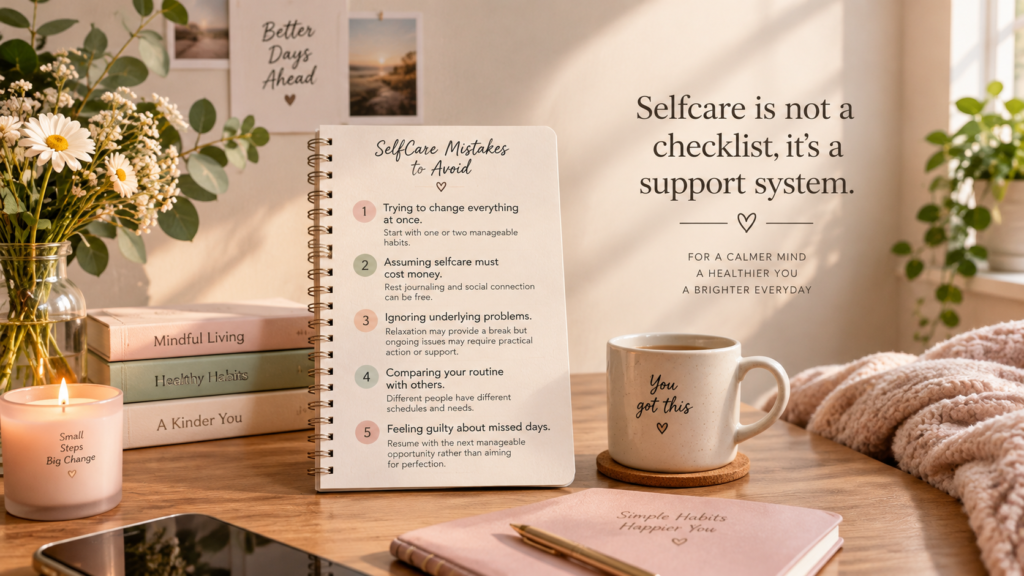
Selfcare becomes less helpful when it feels like another strict responsibility.
- Trying to change everything at once: Start with one or two manageable habits.
- Assuming selfcare must cost money: Rest journaling and social connection can be free.
- Ignoring underlying problems: Relaxation may provide a break but ongoing issues may require practical action or support.
- Comparing your routine with others: Different people have different schedules and needs.
- Feeling guilty about missed days: Resume with the next manageable opportunity rather than aiming for perfection.
The goal is to support your everyday life not to create another checklist you must complete.
Conclusion
The best self care routine ideas are simple, affordable and suited to your everyday life. Habits involving rest movement, emotional awareness, social connection and planning can help you begin without changing everything at once.
Start with one or two activities that meet your needs and adjust them over time. For more ideas explore EveryTalkin’s guide to selfcare activities for everyday wellness.
FAQs
What is the best selfcare routine for beginners?
Start with two or three simple habits such as taking breaks, maintaining a regular bedtime or checking in with your feelings. Choose activities that suit your needs and schedule.
How much time should I spend on selfcare daily?
There is no single amount of time that works for everyone. A few minutes can be a useful starting point while other activities may take longer depending on your needs.
What selfcare routine ideas cost nothing?
You can read journals, walk somewhere safe, listen to music, stretch comfortably or contact a friend. Rest and healthy boundaries are also valuable forms of selfcare.
Should I have both morning and evening routines?
Not necessarily. Some people prefer routines at both times while others find one consistent habit easier to maintain. Start with whichever fits your schedule best.
Can selfcare help manage stress?
Activities such as taking breaks, moving comfortably, relaxing and connecting with supportive people may help manage everyday stress. Persistent difficulties may require practical changes or professional support.
What if I cannot stick to my routine?
Make the routine smaller and remove activities that feel burdensome. Connect one manageable habit to something you already do and adjust the plan when your needs change.


 By




 By