

A rushed morning can make it difficult to prepare for school work and other responsibilities. Without a clear plan small decisions such as choosing what to do first or finding essential belongings can take extra time.
The benefits of a morning routine come from creating structure and making time for activities that support your needs. A realistic routine may help you manage responsibilities, develop consistent habits and start the day with a clearer direction.
You do not need an extremely early wakeup time or a complicated schedule. A few practical activities can make your mornings easier to manage.
What Are the Benefits of a Morning Routine?
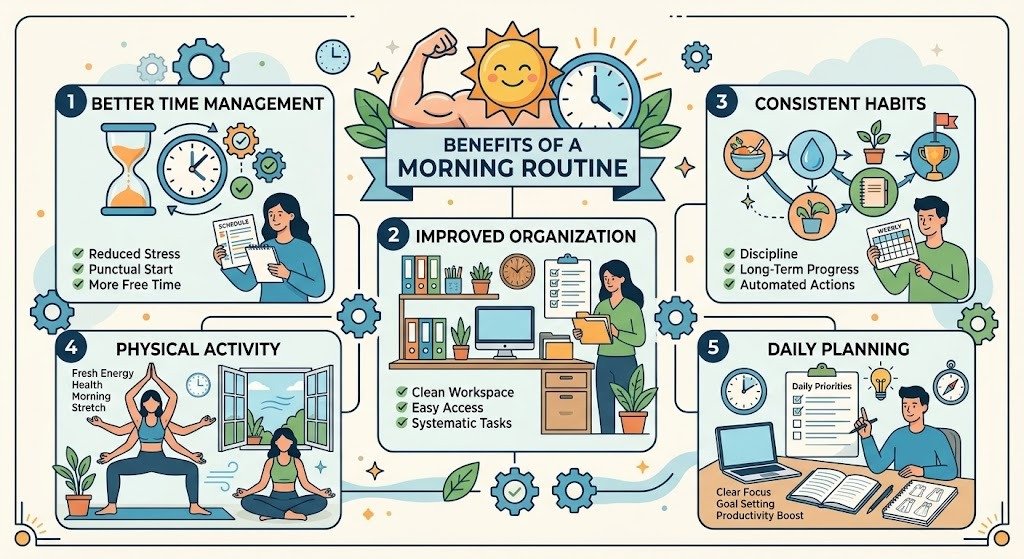
The benefits of a morning routine include better time management, improved organization, more consistent habits and a more prepared start to the day. It can also create opportunities for physical activity, personal care learning and daily planning.
The results depend on your chosen activities. For example reviewing your schedule may help organize your responsibilities while a short walk can add movement to your day.
Why Is a Morning Routine Important?
A morning routine gives your day a predictable starting point. Instead of deciding what to do at every moment you follow a simple sequence that helps you prepare for daily responsibilities.
It can reduce unnecessary delays and create time for activities that are easy to postpone such as eating breakfast, reviewing your schedule or preparing for school and work. However a morning routine is a practical tool not a guarantee of success or happiness.
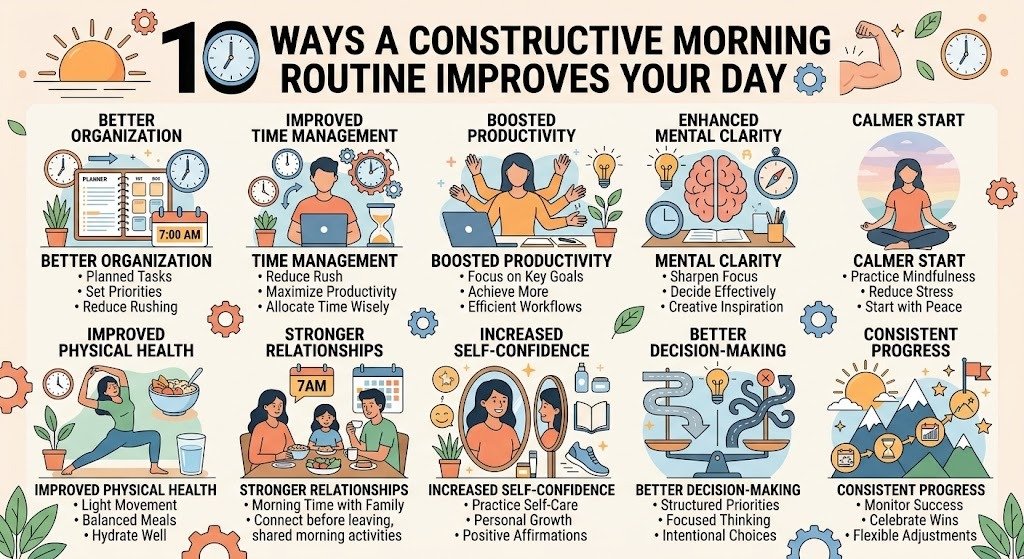
10 Key Benefits of a Morning Routine
A well planned morning routine can support different areas of daily life. Here are ten useful benefits and their practical value.
Better Time Management
Planning your morning helps you use available time more purposefully. Students can prepare school materials and check their timetable while professionals can review their calendars and identify important tasks. Leaving some flexibility in your schedule also helps you manage unexpected delays.
Improved Focus and Mental Clarity
Writing down two or three important tasks can make your priorities easier to understand. Reading, journaling or spending quiet time away from notifications may also help you prepare for studying or working.
A routine does not automatically improve concentration but reducing distractions can make it easier to begin important activities.
A More Organized Day
Preparing essential belongings can prevent small tasks from becoming lastminute problems. Checking your schedule, organizing documents and keeping your workspace tidy can make the transition from waking up to daily responsibilities smoother.
More Consistent Healthy Habits
A morning routine creates regular opportunities to practise useful habits. These may include drinking water, eating a suitable breakfast, making time for movement and maintaining a reasonably consistent sleep schedule. Connecting an activity with something you already do can make it easier to remember.
Better Preparation for School or Work
Students can check their timetable, organize study materials and review assignments. Professionals can prepare documents, check appointments and organize their work priorities. Preparing some belongings the night before can also reduce morning delays.
More Opportunities for Physical Activity
A morning routine can create time for walking, gentle stretching, cycling or other comfortable activities. Physical activity supports overall wellbeing but it does not have to happen in the morning.
The World Health Organization’s physical activity guidance explains the importance of regular movement.
A More Manageable Start to the Day
A simple routine may reduce avoidable pressure by giving you time to get ready and understand your priorities. Reading, praying, journaling or practising calm breathing can also provide a few quiet moments before daily responsibilities begin. A routine cannot remove every source of stress but it can help you feel more prepared.
More Time for Personal Growth and Learning
Morning hours can provide an opportunity to read, practise a language review, study notes or learn a useful skill.
For example a student learning English could review vocabulary while someone developing digital skills might read an educational article. Short learning sessions can become useful when they fit your schedule.
A Greater Sense of Responsibility and Independence
Preparing your belongings, managing your time and completing small tasks can help you become more independent.
For example a student who regularly organizes school materials may become more confident about preparing for classes. A routine also teaches you to adjust your plans when unexpected events occur.
A More Consistent Sleep and Daily Schedule
Maintaining a reasonably consistent wakeup time alongside a suitable bedtime can help create a more predictable daily schedule.
According to the CDC’s sleep guidance, teenagers aged 13–17 generally need 8–10 hours of sleep while adults aged 18–60 need at least 7 hours.
Waking up extremely early does not automatically make a routine healthier. Your schedule should allow enough time for rest.
How Does a Morning Routine Benefit Different People?
The benefits of a morning routine depend on someone’s responsibilities and available time.
| Lifestyle | Useful Activities | Possible Benefit |
| Students | Check timetable and prepare school materials | Better class preparation |
| Professionals | Review calendar and work priorities | Organized workday |
| Remote workers | Prepare workspace and plan tasks | Clearer work schedule |
| Busy parents | Organize essentials and family plans | Smoother household preparation |
| People learning skills | Read practise or review notes | Regular learning opportunities |
These are flexible examples rather than fixed schedules.
What Should You Include in a Healthy Morning Routine?
A useful morning routine should help you prepare for the day without making your schedule complicated.
Start with personal care such as washing up, brushing your teeth, getting dressed and organizing your belongings. Include a suitable breakfast and drink water according to your needs.
You can also add gentle movement, review your main priorities or spend a few minutes reading, journaling or praying. Choose activities that genuinely support your everyday needs rather than following every popular morning habit.
How Can You Create a Morning Routine That Works?
Creating a morning routine does not require a complete lifestyle change. Start by identifying what makes your mornings difficult such as forgetting belongings or running out of time.
Choose two or three manageable habits that address these challenges. Prepare your bag clothes or workspace the night before to reduce morning decisions.
Keep your schedule realistic and leave room for unexpected delays. After trying your routine, review what works and remove activities that feel unnecessary.
Morning Routine Examples 10 20 and 30 Minutes
A short routine can still provide useful structure. These examples show how you can use different amounts of available time.
| Time Available | Example Activities | Main Purpose |
| 10 minutes | Personal care checking schedule preparing essentials | Basic preparation |
| 20 minutes | Personal care breakfast reviewing priorities gentle movement | Balanced start |
| 30 minutes | Personal care breakfast short walk planning | More preparation time |
Adjust these examples to your responsibilities and make sure your routine allows enough sleep.
Are There Any Disadvantages of a Morning Routine?
A morning routine can become difficult when it is too strict or takes time away from essential needs. Trying to follow a long schedule waking up without enough sleep or copying someone else’s habits may create unnecessary pressure.
Unexpected responsibilities can also interrupt a fixed routine. If your schedule becomes stressful, simplify it and focus on the activities that genuinely help.
Common Morning Routine Mistakes to Avoid
Avoid waking up earlier than necessary, adding too many habits and comparing your schedule with someone else’s. Ignoring sleep or treating a missed morning as a failure can also make a routine difficult to maintain.
Instead focus on a few useful activities and adjust your schedule when your responsibilities change.
How Can You Maintain Your Morning Routine?
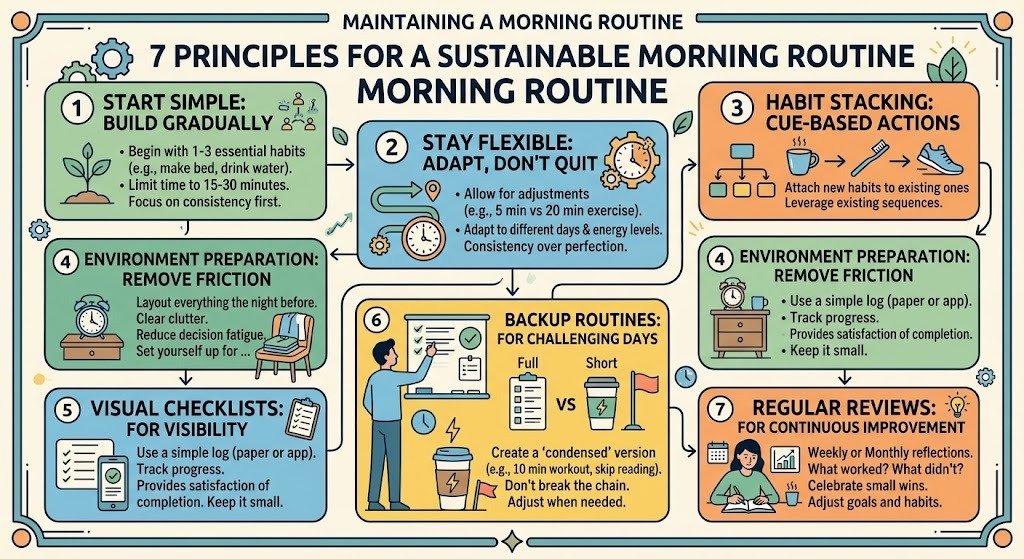
Consistency becomes easier when your routine is simple and flexible. Connect new habits to activities you already follow, keep essential belongings in predictable places and use a checklist if helpful.
You can also create a shorter backup routine for busy mornings. Review your schedule regularly and remove activities that no longer provide value.
Conclusion
The benefits of a morning routine come from creating a more organized and purposeful start to the day. Simple activities such as preparing belongings, planning priorities, eating breakfast and making time for movement can support everyday responsibilities.
An effective routine does not need to be long or strict. Start with a few useful activities, allow enough time for sleep and adjust your schedule when necessary. The best routine is one that makes your daily life easier to manage.
FAQs
What Are the Main Benefits of a Morning Routine?
The main benefits include better time management, improved organization, more consistent habits and a more prepared start to daily responsibilities. It can also create opportunities for learning movement and personal care.
How Long Should a Morning Routine Take?
There is no fixed duration. Some people need only 10–15 minutes while others prefer a longer routine. Choose a schedule that fits your responsibilities and allows enough sleep.
Is Waking Up Early Necessary for a Good Morning Routine?
No. Your wakeup time should match your school work and personal schedule while allowing you to get enough sleep.
Can a Morning Routine Improve Productivity?
A morning routine may support productivity by helping you identify priorities, prepare necessary materials and reduce avoidable delays.
What Should Students Include in a Morning Routine?
Students can include personal care breakfast checking their timetable, organizing school materials and reviewing important assignments.
What Should I Do If I Cannot Follow My Morning Routine Every Day?
Keep a shorter version for busy mornings and return to your usual routine when possible. Flexibility is more useful than expecting every morning to go exactly as planned.


 By




 By