

A good morning can influence how you approach your responsibilities, manage your time and take care of yourself throughout the day. However building a better morning does not mean waking up extremely early or following a complicated schedule.
A good morning routine is a collection of practical habits that help you feel prepared, organized and ready for daily activities.
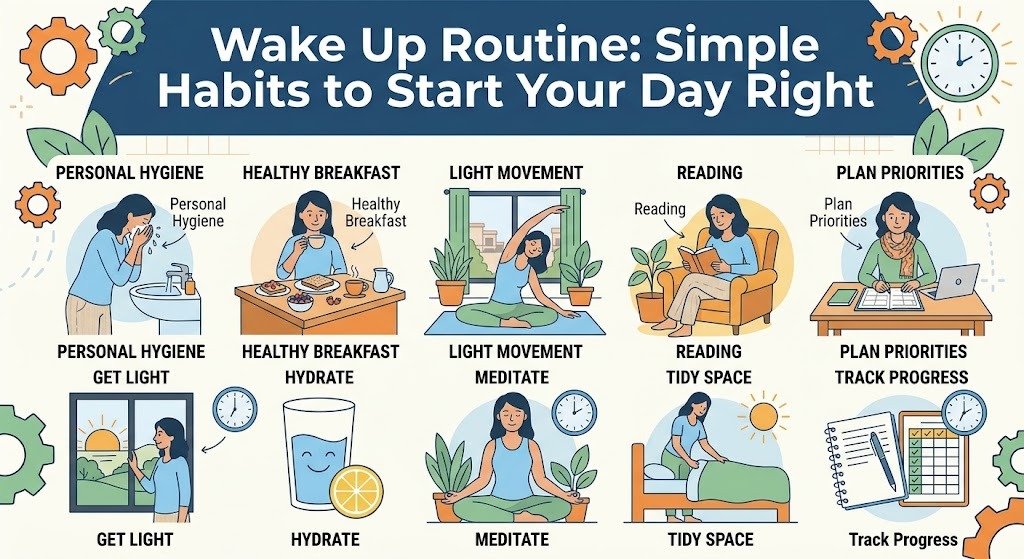
It may include personal hygiene breakfast, light movement reading or planning your priorities. The best routine depends on your lifestyle and available time.
This guide explores useful morning habits, realistic schedules and simple ways to make them part of your everyday life.
What Is a Good Morning Routine and Why Is It Important?
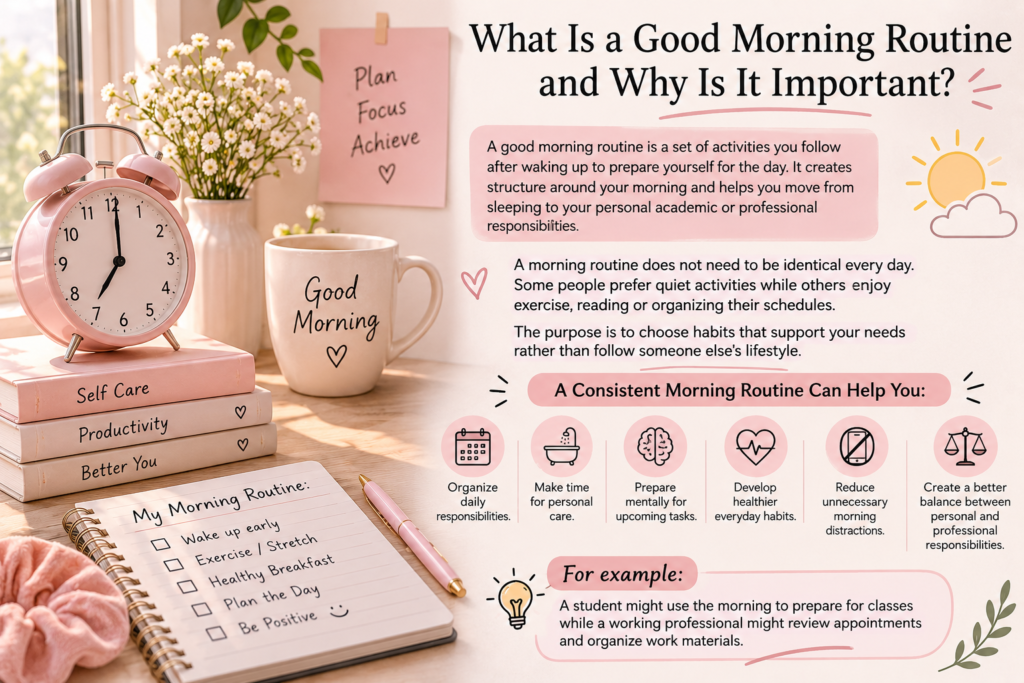
A good morning routine is a set of activities you follow after waking up to prepare yourself for the day. It creates structure around your morning and helps you move from sleeping to your personal academic or professional responsibilities.
A morning routine does not need to be identical every day. Some people prefer quiet activities while others enjoy exercise reading or organizing their schedules.
The purpose is to choose habits that support your needs rather than follow someone else’s lifestyle.
A consistent morning routine can help you
- Organize daily responsibilities.
- Make time for personal care.
- Prepare mentally for upcoming tasks.
- Develop healthier everyday habits.
- Reduce unnecessary morning distractions.
- Create a better balance between personal and professional responsibilities.
For example a student might use the morning to prepare for classes while a working professional might review appointments and organize work materials.
How Is a Morning Routine Different From a WakeUp Routine?
These two terms are closely related but they describe slightly different activities.
A wakeup routine focuses on the first few actions after getting out of bed. A complete morning routine includes those activities and extends into breakfast exercise studying planning and preparing for work.
| WakeUp Routine | Good Morning Routine |
| Getting out of bed | Getting ready for the entire day |
| Opening curtains | Spending time in natural light |
| Drinking water | Preparing breakfast |
| Washing your face | Completing personal care |
| Becoming alert | Planning daily priorities |
| Starting the morning | Preparing for work study or personal activities |
Both routines can support a structured day. The main difference is how much of your morning they cover.
10 Healthy Morning Habits to Include in Your Daily Routine
A useful morning routine combines physical care, mental preparation and daily organization. You do not need to practise all ten habits immediately. Select the ones that fit your schedule and gradually build a routine around them.
Wake Up at a Consistent Time
A predictable wakeup time provides structure to your day. Instead of changing your schedule frequently try to wake up at a time that allows you to complete your morning responsibilities without rushing.
Consistency should begin with your sleep schedule. If you regularly need to wake up at 700 a.m., plan your bedtime so you can get enough rest.
Avoid choosing an extremely early alarm simply because it is popular on social media.Your ideal wakeup time depends on your age, sleep requirements and daily responsibilities.
Make Your Bed and Organize Your Space
Making your bed is a small household activity that can help you begin the day with a sense of order. It also gives you an opportunity to organize your immediate surroundings before moving on to other activities.
You can make this habit simple
- Straighten your bedsheet.
- Arrange your pillows.
- Put away unnecessary items.
- Open the curtains.
- Keep your morning essentials in their usual places.
You do not need to spend a long time cleaning your entire room. A few minutes of organization can be enough to prepare your space.
Drink Water and Complete Personal Hygiene
After waking up, drinking water can be a convenient way to continue your daily hydration habits.
Keep a glass or bottle somewhere accessible so you do not have to search for it every morning.
Next complete your basic personal hygiene activities
- Brush your teeth.
- Wash your face.
- Comb your hair.
- Change into clean clothes.
- Follow your usual skincare routine if needed.
These activities help you prepare for your day and maintain personal cleanliness.
Get Natural Morning Light
Natural daylight is an important environmental signal for your body’s internal clock also known as the circadian rhythm.
Opening your curtains or spending some time outdoors can help your body recognize that daytime has started.
You can include natural light in your routine by
- Opening your bedroom curtains.
- Sitting near a bright window.
- Spending a few minutes outside.
- Taking a short morning walk.
You do not need to look directly at the sun. Ordinary daylight exposure is sufficient for this everyday habit.
The American Heart Association also recommends using natural light as part of a healthy wakeup routine. American Heart Association+1
Eat a Balanced Breakfast
Breakfast can provide an opportunity to include useful nutrients in your daily eating pattern. The best choice depends on your appetite preferences, schedule and nutritional needs.
Some practical breakfast ideas include
- Eggs with wholegrain toast.
- Oatmeal with fruit and nuts.
- Plain yogurt with seasonal fruit.
- Wholegrain bread with peanut butter.
- A homemade sandwich with vegetables and a protein source.
If your mornings are busy, prepare ingredients the night before. Avoid treating breakfast as a strict rule that everyone must follow at exactly the same time. Focus on an eating pattern that suits your individual needs.
Include Gentle Exercise or Physical Movement
Physical activity is another useful habit to consider. You do not need to complete a demanding workout immediately after waking. Simple movements can be a comfortable way to begin your day.
For example
- Take a short walk.
- Stretch your arms and shoulders.
- Try gentle yoga movements.
- Walk around your home.
- Complete a comfortable mobility routine.
If you prefer exercising later that is perfectly fine. Morning exercise is an option not a requirement for a successful routine. The important thing is to find opportunities for regular movement throughout your day.
Read Something Useful
Reading for a few minutes can make your morning more meaningful especially if you want to develop a learning habit. You can choose material that matches your interests and goals.
For example
- Students can review a few pages of educational material.
- Professionals can read an industry article.
- Beginners can explore a personal development book.
- Anyone interested in learning can read about a new subject.
You do not need to finish an entire chapter every morning. Even a small reading session can become a manageable daily habit.
Practise Gratitude or Quiet Reflection
A morning routine does not have to focus entirely on physical activities. You can also make room for reflection and mental wellbeing. Spend a few minutes thinking about what matters to you or writing a short journal entry.
Some simple ideas include
- Write down one thing you appreciate.
- Reflect on a positive experience.
- Identify something you want to improve.
- Spend a few quiet minutes without distractions.
- Pray or reflect according to your personal beliefs.
These activities are personal choices. You should select something that feels comfortable rather than forcing yourself to follow a particular practice.
Plan Your Most Important Tasks
A clear plan can make your morning more organized. Instead of writing a long list of everything you might do, identify two or three important priorities.
For example
| Area | Daily Priority |
| Education | Complete an important assignment |
| Professional | Finish a scheduled work task |
| Personal | Organize your study area |
| Development | Spend time learning a useful skill |
This gives you a starting point and makes it easier to decide what deserves your attention. You can use a notebook calendar or digital planner. The best option is the one you can use consistently.
Prepare Yourself for the Day
Before beginning your responsibilities take a few minutes to check that everything is ready. Depending on your schedule this may include
- Packing your school or work bag.
- Checking your timetable.
- Organizing important documents.
- Preparing your workspace.
- Confirming appointments.
- Planning your journey.
This final preparation step helps you move from your personal morning activities into your daily responsibilities.
What Is the Best Morning Routine for Different Schedules?
The best morning routine is not necessarily the longest one. It should fit your available time while allowing you to complete important activities. Here are three examples you can adjust according to your lifestyle.
A Simple 15Minute Morning Routine
A 15minute routine is suitable for people with limited morning time.
| Time | Activity |
| 0–3 minutes | Get out of bed and open curtains |
| 3–7 minutes | Drink water and complete basic hygiene |
| 7–11 minutes | Get dressed and organize your space |
| 11–15 minutes | Review priorities and prepare essentials |
This routine focuses on basic preparation rather than including every optional activity.
A Balanced 30Minute Morning Routine
A 30minute schedule offers more flexibility for personal care and planning.
| Time | Activity |
| 0–5 minutes | Wake up hydrate and get natural light |
| 5–12 minutes | Personal hygiene and getting dressed |
| 12–18 minutes | Walking or gentle stretching |
| 18–25 minutes | Breakfast |
| 25–30 minutes | Review daily priorities |
You can adjust these activities based on your responsibilities. If breakfast takes longer, reduce an optional activity rather than rushing through essential preparation.
A Relaxed 60Minute Morning Routine
People with flexible schedules may prefer a longer routine.
| Time | Activity |
| 0–10 minutes | Wake up hydrate and get natural light |
| 10–20 minutes | Personal hygiene and getting dressed |
| 20–30 minutes | Comfortable physical activity |
| 30–40 minutes | Breakfast |
| 40–50 minutes | Reading or journaling |
| 50–60 minutes | Planning and preparing for the day |
A longer schedule is not automatically better. It is useful only when it fits your lifestyle and does not reduce your sleep.
How Can Students and Working Professionals Build a Good Morning Routine?
Different responsibilities require different morning habits. A student preparing for classes may need a different schedule from someone working in an office or managing a remote job.
Morning Routine for Students
Students can use their morning to prepare for academic responsibilities and organize their study materials.
A practical routine may include
- Wake up with enough time for morning preparation.
- Complete personal hygiene.
- Eat breakfast according to your needs.
- Review your timetable.
- Pack books, stationery and other essentials.
- Leave with enough time for your journey.
Students should avoid sacrificing necessary sleep to complete unnecessary early morning activities.
Morning Routine for Working Professionals
Working professionals can use their morning to create a smooth transition into their responsibilities.
Useful activities include
- Wake up after sufficient sleep.
- Complete personal hygiene and get dressed.
- Have breakfast and drink water.
- Check important appointments.
- Review the day’s main priorities.
- Prepare work materials or organize a home workspace.
If you work remotely, getting dressed and arranging your desk can help separate personal time from working hours.
Morning Routine for People Working From Home
Working from home can make it easy to move directly from bed to work without a clear transition.
A simple routine can create more structure.
Try to
- Get dressed before starting work.
- Open your curtains.
- Prepare your workspace.
- Have breakfast if it suits your schedule.
- Review your tasks.
- Begin work at a planned time.
You do not need to copy an office schedule. Create a routine that provides structure while allowing flexibility.
How Does Sleep Affect Your Morning Routine?
A good morning routine begins with healthy sleep habits. If you regularly go to bed late or do not get enough rest, completing several morning activities may become difficult. Sleep supports physical health, emotional wellbeing, learning and everyday functioning.
According to the CDC recommended sleep duration varies by age
| Age Group | Recommended Sleep |
| 6–12 years | 9–12 hours |
| 13–17 years | 8–10 hours |
| 18–60 years | At least 7 hours |
| 61–64 years | 7–9 hours |
| 65 years and older | 7–8 hours |
CDC+1
How Can You Prepare the Night Before?
Evening preparation can make your morning easier because it reduces the number of decisions you need to make after waking.
Consider these simple activities
- Choose your clothes for the next day.
- Prepare your school or work bag.
- Organize your desk.
- Review tomorrow’s schedule.
- Prepare breakfast ingredients.
- Set an appropriate alarm.
- Reduce unnecessary distractions before bedtime.
For example, if you have an important meeting the next morning, preparing your documents and clothes beforehand can save time.
The American Heart Association also emphasizes that a successful morning starts with adequate sleep and preparation the previous evening. American Heart Association+1
What Common Morning Routine Mistakes Should You Avoid?
A morning routine should make daily life easier and not create additional pressure. Some common mistakes can make even a simple schedule difficult to maintain.
Trying to Follow Someone Else’s Routine
A routine that works for a fitness enthusiast or business professional may not suit a student or someone with different responsibilities.
Choose activities according to your own needs instead of copying popular schedules.
Adding Too Many Activities
Trying to include exercise reading, journaling, meditation, cooking and studying every morning can make your schedule overwhelming. Start with a few important activities and introduce optional habits gradually.
Ignoring Sleep
Waking up early without getting enough sleep can make your mornings more difficult. Prioritize sufficient rest rather than treating early waking as a measure of productivity.
Spending Too Much Time on Your Phone
Checking notifications and social media immediately after waking can distract you from your planned activities. Consider completing your basic morning preparation before checking nonessential notifications.
Creating an Unrealistic Schedule
A routine with no extra time can become difficult when something unexpected happens. Allow flexibility for breakfast, personal care, travel and other responsibilities.
Giving Up After Missing One Morning
Missing a habit does not mean your entire routine has failed. If you wake up late or miss an activity, continue with the next useful step. Consistency develops through repeated effort not perfect performance.
How Can You Build a Good Morning Routine That Lasts?
Building a sustainable routine requires patience and realistic planning. Instead of changing your entire lifestyle, immediately introduce small habits that you can maintain.
Step 1 Understand Your Current Schedule
Start by identifying what usually happens during your mornings. Ask yourself whether you have enough time, whether you frequently rush or whether certain activities distract you. This helps you understand what needs improvement.
Step 2 Choose Three Important Habits
Select three activities that provide the most value.
For example
- Get natural morning light.
- Complete personal hygiene.
- Review your daily priorities.
You can introduce more activities once these habits become comfortable.
Step 3 Connect New Habits With Existing Activities
Habit stacking means connecting a new activity with something you already do regularly.
For example
- After brushing your teeth, drink water.
- After breakfast, review your schedule.
- After getting dressed, organize your work materials.
This approach makes new habits easier to remember.
Step 4 Prepare Your Environment
Keep your morning essentials in convenient places. Put your books, clothes , breakfast ingredients and work materials where you can easily access them. A little preparation can reduce unnecessary decisions.
Step 5 Track Your Progress
Use a notebook or simple habit tracker to monitor your consistency.
You can record whether you completed your most important habits each day. The purpose is to understand your progress not to create pressure to achieve a perfect record.
Step 6 Review and Adjust Your Routine
After following your routine for a week or two identify what works and what needs improvement. You might discover that reading is easier in the evening or that exercise fits better into your afternoon. Adjust your schedule instead of forcing activities into unsuitable time slots.
Conclusion
A good morning routine is not about following a perfect schedule or completing as many activities as possible. It is about developing simple habits that help you organize your responsibilities, care for yourself and prepare for the day.
Start with a few manageable activities such as personal hygiene breakfast, natural light and daily planning. Adjust your routine according to your lifestyle and allow yourself time to build consistency.
FAQs
1. What Is the Best Good Morning Routine for Beginners?
A beginner-friendly morning routine includes waking up at a suitable time, completing personal hygiene, drinking water, getting natural light and reviewing daily priorities. Start with a few activities that fit your schedule and gradually introduce additional habits.
2. What Are the Five Most Important Morning Habits?
Five useful habits include maintaining a consistent sleep schedule, getting natural light, completing personal hygiene including physical movement and planning daily responsibilities. You can adjust these habits according to your individual needs.
3. How Long Should a Good Morning Routine Take?
A morning routine can take 15, 30 or 60 minutes depending on your schedule. The best duration is one that allows you to complete important activities without rushing or sacrificing sufficient sleep.
4. What Should I Avoid Doing in the Morning?
Avoid spending unnecessary time scrolling through social media creating unrealistic schedules and skipping essential preparation. It is also important not to sacrifice sleep simply to wake up earlier than necessary.
5. How Can I Make My Morning More Productive?
Prepare your essentials the night before, identify your main priorities and complete important activities before unnecessary distractions take over. A short and organized routine is often easier to maintain than a complicated schedule.
6. Can I Have a Good Morning Routine Without Waking Up Early?
Yes. You can develop a healthy morning routine without waking up extremely early. Choose a wakeup time that allows sufficient sleep and gives you enough time to manage your daily responsibilities.


 By



 By