
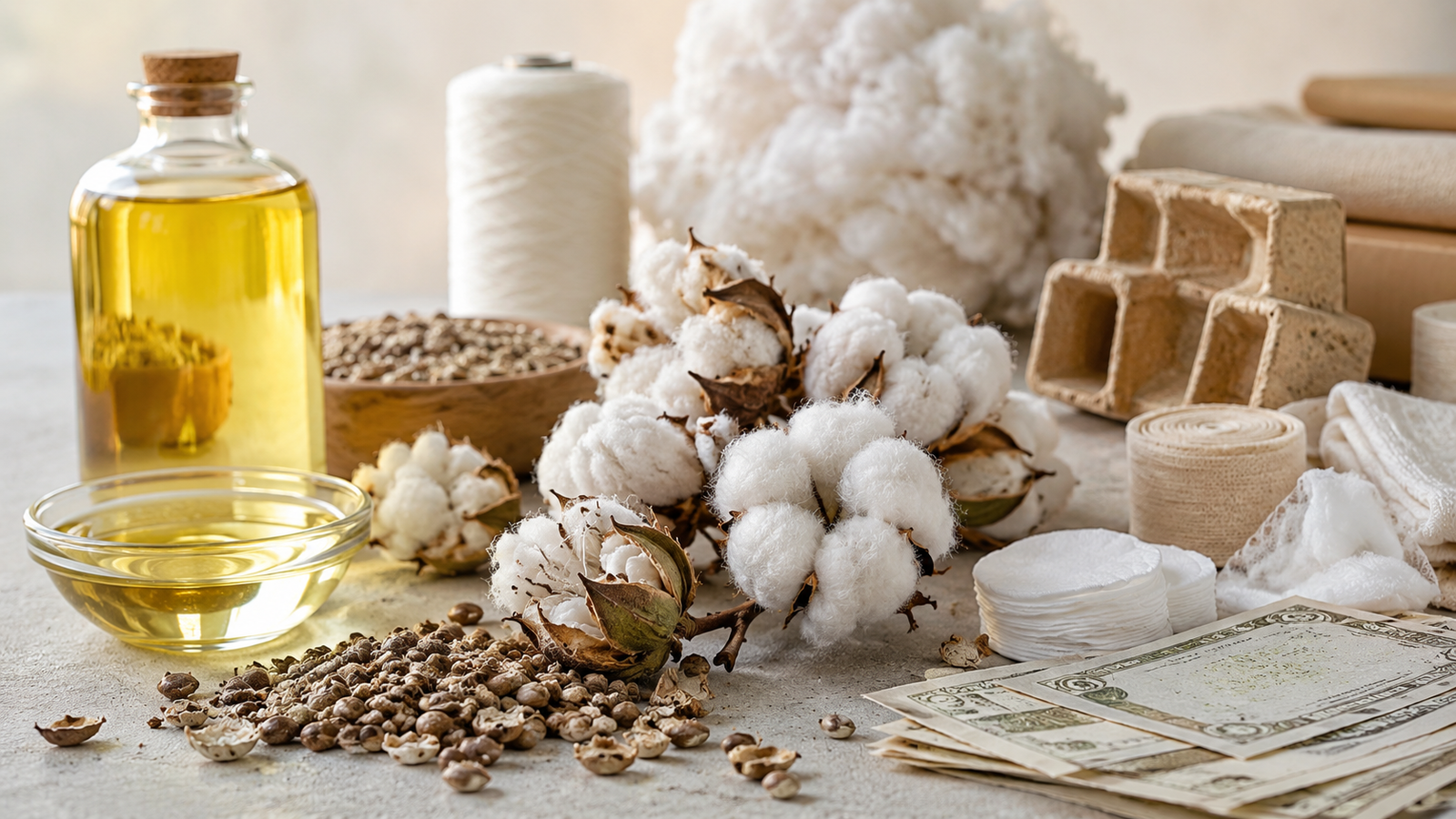

When most people think of cotton they picture t-shirts, denim jeans or bedsheets. But cotton is one of the most versatile crops on the planet and almost nothing from the plant goes to waste.
From the seed to the short fibers left on the gin floor cotton by-products quietly show up in food medicine, currency explosives, sports equipment and even renewable energy.
In this guide we break down every major category of cotton by products, back it up with real production data and look at where the industry is headed next.
What Exactly Is a Cotton By Product?
A cotton by-product is anything derived from the cotton plant other than the spun fiber used for textiles. This includes:
- Cottonseed the seed left after the fiber (lint) is removed during ginning
- Linters the short fuzzy fibers still clinging to the seed after ginning
- Gin trash leftover stalks leaves burrs and dirt from the ginning process
- Cotton hulls the outer seed coat separated during oil extraction
Roughly half the weight of harvested cotton is seed not fiber which is why the by-product industry is nearly as economically important as textile production itself.
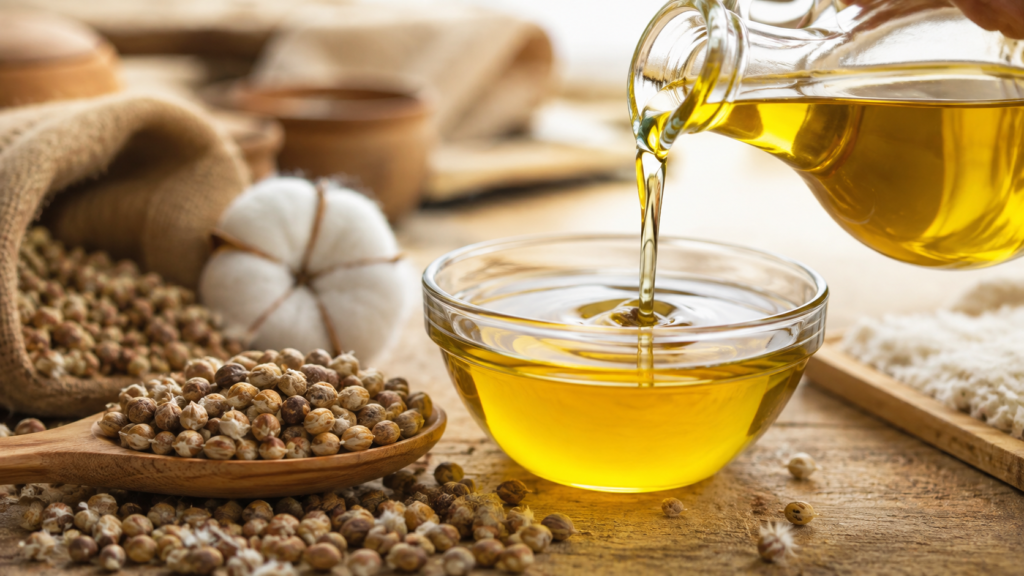
1. Food Industry By Products
Cottonseed oil is the most widely used cotton by product in food. It’s cholesterol free, rich in polyunsaturated fats and naturally high in vitamin E which gives it a long shelf life. It’s a primary ingredient in shortening products like Crisco and is commonly used for frying and baking.
Beyond oil cotton shows up in food in less obvious ways:
- Cottonseed mea a high protein feed for dairy cows and livestock
- Cotton cellulose short fibers too small for textile use added to processed foods as a low calorie filler and thickener (found in items like shredded cheese ice cream and sauces)
- Cotton hulls used as roughage in animal feed
One emerging development worth watching: researchers have engineered ultra low gossypol cottonseed making cottonseed protein safe for direct human consumption for the first time as a potential new plant protein source for a growing global population.
2. Textile Industrial & Consumer Products
Beyond linters cotton has hundreds of industrial applications:
| Product | Cotton By Product Used |
| Baseballs | Cotton polyester yarn wrapping around the core |
| Currency | Cotton linen blend (~75% cotton fiber) |
| Coffee filters | Processed cotton fiber |
| Fishnets & tarpaulins | Woven cotton fiber |
| Book binding & archival paper | Cotton linters/cellulose |
| Biodegradable packaging | Cotton blended with mycelium (Mushroom® Materials) |
A quick yield fact: one 227 kg bale of cotton can produce approximately 215 pairs of jeans 1200 t-shirts 3000 diapers or 680000 cotton balls depending entirely on how it’s processed.
3. Medical & Hygiene Products
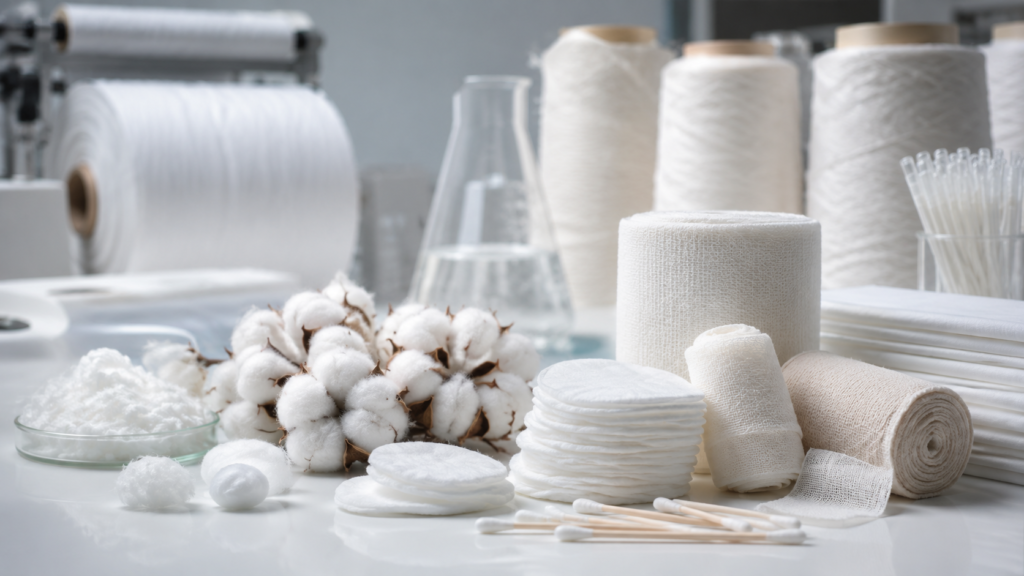
Cotton’s natural absorbency and hypoallergenic properties make it a staple in healthcare:
- Bandages wound dressings and gauze
- Cotton swabs and cotton balls
- Surgical gowns and face masks
- Tampons and sanitary products
- Diapers and baby wipes
Linters, specifically the shortest cotton fibers, are the raw material behind most of these medical grade cotton products since they’re too short for weaving but ideal for absorbent materials.
4. Explosives & Chemical Applications
This is the most surprising category for most readers. When cotton linters are treated with nitric and sulfuric acid they form nitrocellulose commonly known as guncotton, a highly flammable compound used in gunpowder rocket propellant and industrial explosives. It’s a niche but historically significant use of the plant dating back over a century.
5. Energy & Sustainability Uses
This is where most existing articles fall short cotton’s role in the circular economy is growing:
- Cotton stalks and gin trash are increasingly processed into biomass for renewable energy and biochar
- Cottonseed oil is being researched as a feedstock for biodiesel
- Cotton textile waste is being recycled into insulation and composite building materials
- Cotton based biodegradable packaging (like Mushroom® Materials) offers an alternative to petroleum based plastics
A Note on Organic vs. Conventional Cotton By Products
It’s worth being transparent here: the vast majority of U.S. cotton is genetically modified and cotton farming historically uses a significant share of the world’s pesticides.
Since by products like cottonseed oil and cellulose enter the food supply some consumers prefer certified organic cotton products for food and personal care.
This doesn’t diminish cotton’s usefulness; it just means shoppers who are pesticide conscious should look for the USDA organic seal on cotton derived food ingredients the same way they would with any conventional crop by product.
The Bottom Line
Cotton isn’t just a textile crop it’s one of the most fully utilized plants in agriculture. From baseballs to banknotes, medical gauze to biodiesel almost every part of the cotton plant finds a second life.
As sustainability research grows cotton by products are only becoming more valuable proving that this “fuzzy little plant” does a lot more than just clothe us.
FAQs
Is cottonseed oil safe to eat?
Yes. Refined cottonseed oil is FDA approved and widely used in food manufacturing. It’s naturally cholesterol free and high in vitamin E.
What are cotton linters used for?
Linters are the short fibers left on the seed after ginning. They’re used in medical supplies, currency paper explosives (nitrocellulose) and cellulose based food additives.
Does money really contain cotton?
Yes, U.S. currency is made from a blend that is roughly 75% cotton and 25% linen which is why bills don’t disintegrate in the wash like regular paper.
What is “gin trash”?
Gin trash refers to the leftover plant material stalks, leaves, burrs and dirt separated from cotton during the ginning process. It’s often repurposed as compost animal bedding or biomass fuel.
Are cotton by-products sustainable?
Increasingly yes. Beyond traditional uses like oil and animal feed cotton waste is now being converted into biodegradable packaging biofuel and recycled textile insulation making the crop far less wasteful than it once was.


 By
By


 By
By
 By
By