
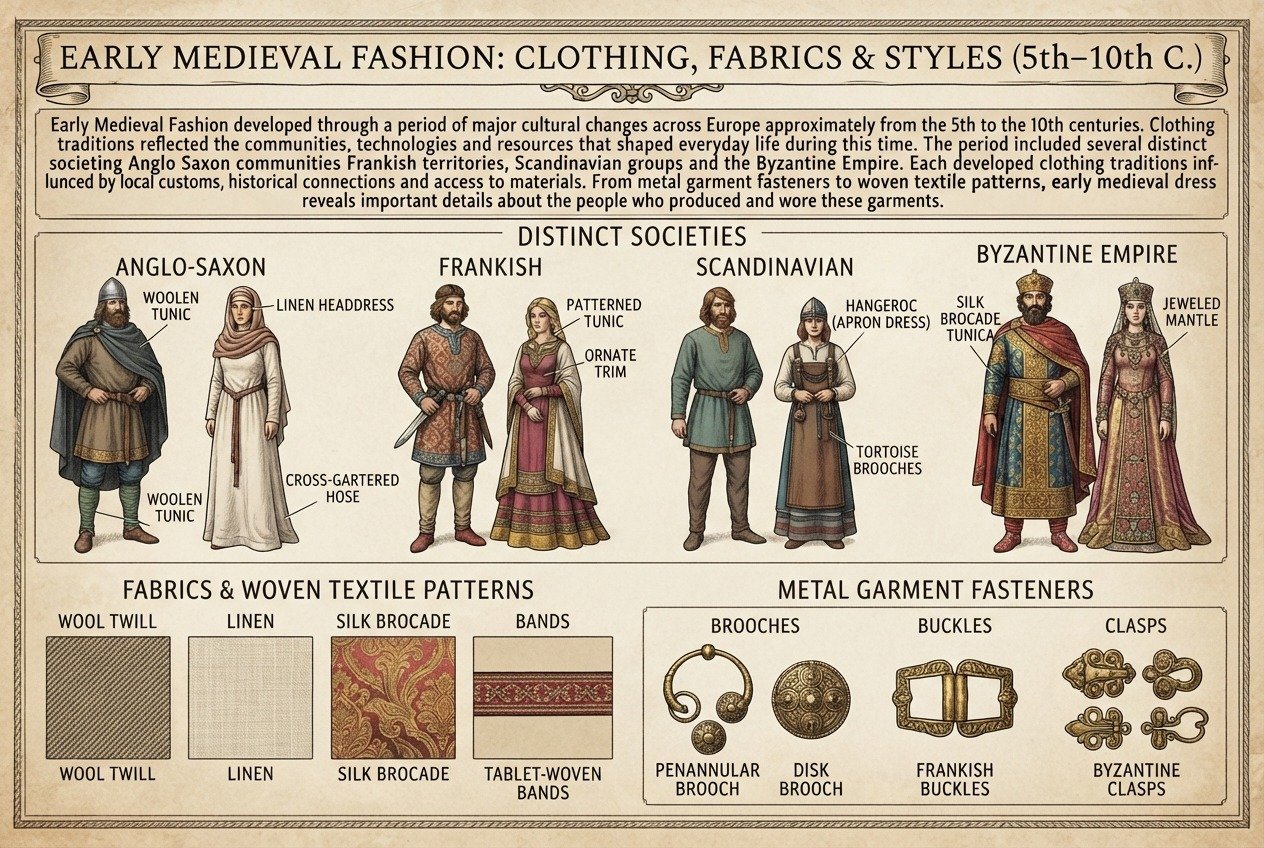

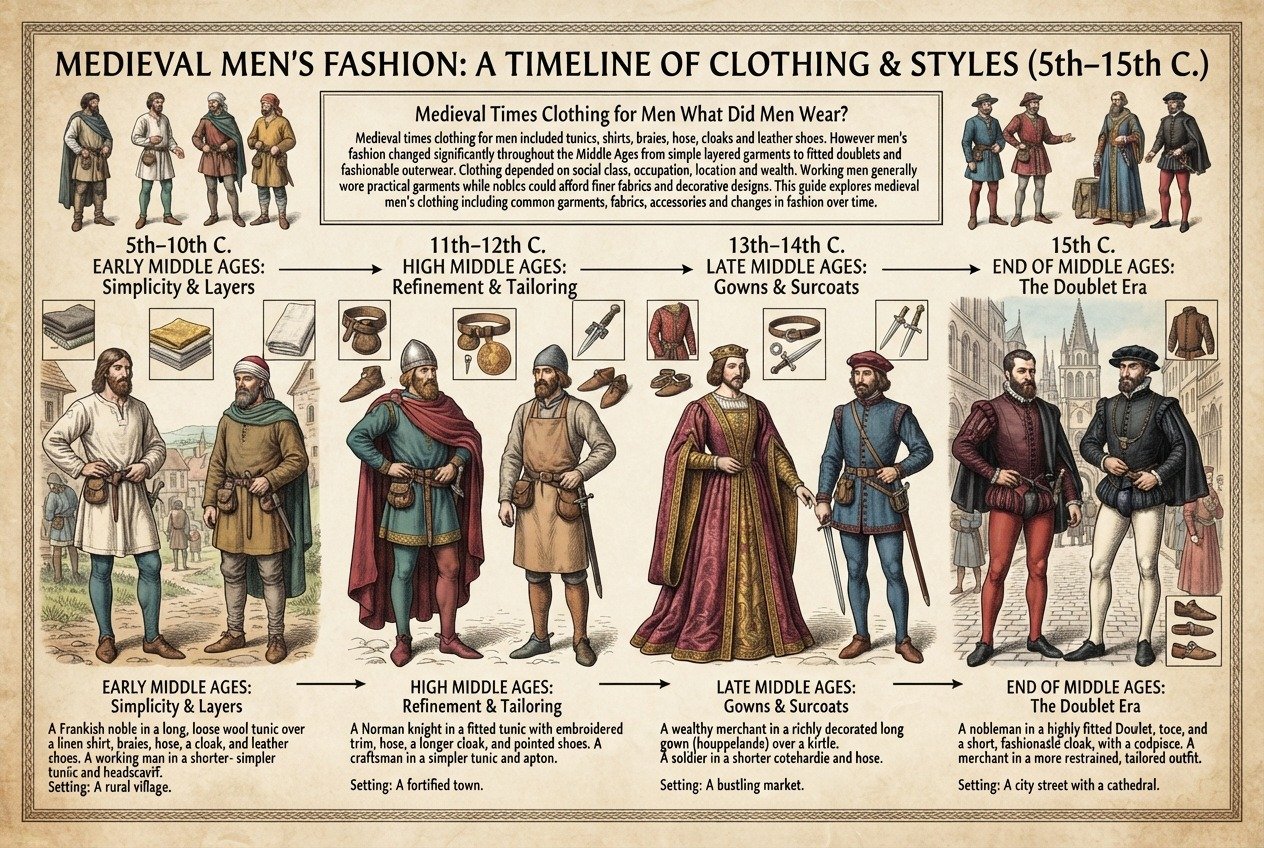
Early Medieval Fashion developed through a period of major cultural changes across Europe approximately from the 5th to the 10th centuries. Clothing traditions reflected the communities technologies and resources that shaped everyday life during this time.
The period included several distinct societies including Anglo Saxon communities Frankish territories, Scandinavian groups and the Byzantine Empire. Each developed clothing traditions influenced by local customs, historical connections and access to materials.
From metal garment fasteners to woven textile patterns, early medieval dress reveals important details about the people who produced and wore these garments.
What Influenced Fashion in the Early Middle Ages?
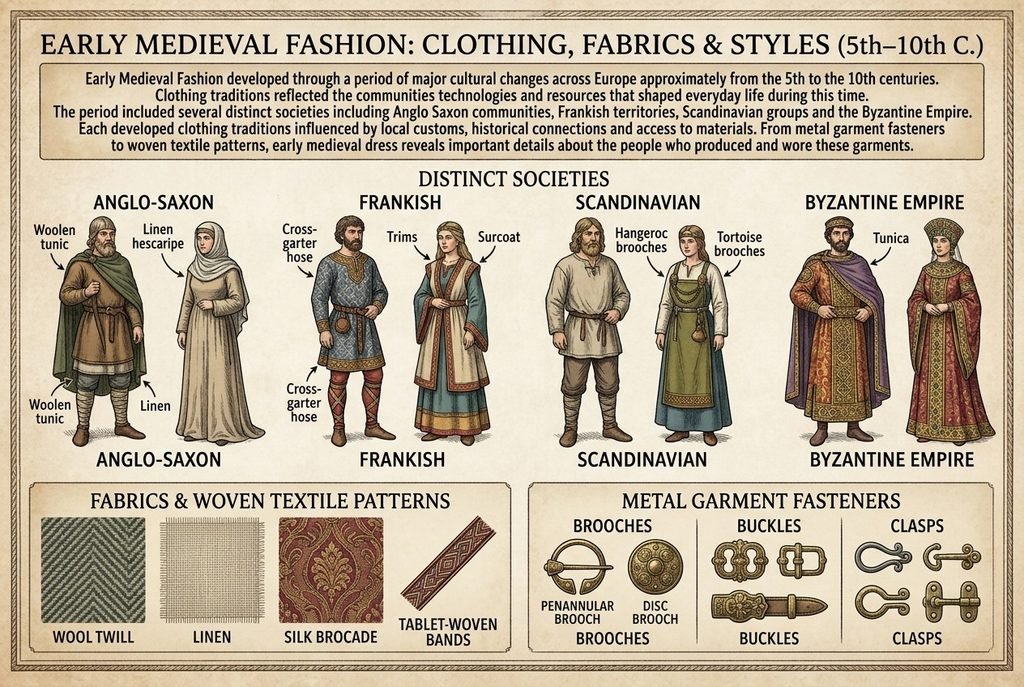
Early medieval clothing developed through the interaction of different cultural traditions. The decline of western Roman political authority did not mean that older clothing practices disappeared immediately.
Roman influences continued in some areas while Germanic communities maintained and developed their own garment traditions. Scandinavian societies also had distinctive clothing practices influenced by local environments and cultural connections.
Several factors shaped fashion during this period
- Local textile production and available fibres.
- Contact between neighbouring communities.
- Trade in valuable materials and ornaments.
- Climate and everyday living conditions.
- Religious traditions and cultural identity.
These influences created a diverse clothing landscape rather than one standard European fashion.
How Did Clothing Reflect Cultural Changes from the 5th to 10th Centuries?
Early medieval dress developed gradually with different communities adopting and adapting clothing traditions over time.
5th and 6th centuries Clothing included tunics, dresses , cloaks and different forms of leg coverings. Older Roman influences remained visible in some regions.
7th and 8th centuries Archaeological finds reveal the importance of garment fasteners, belts beads and metal ornaments in several communities.
9th and 10th centuries Increasing trade and cultural contact influenced textile choices, decorative objects and clothing practices.
These developments did not follow one identical timeline. Different societies retained their own traditions while adopting selected influences from elsewhere.
What Made Anglo Saxon Clothing Distinctive?
Anglo Saxon clothing is particularly interesting because archaeological discoveries provide evidence about garment fastenings, accessories and textile materials.
Men commonly wore tunics trousers or leg coverings belts and cloaks. Women’s clothing could include undergarments and outer garments secured with brooches.
<AsyncImage query=”Anglo Saxon early medieval clothing reconstruction woman paired brooches man tunic museum” aspectRatio=”16 9″ width=”100%”/>
Paired shoulder brooches are especially associated with some women’s dress traditions in early Anglo Saxon archaeological contexts.
Other important discoveries include
- Decorative belt fittings.
- Glass and amber beads.
- Metal brooches and pins.
- Textile fragments preserved in burial contexts.
- Leather and metal clothing accessories.
These finds help researchers investigate how garments were fastened and decorated although burial discoveries do not represent every person’s everyday clothing.
What Were the Clothing Traditions of Frankish Communities?
Frankish clothing developed through a combination of older Roman influences and regional traditions.
Men wore tunics belts and outer garments while different forms of trousers and leg coverings appeared in some contexts.
Clothing accessories could include metal buckles, decorative fittings and brooches. Wealthier individuals sometimes had access to imported textiles and more elaborate ornaments.
Written records and archaeological discoveries provide different types of information about Frankish dress. Together they help researchers understand how clothing reflects political relationships, cultural identity and social position.
How Did Scandinavian Dress Differ During the Viking Age?
Scandinavian clothing traditions developed within northern European environments and included practical garments suited to different activities.
<AsyncImage query=”Viking Age Scandinavian clothing archaeological reconstruction wool apron dress tunic brooches” aspectRatio=”16 9″ width=”100%”/>
Men’s clothing could include tunics, trousers, belts and cloaks. Women’s clothing traditions included dresses and additional outer layers with brooches and other ornaments appearing in archaeological contexts.
Some distinctive features included
Oval brooches Paired oval brooches are associated with certain women’s clothing traditions in Viking Age Scandinavia.
Woollen textiles Wool was an important material for garments and outer layers.
Decorative tablet weaving This technique produced narrow patterned bands used in textile decoration.
Metal accessories Brooches buckles and other fittings provide evidence of clothing practices and craftsmanship.
Scandinavian clothing was not identical across all communities. Archaeological discoveries from different locations reveal regional and chronological variations.
What Clothing Traditions Were Found in the Byzantine Empire?
Byzantine dress developed from Eastern Roman traditions and was influenced by the empire’s extensive political, commercial and cultural connections.
<AsyncImage query=”Byzantine early medieval clothing mosaic emperor tunic ornamental patterned bands” aspectRatio=”16 9″ width=”100%”/>
Clothing could include long tunics, decorated garments and outer layers. Some surviving artistic representations show ornamental bands patterned textiles and elaborate finishing.
Important characteristics included
- Tunics decorated with woven or embroidered bands.
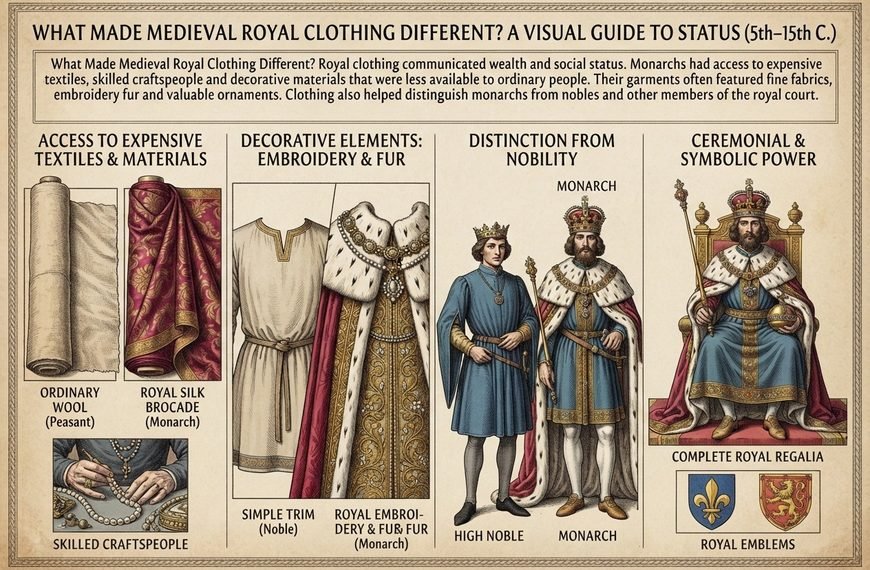
- Fine textiles associated with wealthy households.
- Decorative borders and patterned surfaces.
- Garments influenced by Eastern Mediterranean textile traditions.
Byzantine clothing provides an important example of how early medieval fashion developed differently across Europe and the surrounding Mediterranean world.
How Were Early Medieval Textiles Woven and Decorated?
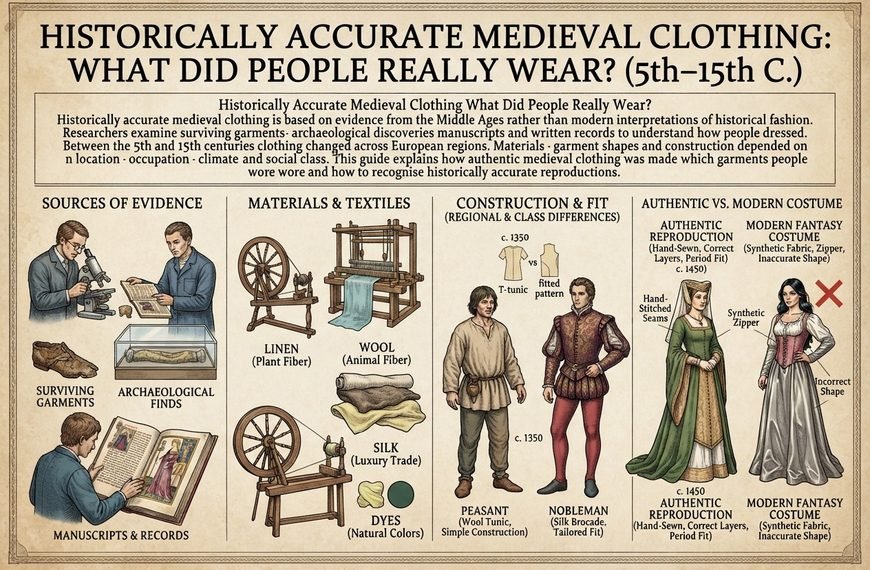
Textile production required specialised skills and considerable manual work. Different weaving techniques allowed craftspeople to produce fabrics with varying textures, weights and decorative patterns.
<AsyncImage query=”early medieval historical weaving loom tablet weaving textile reconstruction” aspectRatio=”16 9″ width=”100%”/>
Some important textile techniques included
Plain weaving A basic weaving structure used to create different types of fabric.
Twill weaving A technique that produces diagonal patterns in the textile surface.
Tablet weaving A method used to create narrow decorative bands often with intricate patterns.
Embroidery Decorative threadwork added designs to completed fabrics.
These techniques helped create both practical clothing materials and decorative textile elements.
Which Natural Materials Were Available to Early Medieval Communities?
The materials used in clothing depended on local resources, production methods and trade connections.
| Material | Historical applications |
| Wool | Garments outer layers and woven textiles |
| Linen | Lightweight clothing and underlayers |
| Silk | Valuable imported textiles |
| Leather | Footwear and practical accessories |
| Fur | Warm clothing and selected decorative uses |
Wool and linen were important textile materials while silk was associated with valuable trade goods.
The availability of each material differed between communities. Archaeological evidence also shows that textile production was not identical across all regions.
How Did Brooches and Belt Fittings Become Important Fashion Elements?
Metal accessories were among the most recognisable features of several early medieval clothing traditions.
Brooches helped secure garments while buckles and belt fittings had practical functions. Their shapes, materials and decoration also reflected local craftsmanship.
<AsyncImageGroup query={[“Anglo Saxon early medieval metal brooch archaeological museum””Viking age oval brooch archaeological museum””Frankish early medieval belt buckle archaeological artifact”]} aspectRatio=”5 4″/>
Archaeological collections contain different examples of
- Round and disc shaped brooches.
- Paired oval brooches.
- Metal belt buckles.
- Decorative pins.
- Beads and pendants.
Some objects were made from iron, bronze, silver or other materials. Their craftsmanship and decoration provide valuable information about early medieval metalworking and personal adornment.
What Can Burial Discoveries Reveal About Early Medieval Dress?
Burial archaeology is an important source of information about early medieval clothing. In some graves metal objects survived even when the original fabric had disappeared.
Brooches, buckles, beads and other accessories can help researchers understand how garments were arranged and secured.
Textile impressions and preserved fragments sometimes provide additional evidence about weave structures and fabric materials.
However burial objects must be interpreted carefully. They do not necessarily show a complete everyday outfit and burial customs varied between communities and religious traditions.
Researchers compare burial discoveries with other archaeological finds, historical documents and contemporary artwork to develop more reliable interpretations.
How Can You Identify an Early Medieval Clothing Reproduction?
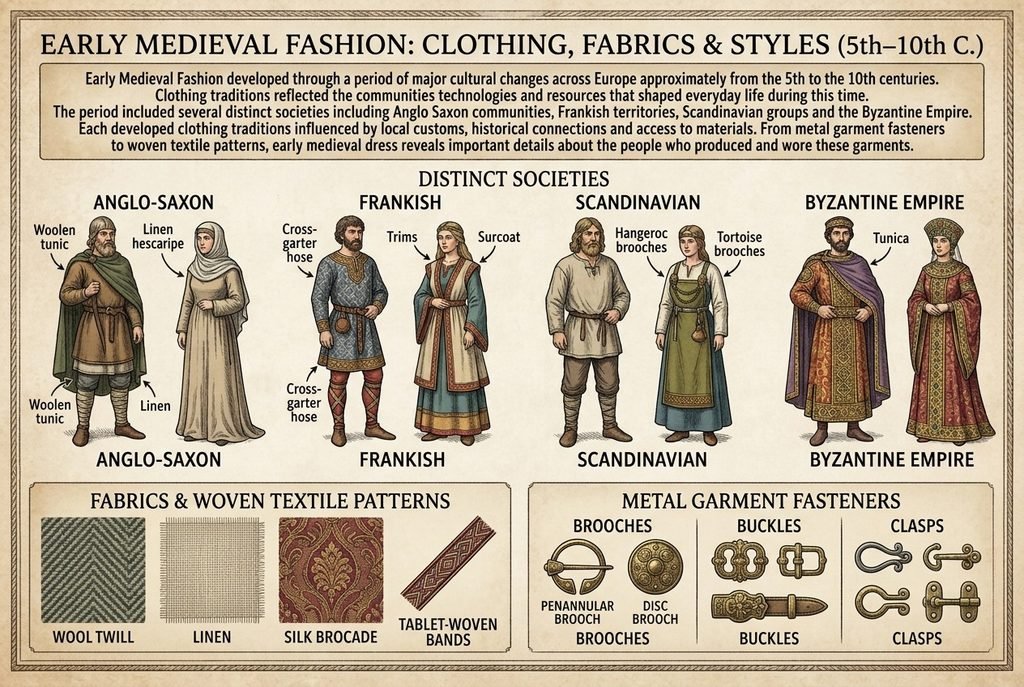
A convincing early medieval reproduction should represent a specific community and historical setting.
Instead of combining every popular early medieval feature into one outfit examine the evidence associated with the intended location and period.
Consider these points
- Historical community Identify whether the outfit represents Anglo Saxon Frankish Scandinavian or Byzantine traditions.
- Garment design Examine the garment shapes documented for that community.
- Fastening methods Check whether brooches buckles or other fasteners are appropriate.
- Textile techniques Consider historical weaving and decoration methods.
- Archaeological references Compare the reproduction with relevant museum objects and published discoveries.
A historically informed reproduction should explain its sources rather than relying only on a general medieval appearance.
Conclusion
Early Medieval Fashion reflected the cultural diversity of Europe between the 5th and 10th centuries. Anglo Saxon garment fasteners, Scandinavian textile traditions Frankish clothing practices and Byzantine decorative influences all contributed to the development of dress during this period.
Archaeological discoveries and historical research help reveal how early medieval communities produced, decorated and wore their garments. Studying these regional traditions provides a more detailed understanding of fashion before the High and Late Middle Ages.
FAQs
Which centuries are included in early medieval fashion?
Early medieval fashion generally refers to clothing from the 5th to 10th centuries. Some historical periodisations extend the Early Middle Ages into the 11th century.
What were the main Anglo Saxon clothing accessories?
Archaeological discoveries include brooches, buckles, beads and decorative metal fittings. Some women’s clothing traditions used paired shoulder brooches to secure outer garments.
Did Scandinavian people wear brooches?
Yes. Archaeological discoveries from Viking Age Scandinavia include several brooch types. Their designs and uses differed according to period and regional tradition.
What was tablet weaving used for?
Tablet weaving produced narrow decorative textile bands. These could be incorporated into clothing and other textile items.
Did early medieval people use silk?
Yes. Silk was available in some communities through trade although it was a valuable material and was not equally accessible to everyone.
How do historians identify early medieval garment styles?
Researchers study archaeological textiles, clothing fasteners, burial discoveries, manuscripts , historical artwork and written records.
Were early medieval clothing styles the same throughout Europe?
No. Anglo Saxon Frankish Scandinavian and Byzantine communities had different traditions although trade and cultural contact sometimes created similarities.

 By

 By