
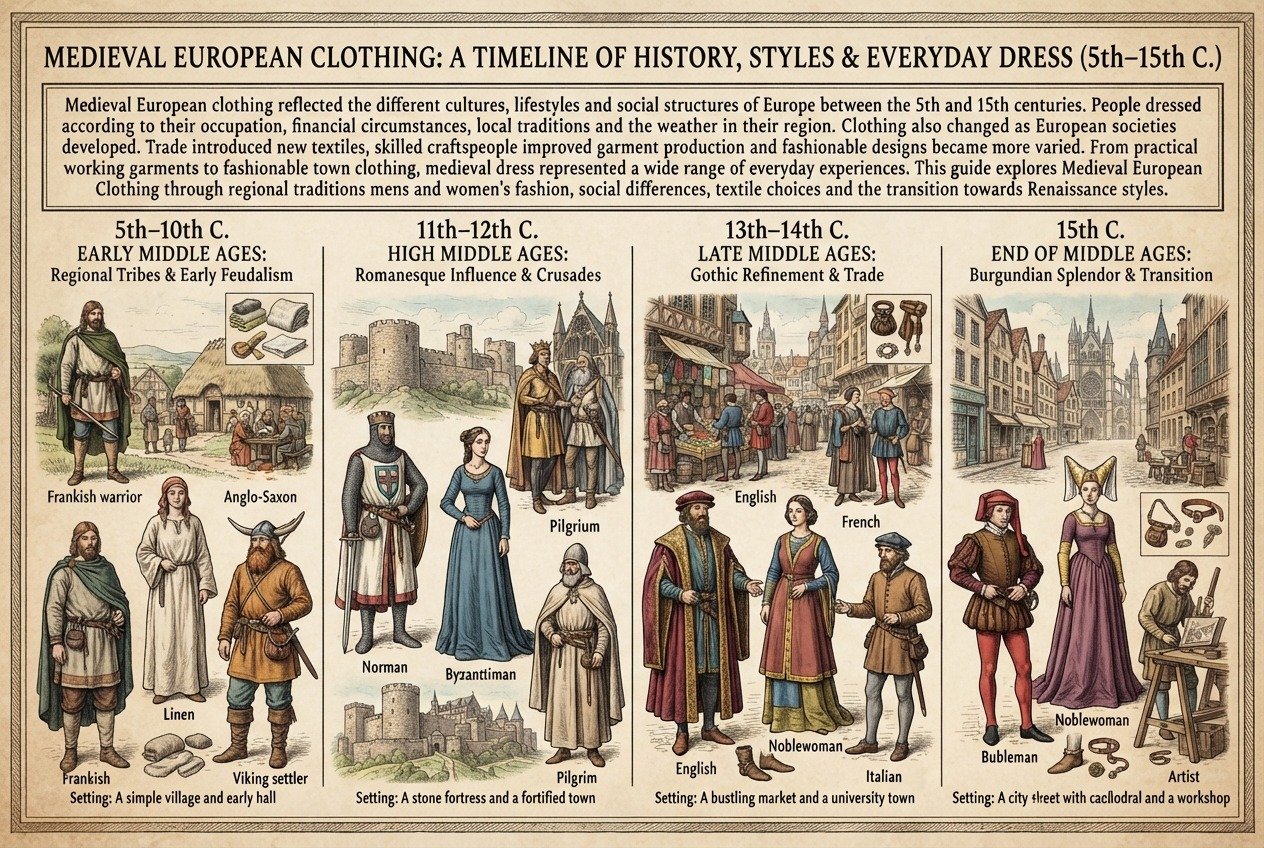

Medieval European clothing reflected the different cultures, lifestyles and social structures of Europe between the 5th and 15th centuries. People dressed according to their occupation, financial circumstances, local traditions and the weather in their region.
Clothing also changed as European societies developed. Trade introduced new textiles, skilled craftspeople improved garment production and fashionable designs became more varied. From practical working garments to fashionable town clothing, medieval dress represented a wide range of everyday experiences.
This guide explores Medieval European Clothing through regional traditions mens and women’s fashion, social differences, textile choices and the transition towards Renaissance styles.
How Did Clothing Shape Everyday Life in Medieval Europe?
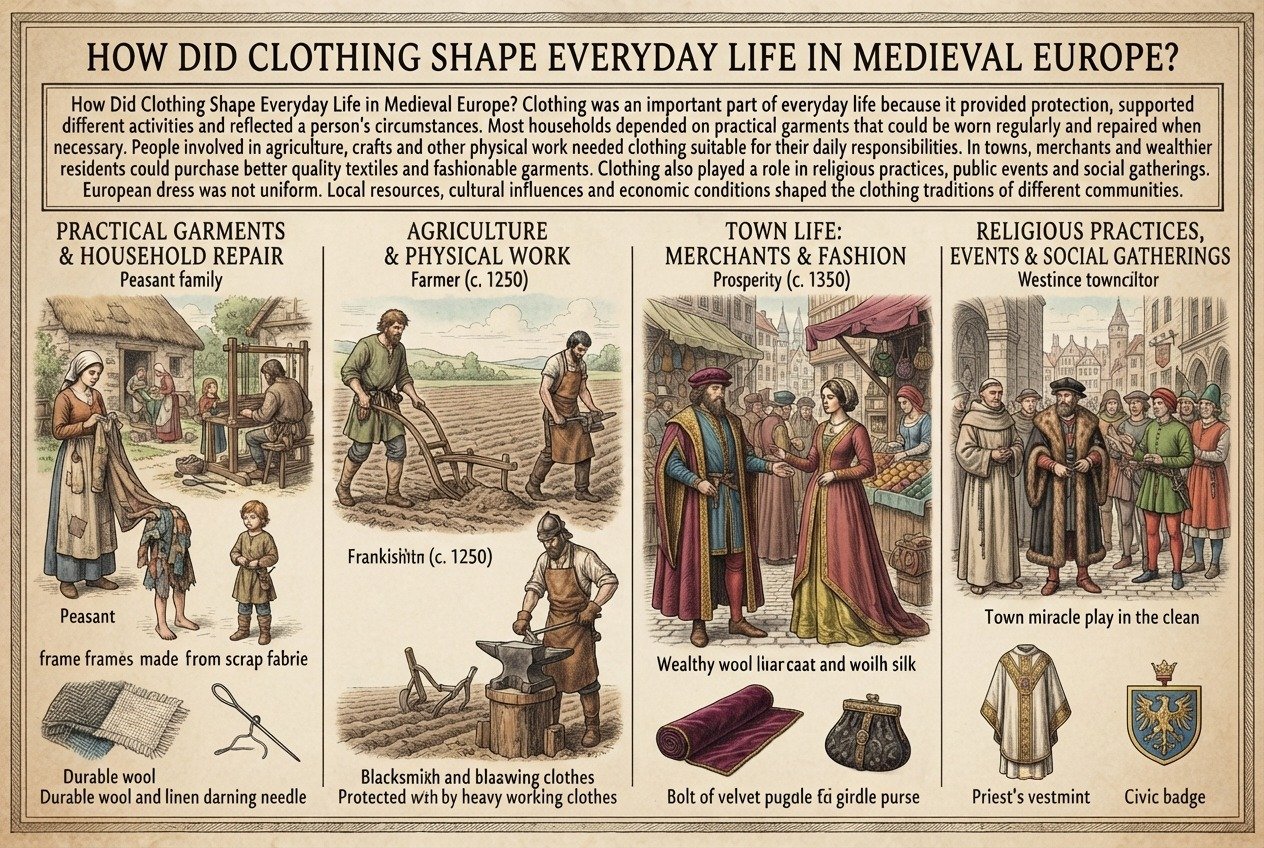
Clothing was an important part of everyday life because it provided protection, supported different activities and reflected a person’s circumstances.
Most households depended on practical garments that could be worn regularly and repaired when necessary. People involved in agriculture crafts and other physical work needed clothing suitable for their daily responsibilities.
In towns merchants and wealthier residents could purchase better quality textiles and fashionable garments. Clothing also played a role in religious practices, public events and social gatherings.
European dress was not uniform. Local resources, cultural influences and economic conditions shaped the clothing traditions of different communities.
How Did European Fashion Develop Between the 5th and 15th Centuries?
The Middle Ages covered a long period of social and cultural development. Changes in clothing reflected developments in textile production trade and tailoring.
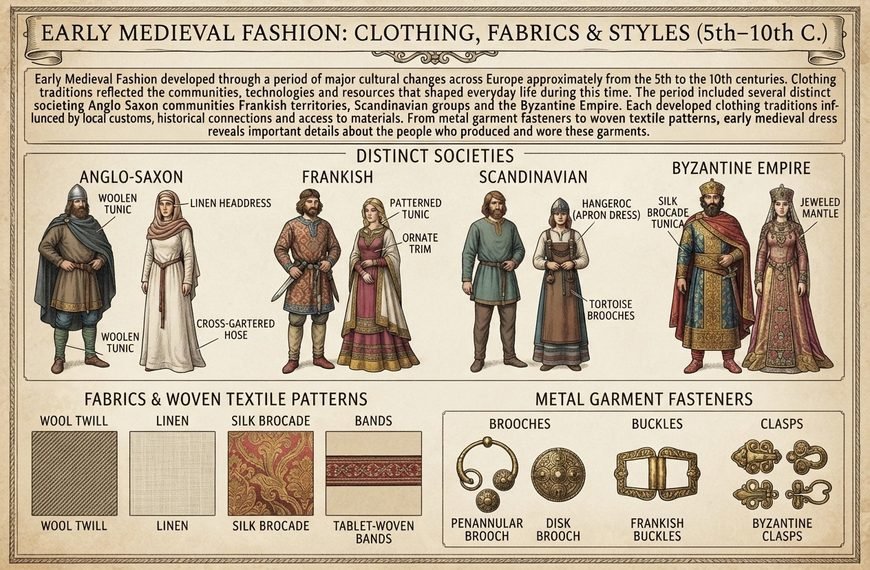
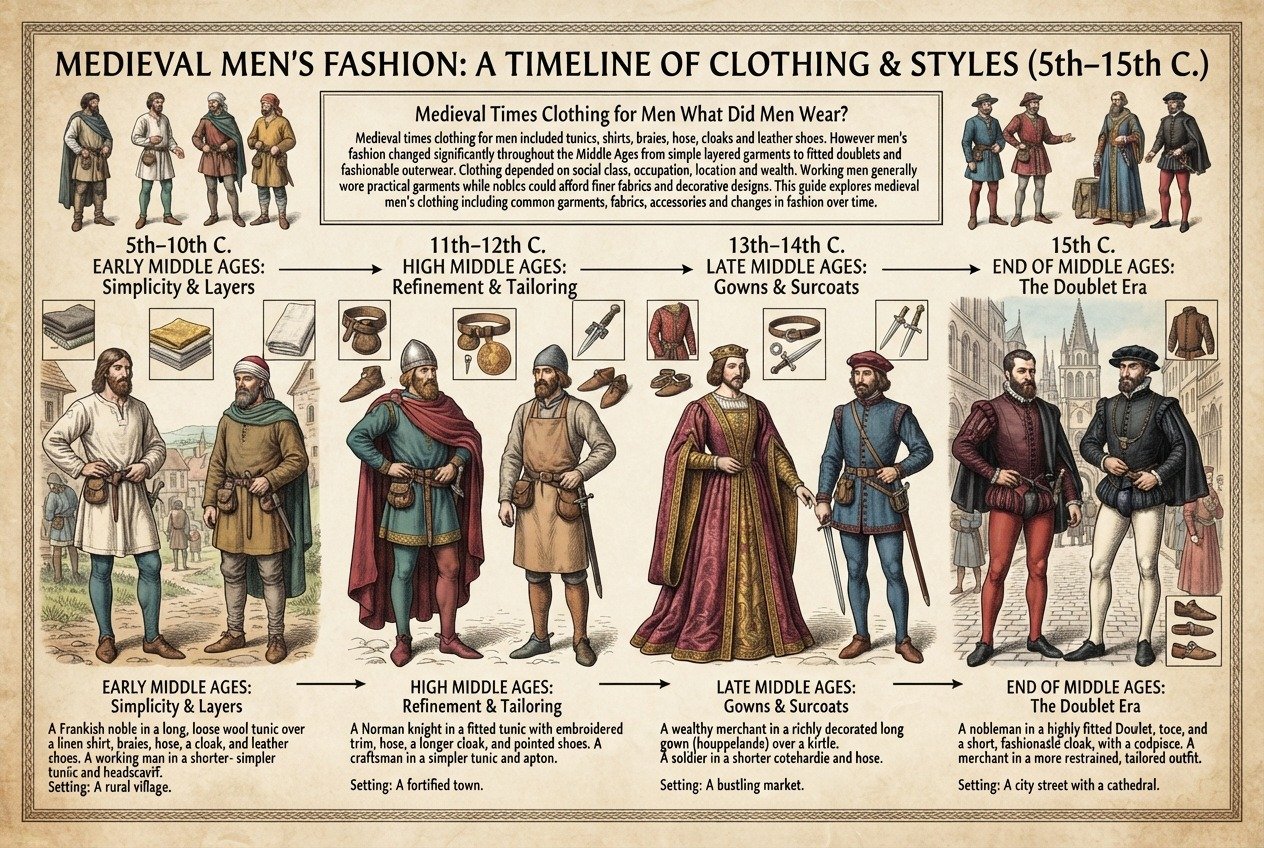
Early medieval period (5th–10th centuries) Clothing traditions included tunics, cloaks dresses and practical leg coverings. Regional influences shaped garment construction and decorative details.
In the High medieval period (11th–13th centuries) European clothing became more varied in fashionable settings. Changes in garment proportions, decorative finishing and textile availability influenced both mens and womens dress.
Late medieval period (14th–15th centuries) Tailoring developments produced more shaped garments in several European regions. Fitted sleeves, changing silhouettes and more elaborate clothing details became increasingly noticeable.
Fashion did not change everywhere at the same time. Older styles continued alongside newer designs in different communities.
What Were the Main Differences Between Mens and Womens European Dress?
Mens and womens clothing shared some materials and garment traditions but their outfits developed different shapes and combinations.
Mens clothing Mens wardrobes could include shirts, tunics , doublets , hose and outer garments. During the later Middle Ages shorter upper garments and more fitted leg coverings became prominent in fashionable European clothing.
Women’s clothing Women’s outfits often included undergarments, kirtles, gowns and additional outer layers. Garment proportions, sleeve designs and decorative details changed throughout the medieval period.
Shared clothing elements Both men and women used belts, cloaks head coverings and footwear. Their designs depended on regional traditions, occupation and personal resources.
How Did Regional Culture Influence European Dress?
European clothing traditions developed through local customs, migration trade and contact between different communities.
Some important regional influences included
- England Wool production played an important role in clothing and textile commerce. Garments included tunics gowns and various outer layers.
- France Court culture and urban textile production influenced fashionable clothing and garment decoration.
- Italy Commercial connections supported the development of textile industries and luxury fabric production.
- Scandinavia Clothing traditions reflected northern climates, local textile production and regional cultural influences.
- Byzantine territories Eastern Mediterranean connections contributed to distinctive textile patterns, decorative bands and luxurious fabrics.
These descriptions represent broad historical influences rather than fixed national costumes. European communities exchanged ideas and materials through trade and travel.
How Did European Textile Trade Influence Fashion?
The textile industry played a major role in the development of medieval European clothing. Different regions became associated with particular materials and manufacturing skills.
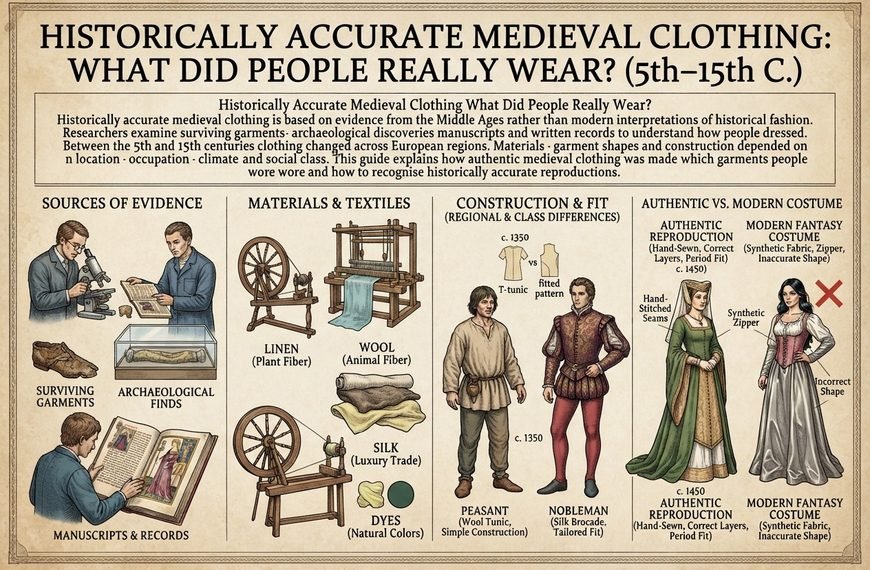
Wool was especially important in parts of England and other European regions. Linen production supplied households with materials for various garments while commercial centres developed specialised textile industries.
Long distance trade also made luxury textiles available to wealthy customers. Italian commercial cities for example participated in important trade networks connecting European markets with the Mediterranean.
The growth of textile production influenced clothing quality, decorative possibilities and access to fashionable materials.
What Were the Differences Between Peasant Merchant and Noble Clothing?
Economic circumstances strongly influenced the appearance of medieval clothing.
| Social group | General clothing characteristics |
| Agricultural workers | Durable garments suited to physical work |
| Urban craftspeople | Practical clothing influenced by occupation |
| Merchants | Better quality fabrics and fashionable details |
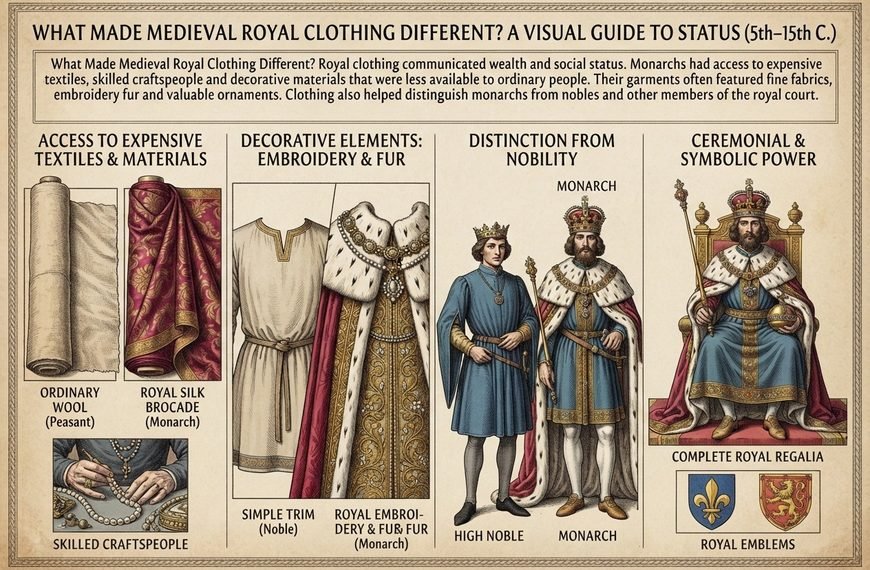
| Nobility | Fine textiles embroidery and elaborate accessories |
Working households generally depended on practical clothing that could be repaired and reused. Wealthier people had greater access to imported fabrics, specialised craftsmanship and decorative garments.
However clothing differences were not determined by wealth alone. Local customs occupation and sumptuary regulations also influenced what people could wear.
What Decorative Details Appeared in Medieval European Fashion?
Decoration added visual interest to garments and could communicate personal taste, wealth or cultural identity. Some common decorative features included
Embroidery Decorative stitching created patterns and borders on garments.
Woven designs Textile production techniques could create patterns directly within the fabric.
Contrasting panels Different textile colours and sections were sometimes combined to create distinctive designs.
Metal fittings Decorative buckles brooches and other fittings added detail to clothing.
Fur trimming Fur could provide warmth and serve as a decorative finishing material.
The amount and complexity of decoration varied according to the garment period and resources of the wearer.
How Did Medieval Headwear and Footwear Develop?
Head coverings and footwear were essential parts of European dress. Their designs changed according to climate, occupation, social customs and fashionable preferences.
Men used different forms of hats, hoods and caps. Women’s headwear could include veils, coifs and other coverings influenced by regional and religious traditions.
Footwear included leather shoes, boots and other practical designs. During the later Middle Ages poulaines became notable in fashionable settings because of their distinctive elongated toes.
Not every footwear or headwear style was used throughout Europe. Their popularity depended on historical period and local preferences.
What Was the Difference Between Medieval and Renaissance Fashion?
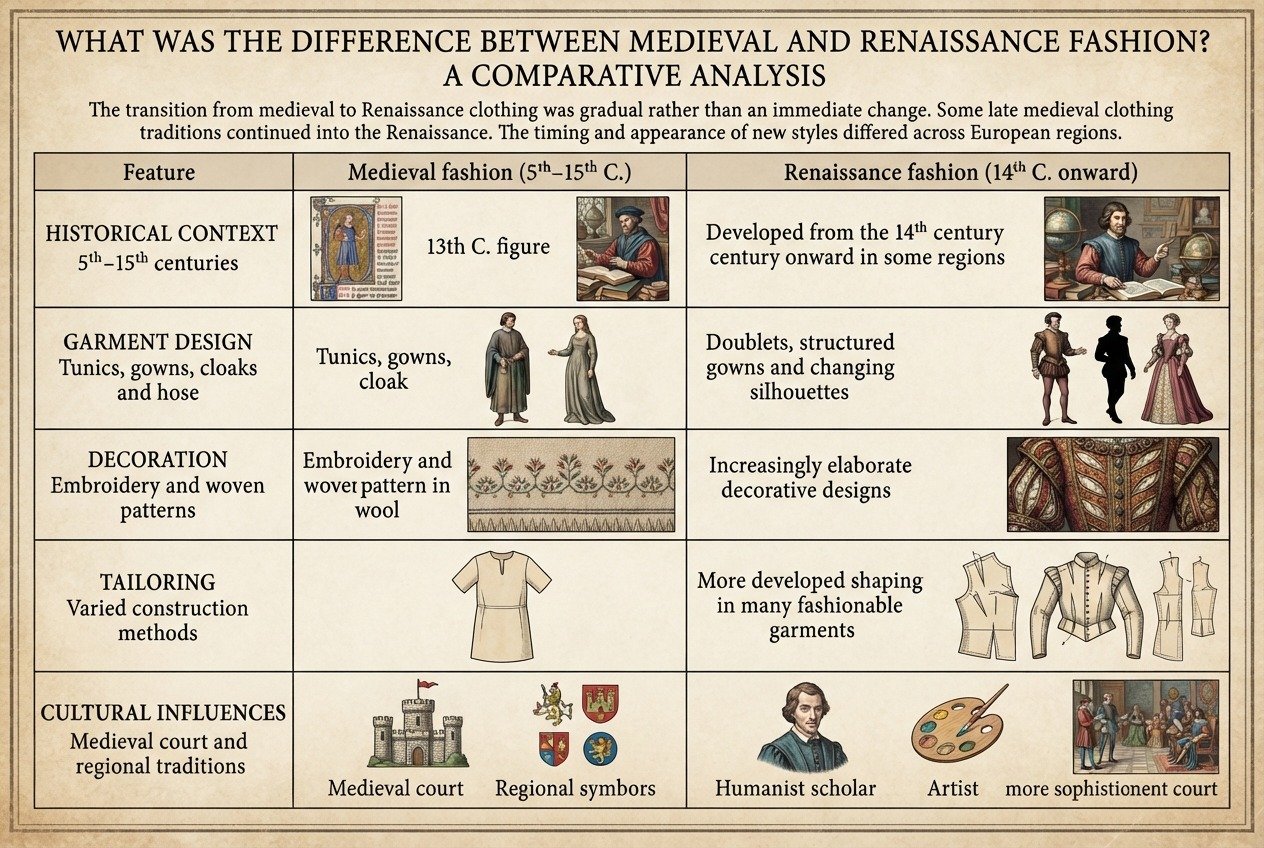
The transition from medieval to Renaissance clothing was gradual rather than an immediate change.
| Feature | Medieval fashion | Renaissance fashion |
| Historical context | 5th–15th centuries | Developed from the 14th century onward in some regions |
| Garment design | Tunics gowns cloaks and hose | Doublets structured gowns and changing silhouettes |
| Decoration | Embroidery and woven patterns | Increasingly elaborate decorative designs |
| Tailoring | Varied construction methods | More developed shaping in many fashionable garments |
| Cultural influences | Medieval court and regional traditions | Humanism artistic developments and changing court culture |
Some late medieval clothing traditions continued into the Renaissance. The timing and appearance of new styles differed across European regions.
Conclusion
Medieval European clothing developed through centuries of cultural exchange, economic activity and changing social traditions. Mens and womens garments, regional textile industries, decorative techniques and differences in wealth all contributed to the variety of medieval dress.
Understanding these developments provides a broader picture of European society and explains how clothing changed between the early medieval period and the beginning of the Renaissance.
FAQs
What was the most common clothing in medieval Europe?
Tunics gowns, shirts, cloaks and leg coverings were important garments. Their designs varied according to gender occupation location and historical period.
Why was wool important in medieval Europe?
Wool provided warmth that could be woven into different types of fabric and supported important textile industries. It was widely used for outer clothing.
Did medieval European clothing differ between countries?
Yes. Regional customs, climate trade and cultural influences shaped clothing traditions across Europe. England, Italy , Scandinavia and Byzantine territories all had distinctive influences.
What did wealthy medieval Europeans wear?
Wealthier households could afford fine wool, imported silk, decorative textiles, embroidery and valuable accessories. Their garments often reflected their financial resources and social position.
When did fitted clothing become popular in Europe?
More fitted garments became increasingly noticeable in several European regions during the later Middle Ages. Their development was gradual and differed between clothing types.
What footwear did medieval Europeans use?
Leather shoes and boots were common footwear types. Some fashionable late medieval shoes featured elongated toes including poulaines.
How do historians study medieval European dress?
Researchers examine surviving textiles, archaeological discoveries, written documents, paintings , sculptures and illuminated manuscripts to understand historical clothing.

 By

 By