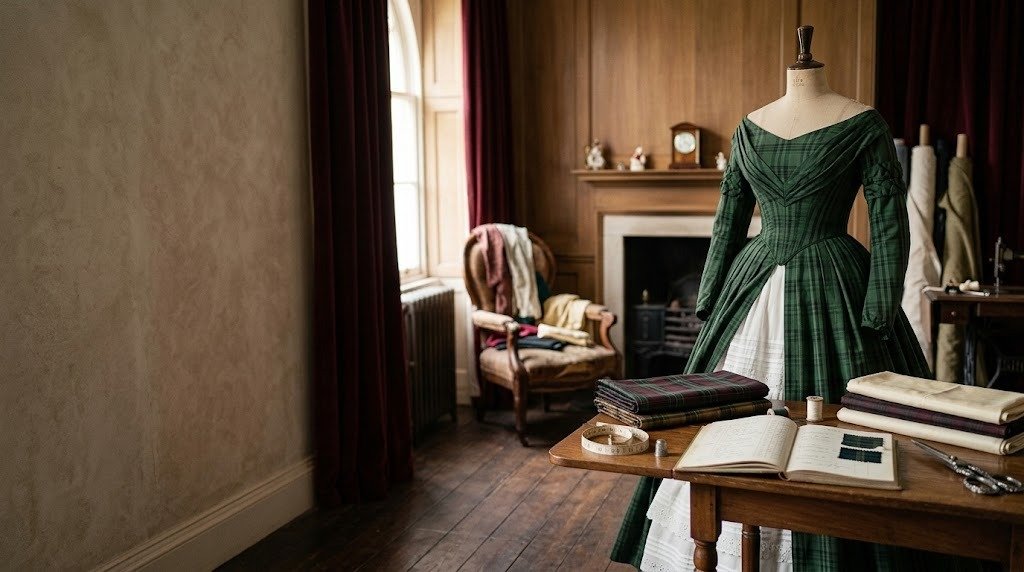

Early Victorian fashion refers to clothing worn during the beginning of Queen Victoria’s reign from 1837 through the late 1830s and 1840s. The period featured fitted bodices full skirts shaped sleeves bonnets and structured men’s clothing.
Fashion reflected social class, occupation, available materials and personal circumstances. Wealthier people could afford elaborate garments while working people often needed durable clothing for everyday tasks.
The Victorian era lasted from 1837 to 1901 but its fashion changed significantly over time. Early Victorian clothing should not be confused with the cage crinolines of the mid1850s or the bustle styles associated with later decades.
What Did Women Wear in the Early Victorian Era?
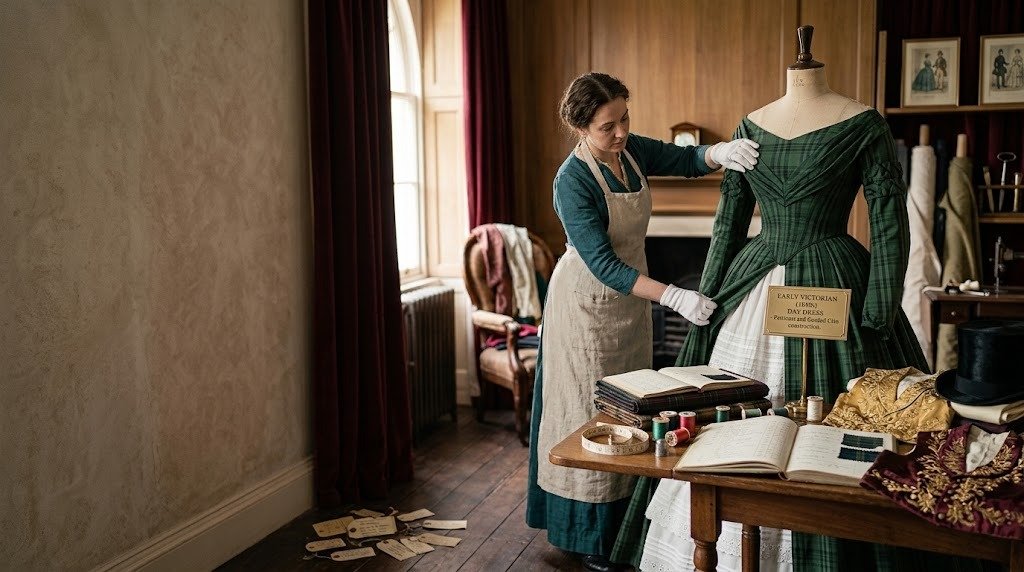
Women’s clothing emphasized fitted upper bodies and full skirts. The exact silhouette changed between the late 1830s and the 1840s particularly in sleeve shapes and skirt construction.
Fitted Bodices and Full Skirts
Bodices fitted closely to the torso and often featured a pointed front extending slightly below the waist. Seams and fastenings helped create a structured shape while necklines varied according to the occasion.
Full skirts were supported by layers of petticoats creating a broad silhouette. Before steel cage crinolines became fashionable in the mid1850s multiple petticoats were commonly used to provide volume.
How Did Sleeves Change?
Sleeves help distinguish different stages of early Victorian fashion. Large gigot or lego mutton sleeves were prominent in the early 1830s but became less exaggerated as the decade progressed.
By the 1840s sleeves were generally more restrained. This change reflected a move away from the dramatic proportions associated with earlier Romantic styles.
Fabrics and Colours
Early Victorian clothing used materials such as silk cotton wool and linen. Silk was suitable for luxurious garments while cotton and wool served various everyday purposes.
Colours and patterns varied by garment occasion and budget. Although dark clothing appeared in Victorian wardrobes, early Victorian fashion was not limited to black and brown. Historical garments and museum collections provide better evidence than modern costume interpretations.
What Did People Wear Under Victorian Dresses?
Undergarments helped create the fitted bodices and full skirts associated with early Victorian women’s clothing. A typical combination could include a chemise corset or stays and several petticoats.
| Garment | Purpose |
| Chemise | A washable layer worn next to the body |
| Corset or stays | Shaped and supported the torso |
| Petticoats | Added volume and warmth beneath skirts |
| Outer dress | Created the visible silhouette |
| Shawl or wrap | Provided warmth and complemented the outfit |
The Victoria and Albert Museum documents how corsets and petticoats contributed to Victorian silhouettes. However clothing practices varied according to income, occupation and personal needs. Not everyone wore the same number of layers or followed fashionable dress conventions.
Early Victorian Fashion Accessories
Accessories completed an outfit and helped make it suitable for different occasions.
Bonnets: Common women’s headwear often decorated with ribbons or fabric details.
Shawls and wraps: Provided warmth and complemented dresses without completely covering them.
Gloves: Worn for certain formal and fashionable occasions.
Jewelry: Brooches earrings and necklaces added decoration depending on personal taste and budget.
Footwear: Shoes and boots varied according to the wearer and the activity.
When recreating an early Victorian outfit choose accessories that match the approximate date. Combining pieces from different Victorian decades may create a vintage-inspired look but it may not be historically accurate.
What Did Men Wear in the Early Victorian Era?
Early Victorian men’s fashion emphasized tailoring layered clothing and distinctions between formal and everyday dress.
Coats Waistcoats and Trousers
Men commonly wore coats over waistcoats and shirts paired with trousers and neckwear. The frock coat was an important style featuring a fitted upper section and a longer skirted lower part.
Waistcoats introduced additional colour or pattern while fabric choices such as wool and other tailored materials depended on the occasion and budget.
Hats and Neckwear
Top hats were associated with certain formal and urban settings while other headwear suited different activities. Cravats were tied around the neck and helped complete a well-dressed appearance.
A historically accurate outfit should reflect the person’s occupation and setting. Formal clothing and practical workwear did not look the same.
How Did Social Class Influence Early Victorian Fashion?
Clothing reflected differences in income, occupation and lifestyle. Wealthier households could afford fine fabrics, elaborate garments and separate outfits for different occasions. Working people often prioritized durability, comfort and repeated use.
| Social context | Clothing priorities |
| Wealthy households | Fine fabrics fitted garments and occasionspecific outfits |
| Middle class households | Tailoring respectable appearance and versatile clothing |
| Working households | Practical garments durability and repairs |
These categories are general rather than fixed rules. Clothing also varied by age, region gender and personal circumstances. Surviving fashionable garments may not fully represent the everyday clothing of the wider population.
How Did Industrial and Cultural Changes Affect Fashion?
Early Victorian fashion developed during a period of industrial and social change. Textile production, commercial trade dressmaking and fashion publications helped influence how clothing was made and how new styles spread.
Fashion illustrations allowed people to learn about styles beyond their immediate communities. However new fabrics and fashionable garments were not equally affordable or available to everyone.
Romantic influences also shaped early Victorian clothing. As the 1840s progressed silhouettes generally became more restrained than the dramatic sleeve styles of the early 1830s. Fashion evolved gradually rather than changing immediately when Queen Victoria came to the throne.
Early Victorian Fashion Compared with Later Victorian Styles
Victorian fashion changed considerably between 1837 and 1901. Understanding these differences is essential for historical research and costume design.
| Period | Main characteristics |
| Late 1830s | Full skirts fitted bodices and transitional sleeve styles |
| 1840s | Restrained sleeves defined waists and petticoat-supported skirts |
| 1850s–1860s | Wider skirts with cage crinolines becoming important from the mid1850s |
| 1870s–1880s | Bustleshaped silhouettes and emphasis towards the back |
| 1890s | Distinctive sleeve shapes and changing skirt lines |
The Victoria and Albert Museum places cage crinolines in the mid1850s and bustle styles in the 1870s. These features should not automatically be described as typical of the 1840s.
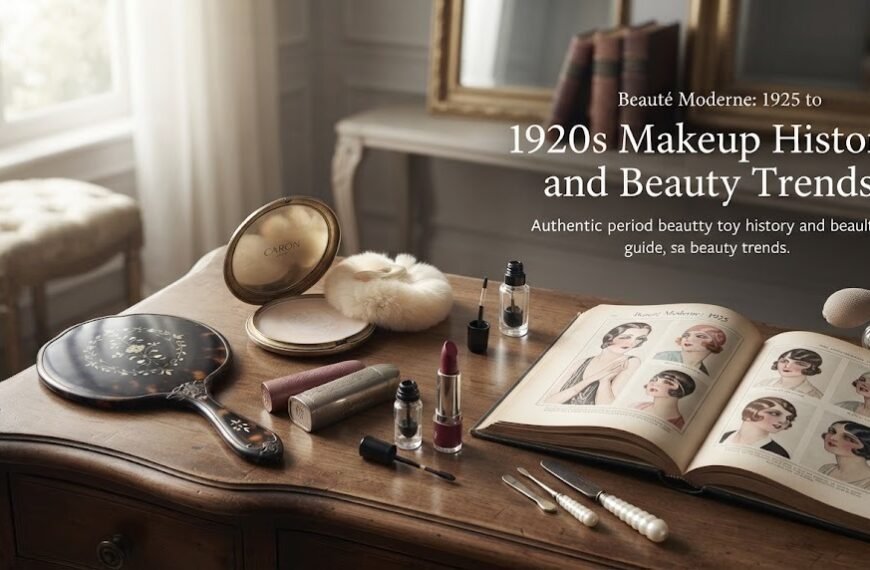
For comparison explore EveryTalkin’s 1920s fashion history and trends which covers a much later period with different silhouettes and clothing conventions.
How to Create a Historically Inspired Early Victorian Outfit?
Start by choosing a specific year and occasion. A day dress, evening gown and practical working outfit would have different details.
- Choose a date: Decide whether you want to represent the late 1830s or the 1840s.
- Research the silhouette: Examine the bodice neckline sleeves and skirt shape.
- Consider the undergarments: Petticoats are a useful starting point for recreating the full skirts of the 1840s.
- Select suitable fabrics: Match materials and decoration to the type of outfit.
- Add period-appropriate accessories: Choose headwear shoes and jewelry that fit your chosen date.
- Check historical references: Use dated museum garments or documented illustrations wherever possible.
A modern outfit inspired by the 1840s can be attractive without being an exact reconstruction. For educational or historical writing make that distinction clear.
Common Misconceptions About Early Victorian Fashion
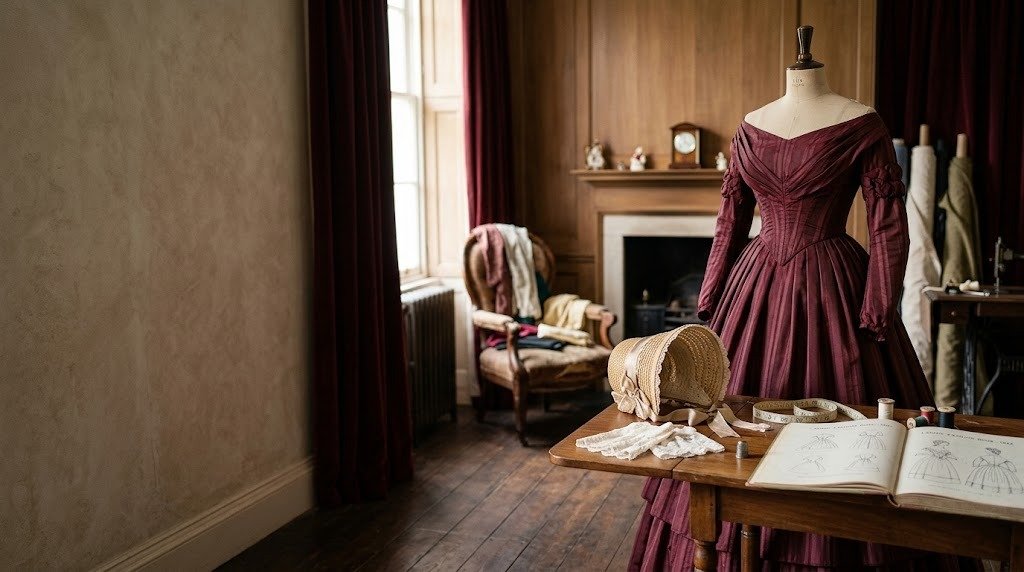
Myth 1: All Victorian women wore enormous hoop skirts.
Steel cage crinolines became prominent in the mid1850s. Earlier skirts commonly used petticoats for fullness.
Myth 2: Victorian clothing was always dark.
Colours patterns and fabrics varied according to the garment and occasion.
Myth 3: Everyone dressed alike.
Clothing differs by income, occupation region and personal circumstances.
Myth 4: Men’s clothing was always plain.
Tailoring fabric waistcoats, hats and neckwear all contributed to men’s appearance.
Myth 5: Costume dramas are completely accurate.
Screen costumes are interpretations. Museum collections and historical research provide stronger evidence for specific details.
Conclusion
Early Victorian fashion reflected the clothing, social expectations and craftsmanship of Britain during the first years of Queen Victoria’s reign. Fitted bodices full skirts petticoats changing sleeve shapes tailored menswear and carefully chosen accessories helped define the period.
For accurate historical research focus on the late 1830s and 1840s rather than treating the entire Victorian era as one style. Dated museum garments and reliable fashion histories can help identify the details that make early Victorian clothing distinctive.
FAQs
1. When was Early Victorian Fashion popular?
Early Victorian fashion generally covers the beginning of Queen Victoria’s reign in 1837 through the late 1830s and 1840s. Some definitions extend the period into the early 1850s.
2. What were the main features of early Victorian dresses?
Common features included fitted bodices defined waists, full skirts changing sleeve shapes and layered petticoats. Fabrics and decoration depended on the occasion and the wearer’s resources.
3. Did early Victorian women wear crinolines?
Petticoats were commonly used to support full skirts. Steel cage crinolines became a major fashion development in the mid1850s so they are not the best default choice for an outfit representing the 1840s.
4. What did men wear during the early Victorian era?
Men commonly wore coats, waistcoats , shirts, trousers and neckwear such as cravats. Hats and outerwear varied according to the occasion and occupation.
5. Were early Victorian clothes always dark and modest?
No. Clothing included a range of colours and decorative details. Necklines fabrics and levels of decoration also differed between daywear and eveningwear.
6. How can I identify an early Victorian dress?
Examine the sleeve shape bodice skirt construction and supporting undergarments. Comparing the garment with a dated museum example can help distinguish early Victorian styles from later crinolines and bustle silhouettes.

 By
By
 By
By
 By
By