
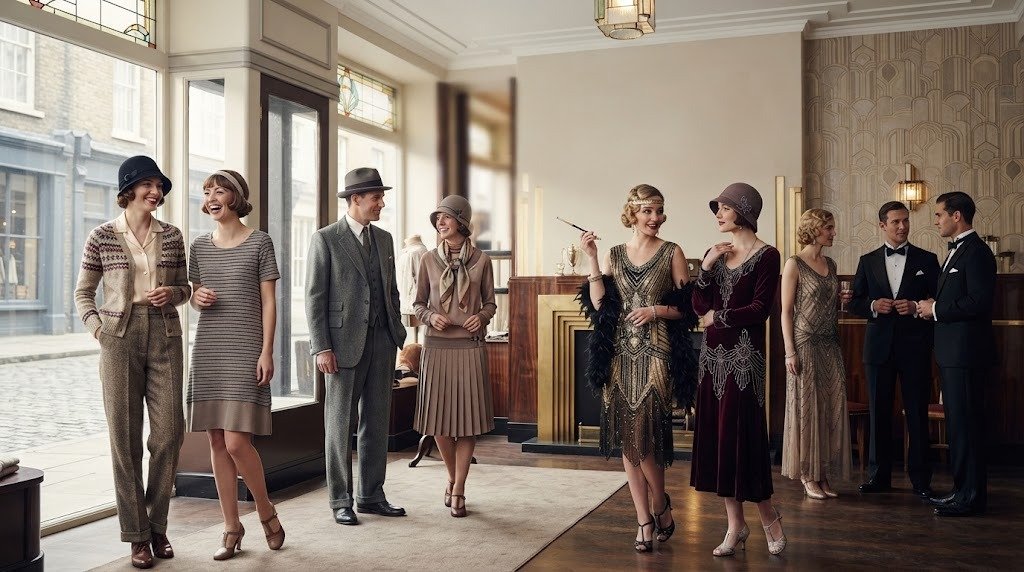

The 1920s were one of the most influential periods in modern fashion history but the decade was far more diverse than the iconic image of a beaded flapper dress. Fashion gradually shifted toward simpler construction, shorter skirts, relaxed silhouettes, practical sportswear and glamorous eveningwear.
Women embraced drop waist dresses, cloche hats, bobbed hairstyles and decorative accessories while men continued wearing tailored suits alongside increasingly casual sportswear.
Designers Art Deco jazz culture cinema and changing social attitudes all shaped the decade’s distinctive style. From everyday clothing to elaborate evening outfits 1920s fashion reflected a society becoming more modern, active and visually expressive.
What Was 1920s Fashion?
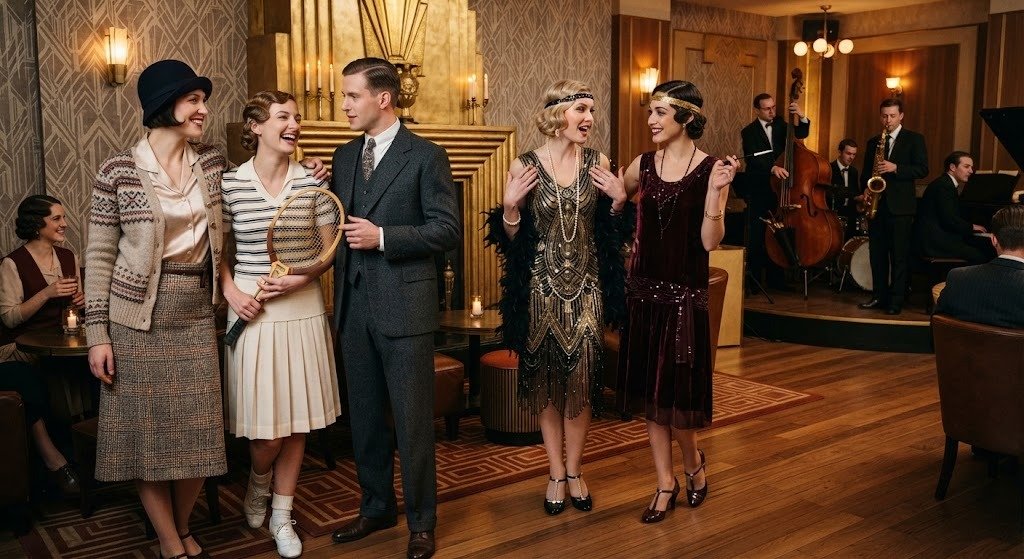
1920s fashion was defined by simpler silhouettes, shorter hemlines, relaxed clothing and new ideas about modern dress. Women’s clothing became strongly associated with tubular and drop-waist shapes while men continued wearing suits but increasingly adopted casual and sporting styles.
The decade often called the Roaring Twenties was influenced by entertainment dancing, sport travel cinema and changing social attitudes. However there was no single 1920s outfit.
Clothing varied according to year, occasion, age, social class location, season and activity. An evening dress could look very different from a practical day dress or sports outfit.
How Did Fashion Change During the 1920s?
Fashion changed significantly from 1920 to 1929. Early 1920s clothing still retained some characteristics of the previous period while the middle of the decade became strongly associated with straight tubular silhouettes and dropped waists.
By the late 1920s fashion was already moving toward longer hemlines and more defined shapes that would become important in the 1930s. A simplified timeline looks like this:
| Period | General Style |
| Early 1920s | Transitional styles and longer skirts |
| Mid-1920s | Drop waists tubular silhouettes shorter skirts |
| Late 1920s | Sleek eveningwear and changing hemlines |
| 1929 onward | Gradual transition toward 1930s styles |
This is why it can be misleading to treat every garment from the decade as a typical flapper dress.
What Did Women Wear in the 1920s?
Women wore a wide range of clothing including day dresses skirts and blouses suits sweaters sportswear coats evening dresses swimwear and specialized garments.
The overall silhouette became less restrictive while materials such as jersey and artificial silk helped support more practical and accessible clothing.
Daywear and Eveningwear
Day dresses were generally more practical and could include simple collars, sleeves, straight silhouettes, drop waists and relatively modest decoration. Cotton wool silk and other fabrics were used depending on the garment and wearer.
Eveningwear was much more decorative. Surviving 1920s garments feature beading metallic decoration rhinestones embroidery geometric motifs and lightweight fabrics.
Reflective decorations were especially effective under artificial lighting and during dancing helping create the dramatic appearance now associated with 1920s nightlife.
What Was a Flapper Dress?
A flapper dress was associated with the youthful and modern image of the 1920s flapper. Typical examples featured a loose or tubular silhouette, a dropped waist, a relatively short skirt and decorative details such as beads embroidery or fringe.
However not every woman in the 1920s was a flapper and not every dress was covered in fringe. Flapper fashion represented only one part of women’s clothing during the decade.
Modern costumes often exaggerate fringe feathers and other recognizable details making them look more theatrical than everyday historical clothing.
What Was the Drop Waist Silhouette?
The drop waist placed the visual waistline lower on the body often around the hips. Instead of strongly emphasizing the natural waist many dresses created a straighter line from the shoulders toward the hips and skirt.
This tubular relaxed silhouette became one of the defining features of mid 1920s women’s fashion. However it was not universal.
The robe de style associated particularly with Jeanne Lanvin used a much fuller skirt while maintaining a lower waistline. This contrast shows that 1920s fashion included both modernist simplicity and romantic femininity.
What Accessories Were Popular in the 1920s?
Accessories played an important role in creating the complete 1920s look. Popular examples included:
- Cloche hats
- Headbands
- Long necklaces
- Beaded purses
- Gloves
- Brooches
- Drop earrings
- Mary Jane and T-strap shoes
The cloche hat became one of the decade’s most recognizable accessories. Its close fitting bell-shaped design worked especially well with the short hairstyles that became fashionable.
Accessories were not simply decorative additions. They helped create the proportions and visual identity of an entire outfit.
What Hairstyles Were Popular in the 1920s?
Short hair became a strong symbol of modern 1920s style. The bob was particularly associated with the fashionable woman of the period followed by styles such as the shingle and Eton crop.
The combination of bobbed hair, a cloche hat and a drop-waist dress became one of the most recognizable visual formulas of the decade.
However long hair did not disappear immediately and historical photographs show considerable variation throughout the period.
What Shoes Did Women Wear?
Shorter skirts made footwear more visible, increasing the importance of shoes as part of the overall outfit. Popular styles included Mary Jane shoes T-strap shoes pumps low heels dancing shoes and sports shoes.
Evening footwear could be more decorative while daytime shoes were generally more practical. The growing popularity of dancing and leisure activities also increased the importance of comfortable secure footwear.
How Did Art Deco Influence 1920s Fashion?
Art Deco strongly influenced the visual language of 1920s fashion especially through geometric patterns, metallic surfaces symmetry and streamlined decoration.
The 1925 Paris Exposition Internationale des Arts Décoratifs et Industriels Modernes was particularly important to the development and recognition of the Art Deco movement.
Its influence can be seen in surviving garments through:
- Geometric designs
- Metallic decoration
- Rhinestones
- Abstract motifs
- Glass and metal elements
- Streamlined construction
These details were especially striking under electric lighting and helped define the glamorous appearance of 1920s eveningwear.
Which Designers Shaped 1920s Fashion?
Several designers contributed to the development of 1920s fashion including Coco Chanel, Jeanne Lanvin, Madeleine Vionnet and Jean Patou.
Coco Chanel became associated with modern practical clothing and a fashion language based on simplicity and ease. Jeanne Lanvin represented a more romantic direction.
Her robe de style used a fuller skirt and historical references showing that 1920s fashion was not limited to narrow tubular dresses.
Madeleine Vionnet demonstrated the importance of fabric construction and sophisticated draping. Her designs show how the movement of fabric around the body could become a major part of the garment’s visual effect. Together these designers demonstrate the variety of fashion during the decade.
What Did Men Wear in the 1920s?
Men’s fashion remained strongly connected to tailoring but it also became more relaxed and sporty. Common clothing included two and three piece suits shirts ties waistcoats Oxford bags knickerbockers plus fours sweaters sport coats hats and leather shoes.
Tweeds and flannels were popular for less formal clothing while sports and outdoor activities helped make casual styles increasingly acceptable. The fashion associated with Edward Prince of Wales also contributed to the popularity of more relaxed men’s styles.
How Did Sports Influence 1920s Fashion?
Sportswear became increasingly important during the decade. Women wore clothing designed for activities such as tennis, golf , swimming, walking travel and other outdoor activities.
This development is significant because it shows that 1920s fashion was not only about parties and nightlife. The decade helped strengthen the idea that fashionable clothing could also support movement recreation and leisure.
How Did Culture Influence 1920s Fashion?
Fashion developed alongside major cultural changes. Jazz dancing, cinema nightlife, modern art sports and changing ideas about women’s social roles all influenced the atmosphere surrounding 1920s clothing.
In the United States the Harlem Renaissance was another important cultural development. Music literature, art and performance contributed to the broader cultural landscape of the period.
Josephine Baker became an internationally recognized performer whose image was strongly connected with the modern entertainment culture of the era.
What Fabrics and Decorations Were Used?
1920s clothing used different materials depending on garment type, purpose and price. Common fabrics included silk cotton wool jersey, artificial silk chiffon and georgette.
Eveningwear could include extensive beadwork embroidery, rhinestones, sequins, metallic thread glass and other decorative materials.
Museum collections are particularly useful for understanding these details because surviving garments provide direct evidence of the fabrics construction methods and decorations used during the period.
Historical 1920s Fashion vs. Modern Costume
Modern costumes often exaggerate the most recognizable features of the decade. Authentic 1920s fashion was much more varied.
| Historical 1920s Fashion | Modern Costume Version |
| Many different silhouettes | Usually focuses on one flapper shape |
| Simple everyday clothing | Often heavily decorated |
| Selective use of fringe | Fringe may cover the entire dress |
| Varied men’s clothing | Gangster styling may be exaggerated |
| Accessories varied by occasion | Cloche and pearls used as shortcuts |
| Fashion changed throughout the decade | The entire period treated as one style |
For historically accurate research it is better to ask which year and which occasion rather than simply asking what people wore in the 1920s.
What Made 1920s Fashion Important?
The importance of 1920s fashion goes beyond flapper dresses. The decade helped popularize several ideas that became increasingly important in modern fashion including:
- Simpler construction
- Greater freedom of movement
- Casual sportswear
- Shorter skirts
- Short hairstyles
- Coordinated accessories
- Modern-art influences
- Dramatic eveningwear
- More accessible fashionable clothing
The decade therefore became an important bridge between older formal dress traditions and modern twentieth-century fashion.
How Can You Identify an Authentic 1920s Look?
If you are researching or recreating 1920s fashion, focus on the whole outfit rather than one famous item.
First identify the approximate year and decide whether the clothing is daywear, sportswear afternoon wear or eveningwear. Then examine the silhouette accessories hairstyle, hat fabric decoration and shoes.
Comparing the result with historical photographs and surviving museum garments is more reliable than simply adding fringe and a feathered headband to a modern dress.
Why Is 1920s Fashion Still Popular?
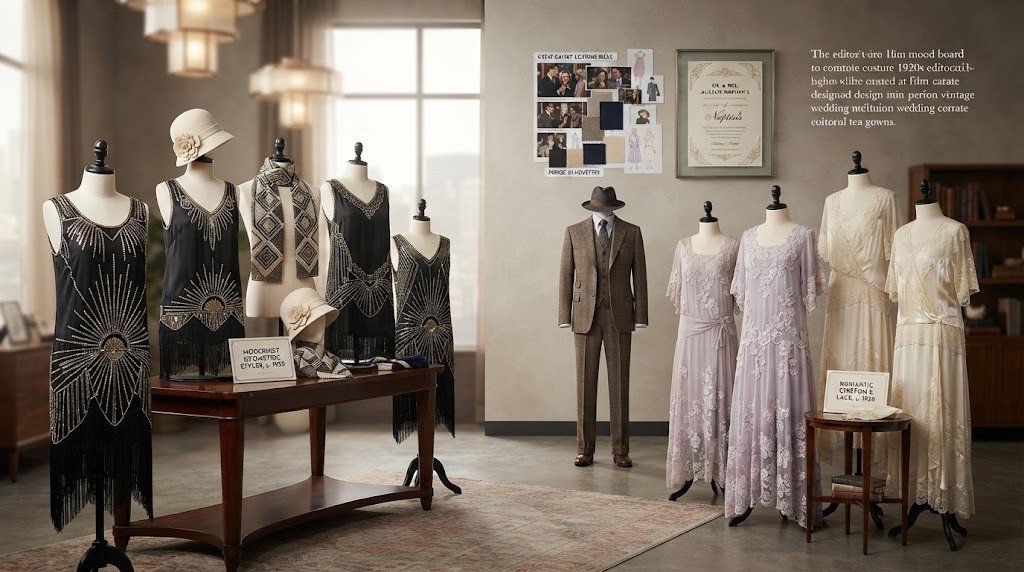
1920s fashion continues to influence costume design, photography weddings, theatre film themed events and vintage-inspired clothing.
Its visual identity remains recognizable because of the combination of straight silhouettes, geometric decoration, short hairstyles, distinctive hats and dramatic eveningwear.
At the same time surviving garments show that the decade included both modernist and romantic styles making it much more diverse than the typical flapper stereotype.
Conclusion
1920s fashion was much more than the flapper dress. It was a decade of transition in which clothing became simpler silhouettes, more relaxed skirts became shorter, sportswear gained importance and eveningwear developed elaborate decoration.
Women’s fashion included drop-waist and tubular dresses, bobbed hairstyles, cloche hats, practical daywear and dramatic evening clothing. Men continued wearing tailored suits while adopting more casual and sporting styles.
Designers such as Chanel Lanvin and Vionnet offered very different interpretations of modern fashion. The best way to understand the decade is therefore to look beyond the stereotype and consider the year’s occasion , social context and complete outfit.
FAQs
What was the main style of the 1920s?
The best-known silhouette was a relatively straight tubular shape with a dropped waist and shorter skirt. However fuller dresses, suits , sportswear and practical daywear were also common.
What did women wear in the 1920s?
Women wore day dresses, suits skirts and blouses, sweaters, sportswear coats, evening dresses and other specialized clothing. Flapper dresses were only one part of women’s fashion.
What is a flapper dress?
A flapper dress is a 1920s-style dress associated with the youthful flapper image. It commonly features a loose or tubular silhouette, dropped waist, relatively short skirt and decorative details such as beads or fringe.
What hats were popular in the 1920s?
The cloche hat was one of the most recognizable women’s hats of the decade. Its close-fitting shape worked particularly well with short hairstyles.
What did men wear in the 1920s?
Men commonly wore tailored suits, shirts, ties , waistcoats and hats. Casual styles such as Oxford bags plus fours sweaters, tweeds and flannels also became increasingly popular.
Was all 1920s fashion inspired by Art Deco?
No. Art Deco strongly influenced geometric decoration and eveningwear but 1920s fashion also included romantic sporty practical and traditional styles. Lanvin’s robe de style is a clear example.

 By
By

 By
By