
Georgian fashion history covers British clothing from 1714 to 1830 during the reigns of George I George II George III and George IV.
Throughout this period clothing changed from elaborate gowns and wide skirts to simpler dresses and tailored outfits. Fashion was influenced by social class trade politics and artistic movements.
This guide explores Georgian womens and mens clothing popular fabrics hairstyles accessories and the major changes that shaped fashion during the era.
What Was Georgian Fashion?
Georgian fashion refers to clothing worn in Britain between 1714 and 1830. It included formal court outfits, everyday garments, working clothes and special occasion dress.
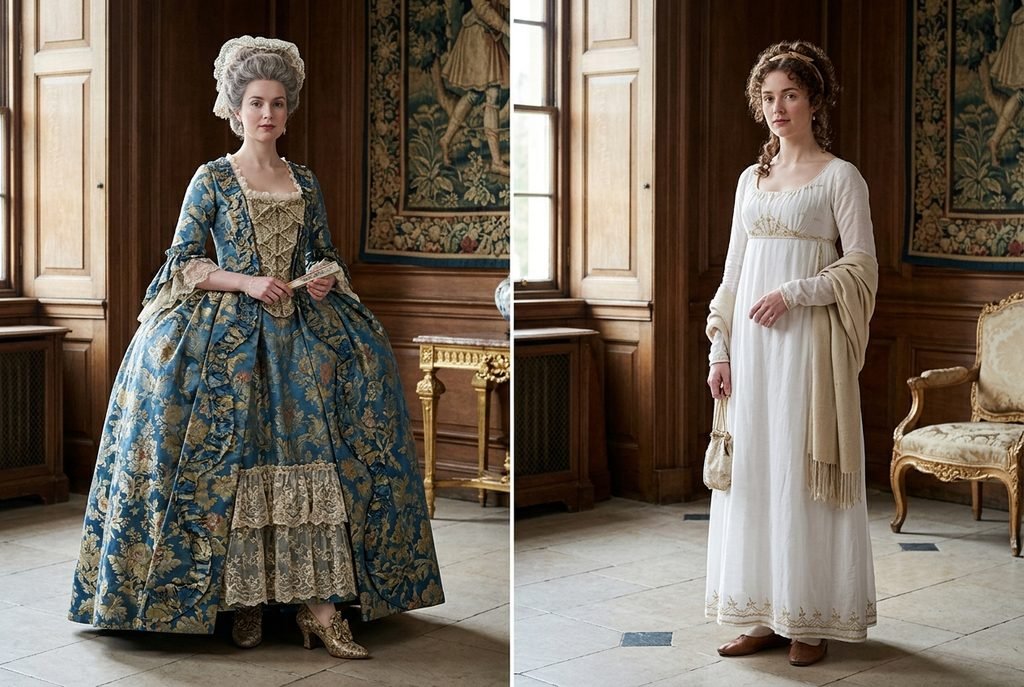
There was no single Georgian style. Earlier clothing often featured structured bodices, wide skirts and decorative fabrics while later styles introduced simpler shapes and higher waistlines.
Clothing also reflected social position. Wealthy people could afford expensive silk and elaborate accessories while working people generally needed practical and affordable garments.
How Did Georgian Fashion Change Between 1714 and 1830?
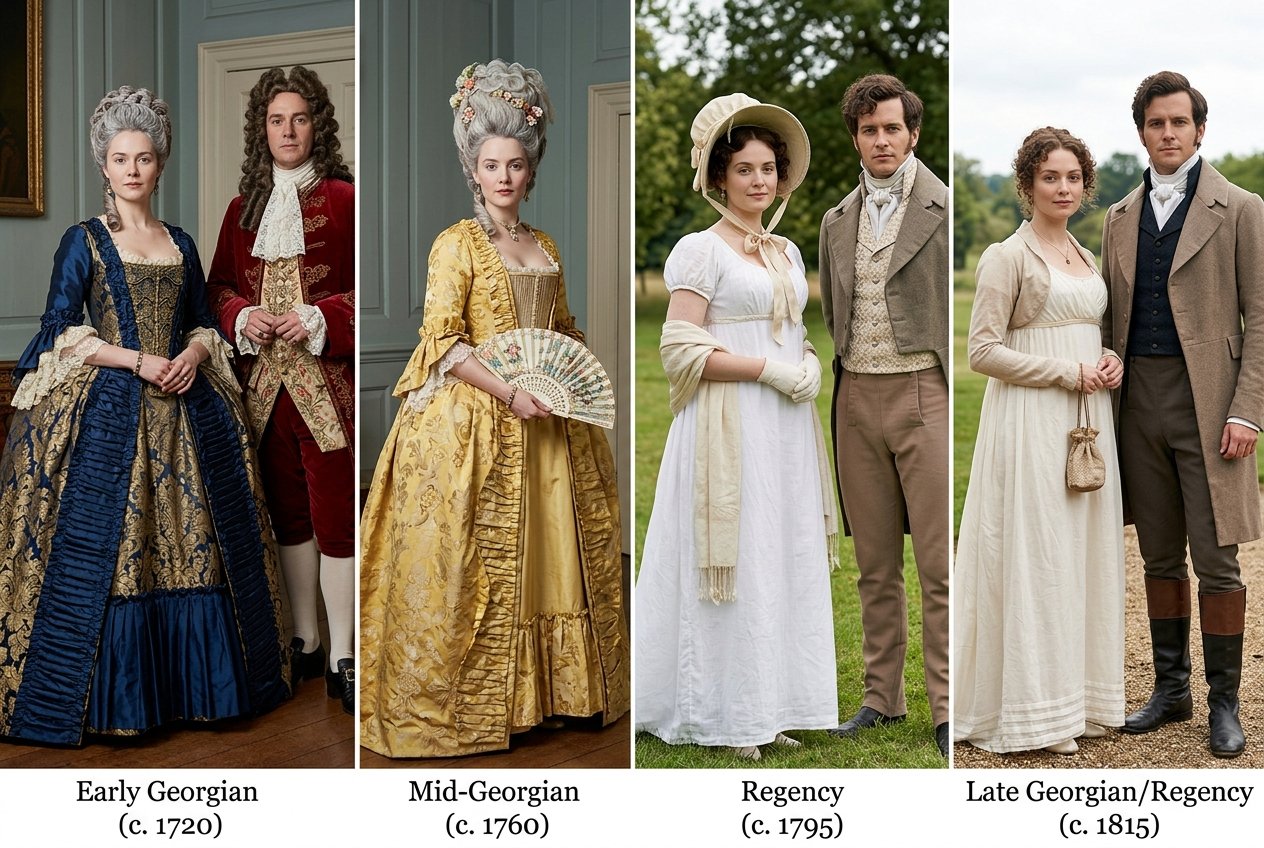
Georgian clothing developed through several stages with noticeable changes in silhouettes, fabrics and decoration.
Early Georgian Fashion (1714–1740s)
Women’s clothing often featured fitted bodices, full skirts and decorative fabrics. Stays shaped the upper body while petticoats and panniers helped create wide silhouettes.
Men commonly wore long coats, waistcoats , knee breeches, stockings and buckled shoes. Wigs and carefully arranged hairstyles were also fashionable.
MidGeorgian Fashion (1750s–1770s)
Elaborate gowns remained popular among fashionable women. The robe à la française featured loose pleats falling from the back while the robe à langlaise had a more fitted back.
Wide skirts embroidered silk lace and decorative petticoats were common in formal clothing. Men’s outfits continued to include coats, waistcoats and breeches.
Late Georgian Fashion (1780s–1790s)
Fashion gradually moved towards simpler silhouettes and lighter fabrics. Neoclassical influences encouraged more naturallooking shapes while wide skirts became less common outside some formal settings.
Men’s clothing also became more restrained with greater emphasis on fitted coats and practical tailoring.
Late Georgian and Regency Transition (1790s–1830)
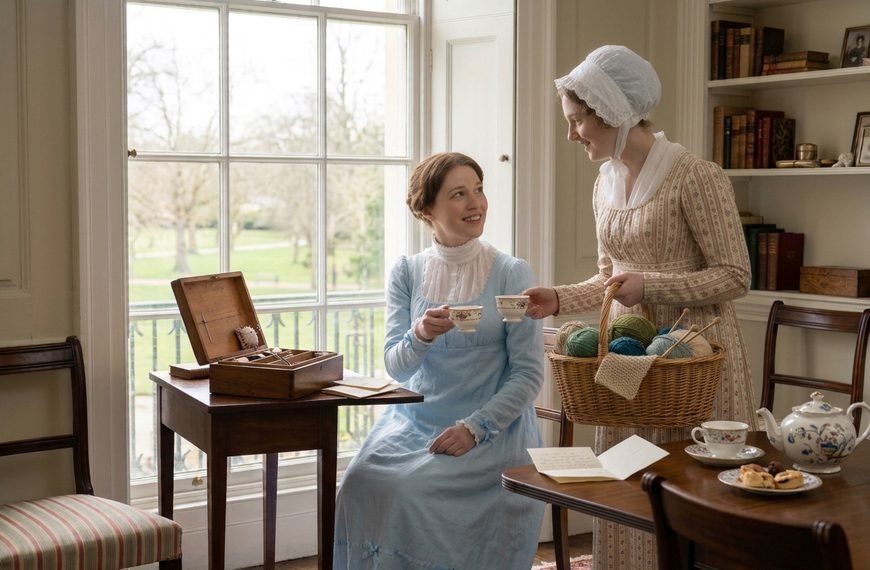
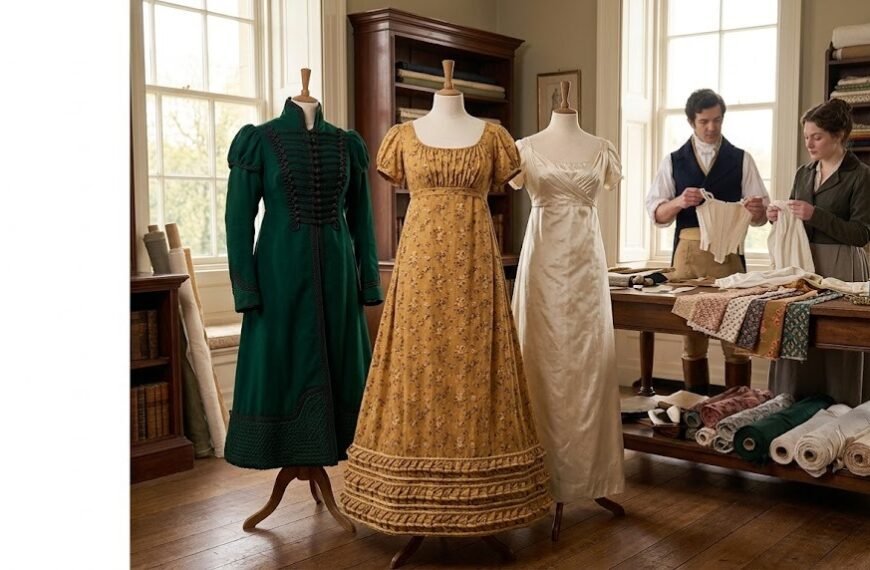
High waisted gowns became a recognisable feature of women’s fashion. Dresses often used muslin cotton and linen with shawls, bonnets and gloves completing the outfit.
Men increasingly wore fitted coats, waistcoats , neckcloths and longer trousers. Older and newer styles sometimes existed together during this transition.
What Did Georgian Women Wear?
Women’s clothing depended on the decade occasion and social position. Wealthy women could wear elaborate gowns while everyday garments were often simpler.
Gowns and Dresses
Gowns were central to women’s fashion. Popular styles included
- Robe à la française Recognised by its loose back pleats and often elaborate decoration.
- Robe à langlaise A gown with a more fitted back.
- Riding dress Tailored clothing designed for riding and outdoor activities.
- Highwaisted gown A late Georgian style with the waistline positioned below the bust.
Stays Petticoats and Outerwear
Stays supported and shaped the upper body while petticoats were worn beneath gowns or as visible parts of an outfit. Panniers created wider skirts in certain eighteenth century styles.
For outdoor activities women wore garments such as cloaks, riding coats, mantles and shawls. Short jackets and longer coats also became familiar during the late Georgian and Regency years.
What Did Georgian Men Wear?
Georgian men’s fashion gradually moved from decorative eighteenth century outfits towards more fitted and restrained clothing.
A typical fashionable outfit could include a coat waistcoat, shirt breeches or trousers stockings and shoes.
Coats Waistcoats and Trousers
Earlier coats could feature embroidery large cuffs and decorative buttons. Later styles became more fitted with shaped fronts and longer tails.
Knee breeches were common during much of the eighteenth century. Longer trousers and pantaloons became increasingly fashionable towards the end of the Georgian period.
Shirts and Accessories
Men commonly wore linen shirts with cravats or neckcloths. Other accessories included hats, gloves , watches, stockings , buckled shoes and walking sticks.
Powdered wigs were associated with some earlier fashionable outfits while natural hairstyles became more popular towards the end of the eighteenth century.
Which Fabrics and Colours Were Popular in Georgian Fashion?
Fabric choices depended on wealth availability and the purpose of a garment. Silk was important in formal clothing while cotton linen and wool were used for different everyday garments.
| Fabric | Common Uses |
| Silk | Formal gowns waistcoats and expensive clothing |
| Cotton | Dresses shirts and everyday garments |
| Linen | Shirts shifts and basic clothing |
| Wool | Coats and warm outerwear |
| Muslin | Lightweight dresses especially in later years |
| Printed cotton | Dresses and decorative garments |
Earlier fashionable clothing could feature rich colours, floral patterns, brocade and embroidery. Later styles included lighter fabrics and simpler designs.
Not every Georgian dress was brightly coloured or white. Surviving garments and historical images show a wider range of materials and colours.
How Did Georgian Hairstyles and Accessories Look?
Hairstyles and accessories changed according to fashion occasion and social position.
Earlier fashionable women’s hairstyles could include curls, powdered hair ribbons and decorative ornaments. By the late eighteenth century simpler arrangements and naturallooking curls became more popular.
Men also moved away from powdered wigs towards natural hair. Beau Brummell became associated with the early nineteenth century preference for neat grooming and carefully arranged clothing.
Common accessories included fans, jewellery gloves, ribbons caps, bonnets , hats , shawls, watches and shoes with buckles. These items could provide practical benefits as well as communicate social position.
How Did Social Class Influence Georgian Clothing?
Social class strongly influenced clothing choices. Wealthy families could afford fine silk embroidered garments and fashionable accessories while working people generally needed durable and affordable clothing.
Working class garments often included woollen clothing, linen shirts, aprons and practical gowns suited to daily activities.
Children’s clothing also varied according to age and family circumstances. Younger children often wore loose garments before gradually adopting styles associated with adults.
Fashionable court clothing therefore represents only one part of Georgian dress. Everyday clothing is equally important for understanding the period.
How Did Trade and Historical Events Influence Georgian Fashion?
International trade, textile production and artistic movements helped shape Georgian clothing.
Trade and Textiles
Britain’s textile industry and international trade made materials such as cotton silk linen and wool available for different garments. Printed cotton fabrics became particularly important during the later Georgian period.
Neoclassical Influence
Interest in ancient Greek and Roman art influenced clothing towards the end of the eighteenth century. This helped popularise simpler silhouettes and highwaisted gowns during the late Georgian and early nineteenth century transition.
Politics and Society
The French Revolution and Napoleonic Wars influenced European society and cultural life. Fashion also reflected changing ideas about luxury public appearance and social identity.
However no single event explains every fashion change. Trade artistic movements and personal taste also influenced clothing.
How Can You Identify Georgian Clothing?
Look at the complete outfit rather than relying on one feature. Garment shape construction fabric and accessories can help identify its historical period.
| Feature | What to Examine |
| Women’s gowns | Bodice shape waistline and skirt width |
| Mens coats | Length cuffs buttons and tailoring |
| Undergarments | Stays petticoats and skirt supports |
| Fabrics | Silk cotton linen and wool |
| Hairstyles | Powdered wigs curls and hair arrangements |
| Accessories | Fans hats gloves jewellery and shoes |
Museum collections and dated portraits are useful references. A surviving garment can reveal its fabric and construction while historical paintings show how clothing was worn together.
Always consider the date. A gown from 1750 should not automatically be treated as an example of clothing from 1805.
What Is the Difference Between Georgian and Regency Fashion?
Regency fashion is part of the wider Georgian period. The Georgian era lasted from 1714 to 1830 while the British Regency officially lasted from 1811 to 1820.
Earlier Georgian fashion often featured structured gowns, wide skirts and elaborate decoration. Regency clothing became known for raised waistlines, flowing skirts and neoclassical influences.
Mens fashion also developed towards fitted coats, carefully arranged neckcloths and trousers. For a closer comparison read EveryTalkins guide to Georgian vs Regency fashion.
How Did Georgian Fashion Influence Later Clothing Styles?
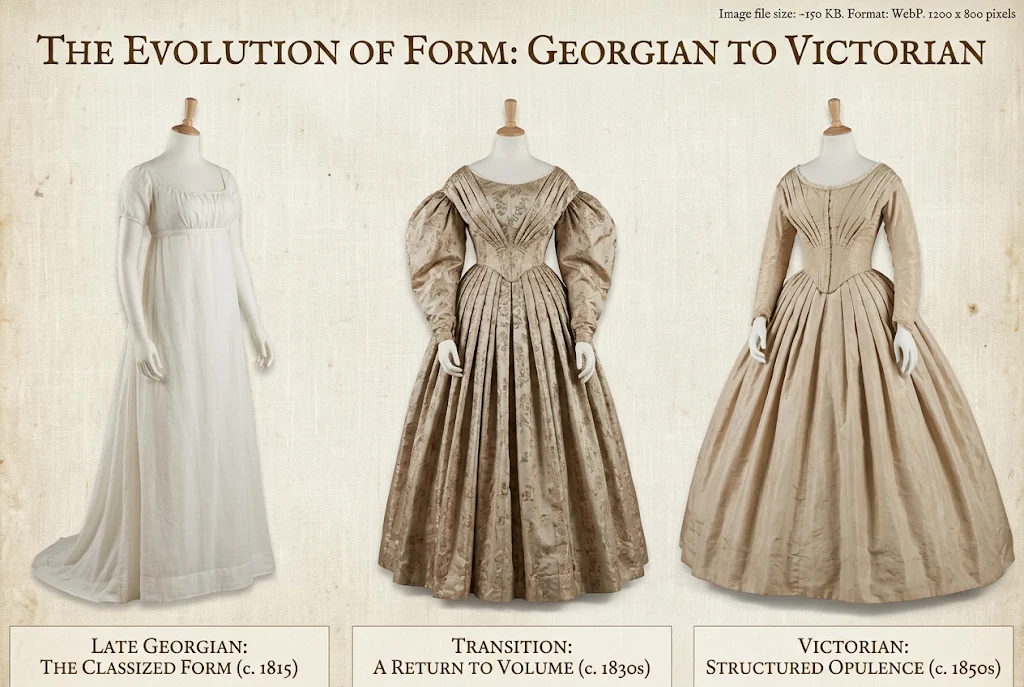
Georgian fashion influenced the development of nineteenth century clothing through changes in tailoring fabrics and silhouettes.
The late Georgian and Regency transition introduced highwaisted gowns which later gave way to lower waistlines and fuller skirts during the 1820s and 1830s.
These developments provide useful context for understanding Victorian fashion which introduced further changes in clothing shapes and construction. Explore the next historical period in EveryTalkins guide to Regency vs Victorian fashion.
Conclusion
Georgian fashion history reveals how British clothing changed between 1714 and 1830. Womens gowns mens tailoring fabrics, hairstyles and accessories reflected changing tastes, social class trade and historical events.
Understanding the differences between each decade provides a clearer picture of what people wore during the Georgian era.
FAQs
When did Georgian fashion begin and end?
Georgian fashion in Britain covers 1714 to 1830 corresponding to the reigns of George I George II George III and George IV.
What were the main features of Georgian women’s clothing?
Common features included gowns, fitted bodices, stays , petticoats and decorative fabrics. Earlier styles often had wide skirts while later gowns featured higher waistlines.
What did Georgian men wear?
Men commonly wore coats, waistcoats, shirts , breeches or trousers stockings and shoes. Cravats hats and wigs were also part of fashionable outfits.
Were all Georgian dresses wide?
No. Wide skirts were associated with certain eighteenth century styles, particularly formal clothing. Later Georgian gowns often had narrower silhouettes.
What fabrics were used during the Georgian era?
Silk cotton linen and wool were widely used. Muslin and printed cotton also became important in later Georgian clothing.
Did working class people follow Georgian fashion trends?
Working people were influenced by wider trends but generally wore practical affordable garments suited to their occupations income and daily activities.
What is the difference between Georgian and Victorian fashion?
Georgian fashion covers 1714–1830 while the Victorian era began in 1837. Georgian styles developed from structured eighteenth century clothing towards early nineteenth century silhouettes while Victorian fashion introduced different shapes including fuller skirts and later bustles.

 By

 By